Uncategorized
Wedding Planner: Complete Guide to Professional Services 2026
Feb
So here’s what I’ve learned after planning 200+ weddings about hiring a wedding planner in 2026
Okay so last week I had three consultations back-to-back and every single couple asked me the exact same thing: “Do we actually need a wedding planner?” And I’m gonna be honest with you—sometimes no, you don’t. But most of the time? Yeah, you really do, and here’s why.
The wedding planning industry has completely shifted since 2024. We’re not just people with clipboards anymore (though I still love my clipboard, not gonna lie). Professional wedding planners in 2026 are basically project managers who also happen to know which florist won’t flake on you three days before your wedding.
What we actually do versus what people think we do
Everyone thinks wedding planners just show up on the day-of with a emergency kit and boss people around. That’s like 10% of the job. The real work happens in those 47 spreadsheets I have open right now while my cat is walking across my keyboard trying to help.
Here’s the breakdown of services you’ll see in 2026:
- Full-service planning – I’m with you from engagement to honeymoon departure, usually 12-18 months
- Partial planning – You’ve booked your big vendors, need help with the rest (this is most of my clients tbh)
- Day-of coordination – Except we don’t call it that anymore because it’s actually like 20 days of work compressed into the final month
- Destination wedding planning – Whole different beast, requires someone who actually knows the location
- Micro-wedding specialists – Yep, this is its own category now, 50 guests or less
The pricing structure nobody wants to talk about
So I’m just gonna say it. Wedding planners in major metros are charging $3,500-$12,000+ for full planning in 2026. I know. But wait, lemme break down what you’re actually paying for because my client last month thought I just “picked some flowers and made a timeline.”
Your planner fee covers:
- Vendor research and vetting (I have a blacklist of 30+ vendors I won’t work with anymore, that knowledge is valuable)
- Contract review and negotiation (saved a couple $4,000 on their catering contract two weeks ago)
- Budget management and tracking
- Design conceptualization and execution
- Timeline creation for like seven different groups of people
- Problem-solving when your bridesmaid gets food poisoning or the tent company shows up to the wrong venue
Oh and another thing—most planners now charge either a flat fee or a percentage of your total budget. The percentage model used to be standard (usually 10-15%), but I switched to flat fees in 2025 because it felt more transparent. Some planners still do percentage though, so just ask upfront.
How to actually find a planner who isn’t gonna drive you crazy
This is where people mess up. They google “wedding planner near me” and book whoever has the prettiest Instagram. Don’t do that. Well, okay, start there, but then actually dig deeper.
Questions you gotta ask during consultations
I literally had a consultation yesterday where the couple didn’t ask me a single question about my process and then seemed shocked when I explained how I work. Here’s what you need to know:
- How many weddings do you take per year? (If they say more than 25-30, they’re stretched too thin or have a big team)
- What’s your communication style? (Some planners do weekly calls, I prefer email updates with bi-weekly check-ins because honestly phone calls for every little decision kill my schedule)
- Do you have backup? (I got COVID in 2024 two days before a wedding and thank god my associate could step in)
- What’s included in your fee versus what costs extra?
- Can I see a real timeline you’ve created? Not the template, an actual one
- How do you handle vendor meal costs and other hidden fees?
Wait I forgot to mention—ask to see their vendor relationships. A good planner in 2026 should have solid connections with at least 15-20 vendors across different categories. I’m not saying we get kickbacks (ethical planners don’t), but vendors respond to my emails faster than they respond to couples because they know I send them business.
Red flags that seem obvious but people ignore them anyway
Okay so funny story, my friend hired a wedding planner who told her “don’t worry about contracts, we keep it casual.” That planner ghosted her four months before the wedding. Here’s what to avoid:
- No written contract or proposal (NEVER work without a contract, I don’t care how nice they seem)
- Pushy about specific vendors (might be getting kickbacks)
- Won’t give you client references
- Their social media hasn’t been updated since 2023
- They don’t ask about your budget in the first conversation
- Everything is “totally fine” and “super easy”—wedding planning is neither of those things
The new specializations you’ll see everywhere in 2026
The industry has gotten really specific lately. Like, I watched The Bear last month and kept thinking about how restaurants have specialized positions and wedding planning has gone the same way.
Sustainable wedding planners
These planners focus on reducing waste, carbon-neutral events, locally-sourced everything. They know which rental companies actually clean and reuse items versus which ones are greenwashing. One of my colleagues only plans zero-waste weddings now and she’s booked solid through 2027.
Cultural wedding specialists
This is huge. If you’re having a Hindu wedding, Chinese tea ceremony, Nigerian traditional wedding, or any cultural celebration—find a planner who actually knows those traditions. I plan a lot of Jewish weddings and I know the ketubah signing happens before, the chuppah needs four poles not two, and we’re breaking the glass at the end not the beginning. That knowledge matters.
Tech-integrated planners
Some planners now offer full digital wedding management with apps, QR codes for everything, virtual guest books, livestream coordination. This became standard during the pandemic years but now it’s like a specialty service. Honestly I’m still catching up on some of this stuff—had to learn how to coordinate hybrid weddings where half the guests are virtual.
What the process actually looks like month by month
Let me walk you through what happens when you hire me for full planning, because I think people don’t realize how structured this is.
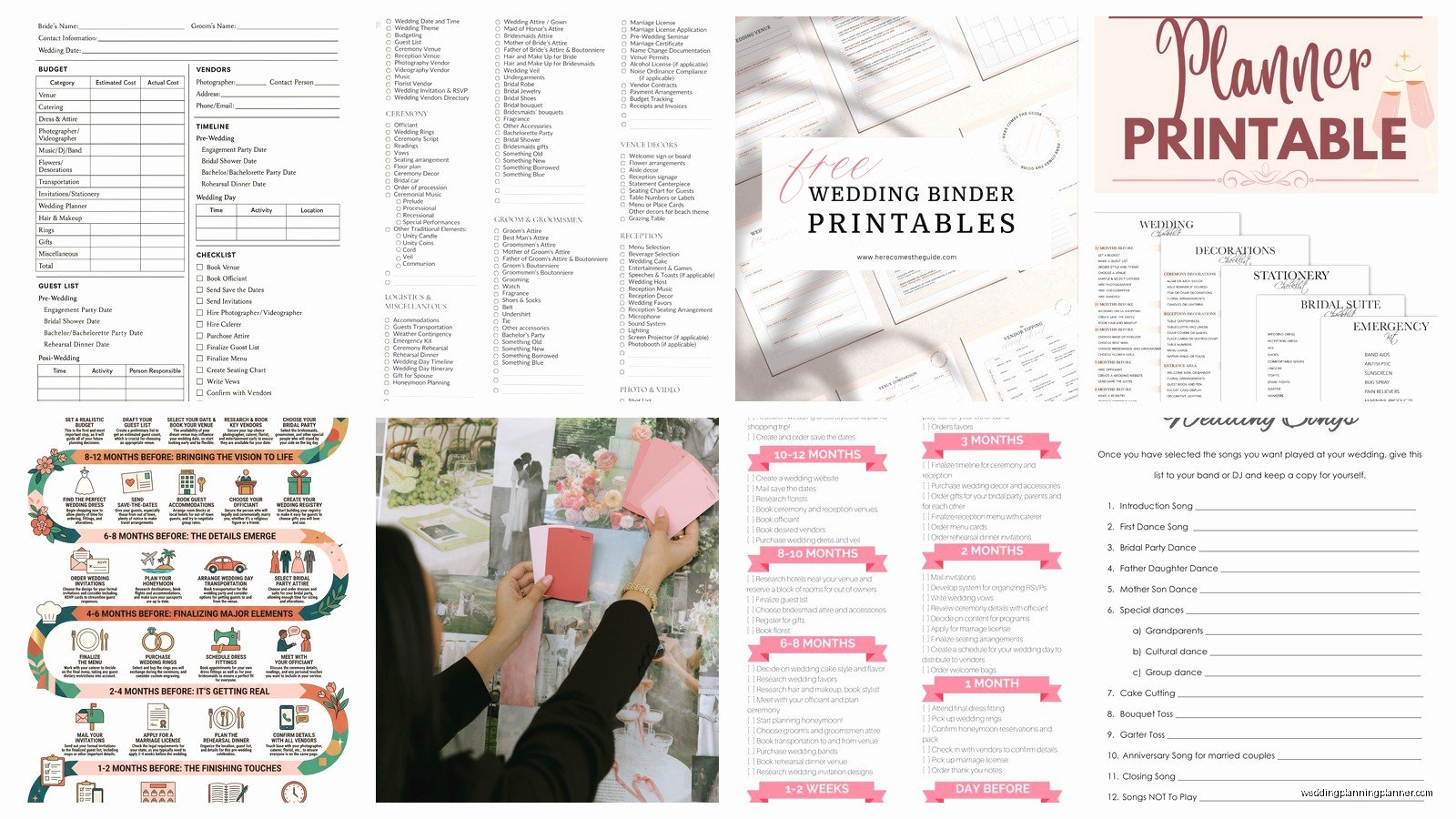
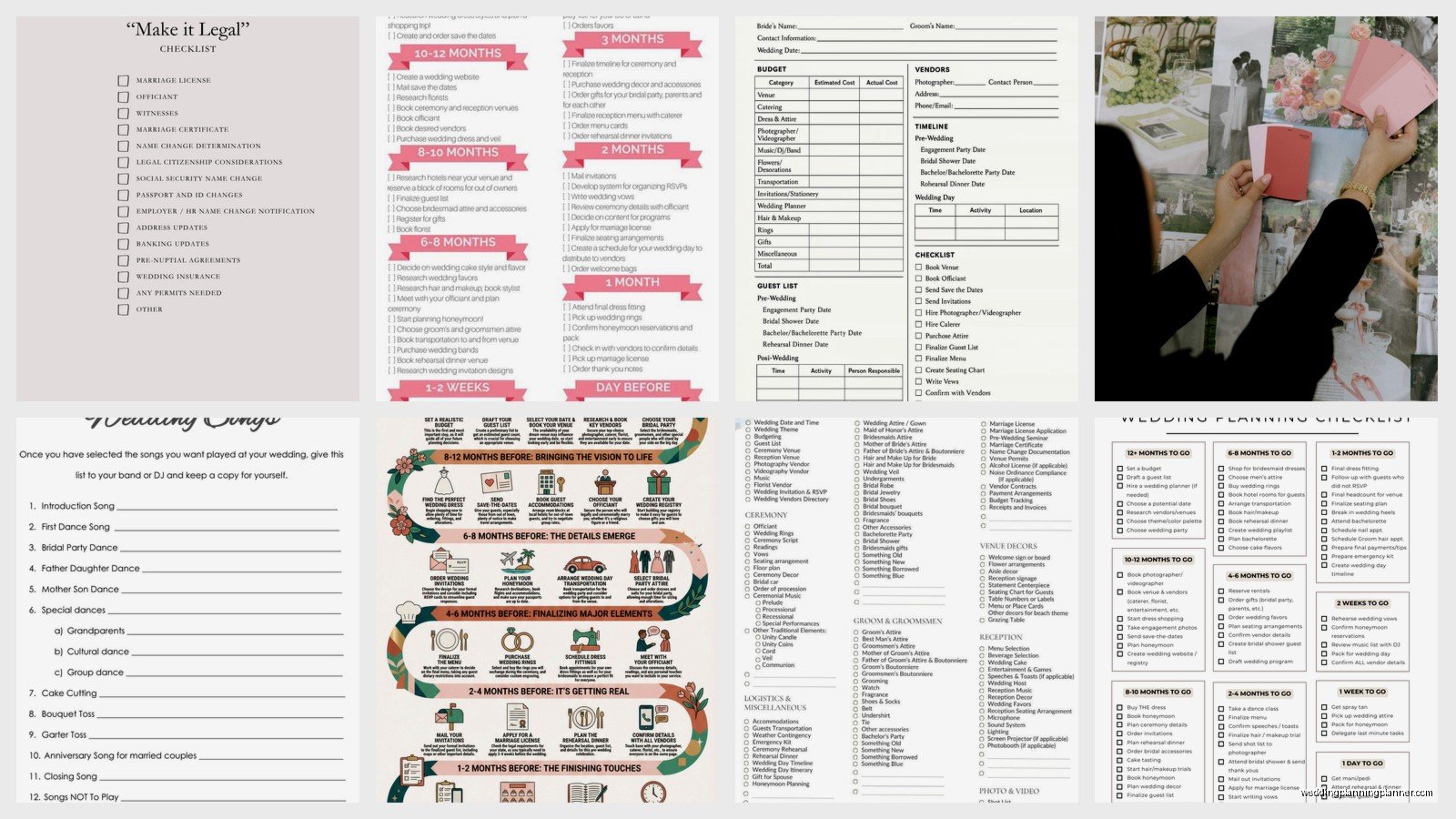
Months 12-10 before the wedding
We’re building your vision and budget. I send you homework (yes, actual homework) about your priorities, style, non-negotiables. We tour venues if you haven’t booked one. I create a preliminary budget that actually makes sense—not those random online calculators that tell you catering is 40% of your budget when venue rental alone might be 35%.
This is gonna sound weird but I also assess family dynamics here. Are your parents divorced? Is someone paying who wants control? I need to know this stuff upfront because it affects literally everything.
Months 9-7 before
Heavy vendor booking period. We’re securing your photographer, videographer, florist, caterer, band or DJ, hair and makeup, cake, rentals. I’m reviewing contracts, negotiating terms, making sure cancellation policies are reasonable. My client’s dog got sick during this phase last month and she couldn’t focus on anything, which is exactly why you have a planner.
Oh and another thing—this is when we’re designing your invitations if you’re doing custom stationery. That’s actually my other business, so I’m biased, but your paper goods set the tone for everything. In 2026 we’re seeing a return to formal invitations after years of digital everything.
Months 6-4 before
Details details details. We’re picking linens, finalizing the menu, choosing ceremony music, figuring out the processional order, designing your seating chart (the worst task in wedding planning, I stand by this). You’re doing dress fittings and I’m tracking all those dates so you don’t miss them.
I’m also starting to build your day-of timeline. This takes me like 6 hours minimum because I’m coordinating vendor arrival times, family photo lists, cocktail hour timing, dinner service pacing, and making sure Grandma gets her meal first because she eats dinner at 4:30pm every day.
Months 3-1 before
Final payments to vendors, final guest count to caterer, finishing touches on decor. We’re having our final planning meeting where I go through every single detail with you. I’m creating day-of emergency kits (safety pins, stain remover, Band-Aids, bobby pins, breath mints, the works). I’m confirming and reconfirming with every vendor because people forget stuff.
Two weeks before I send out the master timeline to everyone—and I mean everyone. The couple, the wedding party, parents, all vendors. Different versions for different people because your DJ doesn’t need to know when the mother of the bride is getting her hair done.
Wedding week
This is where I earn my fee. I’m managing the rehearsal, coordinating vendor load-in, solving last-minute problems (there are always problems), setting up your detail items, directing your family, keeping the timeline moving, and making sure you actually eat something.
I become the bad guy so you don’t have to. Uncle Jerry wants to give a surprise speech? He’s going through me. Photographer is running 20 minutes behind? I’m handling it. Bridesmaid drama in the getting-ready room? I’m shutting it down.
Things that have changed in 2026 that you need to know
The industry evolves fast and some stuff from even 2024 is already outdated.
Vendor availability is still weird post-pandemic
A lot of vendors left the industry during COVID and never came back. Good planners have adapted, but you’re seeing longer lead times for quality vendors. If you want a specific photographer for your fall 2026 wedding, you should’ve booked them already. Not trying to stress you out but that’s reality.
Couples are spending more on fewer things
The giant 200-person wedding is less common. People are doing 80-100 guests and putting money into really good food, open bar, amazing photography. This actually makes my job easier because we can focus on quality over quantity.
Flexibility is built into everything now
Every contract I negotiate includes postponement clauses. Every vendor I work with understands that things can change. We learned this the hard way but it’s standard practice now.
Digital integration is non-negotiable
Wedding websites aren’t optional anymore. Online RSVPs save everyone’s sanity. Digital seating charts that I can update in real-time. Shared planning platforms where you can see everything I’m working on. If a planner isn’t using planning software in 2026, that’s concerning.
Real talk about what planners can’t do
I gotta be honest about limitations because couples sometimes expect magic.
I can’t make your parents get along. I can manage them separately, give them different responsibilities, seat them far apart, but I can’t fix family dysfunction.
I can’t make your budget bigger. If you have $30,000 and want a $60,000 wedding, I can try to maximize value but physics still applies. Although wait—I did just help a couple cut $8,000 from their budget by switching some rental items and doing simpler florals, so there’s that.
I can’t control weather. I can have backup plans for your backup plans, but if it rains on your outdoor wedding, we’re moving to plan B and making it work.
I can’t make all your guests behave. I can try to prevent drama and manage situations, but someone’s gonna get too drunk or your divorced aunt and uncle are gonna argue by the bar. It happens.
The stuff nobody tells you about working with planners
You’re gonna disagree with me sometimes and that’s okay. I had a bride last year who insisted on a particular color scheme that I knew wouldn’t photograph well. I told her, she did it anyway, and the photos were exactly what I predicted. But it was her wedding and she got what she wanted. Sometimes my job is just to advise and then execute whatever you decide.
Communication expectations need to be clear from the start. I don’t answer texts at 11pm unless it’s your wedding week. I don’t work on Sundays except for weddings. My contract says I respond to emails within 48 hours, not immediately. If you need someone available 24/7, you need a different planner.
Trust is everything. If you’re gonna question every decision and second-guess my vendor recommendations, this won’t work. I had to fire a client once (yes, we can do that) because she would agree to plans and then go behind my back to contact vendors directly with different information. Made everyone’s job impossible.