Planning Guides, Style Guide
Marriage Vows Template: Free Download Files
Sep
Okay So About These Marriage Vow Templates
Look, I’ve been doing this wedding planning thing for like fifteen years now and one of the biggest stressors for couples is writing their own vows. Everyone thinks it’s gonna be this magical moment where the words just flow and then they’re sitting there at 2am three days before the wedding with a blank Google Doc staring back at them.
So templates. They’re literally lifesavers and I don’t know why people feel weird about using them? Like in spring 2023 I had this couple—super sweet, both engineers—and they were having actual panic attacks about vow writing. The groom told me he’d rather give a presentation to his entire company than write three paragraphs about his feelings. I sent them some templates and they were done in like an hour, personalized everything, and honestly their vows were some of the most touching I’ve heard.
Where to Actually Find Free Templates That Don’t Suck
Alright so there are a million places online but most of them are either too cheesy or they’re trying to sell you something halfway through. Here’s what I usually point people toward:
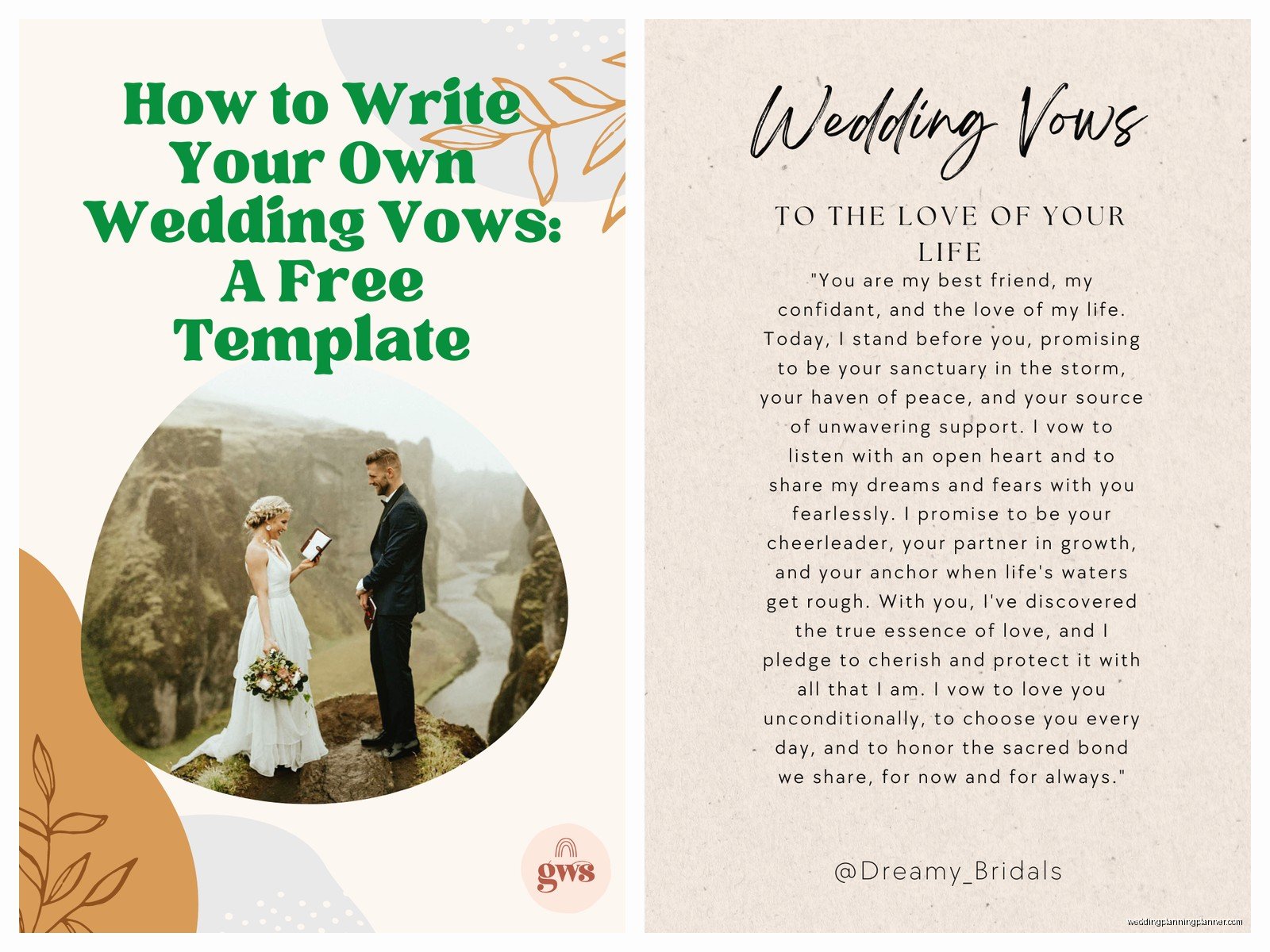
- Canva has free vow templates you can edit right there and print—they look pretty too which is a bonus
- The Knot has a vow builder tool that’s actually free, not hidden behind some paywall surprise
- Etsy has tons of free downloadable PDFs if you search “free marriage vows template” but you gotta be specific with that word FREE or you’ll get a bunch of $8 options
- Pinterest obviously but it’s kinda hit or miss, you’ll spend forty minutes scrolling
- My own blog has some I’ve created over the years from real weddings where couples said I could share them
What really annoyed me though was when I found out some of these “free” download sites make you sign up for like seventeen email lists and then the file is just a Word doc with lorem ipsum text. Like seriously? That happened to me when I was trying to help a client in summer 2021 and I was so irritated I almost threw my laptop across the room. My cat Felix was sitting on my desk and gave me this look like “calm down human” which honestly helped.
What’s Actually In These Templates
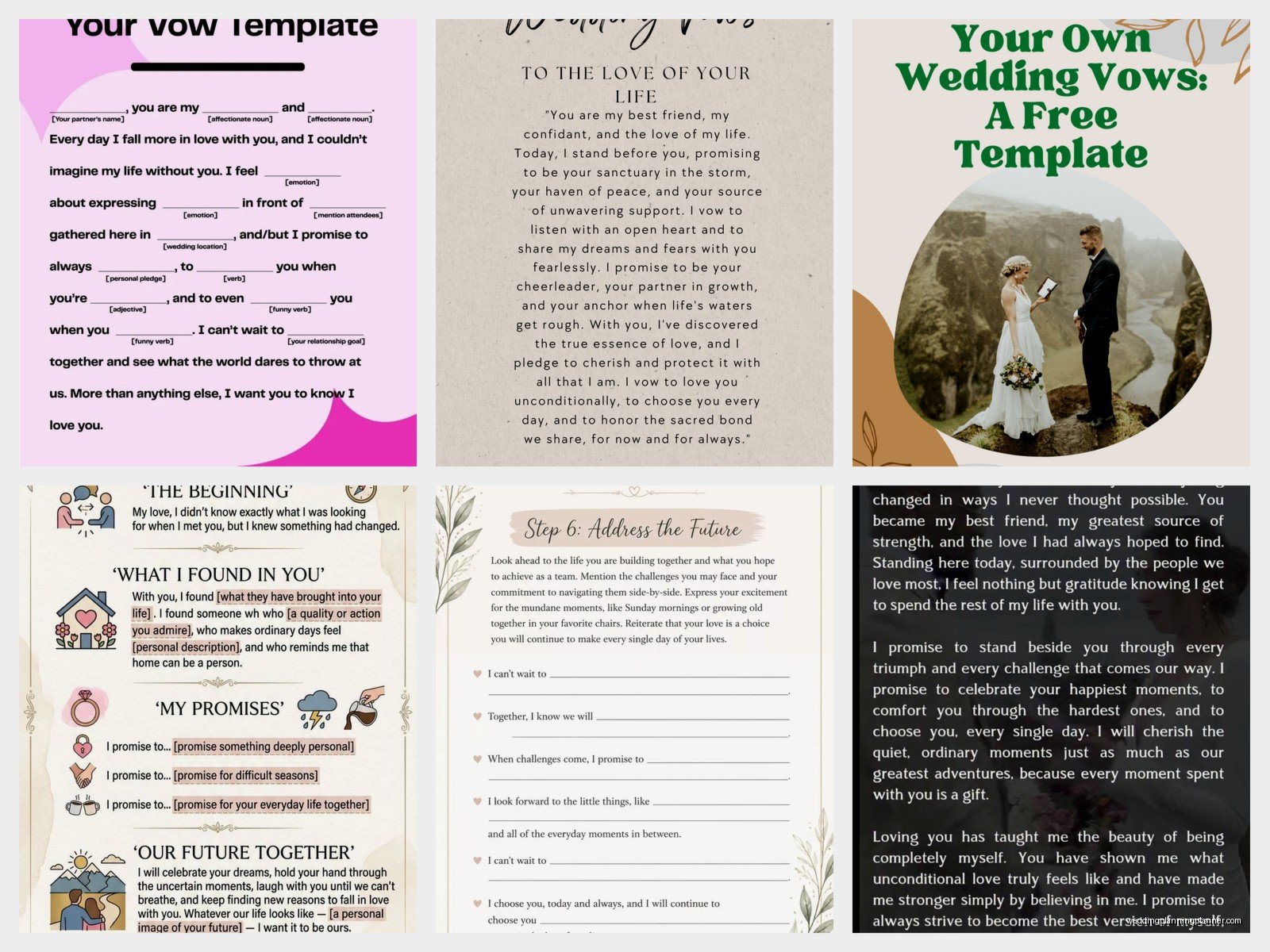
Most good vow templates have a basic structure that goes something like this—and this is what you should look for when you’re downloading stuff:
The opening acknowledgment part: This is where you say like “I take you” or “I choose you” or whatever version feels right. Templates usually give you 3-5 options for this opener so you can pick what doesn’t make you cringe.
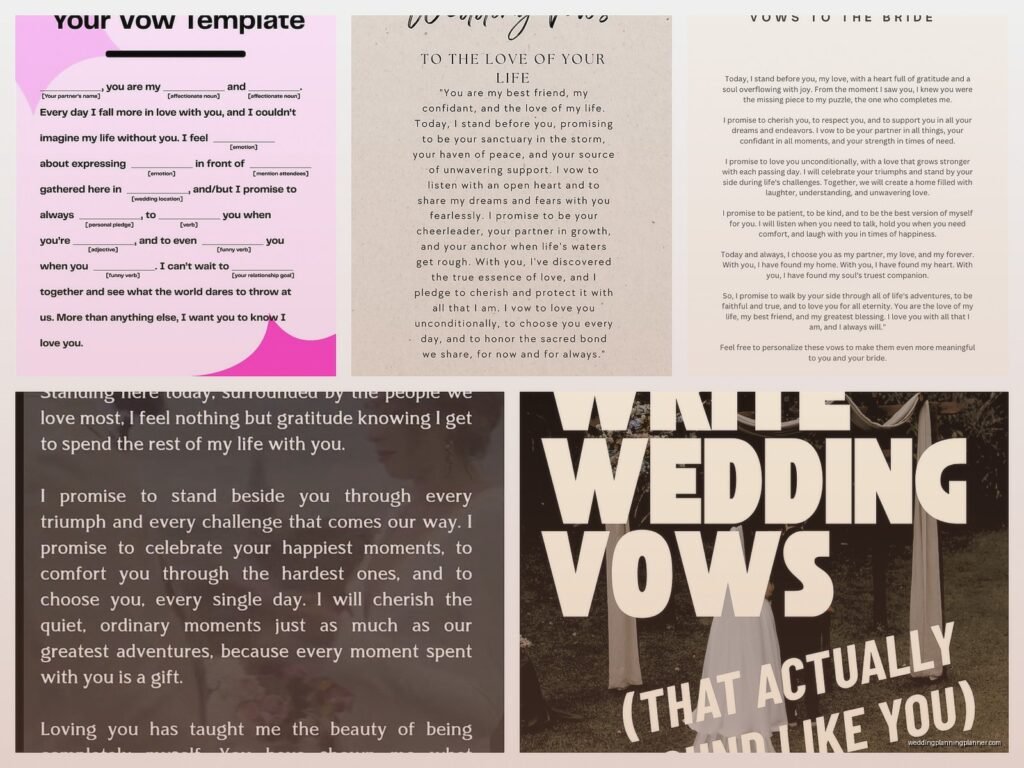
The promise section: This is the meat of it. Templates will have fill-in-the-blank style promises like “I promise to [blank] even when [blank]” or they’ll give you a list of sample promises you can mix and match. Some are practical (I promise to always refill the coffee maker) and some are more emotional (I promise to be your safe place).
The future-looking bit: Where you talk about what you’re excited about or what you’re committing to for the long haul. Templates usually offer different tones here—some are serious, some are lighter.
The closing statement: How you wrap it up, usually something like “I will love you forever” or “I give you my hand and my heart” type stuff.
How to Actually Use a Template Without Sounding Like a Robot
This is where people mess up honestly. They download a template and then just… read it exactly as written? And it sounds so generic and you can tell they didn’t personalize it at all.
Here’s what I tell my couples to do with templates:
Print out like three different templates that you kinda like. Then grab a pen—not your laptop, an actual pen—and start crossing stuff out. Circle the phrases that make you feel something. Add notes in the margins about specific memories or inside jokes.
The template is supposed to be training wheels, not the actual bike you ride down the aisle with. You should be replacing at least 40% of the template wording with your own stuff or it’s not really YOUR vows, you know?
The Fill-in-the-Blank Style Templates
These are great for people who freeze up with a blank page. They look something like:
“[Name], when I think about my life before you, I remember [specific memory]. You changed everything when you [specific thing they did]. I promise to [action] and to always [action]. Even when [challenging situation], I will [commitment]. I cannot wait to [future thing] with you.”
See how that gives you structure but forces you to personalize? That’s the sweet spot. I had this couple who met at a dog park and the groom used a template but filled in stuff about their dogs and it was hilarious and sweet and totally them. The template just gave him permission to not start from scratch.
Traditional vs Modern Template Vibes
You gotta figure out what style matches your wedding vibe. Traditional templates use more formal language—lots of “I shall” and “thee” if you’re going really old school, though most modern traditional ones just use proper grammar and complete sentences without being Shakespeare about it.
Modern templates are more conversational. They might include humor, pop culture references, or really casual language. I’ve seen vows that referenced The Office and honestly if that’s your relationship, go for it.
Religious templates are their own category and usually include references to God, scripture, or faith-based promises. If you’re having a religious ceremony you probably need to check with your officiant anyway because some have requirements about what you can or cannot say.
File Formats and What Actually Matters
Okay so when you’re downloading these free templates, they come in different formats and some are more annoying than others.
PDF templates: You can usually type directly into them if they’re fillable PDFs, or you print them and write by hand. These are good because they maintain formatting and don’t get weird when you open them on different devices.
Word docs or Google Docs: More flexible for editing but sometimes the formatting gets messed up. I’ve seen people’s carefully formatted vows turn into a disaster when they email them to themselves or… wait I’m getting distracted but this reminds me of when I was watching that show Succession and they had a whole plot about a document getting corrupted and I was like YES THAT IS REAL LIFE.
Canva templates: These are cool because they’re already designed to look pretty. You can edit the text and then download as a PDF to print or even have printed on fancy paper. Some couples frame their vows afterward so having them already in a nice design is helpful.
Plain text templates: Honestly these are my favorite to send to clients because there’s no formatting to mess up, you just copy and paste into whatever you want to use.
What to Do With Your Finished Vows
So you’ve used the template, personalized everything, and now you have your vows written. Now what?
Print them in a readable font size—like 14pt minimum. You’re gonna be nervous and emotional and trying to read tiny text is not it. I’ve watched grooms squint at index cards they wrote in 8pt font and it’s painful for everyone.
Print two copies. Keep one in your getting-ready space and give one to your wedding planner or coordinator. I cannot tell you how many times someone has lost their vow cards and we’ve needed the backup.
Practice reading them out loud like at least five times before the wedding. Not to memorize them necessarily, but so you know where the emotional parts are and where you might need to pause. During that spring 2023 wedding I mentioned, the bride practiced so much that she knew exactly when she’d get choked up and had tissues ready.
Some people write them on nice stationery or cards—you can buy vow cards on Etsy or even at Paper Source. Some write them in a vow book that both people sign afterward. Do whatever feels right but make sure it’s something you can actually hold and read from without it being awkward.
The Length Thing Everyone Worries About
Templates usually run between 200-400 words which translates to like 1-2 minutes when spoken. That’s a good target. I’ve seen vows that were thirty seconds and vows that were seven minutes and honestly both can work but check with your officiant.
If you’re both writing your own vows, try to get in the same ballpark length-wise. It’s kinda awkward when one person speaks for 45 seconds and the other goes for five minutes. Not a dealbreaker but just something to coordinate.
Common Template Sections People Skip But Shouldn’t
Most templates include a section about acknowledging the hard stuff—like “when things get difficult” or “in times of struggle”—and I notice people want to skip this part because it feels like a downer. But honestly? Including that one realistic promise makes all the other promises feel more genuine. You’re not just promising to love someone when everything’s perfect, you’re promising to show up when things suck.
Another thing templates often include is something about personal growth or becoming better people together. This feels cheesy to some people but it’s actually really meaningful. The idea that you’re both committing to growth and change and supporting each other through that.
Religious and Cultural Considerations in Templates
If you’re having a religious ceremony, some officiants require certain elements in your vows or forbid certain things. Catholic ceremonies are pretty specific about this. Jewish ceremonies have traditional vows but some rabbis allow personal additions. I worked with a Hindu couple who incorporated Sanskrit phrases into their English vows using a template as the base structure and it was beautiful.
Always check before you finalize anything. I had a couple in 2022 who wrote these gorgeous vows using a template they found online and then two weeks before the wedding their priest was like “nah you gotta use the traditional ones” and they were so upset. Could’ve been avoided with one conversation.
When Templates Don’t Work
Some people just cannot work with templates. They feel too constraining or inauthentic. If that’s you, that’s totally fine. But maybe look at templates just for the structure—like what sections to include and in what order—even if you write everything from scratch.
Or go the other direction and just use traditional vows. There’s zero shame in that. Traditional vows exist because they’ve worked for hundreds of years. They cover all the important stuff. Not everyone needs to write custom vows and the wedding police will not arrest you for using the classics.
I also think templates don’t work well for people who are writers or really verbal processors. If you’re someone who journals every day or writes for a living, you probably don’t need a template. You need a quiet afternoon and permission to just write what you feel.
Free Resources I Actually Recommend
Since this whole thing is about free downloads, here’s what I genuinely send to my clients:
- APW (A Practical Wedding) has a whole section on vow examples that’s free to browse
- Officiant Eric has free vow templates on his website organized by style
- The Knot’s vow builder like I mentioned earlier—it’s actually good
- WeddingWire has sample vows you can customize
- My own resource page but I’m not gonna link it here because that feels self-promotional but it exists if you search my name
Just be careful with random blogs that promise “100 free vow templates” because half of them are just lists of one-sentence examples, not actual usable templates. You want something with structure and guidance, not just a bunch of random romantic phrases thrown together.
Personalizing Without Oversharing
One thing about using templates and filling them in—you don’t need to share your entire relationship history or inside jokes that nobody else will understand. I’ve heard vows that referenced stuff that clearly meant something to the couple but left everyone else confused. Templates usually help prevent this because they keep you focused on universal promises and feelings with personal details sprinkled in, not the other way around.
Like mentioning that specific Tuesday in October when they brought you soup when you were sick is sweet. Explaining the entire context of why that Tuesday mattered and what kind of soup and how you’d had a fight the week before and… see how that gets away from you? Templates keep you on track.
Anyway, that’s basically everything I know about vow templates after doing this job for way too long. They’re useful tools, they’re not cheating, and anyone who judges you for using one probably hasn’t tried to write vows themselves at midnight while crying into a glass of wine. Use the templates, make them your own, practice saying them out loud, and you’ll be fine.