
Planning Guides, Style Guide
French Wedding Planner: Professional Services Guide

Oct
So You Wanna Hire a French Wedding Planner
Okay so French wedding planners are a whole different thing compared to what you might be used to in the States or UK. I learned this the hard way back in spring 2023 when I had a client who wanted to get married in Provence and she just assumed the process would be exactly like planning a wedding in California and… nah. Not even close.
First thing you gotta know is that French wedding planners typically operate under different business structures than what we do here. They often work as wedding designers rather than just coordinators, which means they’re super involved in the aesthetic and creative direction, not just logistics. Like, they’re gonna have opinions about your color palette and they’re not shy about sharing them.
What French Wedding Planners Actually Do
French planners usually offer these service levels:
- Conseil en organisation (consultation services) – basically they meet with you a few times, give advice, recommend vendors
- Coordination partielle (partial planning) – they handle specific aspects like venue sourcing or vendor management
- Organisation complète (full planning) – they’re with you from engagement to the last dance
- Jour J coordination (day-of coordination) – they show up on the wedding day to manage everything
The thing that really annoyed me when I first started working with French planners is that their “day-of coordination” doesn’t mean the same thing as ours. In France, this service usually includes at least one or two meetings beforehand and a full venue walkthrough, whereas here we often… anyway, the point is clarify exactly what’s included because terminology doesn’t translate directly.
Pricing Structures Are Different
French wedding planners typically charge in one of these ways:
A flat fee that ranges from €2,000 to €15,000+ depending on the scope. For a full-service luxury château wedding, you’re looking at the higher end or even more. They’ll often break this into payment milestones – like 30% when you sign the contract, 40% six months before, and 30% one month before the wedding.
Some planners charge a percentage of your total wedding budget, usually around 10-15%. This is kinda common for destination weddings or when they’re managing a really high budget event. Honestly this model can get expensive fast if you’re planning something elaborate.
Hourly rates exist but they’re less common – maybe €80-€200 per hour depending on experience and location. Paris planners charge more than planners in smaller regions, obviously.

Finding the Right French Planner
So you’ve decided you need a French planner. Where do you even start looking? I usually tell clients to check these places:
- Wedding industry associations – Look for planners who are members of AFWP (Association of French Wedding Planners) or similar organizations
- Venue recommendations – If you’ve already booked a château or venue, ask them who they’ve worked with successfully
- Instagram and wedding blogs – French planners are super active on social media, search by region and style
- Destination wedding agencies – Some specialize in connecting international couples with French planners
When you’re vetting planners, you need to ask specific questions. Like, do they speak English fluently if you don’t speak French? This seems obvious but I’ve seen couples assume everyone in the wedding industry speaks perfect English and then struggle with communication during the actual planning process.
The Language Barrier Thing
Okay real talk – even if your planner speaks English, many of their vendor contacts might not. Your florist might only communicate in French, the caterer might send contracts in French, and you’re gonna need someone who can translate and explain cultural differences in contract terms.
I remember this one time – completely unrelated but kinda relevant – my cat knocked over my coffee right as I was on a video call with a French venue coordinator and I had to explain what happened while frantically cleaning up, and she just looked so confused because apparently French people don’t… anyway, the point is that cultural misunderstandings happen even in professional settings, so having a planner who can bridge that gap is crucial.
Understanding French Wedding Vendor Contracts
French contracts are detailed. Like, way more detailed than what you might be used to. They include specific clauses about:
- Cancellation policies and force majeure conditions
- Payment schedules (often more structured than US contracts)
- Insurance requirements – some vendors require you to have wedding insurance
- Setup and breakdown times with specific fees for overtime
- Menu tastings and final guest count deadlines
A good French wedding planner will review all these contracts with you and flag anything unusual. They should also handle the negotiation process because they know what’s standard and what’s negotiable in the French market.
Legal Requirements for Getting Married in France
Here’s where it gets complicated and honestly where a French planner becomes almost essential. If you’re not a French citizen, you can’t just show up and get legally married. The paperwork is… it’s a lot.
You need:
- Birth certificates (translated and apostilled)
- Proof of residency in France for at least 30-40 days before the wedding
- Certificates from your home country stating you’re free to marry
- Sometimes divorce decrees or death certificates if previously married
Most international couples actually do a legal ceremony in their home country and then do a symbolic ceremony in France. Your planner should explain this upfront and can usually connect you with officiants who specialize in symbolic ceremonies that feel just as meaningful as legal ones.
What to Expect During the Planning Process
French planners work on different timelines. They typically want you to start planning 12-18 months in advance, minimum. For popular venues and summer dates, you might need even more time.
Your planner will probably schedule regular check-ins – usually monthly video calls if you’re planning from abroad, or in-person meetings if you’re based in France. They’ll send you detailed recaps after each meeting, vendor proposals with their recommendations, and mood boards or design concepts.
The Venue Search Process
If you haven’t already chosen a venue, this is where your planner really earns their fee. They’ll ask about your vision, budget, guest count, and preferred region, then they’ll send you a curated list of options.
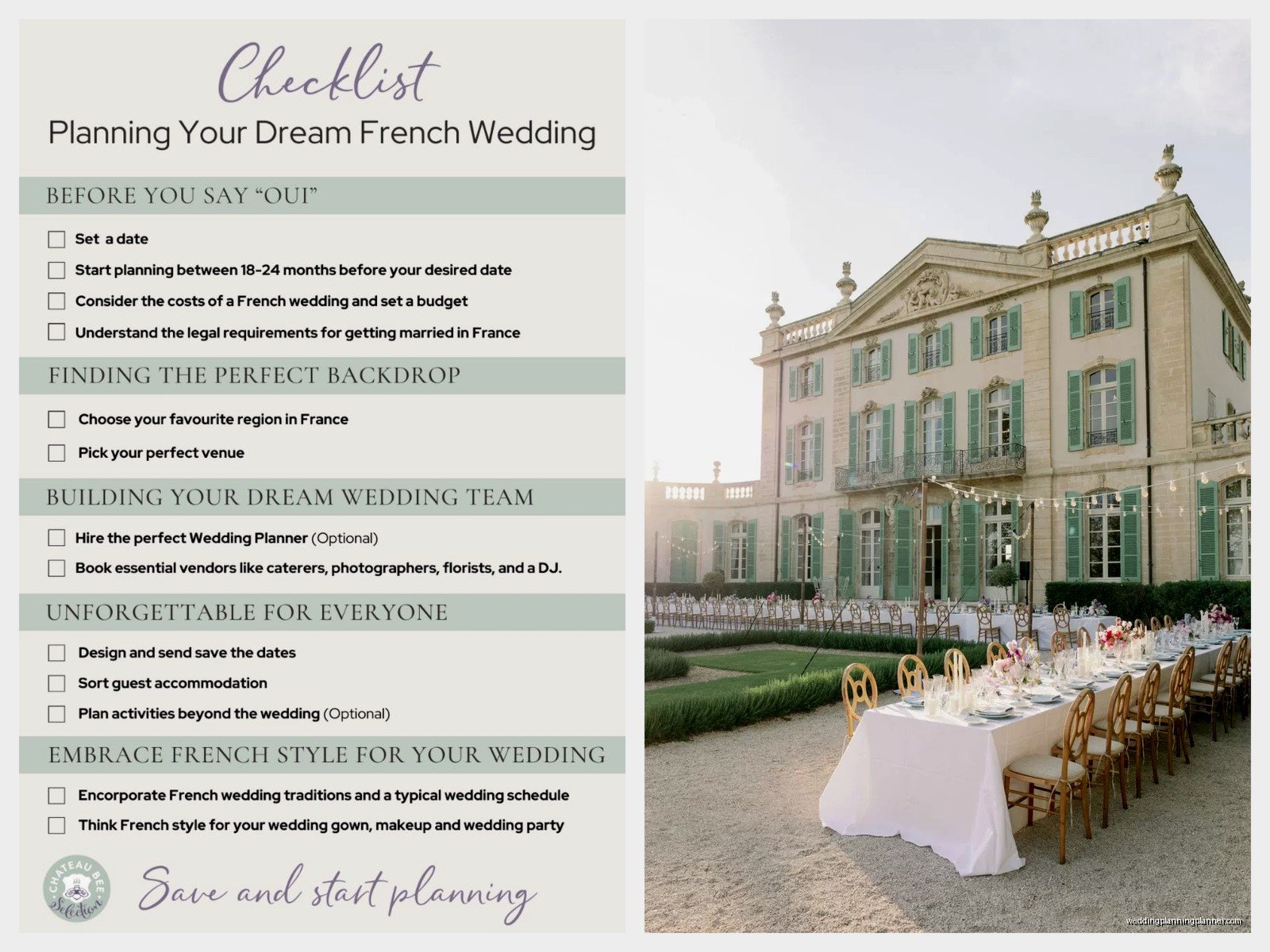
French wedding venues come in so many varieties:
- Châteaux (castles) – the classic choice, often come with accommodations
- Bastides – country manor houses, especially popular in Provence
- Vineyards – gorgeous for wine-loving couples, often in Bordeaux or Burgundy
- Historic estates and gardens
- Luxury hotels and restaurants
- Beaches and coastal properties (Côte d’Azur, Brittany)
Your planner will arrange site visits, which usually means you’ll need to plan a trip to France. Some planners can do virtual tours but honestly you really wanna see these places in person because photos don’t capture the… I mean, you need to see the space, walk through where your ceremony would be, check out the accommodations.
Vendor Selection and Management
This is probably the most valuable service a French planner provides. They have established relationships with vendors and know who’s reliable, who’s creative, who’s gonna show up on time, and who to avoid.
For a typical French wedding, you’ll need:
- Caterer (this is huge – French food is obviously a centerpiece)
- Florist
- Photographer and videographer
- Entertainment (DJ, band, or both)
- Rental company for furniture, linens, dishware
- Lighting designer
- Transportation for guests
- Hair and makeup artists
- Stationer for invitations and day-of paper goods
Your planner will get quotes from multiple vendors in each category, present them to you with their recommendations, and handle all the communication and contract negotiations. They’ll also manage the payment schedules and make sure everyone shows up when they’re supposed to.
Design and Styling Services
French planners are usually pretty involved in the design aspect. They’ll create mood boards, suggest color palettes, and work with you on the overall aesthetic vision.
During that spring 2023 Provence wedding I mentioned earlier, my client wanted a very specific lavender and sage color scheme, and the French planner we worked with pushed back initially because she felt it was too expected for Provence. She suggested this gorgeous combination of deeper purples with terracotta and it ended up being absolutely stunning. French planners aren’t afraid to challenge your ideas if they think they can make it better, which can be refreshing or frustrating depending on your personality.
They’ll typically handle:
- Ceremony setup and styling
- Reception layout and design
- Table settings and centerpieces
- Signage and paper goods coordination
- Lighting design and ambiance
- Special touches like welcome bags or favors
Timeline Management
French weddings run differently than American weddings. The timeline is usually more relaxed, meals last longer (like, way longer – a seated dinner can easily be 3-4 hours), and there’s less emphasis on sticking to a strict schedule.
Your planner will create a timeline that respects French customs while incorporating any traditions you want from your own culture. They’ll also manage the flow on the wedding day, which means coordinating with all the vendors, making sure the caterer knows when to serve each course, telling the photographer when key moments are happening, cueing the musicians or DJ.
Day-Of Coordination Specifics
On your wedding day, your French planner typically arrives early – like several hours before guests – to oversee setup. They’ll have a team with them, usually at least one or two assistants depending on the size of your wedding.
They handle:
- Vendor arrival and setup supervision
- Placement of all decorative elements according to the plan
- Final walk-throughs of ceremony and reception spaces
- Troubleshooting any last-minute issues
- Guest assistance and direction
- Timeline management throughout the event
- Coordination with venue staff
- Managing the breakdown and ensuring nothing gets left behind
One thing I really appreciate about French planners is that they’re super discreet. They manage everything behind the scenes without being obvious or intrusive. You won’t see them running around frantically – they’re calm and professional even when things go wrong.
What’s Usually NOT Included
It’s important to know what French planners typically don’t include in their services:
Travel and accommodation costs for the planner and their team – you’ll usually need to cover this separately. Legal marriage paperwork assistance – most planners will guide you but won’t handle the actual bureaucracy. Guest accommodations and travel planning – they might recommend hotels but won’t book rooms for your guests. Wedding website creation – some do this, many don’t. Personal attendant services for the couple – this isn’t really a thing in France like it is in the US.
Communication Expectations
French business culture is different. Your planner probably won’t respond to emails immediately – response times of 24-48 hours are normal, even longer during weekends or French holidays (and there are a lot of French holidays).
They typically work during French business hours, so if you’re in a different time zone, you’ll need to schedule calls accordingly. Most planners are flexible about this but don’t expect them to be available at midnight their time for emergencies unless it’s actually your wedding day.
Red Flags to Watch For
When you’re evaluating French wedding planners, watch out for:
- Planners who don’t have a proper business registration (ask for their SIRET number)
- Anyone who promises things that sound too good to be true price-wise
- Planners who won’t provide references from past clients
- Lack of professional insurance (they should have liability coverage)
- Contracts that aren’t clear about what’s included and what costs extra
- Planners who seem dismissive of your ideas or vision
- Anyone who doesn’t ask detailed questions about your budget and priorities
Making the Most of Your Planner
To get the best results from your French wedding planner, you should be organized and responsive. Respond to their emails promptly, make decisions within the timeframes they give you, and trust their expertise about what works in France.
Be upfront about your budget from the beginning – don’t lowball it thinking you’ll negotiate later. French vendors and planners appreciate transparency and will work within your constraints if they know what they are.
Also gonna be honest here, you need to be flexible about certain things. French vendors have their own way of doing things, and while your planner can advocate for your preferences, some things just work differently in France. The caterer might not be willing to do a taco bar, the château might have noise restrictions that end music at midnight, the florist might source different flowers than what you see on Pinterest.
Budget Considerations Beyond the Planner Fee
Remember that hiring a French planner is just one line item in your budget. You’ll also need to factor in travel costs for venue visits and planning trips, potentially higher vendor costs in popular regions like Paris or Provence, currency exchange rates and international transaction fees, and shipping costs if you want to bring anything from home.
French weddings can range from €15,000 for something intimate and simple to €150,000+ for a full château weekend with 150 guests. Your planner should help you understand what’s realistic for your budget and won’t let you book a venue you can’t afford to fill with appropriate vendors and services.
Regional Differences in Planning Services
Paris planners operate differently than planners in Provence, who work differently than planners in Bordeaux or the Loire Valley. Paris weddings tend to be more formal and expensive, with planners who specialize in luxury hotel weddings and sophisticated urban venues. Provence planners are all about that outdoor, rustic-elegant vibe with lots of lavender and natural light. Loire Valley planners work mostly with châteaux and historic properties. Côte d’Azur planners do glamorous beach and villa weddings.
Choose a planner who specializes in the region where you’re getting married because they’ll have the best vendor connections and understand local regulations and customs specific to that area.
