
Planning Guides, Style Guide
Catering Event Planner: Professional Services Guide

Oct
So You Wanna Work With a Catering Event Planner
Okay so catering event planners are basically the people who save your butt when you’re trying to feed 150 guests and have no idea where to start. I’ve worked with probably hundreds of them over the years and honestly, the good ones are worth their weight in gold-plated appetizer trays.
First thing you gotta understand is that a catering event planner isn’t just someone who orders food. They’re coordinating timing, managing staff, dealing with dietary restrictions, setting up serving stations, and making sure your drunk uncle doesn’t knock over the dessert table at 9pm. Which happened at a wedding I planned in summer 2021 and let me tell you, the catering manager handled it like an absolute pro while I was having a mild panic attack behind the cake table.
What These People Actually Do
A professional catering event planner handles the entire food and beverage service for your event. They work with the catering company or sometimes they ARE the catering company, depends on the setup. Their job includes menu planning, budget management, staff coordination, equipment rental, setup and breakdown, and troubleshooting when things go sideways.
You’ll typically find them working on weddings, corporate events, galas, fundraisers, or really any event where more than like 30 people need to eat at the same time. Some specialize in specific event types, others are more general.
When You Actually Need One
If you’re having more than 50 guests, you probably need professional catering services. Can you wing it with Costco trays and your cousin who “knows how to cook”? I mean technically yes, but I’ve seen that go wrong more times than I can count.
You definitely need a catering event planner if:
- Your event has more than 75 guests
- You’re serving a plated meal (not just buffet style)
- There are multiple dietary restrictions to manage
- You need bar service with actual bartenders
- Your venue doesn’t have a kitchen or is outdoors
- You want hot food that actually stays hot
- You value your sanity
Finding the Right One
This is where it gets kinda tricky because not all catering planners are created equal. I once worked with someone who showed up 45 minutes late to a corporate luncheon and didn’t bring enough plates—like how do you forget plates?? That still annoys me.
Start by asking your venue if they have preferred caterers. Most venues have a list of people they’ve worked with before, and there’s a reason for that. These caterers know the kitchen setup, the load-in process, where the electrical outlets are, all that stuff that seems minor until it’s a problem.
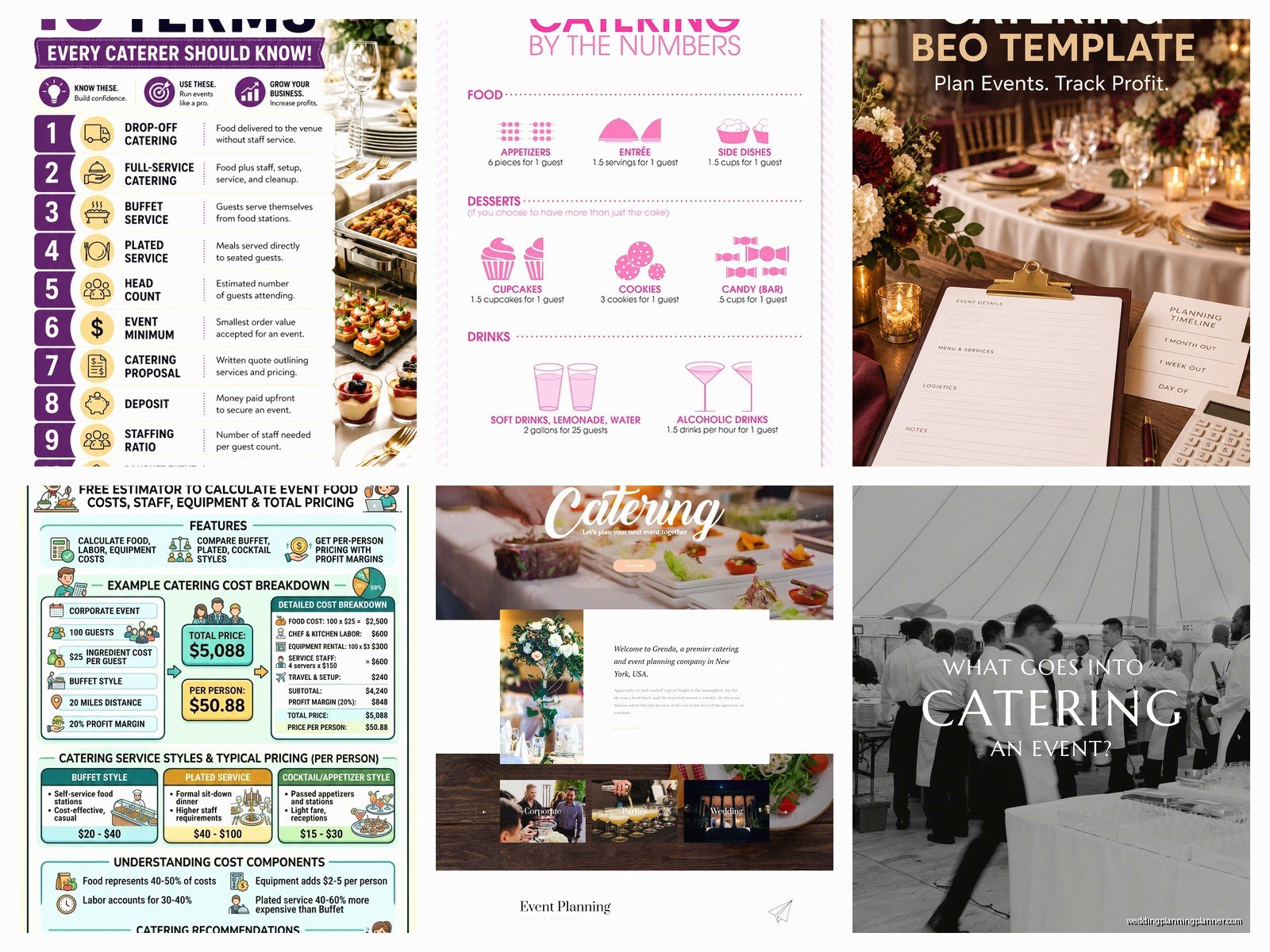
When you’re interviewing potential catering planners, ask them:
- How many events have they done similar to yours
- What’s included in their pricing (labor, rentals, setup, breakdown)
- How they handle dietary restrictions and allergies
- What their staffing ratio is (you want about 1 server per 20-25 guests for plated meals)
- If they have backup plans for equipment failures
- What their cancellation and refund policies are
Also ask for references and actually call them. I know it feels awkward but you’re potentially spending thousands of dollars here.
The Money Situation
Catering is expensive and there’s no way around it. You’re paying for food, labor, equipment, transportation, setup time, and the planner’s expertise. Most catering event planners charge either per person or a flat fee plus costs.
Per person pricing usually ranges from like $30 to $200+ depending on what you’re serving and where you are. A basic buffet lunch might be $35 per person. A fancy plated dinner with multiple courses could easily hit $150 per person or more.
What’s usually NOT included in the base price:
- Bar service and alcohol (though some packages include this)
- Linens and fancy dishware
- Service staff gratuity (usually 18-22%)
- Cake cutting fees if you’re bringing your own cake
- Overtime charges if your event runs long
- Specialty rentals like lounge furniture or unique serving pieces
Always get everything in writing. Every. Single. Thing. I’ve seen too many couples get surprised by “unexpected” fees that were totally expected by everyone except them.
The Planning Timeline
You should book your catering event planner like 6-12 months before your event if possible. Popular planners and caterers get booked up fast, especially for Saturday weddings in peak season.
Here’s roughly how the timeline works:
6-12 months out: Book your planner, discuss general vision and budget, maybe do a tasting if they offer one. Tastings are fun btw, it’s basically the best part of planning besides… well actually that might be the best part.
3-4 months out: Finalize your menu, confirm guest count estimates, discuss service style and timing, coordinate with your venue and other vendors.
1 month out: Give your final guest count (this is usually when you’re locked into numbers), confirm all details, review the day-of timeline, discuss any last-minute changes.
1 week out: Final final confirmations, give actual final headcount, review emergency contacts and backup plans.
Menu Planning Real Talk
Your catering planner will help you design a menu but here’s what I’ve learned works and what doesn’t. Passed appetizers during cocktail hour are great but you need more of them than you think. People are hungry and nervous and they will devour those bacon-wrapped dates.
For the main meal, you gotta balance what you want with what actually works for large-group service. That fancy deconstructed whatever might look amazing plated for two people at a restaurant, but it falls apart when you’re trying to serve 150 people and keep everything hot.
Safe protein choices that hold up well: chicken (boring but reliable), beef tenderloin, salmon. Riskier choices: anything that gets soggy, delicate fish that overcooks easily, pasta that clumps together if it sits.
Dietary restrictions are gonna be a thing no matter what. You’ll have vegetarians, vegans, gluten-free guests, dairy allergies, nut allergies, people who don’t eat red meat, people who only eat organic, people who are on some weird cleanse. A good catering planner helps you handle this without making separate meals for half your guest list.
Service Styles Explained
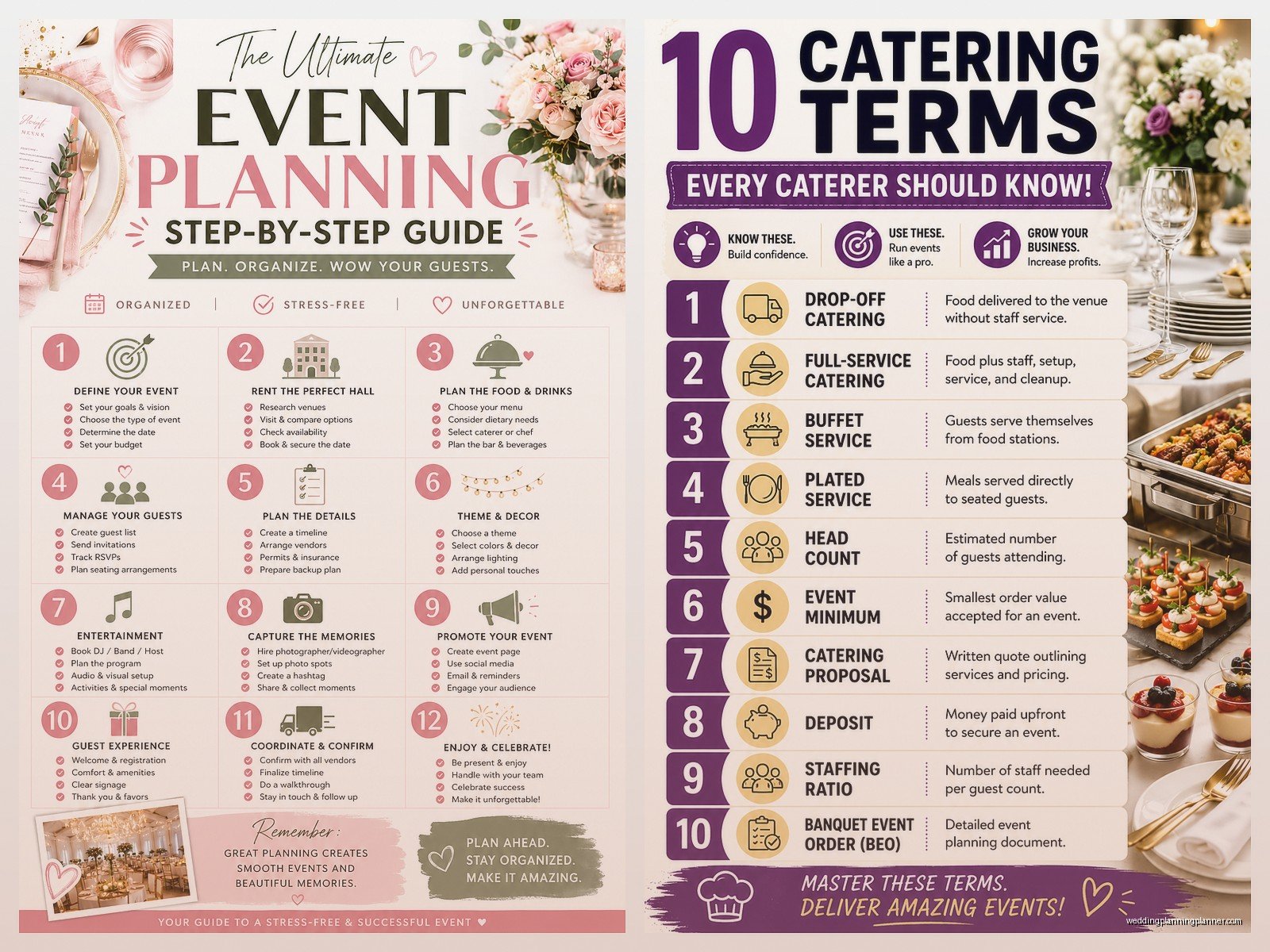
There are a bunch of different ways to serve food and your catering planner will walk you through options, but here’s the quick version:
Plated service: Guests sit down, servers bring them their meal. Most formal, most expensive, requires the most staff, but also looks the fanciest and keeps timing tight. You’ll need to collect meal choices in advance usually.
Buffet: Everyone lines up and serves themselves or is served by staff at stations. More casual, less expensive, gives guests options, but takes forever if you don’t set up the flow right. Please have your catering planner design a good buffet flow or you’ll have a traffic jam.
Family style: Large platters served to each table and people pass them around. Feels homey and communal, can be really nice for certain events, but requires trust that your guests will actually share and not hoard all the good stuff.
Food stations: Multiple stations set up around the space with different food options. Good for cocktail parties or more casual events, encourages mingling, but you need enough stations so people aren’t waiting forever.
Passed hors d’oeuvres only: Servers walk around with trays all night. Works for shorter cocktail receptions but not for actual dinner events unless you want hangry guests.
The Day-Of Coordination
On the actual event day, your catering planner should be handling literally everything food-related so you don’t have to think about it. They’ll arrive early for setup, manage their staff, coordinate timing with your other vendors, handle any issues that come up, and break everything down at the end.
In spring 2023 I had a wedding where the catering team discovered the venue’s kitchen hood system wasn’t working like an hour before service. The catering planner completely redesigned their cooking setup on the fly, brought in portable equipment, and guests had no idea anything went wrong. That’s the kind of problem-solving you’re paying for.
Your catering planner should check in with you or your wedding planner at key moments but otherwise stay invisible to guests. If you’re seeing them running around looking stressed, something’s probably not going great… or they’re just understaffed which is also not great.
Red Flags to Watch For
Some warning signs that a catering planner might not be the right fit:
- They’re super vague about pricing and won’t give you detailed quotes
- They don’t ask about dietary restrictions or seem annoyed when you bring them up
- They’ve never worked at your venue and don’t want to do a site visit
- Their contract is super short or missing important details
- They don’t have proper insurance and licensing
- Their references are all from like 5 years ago
- They can’t show you photos of their actual work
- They pressure you to decide immediately
Working With Them Effectively
To get the best results from your catering planner, you need to be a good client too. Be clear about your budget from the start—don’t say your budget is $50 per person if you really can only spend $35. That just wastes everyone’s time.
Respond to their emails and questions promptly. They’re usually juggling multiple events and need your input to keep planning moving forward. If they ask for your final headcount by a certain date, get it to them by that date. These deadlines exist for a reason.
Trust their expertise but also speak up if something really doesn’t work for you. They’ve done this before, you probably haven’t. But it’s still your event and you should feel good about the plan.
Also be realistic about what’s possible. No, they can’t serve a hot plated meal for 200 people in a field with no electricity access. Well I mean technically they could but it would cost a fortune in equipment rental and generators and probably still not work great.
Dealing With Last-Minute Changes
Things change, I get it. Guest counts fluctuate, people develop new allergies, your great-aunt decides she’s vegetarian now. Good catering planners can handle reasonable changes up to a point, but understand that last-minute changes usually cost more and might not always be possible.
Most contracts lock in your final headcount about a week before the event. After that, you’re paying for that number whether people show up or not. It’s annoying but it’s how the industry works because they’ve already ordered food and scheduled staff based on your numbers.
The Bar Service Component
If your catering planner is also handling bar service, there’s a whole separate set of decisions. Open bar, cash bar, limited bar, beer and wine only, full cocktail service—each option has different costs and implications.
Open bars are obviously the most expensive but also the most guest-friendly. You can control costs by limiting the selection or doing beer and wine only. Cash bars are cheaper for you but kinda tacky for formal events in my opinion, though I know some people disagree.
Make sure your bar service includes professional bartenders with proper licensing. Also discuss how much alcohol to order—your catering planner should help you estimate this based on your crowd and event length. My cat knocked over a glass of wine while I was typing this and now I’m cleaning that up but anyway…
Equipment and Rentals
Your catering planner either provides or coordinates all the equipment needed: tables, chairs, linens, plates, glasses, silverware, serving pieces, chafing dishes, coffee urns, whatever. Some include basic rentals in their pricing, others charge separately.
If you want upgraded rentals like fancy chargers or specialty glassware or colored linens, that usually costs extra. Sometimes a lot extra. Those gold flatware sets everyone wants? Yeah those add up quick when you need 150 sets.
Vendor Meals
Something people forget about: you need to feed your vendors. Your photographer, DJ, videographer, and other vendors who are there all day need to eat. Your catering planner should include vendor meals in your planning, usually at a reduced rate from guest meals. Don’t make your vendors fend for themselves or eat your guests’ leftovers, that’s just rude.
Usually vendor meals are simple but substantial—like a boxed meal or basic buffet plate. They don’t need the fancy stuff, they just need fuel to keep working.
