
Planning Guides, Style Guide
Wedding Planner Us: Professional Services Guide
Oct
What Wedding Planner Services Actually Include (And What They Don’t)
So you’re trying to figure out what a wedding planner actually does in the US, and honestly, it’s way more confusing than it should be because every planner structures their services differently. I had this bride contact me in spring 2023 completely panicked because she hired someone who called themselves a “wedding planner” but it turned out they only did day-of coordination and she thought she was getting full planning. Total mess.
The basic breakdown goes like this: there’s full-service planning, partial planning, and day-of coordination (though most of us call it month-of or wedding management now because day-of is kinda misleading). Full-service means I’m with you from engagement to the last dance. We’re talking venue selection, vendor recommendations, budget management, design concepts, timeline creation, all the contracts, all the communication. It’s the most expensive option but also the most hands-off for you.
Partial planning is when you’ve already booked some vendors – maybe you got your venue and photographer locked down – but you need help with everything else or you’re just overwhelmed halfway through. I’ll jump in wherever you are in the process and take it from there. This is actually my most popular service because couples start out thinking they can DIY everything and then realize… they really can’t.
The Pricing Structure Nobody Wants To Talk About
Wedding planner fees in the US are all over the place. You’ve got planners charging $1,500 for day-of coordination in smaller markets, and you’ve got planners in NYC or LA charging $15,000+ for full planning. I’m in a mid-size market and my full planning starts at $4,500, partial at $2,800, and coordination at $1,800. Some planners charge a flat fee, some charge a percentage of your total wedding budget (usually 10-15%), and some do hourly rates which honestly I find annoying to track.
What really gets me is when couples don’t understand that “day-of coordination” doesn’t mean I show up the morning of your wedding having never met you before. I need at least a month, usually two, to review all your contracts, create your timeline, confirm details with every single vendor, do a venue walkthrough, attend your rehearsal… the actual wedding day is just when everything I’ve been planning comes together.
What’s Actually Included In Each Service Level
Let me break down what you’re actually paying for because the packages vary but there are some standard things most professional planners include:
Full-Service Planning typically includes:
- Unlimited communication (email, phone, text – though I do set boundaries around response times because I gotta sleep)
- Venue search and site visits with you
- Vendor recommendations and contract review
- Budget creation and tracking
- Design consultation and mood board creation
- Timeline development for the entire planning process and the wedding day
- Attendance at vendor meetings if needed
- Guest list management and invitation timeline
- Rehearsal coordination
- Full wedding day management (usually 8-10 hours)
- An assistant coordinator for the wedding day
Partial Planning usually includes:
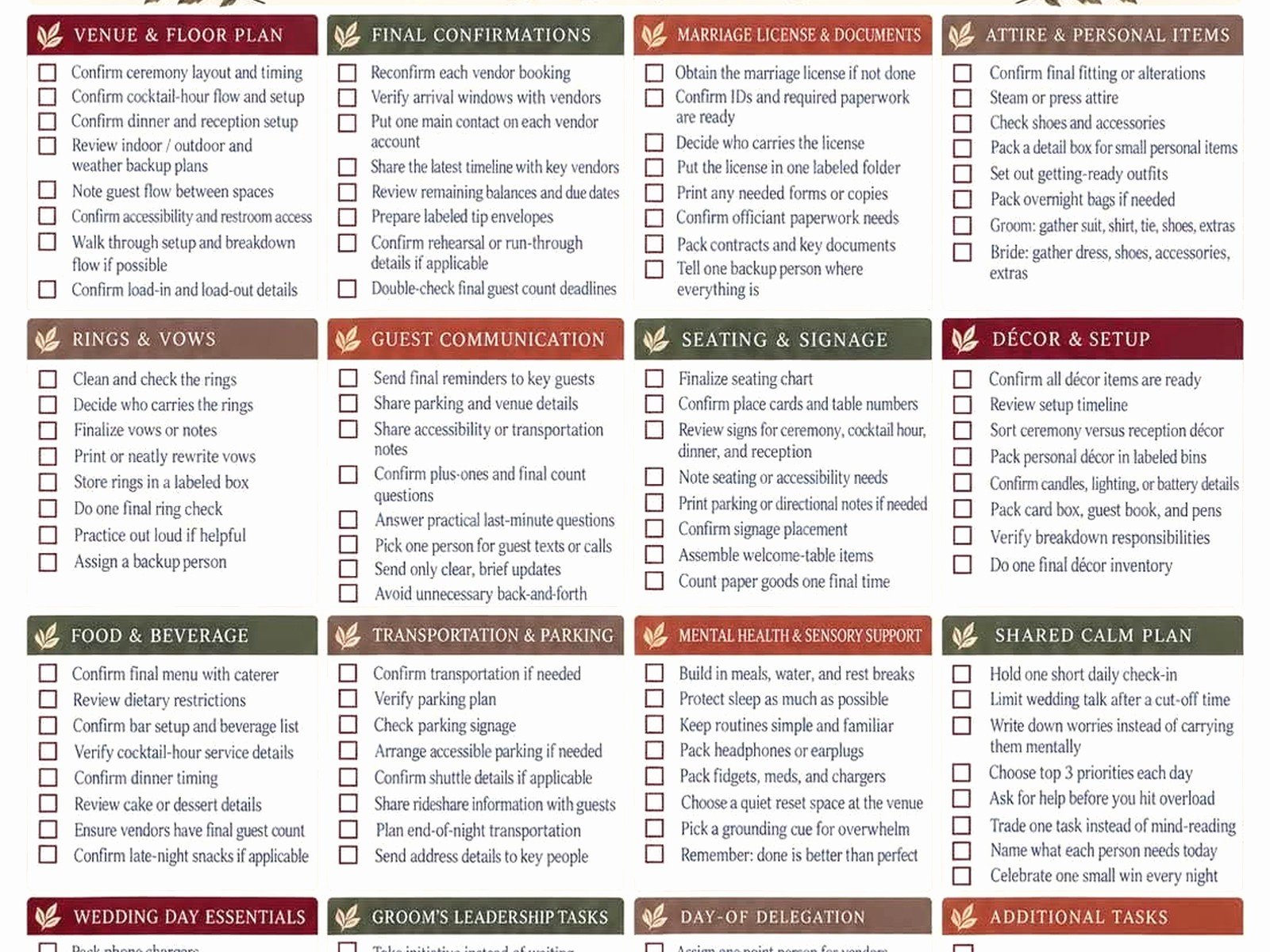
- Initial consultation to assess what you’ve already done
- Help with remaining vendor selection
- Limited vendor recommendations based on what you still need
- Timeline creation
- Some design guidance (but not full design services)
- Month-of coordination services
- Rehearsal coordination
- Wedding day management
Day-Of/Month-Of Coordination includes:
- Initial meeting about 6-8 weeks before the wedding
- Review of all vendor contracts
- Timeline creation and distribution
- Vendor confirmation calls
- Venue walkthrough
- Rehearsal coordination
- Wedding day management (setup supervision, vendor management, problem-solving, cleanup oversight)
The Stuff That’s NOT Included (And Catches People Off Guard)
Here’s where it gets tricky and honestly kinda frustrating for both planners and couples. There are things people assume are included that usually aren’t unless specifically stated:
Invitations and stationery: Most planners don’t design or assemble your invitations. We’ll give you a timeline for when to order and mail them, we might recommend stationery designers, but we’re not stuffing envelopes. Now I do stationery consulting as a separate service, but that’s because I specifically added it – it’s not standard for wedding planners.
Décor setup: I coordinate the setup, meaning I tell people where things go and make sure it matches your vision. But I’m not personally setting up 200 votive candles or tying ribbons on chair backs. That’s what your rental company, florist, or a separate setup crew does. Some planners offer this as an add-on with additional assistants.
Hotel room blocks: I’ll give you advice on how to set these up, but you or your family usually handle the actual booking and communication with the hotel.
Guest communication: I’m not answering your Aunt Susan’s questions about whether she can bring her new boyfriend. That’s on you or your family. I handle vendor communication, not guest management (unless you want to pay extra for that, which some planners offer).
Personal attendant services: Holding your dress while you pee, carrying your lipstick, making sure you eat – some planners include this, many don’t. I always bring an emergency kit and I’ll absolutely help you bustle your dress, but I’m not your personal assistant throughout the reception. That’s usually a bridesmaid job or you can hire a separate personal attendant.
How To Actually Choose A Wedding Planner
Okay so you’re gonna interview planners and you need to know what questions to ask. I interviewed with a couple last summer who asked me what my favorite flower was and I’m like… that’s sweet but also not relevant to whether I can manage your $80,000 wedding?
Questions you should actually ask:
How many weddings do you take per year? (If someone’s doing 40+ weddings, they’re probably not giving each one enough attention. I cap at 15-18 full-service weddings per year.)
What does your team structure look like? Do you have assistants? Will you personally be at my wedding or will you send someone else?
Can I see a sample timeline from a recent wedding? This shows you how detailed they are and how they structure the day.
What’s your communication style and response time? Some planners are super responsive, some take 48 hours. Neither is wrong, but you need to know what to expect.
Do you have backup plans if you’re sick or have an emergency? Any professional planner should have a network of other planners who can step in.
What’s included in your pricing and what costs extra? Get this in writing. Everything should be in the contract.
How do you handle vendor issues or emergencies on the wedding day? Ask for specific examples. I once had a bakery deliver the wrong cake and I had to… wait, I’m getting sidetracked, but basically you want to know they can problem-solve under pressure.
The Contract And Payment Structure
Most planners require a retainer (usually 25-50% of the total fee) to secure your date, then the remaining balance is divided into installments. I do three payments total: retainer, second payment 6 months before, final payment 2 weeks before the wedding. Some planners front-load more of the payment, some split it evenly.
Read your contract carefully. It should outline exactly what services are included, how many meetings you get, response times, cancellation policies, what happens if the planner has an emergency, and what additional fees might apply. It should also state clearly what happens if you cancel or postpone – this became a huge issue during 2020-2021 with COVID and a lot of planners updated their contracts to address postponements more specifically.
One thing that really annoys me is when couples try to negotiate our fees down significantly. Like, I’m running a business, I have insurance, I have assistants to pay, I have software subscriptions and business expenses. My cat knocked over my coffee this morning and I had to clean it up before a client call and I’m still gonna show up and be professional and manage your wedding with the same level of care whether you pay my full fee or… well, actually, if you don’t pay my full fee, I’m probably not taking you on as a client because I’ve learned that couples who don’t value the service from the start are usually the most difficult to work with.
Regional Differences In The US Market
Wedding planning services look different depending on where you are. In major metros like New York, LA, Chicago, you’ll find highly specialized planners – destination wedding planners, luxury planners, cultural wedding specialists. Prices are higher but so is vendor quality and availability.
In smaller markets or rural areas, planners often wear more hats. They might do planning AND be your florist or rental company. This isn’t necessarily bad, but you want to make sure they’re not stretching themselves too thin or creating conflicts of interest. Some planners get kickbacks from vendors they recommend, which should be disclosed.
Southern weddings tend to be bigger and more traditional, so planners there often have experience with 200+ guest weddings and multi-day events. West coast weddings are often more casual and outdoor-focused. Midwest weddings… I’m generalizing here, but there’s often more family involvement and DIY elements, so planners need to be good at coordinating with lots of family helpers who all have opinions.
Specialized Services Some Planners Offer
Beyond the standard packages, some planners offer specialized services that might be exactly what you need:
Destination wedding planning: If you’re having a wedding in a location where neither of you lives, you might need a planner who specializes in that area or in destination logistics. They handle travel coordination, local vendor sourcing, legal requirements for getting married in that location, guest hotel blocks, welcome events, etc.
Cultural wedding expertise: Indian weddings, Chinese weddings, Jewish weddings, Nigerian weddings – these often have specific traditions, timelines, and requirements. If you’re having a cultural wedding or fusion wedding, find a planner who understands those traditions or is willing to learn and work with your family.
Elopement planning: This is growing fast. Couples who want to get married with just a few people but still want it to be special and well-planned. Elopement planners handle permits, photographer coordination, location scouting, and creating intimate experiences.
Virtual planning: After 2020, more planners offer virtual planning services where you never meet in person until maybe the wedding day. Everything’s done over video calls and email. This works great if your planner is in a different location or if you just prefer remote communication.
Red Flags When Hiring A Planner
Not all wedding planners are created equal and some are just… not great at their jobs. Here’s what to watch out for:
They don’t have a contract or their contract is super vague. Nope. Professional planners have detailed contracts.
They’re not asking YOU questions. If someone’s just talking about themselves and their past weddings without asking about your vision, budget, priorities – that’s a problem.
They don’t have insurance. Every professional planner should have liability insurance. If something goes wrong, you need to be protected.
They bad-mouth other vendors or planners. This is unprofessional and suggests they’re difficult to work with.
Their pricing seems way too low. If someone’s charging $500 for full planning, they’re either brand new and undervaluing their services or they’re not actually providing full planning.
They’re not responsive during the inquiry/interview phase. If they take a week to respond to your initial email, that’s how they’ll communicate throughout your planning process.
They don’t have backup plans or a team. Solo planners are fine, but they need a network and contingency plans.
Working With Your Planner Effectively
Once you’ve hired someone, here’s how to make the relationship work smoothly (because I’ve had difficult clients and it makes everything harder for everyone):
Respond to emails within a reasonable timeframe. If I send you three vendor options and you don’t respond for six weeks, we’re gonna fall behind on your timeline.
Be honest about your budget from the start. Don’t tell me your budget is $30,000 when it’s actually $20,000 because then I’m recommending vendors you can’t afford.
Trust the advice you’re paying for. You don’t have to take every suggestion, but if I’m telling you that your timeline doesn’t work or that you need more bathrooms for your guest count, there’s a reason.
Keep communication in one place. Don’t email, text, DM on Instagram, and call about the same topic. It gets confusing and things get lost.
Make decisions when you need to. I’ll give you deadlines for a reason – venues and vendors book up, prices increase, options disappear. You can’t just think about it indefinitely.
Remember that your planner is managing multiple weddings. You’re my priority when it’s your wedding month and wedding day, but I have other clients too. That doesn’t mean I don’t care about yours, it means I need to manage my time effectively.
What Happens On The Actual Wedding Day
People always ask what I actually DO on the wedding day and honestly it’s a lot of behind-the-scenes stuff that couples don’t see. I usually arrive 2-3 hours before the ceremony to supervise setup. I’m checking that the rental company put tables where they’re supposed to go, the florist’s arrangements match what was ordered, the ceremony setup is correct, the cocktail hour space is ready.
I’m the point person for every vendor. If the DJ has a question, they ask me, not you. If the caterer needs to know when to start serving dinner, they check with me. If the photographer wants to know the family photo list, I have it. You shouldn’t be answering vendor questions on your wedding day.
I’m managing the timeline and keeping things moving. Making sure the wedding party is where they need to be, cueing the ceremony musicians, coordinating with the officiant, getting family to their seats, lining up the processional. Then during the reception, I’m cueing all the events – first dance, toasts, cake cutting, bouquet toss, whatever you’ve planned.
I’m also problem-solving things you’ll never know went wrong. The groomsman who locked himself out of his hotel room and needs someone to help him get back in before the ceremony. The uncle who’s had too much to drink and needs to be politely managed. The boutonniere that fell off and needs to be pinned back on. The flower girl who’s having a meltdown and needs a snack. The… okay you get the idea.
At the end of the night, I’m coordinating your exit, making sure your personal items and gifts get packed up and to the right people, checking that you have your marriage license, confirming transportation, and doing a final walkthrough with the venue. Then I go home, take off my shoes, and probably watch some terrible reality TV because my brain is mush after managing 10 hours of controlled chaos.
