
Planning Guides, Style Guide
Indian Wedding Cards Online: Traditional Digital Ordering
Oct
Getting Started With Indian Wedding Card Orders Online
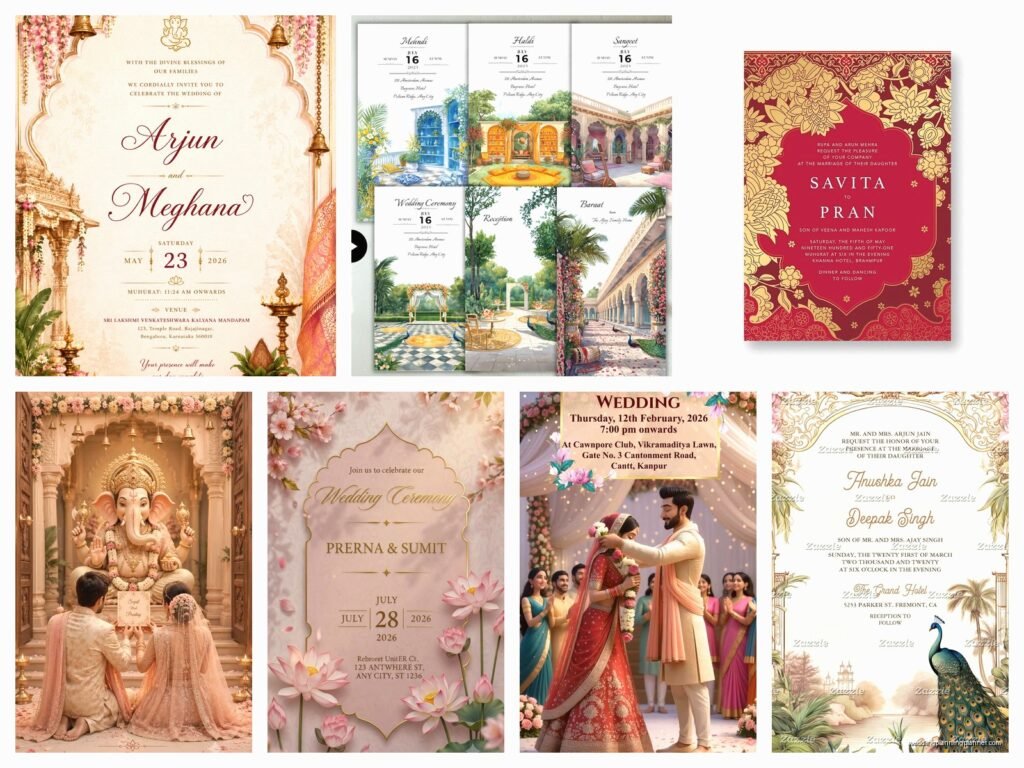
So ordering Indian wedding cards online is kinda wild now because literally five years ago most of my clients wouldn’t even consider it but now it’s like half my business and honestly the quality has gotten SO much better. You’re basically looking at websites that specialize in Indian wedding invitations and they’ve figured out how to blend traditional designs with modern ordering systems.
First thing you gotta do is figure out what style you actually want because there are like thousands of options. I’m talking traditional Hindu cards with Ganesh imagery, Muslim wedding cards with intricate calligraphy, Sikh cards, Christian Indian fusion designs, and then all the regional variations. Summer 2021 I had this bride who spent THREE WEEKS just browsing designs and kept sending me screenshots at midnight and I was like okay we need a system here.
The main websites you’ll see are 123WeddingCards, IndianWeddingCard.com, Parekh Cards online portal, and a bunch of newer ones like Witty Vows and Wedding Wishlist. They all work similarly but have different design collections and price points.
How The Actual Ordering Process Works
You start by browsing their catalogs which are usually organized by religion, color, theme, or price range. Most sites let you filter by budget which is helpful because Indian wedding cards can range from like $1 per card to $15+ for the really elaborate laser cut ones with multiple inserts.
Once you find a design you like you can usually request a physical sample for around $5-15 depending on the card. DO THIS. I cannot stress this enough because colors on screen are never accurate and you need to feel the paper quality. I’ve had so many clients skip this step and then freak out when 500 cards arrive and the red is more orange than they expected.
After you approve the sample or decide to go ahead based on digital proofs you’ll need to provide your wording. This is where it gets tricky because traditional Indian wedding cards have specific wording formats depending on your religion and region and who’s hosting the wedding.
The Wording Nightmare (Or Not)
Most good websites have wording templates you can follow. Hindu cards typically start with a Ganesh symbol or “Shree Ganeshaya Namah” and then list the hosts (usually parents) before the actual invitation text. Muslim cards often include Quranic verses or “Bismillah ir-Rahman ir-Rahim” at the top. Sikh cards might reference Waheguru.
The format usually goes: religious symbol or verse, hosts names, invitation line, bride and groom names, date time venue, RSVP details, sometimes gift registry info though that’s still not super common for traditional families.
Here’s what annoys me though – so many websites don’t explain the traditional etiquette around naming conventions and I end up fielding questions about whether the bride’s parents should be listed first or the groom’s parents and whose titles need to be included. Like in South Indian cards you’ll see really elaborate parent introductions with their titles and sometimes even grandparents mentioned but North Indian cards might be more streamlined.
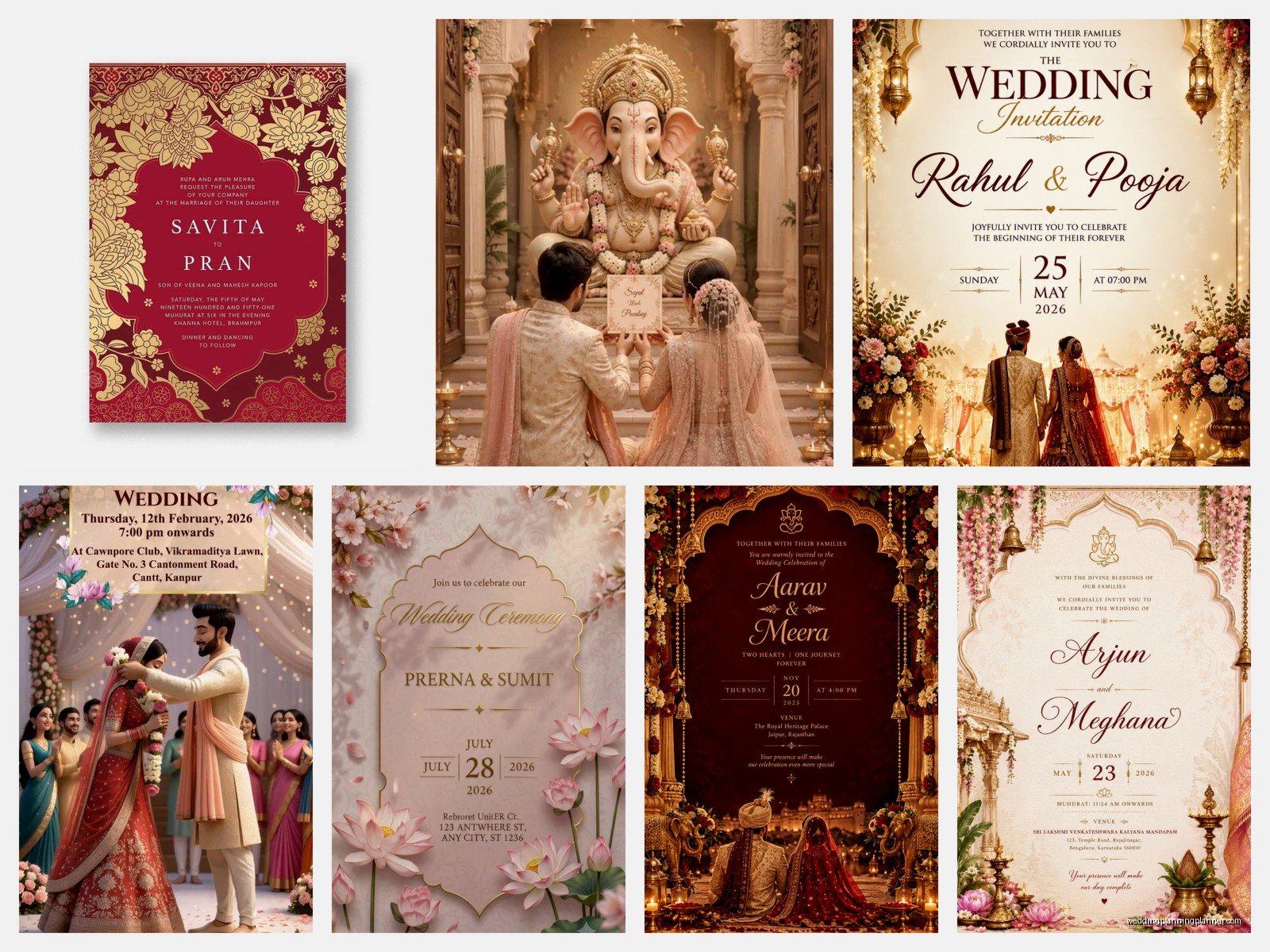
You can usually customize the wording completely or use their templates. Most sites have customer service people who help with this and some even have specific consultants for different religious traditions which is actually pretty helpful.
Customization Options That Actually Matter
Beyond the wording you can typically customize colors, add photos (this is getting more popular especially for the reception cards), change envelope colors, and select different printing methods. Printing methods include digital printing, offset printing, letterpress, foil stamping, and embossing.
Digital printing is cheapest and works fine for most people. Offset printing is better quality for large quantities over 200 cards. Foil stamping looks gorgeous but adds like $2-3 per card. I had a spring 2023 wedding where the couple went with rose gold foil on navy blue cards and it was stunning but they definitely paid for it.
Letterpress is having a moment right now with Indian couples who want that traditional feel with modern design. It’s expensive though and you need to order well in advance because the setup time is longer.
The Insert Situation
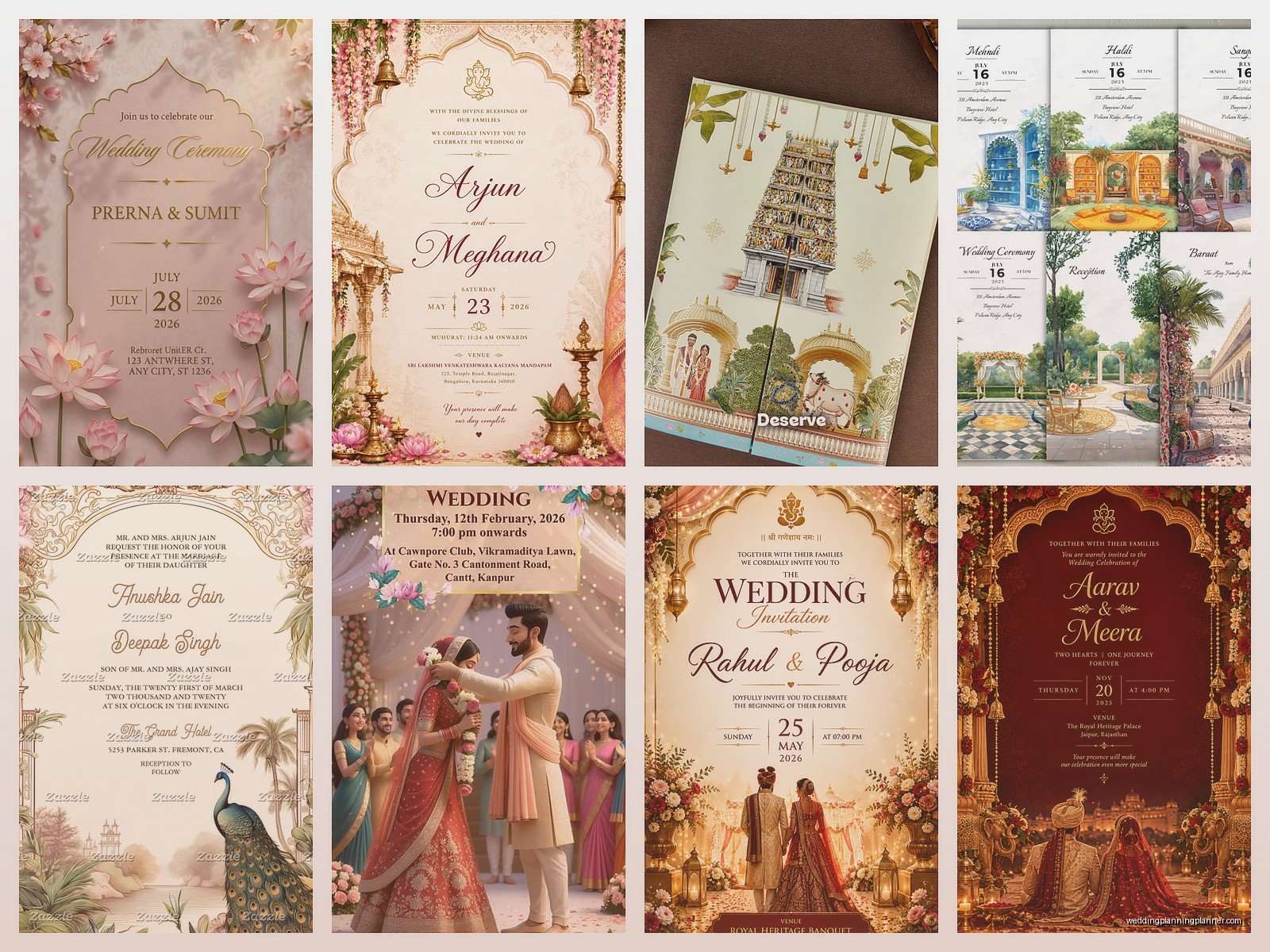
Indian wedding cards usually come with multiple inserts and this is where online ordering can get confusing. You’re typically looking at the main invitation card plus separate inserts for different events like mehendi, sangeet, ceremony, reception. Some families do separate cards for each event, others do one main card with multiple inserts.
You’ll also need RSVP cards (though lots of people are doing online RSVP now), direction cards or a map insert, accommodation details if you have out of town guests, and maybe a gift registry card though again that’s not traditional traditional.
When ordering online you need to specify quantities for each insert because you might not need the same number of everything. Like maybe you’re inviting 300 families to the ceremony but only 200 to the sangeet so you’d order accordingly.
Most websites let you mix and match inserts and they’ll package everything together in the envelope for you or ship it separately if you want to assemble yourself which saves money.
Envelope Drama
Envelopes seem simple but they’re not. Indian wedding card envelopes are often more decorative than Western ones. You can get plain colored envelopes, printed envelopes with designs, or those really fancy ones with ribbon closures and embellishments.
You gotta decide if you want guest addressing printed on the envelopes or if you’re gonna do calligraphy or handwrite them. Printed addressing is like $0.50-$1.50 per envelope extra but saves SO much time. I always recommend it unless you have amazing handwriting or want to hire a calligrapher.
Some websites offer digital calligraphy printing which looks hand-done but isn’t and that’s a nice middle ground. My cat knocked over an entire stack of addressed envelopes once when I was working from home and I literally just sat there staring at the mess for like ten minutes before… anyway that’s why I’m pro-printed-addressing now.
Pricing Reality Check
Budget wise you’re looking at anywhere from $300 to $3000+ for Indian wedding cards depending on quantity and quality. A typical order might be 250 cards (Indian invitations usually go by family not individual so 250 cards could cover 500-800+ guests) at $3-5 per card so around $750-1250 plus shipping.
Shipping from India-based companies takes 3-4 weeks usually and costs $50-150 depending on weight and speed. US-based companies ship faster but often have smaller design selections or higher prices.
Most websites require 50% deposit when you place the order and the balance before shipping. Some offer payment plans which is helpful because Indian wedding cards are often ordered 4-6 months before the wedding.
Timeline You Actually Need
Start browsing designs 5-6 months before your wedding. Order samples 4-5 months out. Finalize design and wording 3-4 months before. Receive cards 2-3 months before the wedding so you can mail them 6-8 weeks before the first event.
I know that seems early but trust me Indian weddings have so many moving parts and cards take longer than you think especially if you’re doing custom designs or ordering from India.
If you’re really pressed for time some companies offer rush services for an extra fee and can turn around orders in 2-3 weeks but the selection is limited and it costs more.
What To Actually Look For Quality-Wise
Paper weight matters more than you’d think. Look for at least 250 GSM for the main card. Anything lighter feels cheap and doesn’t hold up if you’re doing embossing or foil work. The inserts can be lighter weight like 170-200 GSM.
Check reviews specifically about color accuracy because this varies wildly between companies. Some websites have terrible color matching and what looks burgundy online arrives as straight up red.
Look at their portfolio of real wedding cards not just the design mockups. Real photos show you how the cards actually look in someone’s hands with actual lighting.
Customer service responsiveness is huge because you WILL have questions and changes. Before ordering send them a test email or call and see how fast they respond. If it takes three days to answer a simple question, ordering from them will be painful.
The Digital Proof Process
After you submit your wording and customization choices they’ll send digital proofs usually as PDFs. You need to check EVERYTHING. And I mean everything. Spelling of names, dates, times, venue addresses, phone numbers for RSVP, parents names, literally every single character.
I had a client in 2022 who approved proofs without checking carefully and the venue address was missing the apartment number so like 50 guests showed up to the wrong building entrance and that was a whole thing. The company isn’t responsible for content errors once you approve proofs so this is all on you.
Most companies give you 2-3 rounds of revisions included then charge for additional changes. Make all your changes at once rather than sending multiple revision requests because that drags out the timeline.
Modern Additions To Traditional Cards
Lots of online companies now offer QR codes on the cards that link to your wedding website which is actually really practical. Guests can scan it for detailed schedules, accommodation options, registry info, and RSVP online.
Video invitation cards are becoming a thing too where you get the physical card plus a matching digital video invitation you can send via WhatsApp or email. This is perfect for international guests who might not receive the physical card in time or for last minute additions to your guest list.
Some websites offer eco-friendly options now with recycled paper and plantable seed paper though honestly the selection is still pretty limited compared to traditional cards and they cost more.
Common Mistakes People Make
Ordering too few cards is number one. You always need extras for keepsakes, last minute guests, and mistakes. Order at least 10-15% more than you think you need.
Not ordering samples like I mentioned before. Just don’t skip this step unless you’ve ordered from that exact company before and know what you’re getting.
Forgetting about assembly time if you’re doing it yourself. Stuffing 300 envelopes with multiple inserts takes HOURS. Either pay for assembly service or recruit family members and make it a party with snacks.
Waiting too long to order because you can’t decide on a design or you’re waiting for venue confirmation or whatever. The cards are one of the first things guests see so they set the tone for your wedding and you need them early enough to actually mail them properly.
Not checking postage requirements because oversized or heavy invitations cost more to mail and you don’t wanna find that out when you’re at the post office with 250 envelopes. Take a fully stuffed sample envelope to the post office and have them weigh it and tell you exact postage needed.
Dealing With Difficult Situations
If your cards arrive and there’s a printing error that’s their fault they should reprint at no cost but you need to catch it immediately. Most companies have a 48-hour window to report issues after delivery.
If you made an error that you approved in proofs you’re probably gonna have to pay for reprints. Some companies are nice about it and offer discounts but they’re not obligated to.
Lost shipments happen especially with international orders. Make sure the company provides tracking and insurance. If you’re ordering from India consider having them ship to a family member there who can verify everything before forwarding to you, though that adds time obviously.
For last minute guest list additions you can order small quantities of the same design later but there might be a minimum order quantity of like 25-50 cards and setup fees apply again so it gets expensive per card. This is why ordering extras upfront makes sense.
