
Planning Guides, Style Guide
Indian Wedding Invitations Online: Traditional Digital Order
Oct
Ordering Indian Wedding Invitations Online Is Actually Pretty Straightforward Now
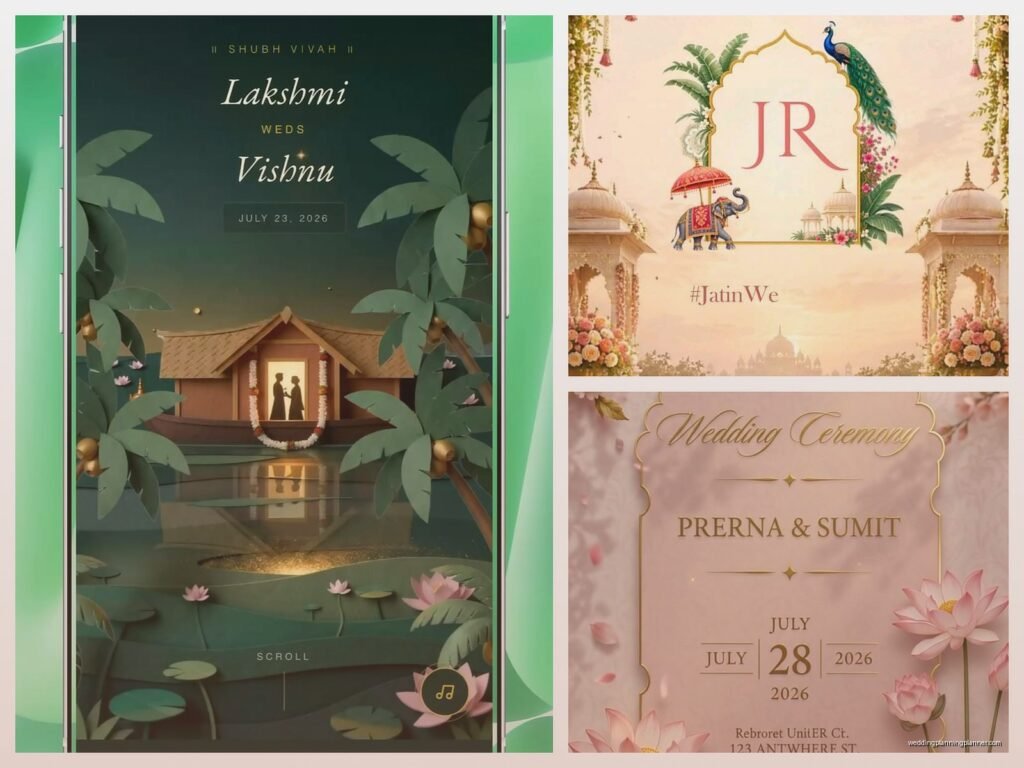
So you’re gonna order Indian wedding invitations online and you want them to look traditional but you also want the convenience of digital ordering. Yeah, I get it. I had this bride back in spring 2023 who was planning from Chicago but her family was in Mumbai and she needed invitations that would make her grandmother happy while also not losing her mind dealing with vendors across time zones.
First thing – figure out what “traditional” actually means for YOUR family because honestly this varies so much. Some families want the full Ganesha imagery, some want specific color combinations based on region, some are fine with modern interpretations. I learned this the hard way when a client’s aunt nearly had a meltdown over the wrong shade of red. Like, we’re talking about a difference I couldn’t even see but apparently it mattered.
The Actual Process of Finding Vendors
Start with dedicated Indian wedding stationery sites. There’s a bunch now – 123WeddingCards, IndianWeddingCard, Parekh Cards – they’ve all gone digital with their ordering systems. You can browse designs, customize online, and order without ever talking to a human if that’s your thing. Though honestly I recommend at least one phone call because these invitations have so many components.
What annoys me is that some of these sites still have terrible filtering systems. You’ll search for “South Indian wedding cards” and get North Indian designs mixed in, or you want boxed invitations and the filter doesn’t actually work properly. It’s 2024, people, your website should function.
Etsy is also surprisingly good for this now. I’ve found vendors who specialize in digital files that look traditional – you buy the design, customize it yourself in Canva or whatever, and then either print locally or use an online printing service. The quality control is on you though.
Understanding What You’re Actually Ordering
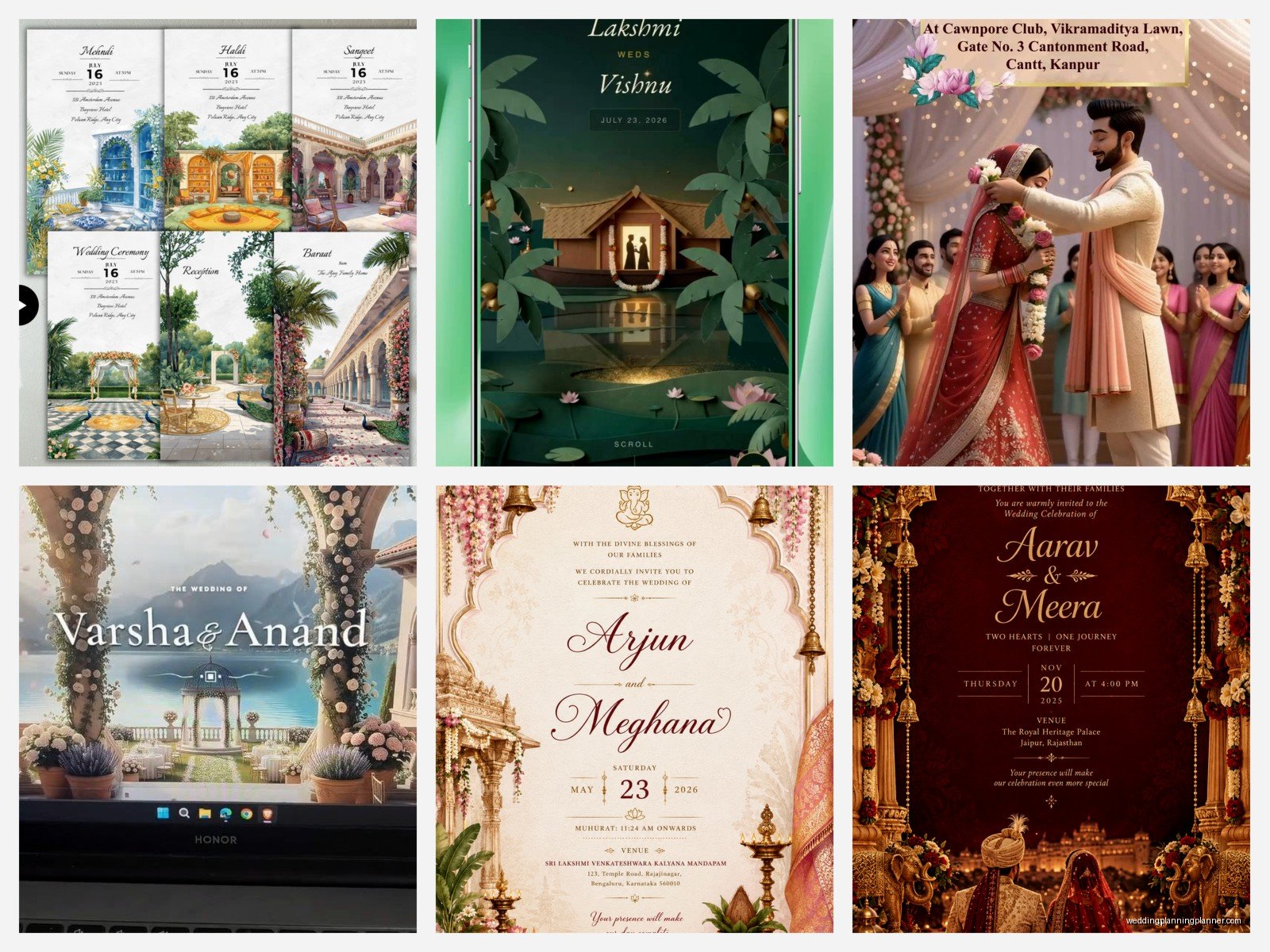
Indian wedding invitations aren’t just one card. You probably know this already but if you don’t – buckle up. You’re typically looking at the main invitation card, RSVP card, reception card, maybe separate cards for mehendi and sangeet, insert cards with accommodation details, and sometimes a printed envelope liner or belly band or… it gets elaborate.
When ordering online you need to be really clear about what’s included in the “set.” Some vendors quote per invitation but that’s just the main card. Others quote for the full suite. I had a client almost have a heart attack when she realized her quote was per card not per set and her budget just tripled.
The digital ordering systems usually have you build your package step by step. You select the main card design, then it asks if you want matching RSVP cards, matching inserts, matching envelopes. Pay attention here because this is where costs add up fast.
Customization Options Online
Most sites now let you customize colors, text, add photos, change motifs – all through their online interface. The good sites have live preview features so you can see changes in real-time. The less good sites make you wait for a PDF proof which can take 24-48 hours and if you need multiple rounds of edits this drags out.
For traditional elements like Ganesha images, swastika symbols, om symbols, kalash designs – these are usually in the template libraries. You can swap them in and out. Some sites let you upload your own graphics too if you have something specific from your family’s tradition or region.
Wording is where it gets tricky ordering online versus working with someone in person. Traditional Indian invitations have specific phrasing, they mention parents and sometimes grandparents, there’s religious verses or blessings. The online templates usually have standard wording but you gotta make sure it matches your family’s expectations. My cat literally walked across my keyboard once while I was proofing invitation wording for a client and I almost didn’t catch that there was gibberish in the middle of a Sanskrit verse – that would’ve been bad.
The Traditional vs Digital Balance
Here’s what’s kinda cool about ordering online now – you can get traditional LOOKING invitations with modern conveniences built in. Like QR codes that link to your wedding website. Or RSVP cards that direct people to an online form instead of mailing back. Some families are totally fine with this, others… not so much.
I usually tell couples to think about their guest list demographics. If you’re inviting a lot of older relatives who expect traditional everything, maybe skip the QR code on the main invitation. Put it on a separate insert card so people who want it can use it and people who’ll be confused can ignore it. You can have both.
For the actual design aesthetic, online vendors have gotten really good at replicating traditional printing techniques digitally. Foil stamping, embossing, letterpress effects – these are all available through online orders now. They’re more expensive than flat digital printing but they give you that traditional luxe feel.
Paper Quality and Printing Methods
You can’t feel paper through a screen which is the biggest limitation of ordering online. Most sites offer sample packs – get them. Spend the $20 or whatever to get physical samples of paper stocks and printing techniques before you commit to 200 invitations.
Traditional Indian wedding invitations often use heavy cardstock, textured papers, or specialty papers with embedded elements. Online you’re choosing from descriptions like “270gsm matte cardstock” or “shimmer paper with mica flecks” and hoping it’s what you imagine. The samples solve this problem.
For printing methods – digital printing is cheapest and fastest, but offset printing gives richer colors for traditional reds and golds. Letterpress is gorgeous but expensive and has limitations on colors. Foil stamping comes in different colors of foil – gold, rose gold, silver, copper, colored foils. You select all this through dropdown menus online which feels weird for something so important but honestly the systems work pretty well now.
Timing Your Online Order
Indian weddings typically send invitations earlier than Western weddings – like 6-8 weeks before for local guests, 2-3 months for international guests. Factor in production time when ordering online.
Most online vendors quote 2-3 weeks for production after you approve the final proof. Then shipping time on top of that. If you need rush production it’s available but costs extra. International shipping to India or UK or wherever your family is – that can take 1-2 weeks depending on service level.
I always build in buffer time because something always goes wrong. The proof has a typo. The colors aren’t quite right. Your mom decides she wants different wording. In spring 2023 with that Chicago bride I mentioned, we had to do four rounds of proofs because different family members kept weighing in and contradicting each other… ordering online meant we could make changes relatively quickly but it still took time.
Proofing Process
Online vendors send digital proofs – usually PDF files. You need to check everything. And I mean everything. Names spelled correctly including all the Indian names with specific spellings. Dates and times accurate. Venue addresses complete. Phone numbers right. Email addresses without typos.
Check the design elements too. Sometimes motifs get flipped or resized weird in the digital layout. Colors on your screen won’t match perfectly to printed colors but they should be in the ballpark. If your traditional red looks orange on the proof, speak up.
Most sites give you 2-3 rounds of proofing included. After that they charge for additional revisions. So get your family’s input early, compile all changes into one list rather than sending them one at a time, and be decisive.
Cost Breakdown for Online Orders
Traditional Indian wedding invitations ordered online typically run $3-$15 per invitation suite depending on complexity. Basic flat-printed cards with standard designs are cheapest. Boxed invitations with multiple inserts, foiling, embellishments – those get pricey fast.
You’re usually looking at base price per invitation, then add-ons for each extra card in the suite, then upgrades for special printing techniques, then envelope options, then assembly if you want them to put everything together, then shipping.
Order more than you think you need. Like 10-15% extra. You’ll forget people, addresses will be wrong, some will get damaged. It’s cheaper to order extras upfront than to place a small reorder later.
Regional Variations in Traditional Designs
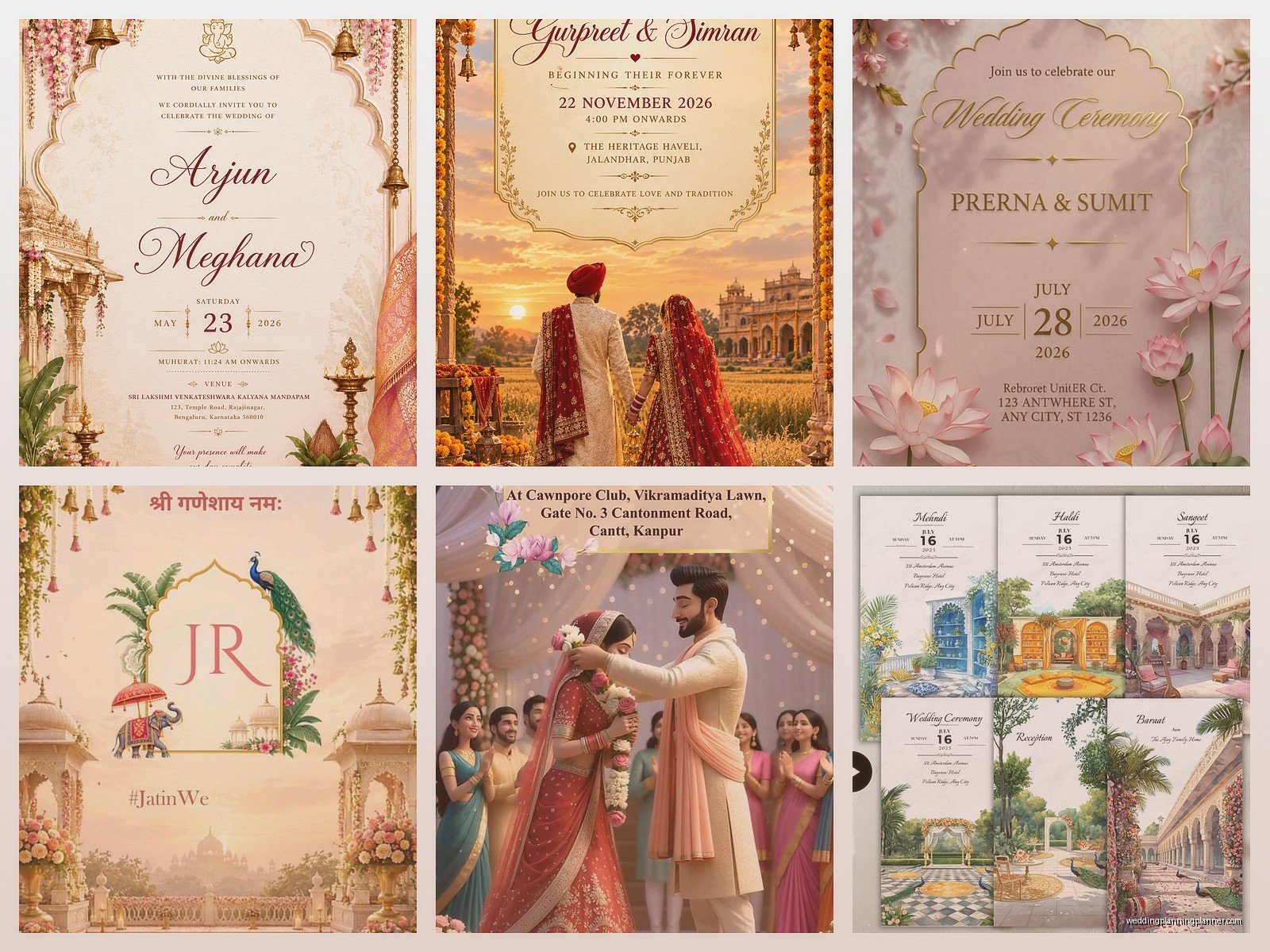
North Indian invitations often feature Ganesha, paisley motifs, elephant and horse imagery for baraat, lots of gold and red. South Indian invitations might have temple imagery, mango leaves, more religious verses in Tamil or Telugu or whatever language. Gujarati invitations have their own style, Bengali invitations are different again.
When ordering online make sure the vendor understands regional differences or has templates that match your background. Some sites organize by region which is helpful. Others just throw everything together and you gotta sort through to find what fits.
The language of your invitation matters too – some families want invitations in English only, some want bilingual with Hindi or Gujarati or Punjabi or whatever, some want the traditional language on the main card and English on inserts. Online vendors can usually handle this but you need to provide the translations. They won’t do that for you.
Envelopes and Assembly
Envelopes for Indian wedding invitations are often part of the design – colored envelopes, printed envelopes, envelope liners with matching patterns. When ordering online you select these as options. Some designs come with coordinating envelopes included, others charge extra.
Assembly is either DIY or you pay the vendor to do it. DIY saves money but takes time – you’re stuffing multiple cards into envelopes, adding tissue paper overlays, sealing everything, adding return address labels or stamps. If you’re doing 200+ invitations this is hours of work.
Paying for assembly usually costs $1-3 per invitation but they do everything. They stuff, seal, can even add postage if you want. For destination weddings or busy couples this is worth it.
Addressing Envelopes
Traditional Indian weddings often have formal addressing – full names with titles, parents’ names sometimes, proper honorifics. You can hand-address which looks nice but is time-consuming. Or print labels. Or some online vendors offer envelope printing as an add-on.
Calligraphy is another option – you provide the address list and they print in a calligraphy font or do actual hand calligraphy. This looks gorgeous but definitely costs extra. For super traditional families this might be expected though.
I’ve also seen couples do a hybrid – hand-address invitations for close family and elders, printed labels for everyone else. Nobody really notices or cares as much as you think they will.
Digital Invitations as a Supplement
Some couples are going fully digital which is… well, it depends on your family. A lot of traditional families still expect a physical invitation. But you can use digital invitations as supplements.
Send the fancy printed invitation to parents, grandparents, close family, maybe some family friends. Send digital invitations to everyone else. Or send printed invitations to everyone but follow up with digital save-the-dates and reminders.
There’s platforms now that specialize in Indian wedding e-vites – they have animated Ganesha, traditional music, all the aesthetic elements in digital format. You can include way more information than fits on a printed card – full schedule of events, accommodation options, travel tips, photo galleries.
The thing is though – and this really depends on your specific situation – some guests won’t take a digital invitation as seriously. RSVP rates tend to be lower. People forget easier. So consider your audience.
What to Include in Your Invitation Suite
At minimum you need the main invitation card with ceremony details, RSVP card with deadline and method, and reception card if that’s separate. Then you probably want cards for other events – mehendi, sangeet, ladies sangeet if that’s a thing in your family, maybe a welcome dinner.
Insert cards for accommodations are helpful – room block details, hotel options at different price points, transportation between venues. Direction cards if venues are hard to find. Weekend itinerary if it’s a multi-day celebration.
Some couples include gift registry information but traditionally this isn’t done on Indian wedding invitations. It’s more word-of-mouth or on the wedding website. Your call on this but know that some older family members might find it tacky.
Dress code can be mentioned on an insert card – especially helpful for non-Indian guests who might not know what to wear. You can suggest traditional attire, give color palette guidance, whatever makes sense.
Common Mistakes When Ordering Online
Not ordering samples first – this is the biggest one. You think you know what “metallic gold foil on burgundy cardstock” looks like but then it arrives and it’s not what you pictured.
Forgetting about international shipping costs and times if you have guests abroad. Shipping 50 invitations to India can cost $100+ and take weeks.
Not leaving enough time for proofing rounds and family input. Everyone has opinions on Indian wedding invitations and incorporating all that feedback takes longer than you expect.
Choosing designs that don’t match your actual wedding vibe. Like if you’re having a modern fusion wedding but your invitations are super ornate traditional, there’s a disconnect.
Skimping on quantity – order extras, seriously. You’ll need them.
Not checking compatibility with envelope sizes for postage. Some elaborate Indian invitation suites need extra postage because they’re thick or oddly sized. Take a sample to the post office and have them weigh it before you buy 200 stamps.
Working With Online Vendors Long-Distance
Time zones can be annoying when you’re ordering from a vendor in India while you’re in the US or UK or wherever. Response times might be slower. Phone calls need to be scheduled. But most vendors are used to this now and have systems in place.
Email everything important. Keep records of what was agreed to, what changes were requested, what the final approved proof looked like. If something goes wrong you’ll want documentation.
Video calls can be helpful for complex customization – you can show them inspiration photos, discuss details in real-time, see paper samples they hold up to the camera. It’s not as good as in-person but it works.
Payment for online orders is usually through credit card or PayPal or bank transfer. Make sure you understand the payment schedule – some want full payment upfront, others do 50% deposit then balance before shipping. International transfers can have fees so factor that in.
Returns and refunds are tricky with custom printed items. Most vendors won’t refund if you just change your mind, but if they screwed up the printing or got your customization wrong, they should reprint. Read the terms and conditions carefully before ordering because policies vary widely and you need to know what you’re agreeing to before you spend hundreds or thousands of dollars on invitations that might not be returnable if something goes slightly wrong but honestly most vendors are pretty reasonable if there’s a legitimate problem, just don’t expect them to redo everything because you decided you don’t like the color after approving the proof three times…
