Planning Guides, Style Guide
Acrylic Wedding Invitations: Clear Perspex Modern Designs
Mar
So you’re thinking about acrylic invitations
Okay so acrylic wedding invitations are basically these clear perspex sheets that you print on and they look super modern and honestly kinda luxe. I remember back in spring 2022 when I first started really pushing these with clients, this one bride literally gasped when I showed her samples. Like actual gasp. Her fiancé just looked confused because he thought they were glass at first.
What makes them different from regular invites
The whole point is the transparency thing. You’re working with clear acrylic sheets, usually about 2-3mm thick, and the text gets printed directly onto the surface. Most printers use UV printing or screen printing methods. The UV stuff is more common now because it dries instantly and the colors really pop against that clear background.
Here’s what annoys me though – everyone thinks they can just design these like paper invitations and that’s gonna work. It doesn’t. You need way more contrast than you think. I had a client last summer 2024 who insisted on light pink text on clear acrylic and I tried to tell her… anyway, her guests literally couldn’t read half the information unless they held it up to a window.
Design considerations you gotta think about
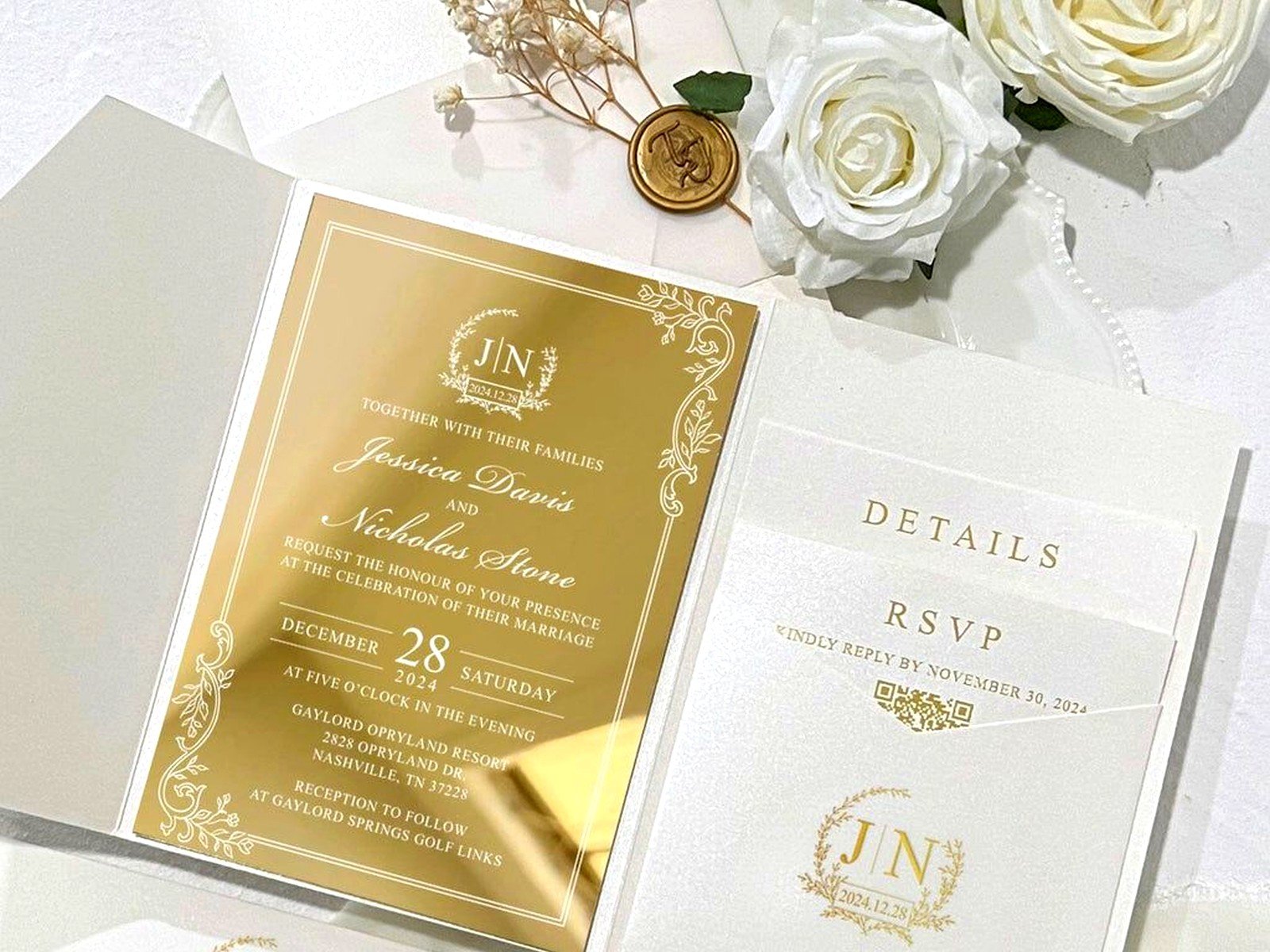
White ink is your best friend. Seriously. It shows up perfectly on clear acrylic and looks super crisp. Black works too obviously. Metallics like gold and rose gold are gorgeous but you need to make sure your printer can actually do metallic UV inks because not all of them can.
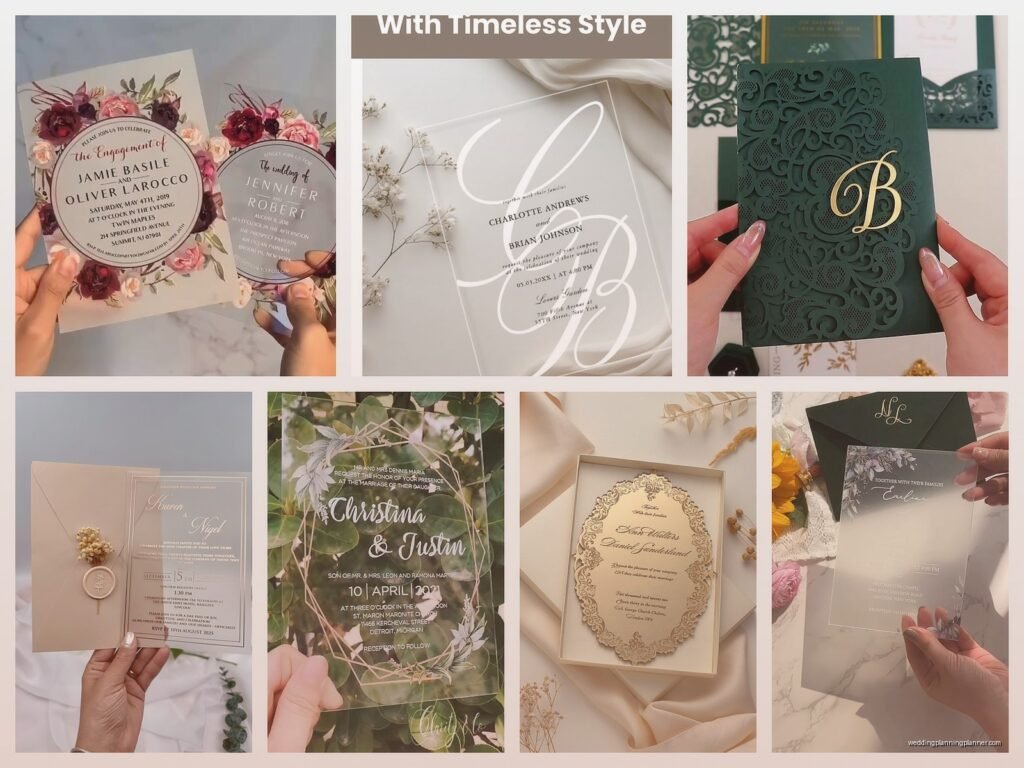
The background matters more than you’d think. When someone holds up a clear invitation, they’re seeing whatever’s behind it. So you want designs that work with that transparency or you need to add a solid backing color in your design. Some couples do a frosted white background print first, then add their text on top.
Shapes and sizes
Standard rectangle is fine but boring honestly. The cool thing about acrylic is you can do custom cuts pretty easily. Circles, hexagons, arch tops, whatever. I’ve done invitations shaped like state outlines, wine bottles (for a vineyard wedding), even one couple wanted theirs shaped like their dog’s silhouette which was… a choice. My cat knocked over a whole stack of square samples once and they just slid across my desk without bending, super satisfying actually.
Popular sizes are 5×7 or 4×6 inches. Anything bigger gets heavy and expensive to mail. Anything smaller and you can’t fit enough info on there.
Printing methods breakdown
UV printing is what most professional stationery companies use now. The printer shoots UV light at the ink right after it hits the acrylic, curing it instantly. You can do full color, white, metallic, even raised texture if you do multiple passes. The setup costs are lower so it works for smaller quantities.
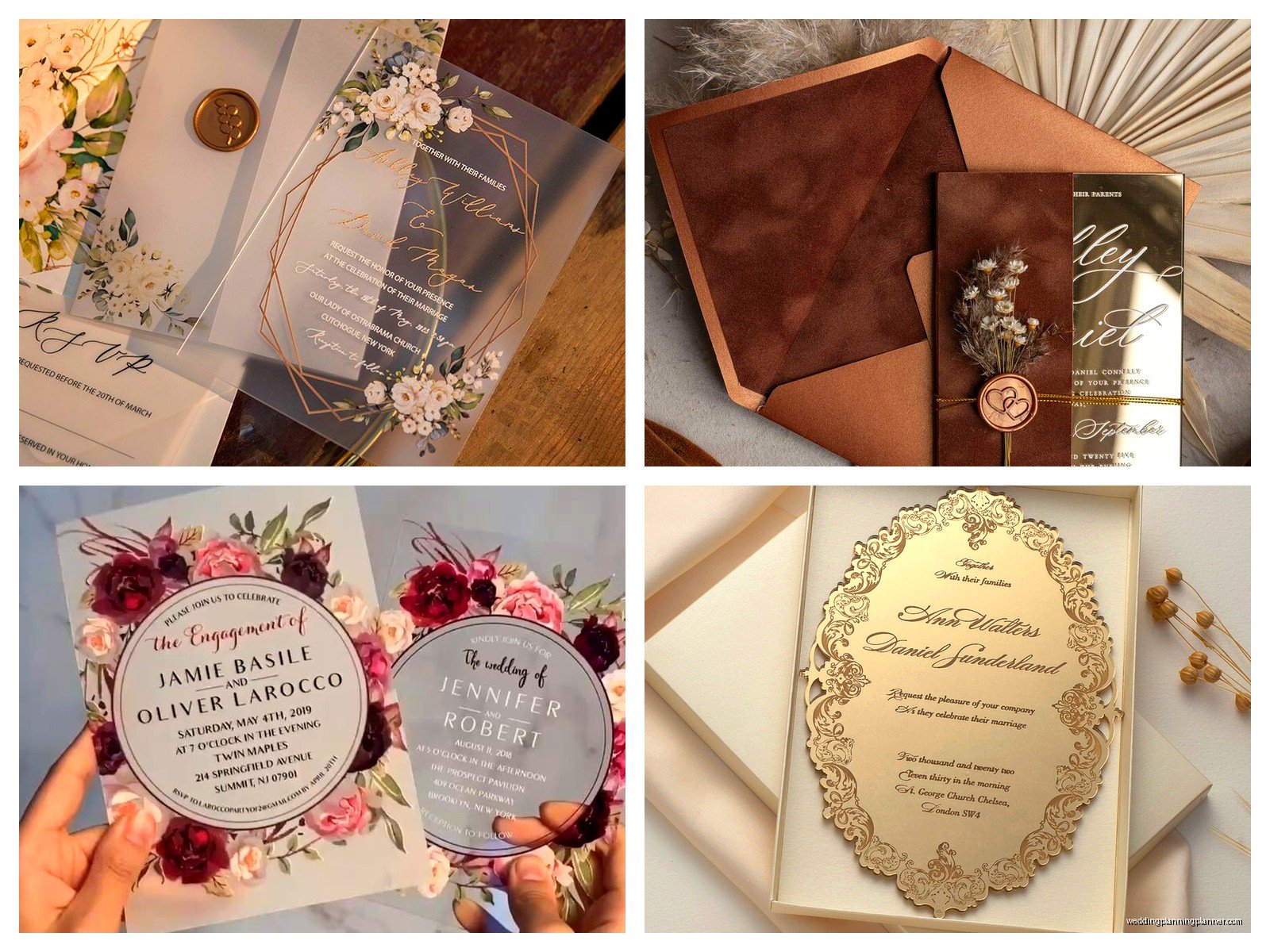
Screen printing is the old school method and honestly it still looks amazing. Each color needs its own screen, so it gets pricey if you want multiple colors. But the ink sits differently, it’s got this slight thickness to it that feels really premium. Better for larger orders like 150+ invitations.
Engraving is another option where they actually cut into the surface of the acrylic. Creates this frosted effect wherever the text is. Really elegant but harder to read unless you do it right with… wait I’m thinking of vinyl application which is different, that’s where you apply vinyl lettering to the surface instead of printing directly.
What to include on the actual invitation
Same info as any invitation basically. Names, date, time, venue. The tricky part is fitting it all on there without making it look cluttered. Remember you don’t have the same room as a paper invitation that can fold out or have multiple inserts.
Some couples do a main acrylic piece with the essential info, then include a regular paper card for RSVP details, accommodations, registry, dress code, all that extra stuff. This keeps the acrylic part clean and readable.
Assembly and packaging umm this part matters
You can’t just stick these in a regular envelope. Well you can but they’ll arrive scratched and gross. Most people do a protective sleeve first – either a glassine envelope or a clear cellophane bag. Then that goes into your mailing envelope.
For fancier presentations, acrylic invites look incredible in wooden boxes, acrylic boxes (very meta), or velvet pouches. I watched this video about minimalist design while assembling a set last month and got completely distracted, had to redo like 30 envelopes because I wasn’t paying attention to which way the text faced.
Mailing logistics you need to know
These are heavier than paper. A single 5×7 acrylic invite usually needs extra postage. Go to the post office and have them weigh your full assembled invitation with envelope and everything before you buy stamps in bulk. Also the thickness means they’re non-machinable, so hand-canceling fees might apply.
Temperature doesn’t really affect acrylic but rough handling will scratch it. Always mark envelopes as “Do Not Bend” and maybe add “Fragile” even though postal workers definitely ignore that half the time.
Cost breakdown roughly
Budget around $8-15 per invitation for basic designs with UV printing. Custom shapes, metallic inks, or fancy packaging adds more. Screen printing can run $12-20+ depending on colors. That’s just the invitation itself, not counting envelopes, postage, assembly labor.
For comparison, decent paper invitations might cost $3-8 each. So yeah, acrylic is definitely a splurge item. But the impact when guests receive them is pretty unmatched.
Where to actually order these
Etsy has tons of sellers doing custom acrylic invites. Quality varies wildly so read reviews carefully. Minted and similar big stationery sites are starting to offer acrylic options now too. Local print shops that do signage work can often do wedding invitations – they’ve got the UV printers already for business signs and stuff.
Get samples before committing to your full order. What looks good on a computer screen might look completely different on actual acrylic.