
Planning Guides, Style Guide
Design Wedding Invitations: DIY Creation Complete Guide
Mar
Okay So You Wanna Make Your Own Wedding Invitations
First thing you need to know is that DIY invitations are totally doable but they’re gonna take more time than you think. Like, way more. I had this couple in spring 2023 who decided three months before their wedding that they wanted to hand-letter 150 invitations and I literally watched them have a meltdown in my office when they realized what they’d signed up for.
Start with figuring out your actual quantity. You need one invitation per household, not per person. So if you’re inviting the Smith family of four, that’s one invite. But also print extras because you WILL mess some up. I always tell people to add 15-20% to whatever number they think they need. Trust me on this.
Pick Your Design Software (This Matters More Than You Think)
You’ve got options here and honestly it depends on what you’re comfortable with. Canva is the easiest if you’re not super tech-savvy – they have templates, it’s drag-and-drop, and you can’t really screw it up too badly. I use it for quick mockups sometimes even though I have Adobe Creative Suite because it’s just… faster?
If you want more control, Adobe Illustrator or InDesign are the professional options. There’s a learning curve but YouTube tutorials will get you there. I learned InDesign during the pandemic by watching random videos at 2am while my cat knocked things off my desk, so like, it’s definitely possible.
Microsoft Word is technically an option but please don’t. Just don’t. The formatting will make you want to scream and your margins will be all over the place.
Template vs. From Scratch
Templates are not cheating. I need to say this because so many couples feel guilty about using them. You can buy templates on Etsy for like $8-15 and customize them completely. Change colors, fonts, wording, layout – whatever. That’s still DIY.
Starting from scratch gives you total creative freedom but you gotta have a vision. And some basic design sense. The number of times I’ve seen someone put 8 different fonts on one invitation… it’s a lot. Stick to 2-3 fonts max. One fancy script, one clean sans-serif, maybe one serif for details.
Paper Selection Is Where People Lose Their Minds
This part annoyed me SO much when I first started because nobody tells you how complicated paper is. You’ve got weight (measured in lb or gsm), finish (matte, glossy, textured), color (which looks different on screen vs. in person), and size.
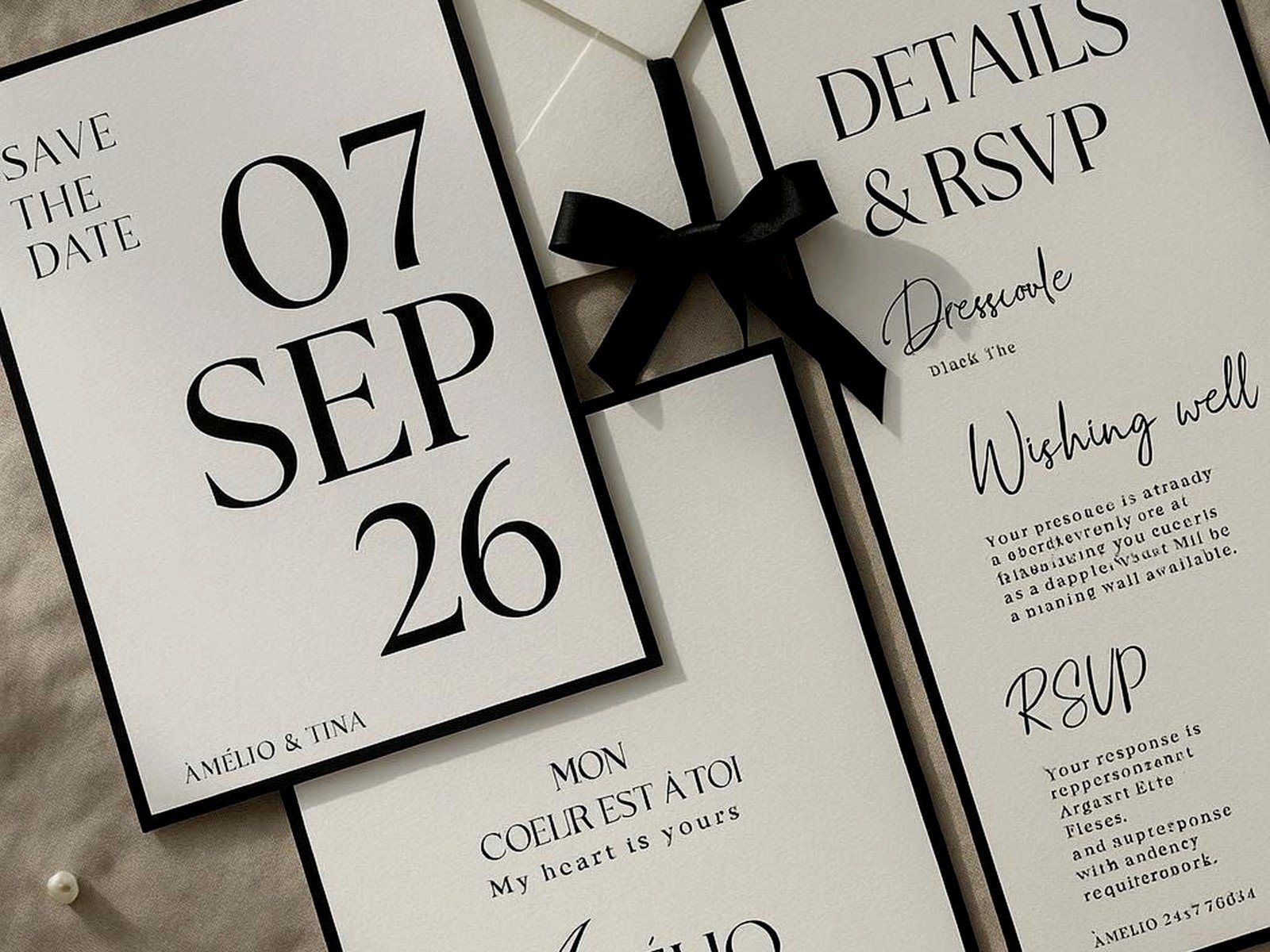
For the main invitation card, you want something substantial. 80lb cover stock minimum, but 100lb or 110lb feels more luxurious. Cardstock comes in different finishes – I usually recommend matte or linen texture because glossy shows fingerprints like crazy and that drives me insane.
Standard sizes are your friend for keeping costs down. A5 (5.8 x 8.3 inches) or 5×7 are the most common. You can do custom sizes but then you need custom envelopes and those get expensive fast.
Order samples before you commit. Paper Source, Cards & Pockets, LCI Paper – they all send sample packs. What looks good on your screen might feel cheap in person or vice versa.
Where to Actually Buy Paper
Online retailers like Paper Source, Cards & Pockets, and LCI Paper have huge selections. Local print shops sometimes sell paper by the sheet which is great for small quantities. Michaels and Hobby Lobby have cardstock but the selection is kinda limited for wedding-quality stuff.
If you’re doing a full invitation suite (invitation, details card, RSVP card, envelope liner, belly band or whatever), buy everything at once from the same place to ensure color matching. I learned this the hard way when a client bought “ivory” from three different suppliers and ended up with three completely different shades.
Printing Methods: The Part Everyone Underestimates
You have basically four options and they’re all different price points and quality levels.
Home Printing: Cheapest option if you already have a good printer. You need an inkjet printer that can handle cardstock – check your printer specs for maximum paper weight. Do test prints on regular paper first, then on one piece of your good cardstock. Alignment is tricky and you’ll probably waste a few sheets getting it right. Also your ink costs add up faster than you think.
Print Shop (like FedEx or local printers): Mid-range option. You send them your files, they print on your paper (if they allow it) or their paper. Quality is usually pretty good. Make sure your files are high resolution – 300 DPI minimum. And save as PDF to preserve your formatting.
Online Print Services: Minted, Vistaprint, Catprint, etc. You upload your design, pick your paper from their options, they print and ship. Super convenient but you’re limited to their paper choices. Prices vary wildly so shop around.
Professional Letterpress or Foil: This is getting into not-really-DIY territory but you can design it yourself and have a pro print it. Expensive but gorgeous. Letterpress gives you that pressed-in texture, foil adds metallic shine.
File Setup (This Is Important Don’t Skip)
Your file needs bleed if you’re doing edge-to-edge printing. That means your design extends 0.125 inches beyond your cut line. Otherwise you get white edges when the paper shifts slightly during cutting.
Use CMYK color mode, not RGB. RGB is for screens, CMYK is for printing. Your colors will look different if you don’t do this and then you’ll be sad when your navy blue prints as purple.
Embed your fonts or convert text to outlines before sending files to a printer. Otherwise they’ll substitute fonts and your carefully chosen script becomes Arial and you’ll want to cry.
Assembly Is Actually The Hardest Part
Nobody warns you about this but assembly takes FOREVER. You’re not just stuffing envelopes. You’re potentially layering multiple cards, adding vellum overlays, tying ribbons, adding wax seals, inserting into envelope liners… it adds up.
Set up an assembly line. Clear a big table, put on a podcast or Netflix (I rewatched all of The Office during one couple’s invitation assembly and I’m not even sorry), and get into a rhythm. If you have a wedding party or helpful family members, bribe them with pizza and wine to help.
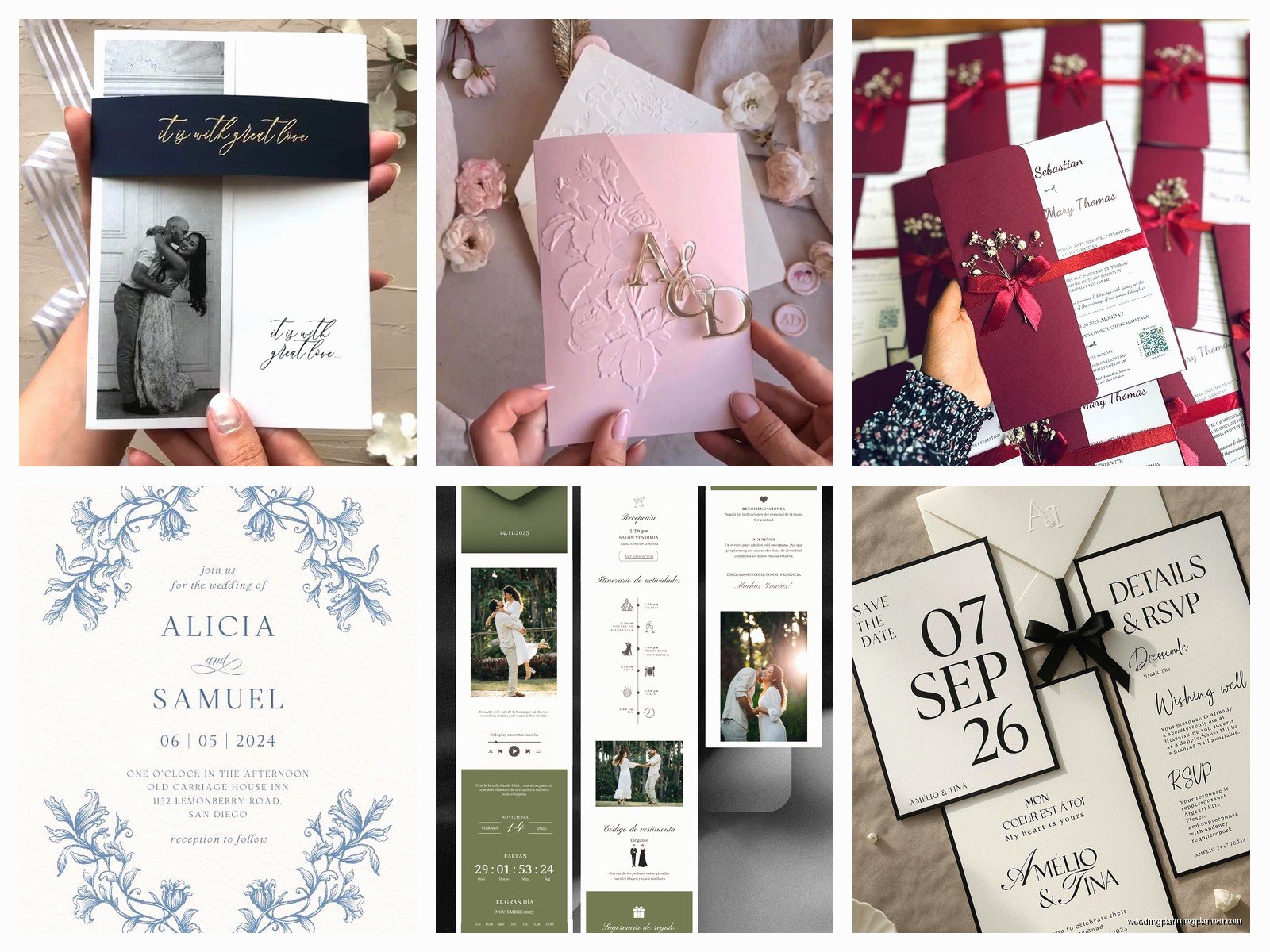
The order for a typical suite goes: invitation card on bottom, then vellum overlay if using, then reception card, then any other detail cards, then RSVP card and envelope on top. Some people use a belly band or ribbon to hold it together. Then the whole stack goes into the envelope with the text facing up so when the recipient opens it, they see the invitation first.
Envelope Addressing Options
You can hand-write them if you have nice handwriting. This takes the longest but looks super personal. I had a bride in summer 2021 who hand-addressed 200 envelopes and said never again.
Print directly on envelopes using your printer – you need to figure out the template setup for your specific printer and envelope size. Do test runs on cheap envelopes first because this is where you’ll waste the most.
Print on labels and stick them on – easiest option but some people think it looks less formal. Clear labels look better than white ones.
Order printed envelopes from a print service – they’ll print your guest addresses directly on the envelopes. Costs more but saves tons of time.
Hire a calligrapher for just the envelopes – you DIY the invitations but outsource the addressing. This is actually a smart compromise if you want that handwritten look without the time investment.
Details That Make It Look Professional
Envelope liners add a pop of color or pattern when someone opens the envelope. You can buy pre-made liners or make your own with a template. They’re fussy to install but they do elevate the whole thing.
Wax seals look fancy but they add thickness which means extra postage. Also they sometimes crack or fall off in the mail which is… annoying. If you’re gonna use them, bring a finished invitation to the post office to get it weighed.
Vellum overlays are those translucent sheets that go over your invitation. They soften the look and add a layer of elegance. You can print on them or leave them blank.
Belly bands are those strips of paper that wrap around your invitation suite to hold everything together. You can make them from cardstock and secure with glue dots or double-sided tape.
The Postage Situation
Take a fully assembled invitation to the post office and have them weigh it. Anything over 1 oz needs extra postage. Anything over 1/4 inch thick is a package, not a letter. Square envelopes cost more to mail because they can’t go through automated sorting – this drives me crazy because square invitations are so pretty but that surcharge adds up.
You can buy vintage stamps or custom stamps through USPS. Just make sure you have enough postage value. If your invitation needs 78 cents and you use a pretty 55-cent stamp, you need to add a 23-cent stamp too or it’s coming back to you.
Hand-canceling means the post office stamps your envelopes by hand instead of running them through machines. This prevents damage but not all post offices do it and you usually have to go in person and ask nicely. Some charge extra, some don’t.
Timeline For Actually Doing This
If you’re DIYing invitations, you need to start early. Like, way earlier than you think. Here’s a realistic timeline:
3-4 months before you need to mail them: Start designing. Order paper samples. Play with layouts. This is the fun creative part where everything seems possible and you haven’t started crying yet.
2-3 months out: Finalize your design. Order all your paper and supplies. Do test prints. Make adjustments. Order more paper because you realized you need more or you picked the wrong shade.
6-8 weeks out: Start printing. Don’t try to do it all in one day unless you have incredible focus and a high-quality printer that won’t jam. I usually recommend printing in batches.
4-6 weeks out: Assembly time. This is where you rope in your friends and family. Set up your assembly line. Put on comfortable clothes because you’ll be at this for a while.
8 weeks before wedding: Mail them. Wedding invitations should go out 6-8 weeks before the wedding, so work backward from your date.
Common Mistakes That Will Haunt You
Not printing a test invitation with all the layers and envelope to check sizing. You’d be surprised how often the RSVP card doesn’t actually fit in the RSVP envelope.
Forgetting to include critical information like the actual time of the ceremony or… the venue address. I’ve seen this happen more times than you’d believe.
Choosing a font that’s too small or too fancy to read. If your 70-year-old grandmother can’t read it without her glasses, pick a different font.
Not accounting for printer margins. Most home printers can’t print edge-to-edge even if you set up bleed. You need to know your printer’s printable area.
Using dark paper with dark ink or light ink on light paper. Contrast is your friend. Navy text on navy paper is not readable no matter how elegant you think it looks.
Underestimating costs. Paper, ink, envelopes, postage, embellishments – it adds up fast. Sometimes DIY actually costs more than ordering from a print service, especially when you factor in your time.
Supplies You’ll Actually Need
Besides paper and printer, here’s what you should have on hand: paper trimmer or sharp scissors and a ruler, bone folder for crisp creases, double-sided tape or glue dots, envelope moistener (don’t lick 150 envelopes trust me), ruler and pencil for alignment, spray adhesive if you’re doing layered cards or envelope liners, weights or clips to hold things in place while glue dries.
A light box is helpful if you’re doing envelope calligraphy or need to trace placement guides. You can make one with a clear plastic bin and a lamp or just use a window during daytime.
If you’re adding ribbons, get fabric scissors. If you’re doing wax seals, get a melting spoon and good quality sealing wax – the cheap stuff looks bad.
When to Throw in the Towel and Hire Someone
Look, sometimes DIY isn’t worth it. If you’re having more than 150 guests, seriously consider professional printing at minimum. If you’re a perfectionist who will redo things 47 times until they’re exactly right, your sanity is worth more than the money you’ll save. If your wedding is less than two months away and you haven’t started, just order from Minted or find a stationer who does rush orders.
There’s no shame in going semi-DIY either – design them yourself, have them professionally printed. Or use a template, customize it, print at home. Or order printed cards and DIY the assembly and embellishments. You don’t have to do every single step yourself for it to count as your creation.
The main thing is knowing what you’re getting into before you start because backing out halfway through when you’ve already bought $300 worth of paper is… well, it’s not great. But you can absolutely make beautiful invitations yourself if you plan ahead, stay organized, and don’t try to do everything the week before they need to be mailed
