Planning Guides, Style Guide
Rustic Wedding Invitations: Country Farmhouse Designs
Mar
Ok so rustic wedding invitations, let me break this down for you
So you’re looking at country farmhouse designs and honestly this is where I spend like half my consultation time because everyone thinks rustic just means burlap and mason jars and… no. Just no. Let me tell you what actually works.
The paper stock matters more than you think
First thing – the paper. You want something with texture. I’m talking kraft paper, recycled cotton, or this gorgeous handmade paper with visible fibers. Last spring I had a bride who insisted on glossy cardstock for a barn wedding and it looked so wrong. Like wearing stilettos to a pig roast, you know? The tactile element is what sells the whole rustic vibe.
Kraft paper comes in different weights – 80lb, 100lb, 110lb cover stock. I usually go with 100lb minimum because anything lighter feels cheap when people hold it. You can find it in natural brown, white kraft, or even this gorgeous greige color that’s been super popular. One of my suppliers has this speckled kraft that looks like tiny seeds are embedded in it and umm… it’s perfect for the farmhouse aesthetic.
Recycled paper is another option but here’s what annoyed me – in summer 2024 I had THREE different paper suppliers change their recycled lines without telling me. I had already shown samples to clients and then boom, discontinued. So always order samples fresh, don’t rely on what you got six months ago.
Layering and backing cards
The farmhouse look works really well with layers. You might have your kraft base card, then a white or cream layer, then your printed invitation on top. Sometimes people add a thin layer of burlap fabric between the kraft and the cream layer – it peeks out maybe an eighth of an inch on all sides. Kinda creates this dimensional thing.
I did this wedding in October 2023 where we mounted the invitation text on barn wood veneer. Like actual thin slices of real wood. It was beautiful but also a nightmare because half of them cracked during assembly and we had to… anyway, test your materials before committing to 150 invitations.
Typography choices that don’t look like every other rustic wedding
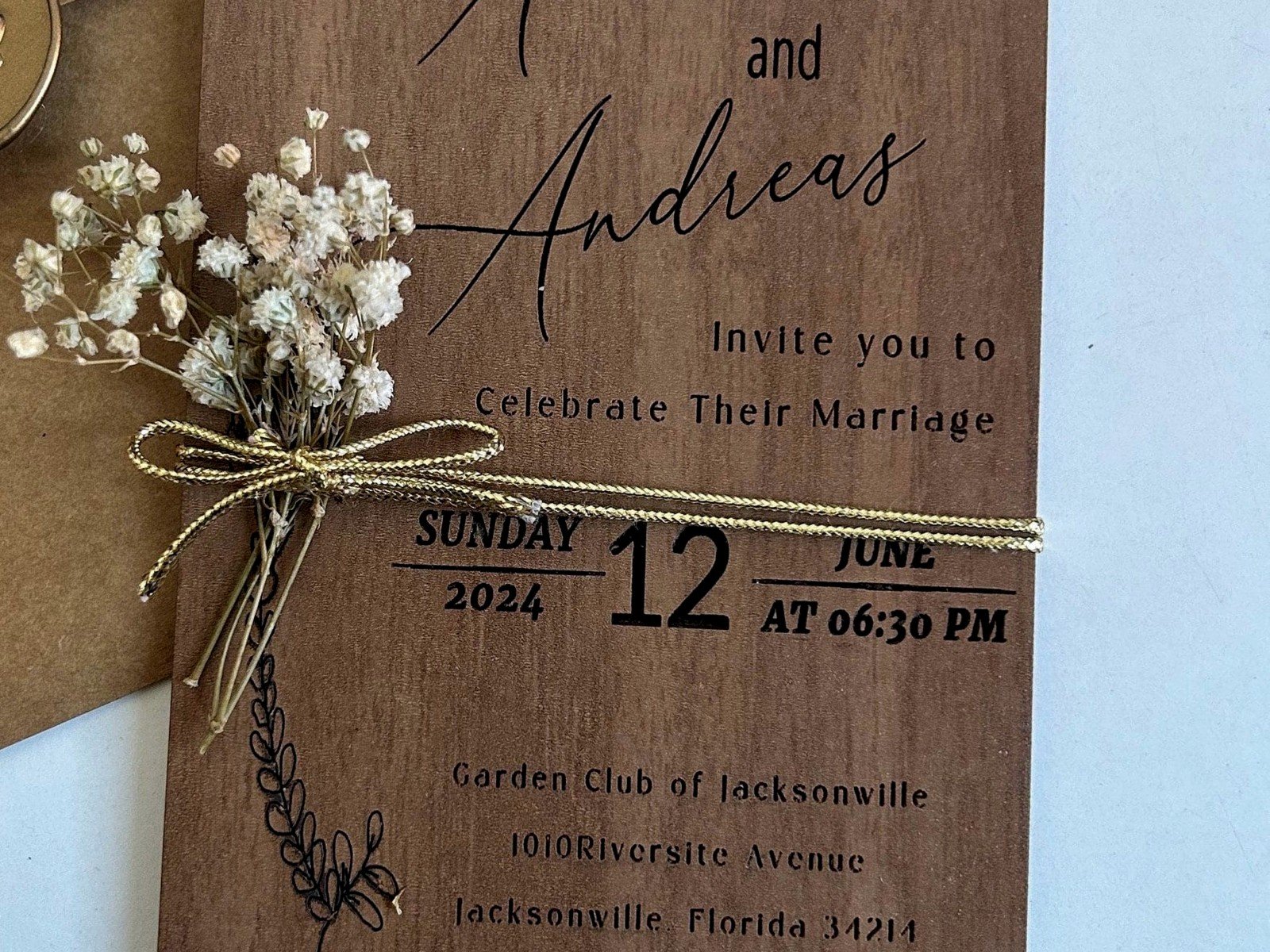
Everyone defaults to that same scratchy handwritten font or the super ornate script and honestly it’s gotten old. For farmhouse style, you want to mix fonts – maybe a clean sans serif for names, a slab serif for the details, and then one decorative element.
Slab serifs are your friend here. Fonts like Rockwell, Clarendon, or Archer have that vintage Americana feel without screaming “I bought this template on Etsy.” You can pair a slab serif with a simple script – not the super swirly one, but something like Sacramento or Dancing Script that’s still readable.
My golden rule is no more than three fonts on one invitation. I learned this the hard way with a client in 2022 who wanted to use SIX different typefaces because she “loved variety” and it looked like a ransom note made from magazine cutouts.
Hand lettering vs printed fonts
If you’ve got the budget, actual hand lettering or calligraphy elevates everything. But not that ultra-formal copperplate calligraphy – you want modern brush lettering or even just nice handwriting. I sometimes hire a calligrapher to write just the couple’s names, then we scan it and incorporate it into the printed design.
There’s also this middle ground where you can use font apps like Procreate to create custom lettering that looks hand-done but can be replicated perfectly across all invitations. Less expensive than hiring a calligrapher for 200 envelopes.
Color palettes that actually work
Natural tones, obviously. But let me get specific because “natural” means different things to different people. For country farmhouse you’re looking at:
- Warm browns – think coffee, chocolate, tan, camel
- Creams and ivories – not bright white, that’s too stark
- Sage green or dusty olive
- Terracotta or burnt orange
- Deep burgundy or wine colors
- Dusty blue or slate blue
- Charcoal or warm black
The mistake people make is thinking rustic = boring brown. You need contrast. A kraft paper base with deep burgundy text and sage green accents? Beautiful. All brown and tan? Looks unfinished.
I had this bride in spring 2024 who wanted “rustic elegance” which is kinda an oxymoron but we made it work by using kraft paper with rose gold foiling. The metallic element dressed it up while the paper kept it grounded. Rose gold, copper, and even gold foil work great with farmhouse designs. Silver feels too modern for this aesthetic.
Design elements and embellishments
Alright so this is where people go overboard. You do not need twine AND burlap AND a wooden heart AND dried flowers all on one invitation. Pick like two special elements max.
Twine and ribbon
Jute twine is the classic choice. You can wrap it around the invitation suite and tie it in a simple bow. I prefer a loose, casual bow – not a perfect florist bow, that defeats the rustic purpose. Sometimes we thread it through a hole-punched corner and tie it that way.
Ribbon options that work: burlap ribbon (with or without lace edge), cotton ribbon in cream or sage, grosgrain in muted colors, silk ribbon for a slightly more elevated look. The width matters – I usually use 1/4 inch to 1/2 inch ribbon. Anything wider starts looking like a Christmas present.
Oh and my cat destroyed an entire box of ribbons last year while I was watching Succession, just jumped into the box and went crazy… had to reorder everything. Anyway.
Belly bands and wraps
Instead of putting your whole suite in an envelope, you can use a belly band to hold everything together. This is a strip of paper (or vellum, or burlap) that wraps around the middle of your stacked invitation pieces.
You can print on the belly band – maybe the couple’s monogram or wedding date. Or you can add a wax seal to it. Wax seals are having a moment and they look gorgeous with rustic invitations. I use a deep burgundy or forest green wax usually, sometimes a copper or gold metallic wax.
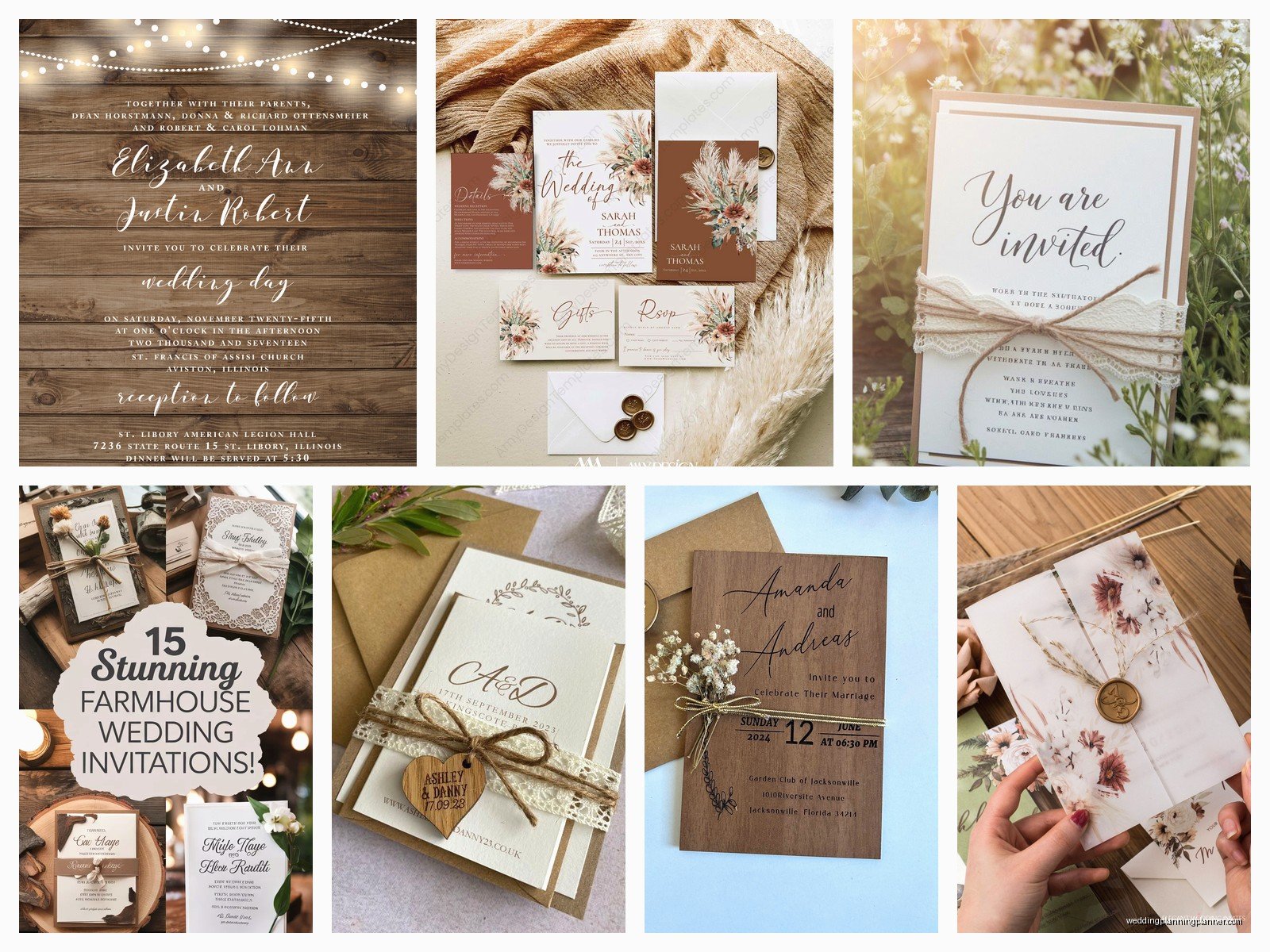
The belly band can be secured with a sticker seal, wax seal, or just tucked in on itself if you size it right. This is actually more affordable than you’d think because you’re using less paper overall – no outer envelope needed if you’re hand-delivering or using a mailing box.
Vellum overlays
A semi-transparent vellum sheet over your invitation adds this soft, romantic layer. You can print on the vellum (works best with digital printing or laser printing) or leave it blank and just use it as a texture element.
For farmhouse style, I like vellum with the invitation details printed on kraft underneath, and maybe a botanical illustration on the vellum itself. Creates depth. You can attach the vellum with a wax seal, a small piece of twine, or even a vintage-style paper fastener.
Printing methods – this is gonna affect your budget big time
Digital printing is the most affordable. It works great on kraft paper and textured stocks. The colors won’t be quite as rich as other methods, but for rustic invitations that’s often fine because you’re going for a more organic, less polished look anyway.
Letterpress is gorgeous for this style but expensive. Like, significantly more expensive. It creates an impression in the paper – you can actually feel the text when you run your finger over it. On soft papers like cotton it looks incredible. I had a client spend $3,200 on letterpress invitations for 180 guests in summer 2023 and while they were stunning, she also cried when she got the invoice so… know your budget.
Thermography is a middle ground. It creates raised text that has a shiny finish. Works well for formal rustic (yes that’s a thing) but might be too polished for a casual barn wedding.
Screen printing can work really well for rustic designs, especially if you want a more artistic, handmade vibe. You can do single color or multiple colors, and it has this slightly imperfect quality that fits the aesthetic.
DIY printing considerations
People always ask if they can print these at home and… yes, but with caveats. If you’re using textured paper or kraft paper, a laser printer usually works better than inkjet. Inkjet can smudge on certain papers or the ink won’t absorb evenly.
Test print everything multiple times. What looks good on your computer screen might print too dark or too light on kraft paper. I always tell clients to print at least 10 test copies on the actual paper stock before committing to the final design because you WILL need to adjust.
Also your home printer probably can’t handle thick cardstock well. Anything over 80lb cover stock might jam constantly or feed crooked. This is where it might be worth paying a print shop to do the actual printing even if you designed everything yourself.
Invitation suite components
A complete rustic wedding invitation suite usually includes several pieces and you don’t need all of them but here’s what’s standard:
The main invitation
This is the big one with all the important info – who’s getting married, when, where. For farmhouse style, I like a 5×7 or 5.5×8.5 size. Square invitations (like 6×6) also look good and feel more modern-rustic if that makes sense.
The wording can be traditional or casual depending on the couple’s vibe. A barn wedding might call for something like “Join us for a celebration of love and good food” instead of the formal “request the honor of your presence” wording. But I’ve also done super formal wording on kraft paper and it creates an interesting contrast.
RSVP cards
Keep these simple. A small card (usually 4×6 or smaller) with checkboxes for attending/not attending, meal choices if you’re doing a plated dinner, and a line for number of guests.
Match the style to your invitation – same paper, coordinating colors. You need to include a pre-addressed, stamped envelope for these or people just won’t send them back. I know it’s annoying to pay for all that postage but trust me, the return rate drops dramatically without it.
One thing that annoyed me recently – I had a couple in fall 2024 who wanted a “phone RSVP only, no cards” system to save money and save paper, which is fine in theory, except they got SO many texts at random times and people asking questions and it became this whole thing where they were managing RSVPs through like four different channels and… just include an RSVP card with a deadline date. Makes your life easier.
Details cards
This is where you put everything else – hotel recommendations, wedding website URL, directions to the venue, dress code, whatever doesn’t fit on the main invitation. For a farmhouse wedding you might include info about parking in a grass field, or that it’s an outdoor ceremony so bring a wrap, or that there’s a shuttle from the hotel.
You can do multiple small cards or one larger details card. I like the look of several small cards in different sizes all stacked together – creates visual interest and that collected, organic feel.
Envelope options and addressing
The envelope is the first thing people see so it sets the tone. For rustic invitations, you’ve got a few good options:
Brown kraft envelopes – obvious choice, coordinates perfectly. You can get them with square flaps, pointed flaps, or even deckled edges. Some come with a peel-and-seal closure which is way easier than licking 150 envelopes (please don’t lick them, use a damp sponge or get the peel-and-seal kind).
Cream or ivory envelopes – softer look, still works with the farmhouse vibe. These often come in nice textures like linen or laid finish.
White envelopes – can work if you add rustic elements like a kraft liner, twine wrapped around the outside, or a wax seal.
Colored envelopes – dusty blue, sage green, terracotta. These make a statement and work really well if your invitation suite uses those colors.
Envelope liners
This is an easy way to add a special touch. The liner is the paper that goes inside the envelope flap. You can use patterned paper with botanical prints, gingham, florals, or even a solid color that coordinates with your palette.
Installing liners is tedious – you gotta glue them in just right so they don’t bubble or shift. There are templates you can buy that make it easier. Or you can pay your stationer to do it but that adds cost. I usually charge $1.50-2.00 per liner installation which adds up fast.
Addressing the envelopes
Calligraphy looks beautiful but is expensive. Figure $3-6 per envelope for professional calligraphy. For 150 invitations that’s $450-900 just for addressing.
Alternatives: nice handwriting (your own or recruit friends), printed labels designed to look handwritten, or printing directly on the envelopes if your printer can handle it. For kraft envelopes, white ink looks really striking. You can print with white toner or white ink, or use a white gel pen to hand-address them.
