
Planning Guides, Style Guide
Vow Renewal Card: Design & Ordering Guide
Apr
So You Need to Order Vow Renewal Cards
Okay so vow renewal cards are honestly one of those things that people overthink like crazy and then I have clients calling me in a panic because they ordered 200 cards with the wrong date on them and the ceremony is in three weeks. This happened to me back in spring 2023 with a lovely couple celebrating their 25th anniversary and I was like… how did we not catch this during proofs? Anyway, let me walk you through this whole process because there’s a method to it even though it seems pretty straightforward at first.
First Things First – Timeline Stuff
You’re gonna want to start thinking about your vow renewal cards at least 2-3 months before your ceremony. I know that sounds like forever but here’s the thing – if you’re ordering custom printed cards (which most people do), you need time for design revisions, printing, shipping, addressing them, and then actually mailing them out with enough notice that people can you know, actually plan to attend.
The standard timeline I tell people is:
- 8-10 weeks before: finalize your design and place the order
- 6-8 weeks before: cards arrive, you start addressing
- 6 weeks before: mail them out
But honestly if you’re doing something super simple or going with a print-at-home template, you can compress this. Just don’t be that person ordering rush printing and paying like triple because you forgot this was happening.
Design Choices That Actually Matter
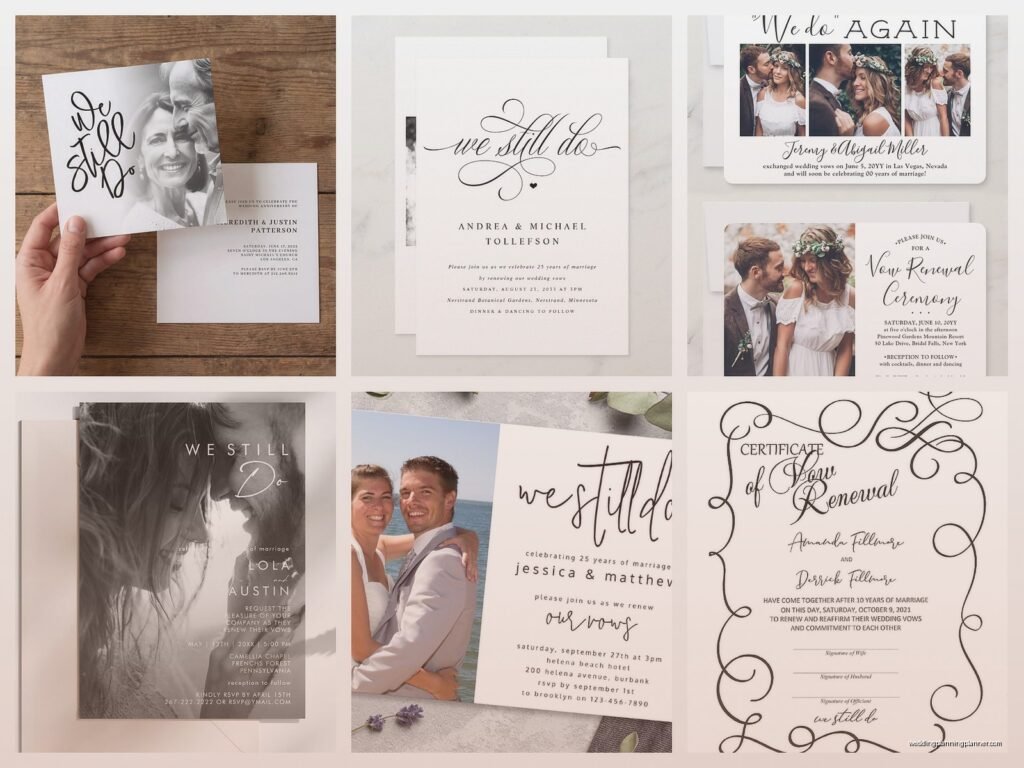
The design is where people get really stuck because vow renewal cards aren’t quite wedding invitations but they’re also not just party invites? They’re kinda their own thing. You want them to feel special and meaningful without being too formal or… I don’t know, trying too hard to recreate your original wedding.
Here’s what you need to decide on the design front:
Formal vs Casual Vibe
This totally depends on your actual event. If you’re having a full ceremony with 100 guests at a venue, your cards should reflect that formality. If it’s 20 people in your backyard with a barbecue after, then yeah a more casual card makes sense. I had a couple once who did their vow renewal at a beach bonfire and their cards literally said “Join us for s’mores and sweet promises” which was perfect for them but would’ve been weird for like, a country club event.
Photos or No Photos
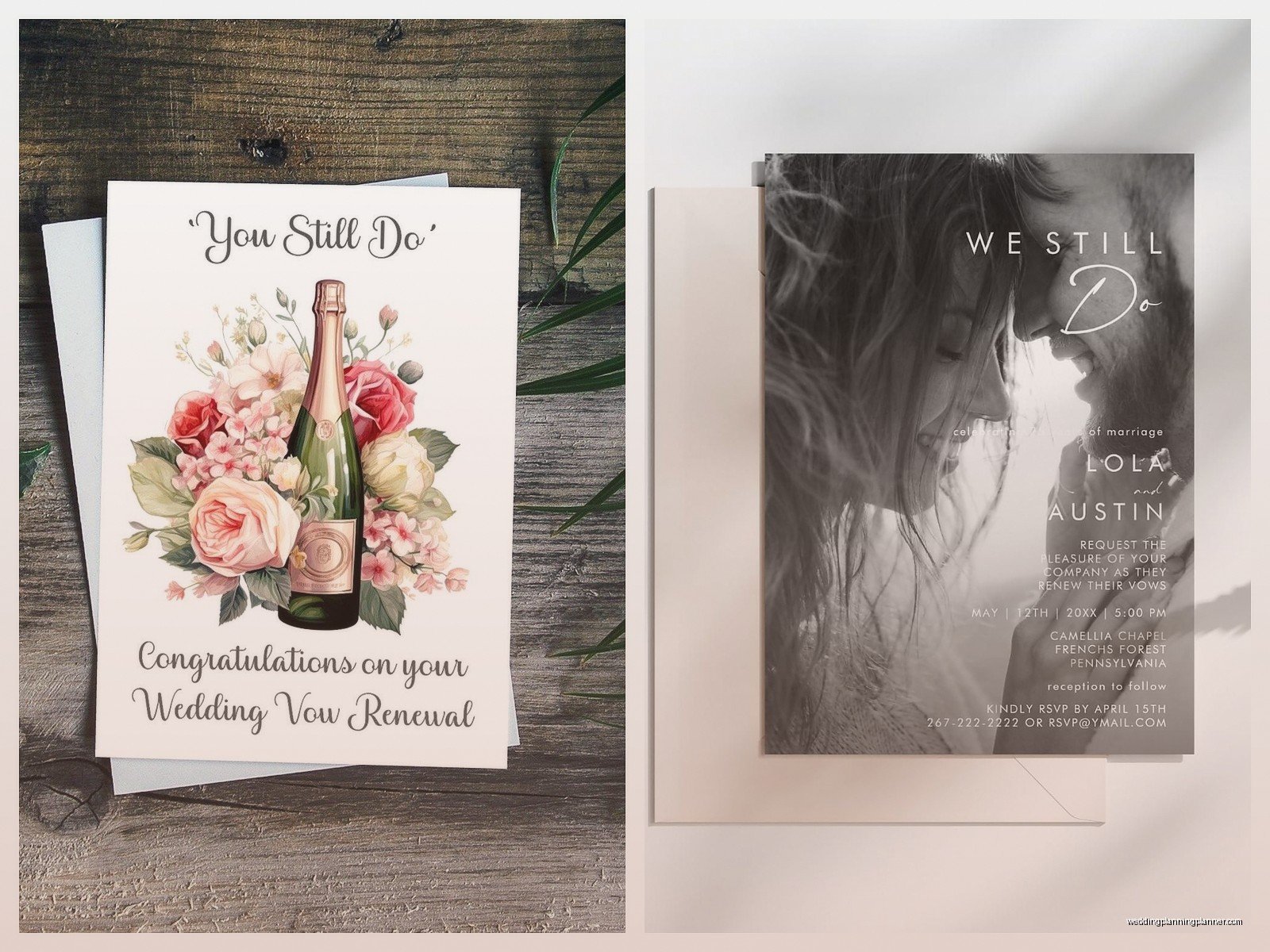
This is a big one. A lot of couples want to include a photo – either from their original wedding or a recent one. It’s sweet and personal but here’s what annoys me about this: people choose THE WORST photos sometimes. Like grainy, poorly lit, unflattering shots because they have some emotional attachment to that specific moment. You need a high-resolution image, good lighting, and something that actually looks good printed. Your printer will thank you.
If you’re using a wedding photo from like 1998, you might need to get it professionally scanned. Those old prints don’t just photograph well with your iPhone, trust me.
What Information Goes On These Things
Alright so the actual content. This is where I see people get really confused about wording and what’s appropriate. Unlike wedding invitations where there’s all these traditional formats, vow renewal cards are more flexible.
You definitely need:
- Your names (just your first names is fine, or full names if you want to be formal)
- What you’re celebrating (vow renewal, obviously, but some people specify the anniversary – “celebrating 30 years of marriage”)
- Date and time
- Location with full address
- RSVP information
Optional stuff that’s nice to include:
- Dress code
- Reception details if it’s separate from the ceremony
- Hotel information for out-of-town guests
- Your wedding website if you have one
- Registry information (though this is… look, I’ll get to this)
The Wording Thing
For formal vow renewals, you might see something like:
Jennifer and Michael Thompson request the honor of your presence as they renew their wedding vows in celebration of twenty-five years of marriage
For casual ones, it’s more like:
We’re renewing our vows! Join us as we celebrate 10 years together
You don’t need the whole “together with their families” thing that wedding invitations have because like… you’re already married. You’re hosting this yourselves. Unless your kids are actually hosting it for you as a surprise or anniversary gift, which is adorable and does happen.
The Registry Question That Everyone Asks
Okay so here’s the controversial part. Should you include registry information on vow renewal cards? Technically, traditional etiquette says nah, gifts aren’t expected for vow renewals and you definitely shouldn’t include registry info on the invitation itself. But in reality, people are gonna ask where you’re registered because they want to bring something.
The compromise I usually suggest: put your wedding website on the invitation, and have registry info on the website. Or just spread it through word of mouth. Your close friends and family will ask, and you can tell them then. Don’t make it seem like you’re throwing this event just to get more gifts because that’s… not a good look.
Some couples do a “no gifts please” line which is fine, or they suggest donations to a charity instead. That’s actually really nice for milestone anniversaries.
Printing Options and What They Cost
Let me break down your main printing options because the price range is WILD and you can spend anywhere from like $50 to $500+ depending on what you choose.
Online Print Services
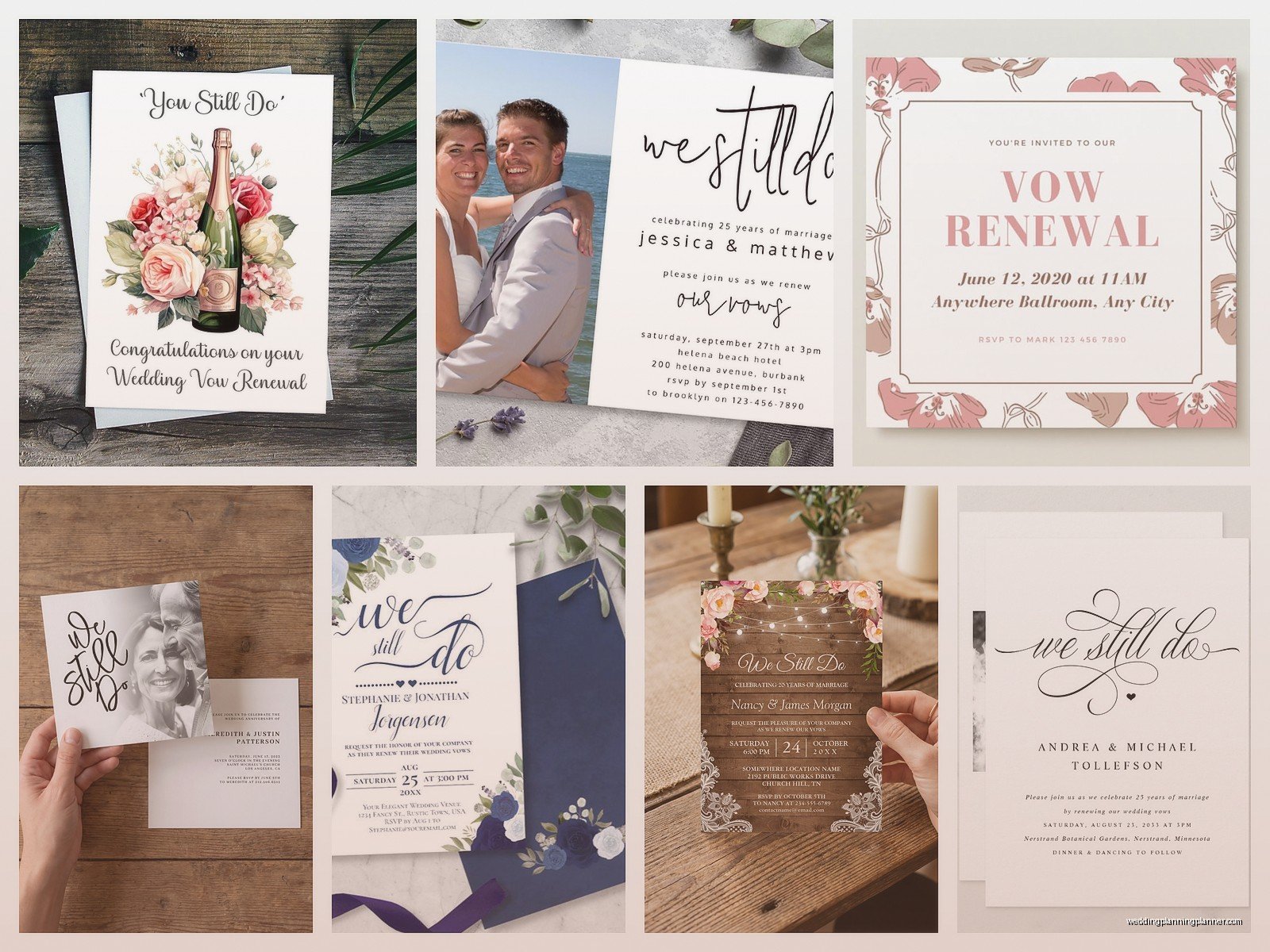
Places like Minted, Shutterfly, Vistaprint, Zazzle – these are your most affordable and convenient options. You pick a template, customize it with your info and maybe a photo, and they print and ship them to you. Usually you’re looking at $1-3 per card depending on the fancy factor. They have good quality, lots of options, and the whole process is pretty foolproof.
I used Minted for my own vow renewal cards back in summer 2021 (yes I practice what I preach) and they turned out beautiful. The only annoying thing was that their envelope addressing service was kinda pricey as an add-on.
Local Print Shops
If you want something more custom or you have a specific design vision, local printers can work with you. This usually costs more but you get more personalization and you can see paper samples in person which is nice. Expect to pay $3-5+ per card.
DIY Print-at-Home
Sites like Etsy sell templates you can customize yourself and print at home or take to a print shop. This is the cheapest option if you have a good printer and decent cardstock. Templates usually cost $5-20 and then you’re just paying for paper and ink. The quality won’t be as nice as professional printing but for a small casual event it’s totally fine.
Letterpress and Fancy Stuff
If you want to go all out – letterpress, foil stamping, custom illustration – you’re looking at boutique stationery designers and prices that start around $8-10 per card and go up from there. It’s gorgeous but like… do you need it for a vow renewal? That’s your call.
Quantity and Ordering Extra
Always order more than you think you need. ALWAYS. I can’t stress this enough. You’ll forget people, you’ll mess up addressing some envelopes, you’ll want a few for your own keepsakes. Order at least 10-15% more than your guest count.
So if you’re inviting 80 people (40 couples/families), you’re sending maybe 50 invitations. Order 60. The cost difference is minimal and you’ll be so glad you have extras. Plus some printing companies have minimums anyway – like you might have to order at least 25 or 50 regardless.
Proofing is Everything
This is where that spring 2023 disaster I mentioned comes in. My clients approved their proof without really reading it carefully and the date was wrong – they’d accidentally put April 15 instead of April 25. We caught it after 200 cards were already printed. The company was nice about reprinting at a discount but it delayed everything and stressed everyone out.
When you get your proof:
- Check the date like five times
- Check the time
- Check the address – every number and street name
- Check all the spelling of names
- Check your RSVP info
- Have someone else check it too
- Sleep on it and check again the next day
I know it seems paranoid but typos on printed cards are forever and they’re expensive to fix.
Envelope Situations
Most printing services include envelopes but sometimes they’re basic white and kinda boring. You can usually upgrade to colored envelopes, lined envelopes, or patterned ones for a few extra dollars. It’s a nice touch that makes the whole thing feel more special when people receive it.
Addressing options are either do it yourself by hand (time-consuming but personal), print labels (functional but not super elegant), use a printer’s addressing service (convenient but pricey), or hire a calligrapher (beautiful but expensive). There’s also those clear labels that you print addresses on and they kinda disappear on the envelope which looks nicer than regular labels.
My cat literally walked across a stack of addressed envelopes once with muddy paws and I had to redo like fifteen of them, so maybe keep your workspace pet-free during this process.
Matching Pieces You Might Want
Besides the main invitation card, you might want or need:
- RSVP cards with envelopes (pre-stamped is nice but costs more)
- Details cards with hotel info, directions, dress code, etc.
- Programs for the ceremony
- Thank you cards (order these at the same time to match)
You don’t need all this stuff. Honestly for smaller vow renewals, just the main invitation with all the info on it is totally fine. You can put additional details on your website. But if you’re doing a bigger event, the extra inserts are helpful so people have all the information.
Digital vs Paper Invitations
Okay so I know I’ve been talking about printed cards this whole time, but digital invitations are also an option. Services like Paperless Post, Greenvelope, or even just a nice email design can work for casual vow renewals. They’re cheaper, faster, and environmentally friendly.
The thing is… they don’t feel as special? Like if you’re having a meaningful ceremony and you really want people there, a physical invitation in the mail shows that you put thought and effort into it. Digital feels more like “hey we’re doing this thing if you wanna come” which might be the vibe you’re going for! But just think about what message you’re sending.
For really small intimate gatherings or if your guests are all tech-savvy and you’re trying to be eco-conscious, digital is fine. For milestone anniversaries or formal events, I’d go with printed.
Timing When You Mail Them
I mentioned this earlier but it’s worth repeating – mail your cards 6 weeks before the event. That gives people enough time to plan travel if needed, request time off work, find childcare, whatever. For destination vow renewals, you might want to send a save-the-date even earlier (like 3-4 months out) and then the formal invitation 6-8 weeks before.
Don’t mail them too early or people forget. Don’t mail them too late or people already have plans. Six weeks is the sweet spot for most events.
What About Save-the-Dates
You don’t really need save-the-dates for most vow renewals unless it’s a destination event or a major milestone anniversary where you really need people to block off that weekend. If you do send them, they can be more casual – postcards work great and they’re cheaper to mail.
Send save-the-dates 3-4 months out, then follow up with the formal invitation 6-8 weeks before like I said. This is really only necessary if you’ve got a lot of out-of-town guests or you’re competing with busy seasons like summer weddings or holidays.
Common Mistakes to Avoid
Let me just rapid-fire some things I’ve seen go wrong:
- Ordering cards before you’ve finalized your guest list and then realizing you need way more
- Choosing a design that doesn’t match your event style at all
- Forgetting to include an RSVP deadline (you need this to give final counts to caterers)
- Using fonts that are too small or too fancy to read – especially for older guests
- Not accounting for postage costs, especially if your invitations are heavy or oversized
- Assuming everyone checks email regularly if you go digital
- Making the cards too wedding-y if it’s meant to be more casual
Oh and one more thing that drives me crazy – when people try to DIY their cards but don’t have the skills or equipment and they end up looking really homemade in a bad way. If you’re gonna DIY, use a good template, invest in quality paper, and make sure your printer can handle it. Otherwise just use a printing service because the cost difference isn’t that huge and the quality difference is massive.
The Actual Ordering Process
When you’re ready to order, here’s basically how it goes with most online services:
You pick your design or template. You customize it with your text, choose your colors, upload photos if you’re using them. You select your paper type and finish – matte, glossy, textured, whatever. You choose your quantity. You add envelopes and any other matching pieces. You review your proof super carefully like I said. You approve it. You wait for them to print and ship.
Shipping usually takes 1-2 weeks depending on the company and whether you pay for rush service. Then you gotta address them all and mail them which takes however long it takes you to sit down and do it – could be one afternoon or could be spread over a week if you’re procrastinating.
Some companies offer design services where you can work with someone to create something custom, which is nice if you’re not confident in your own design skills or you have a specific vision that doesn’t fit their templates. This costs extra but might be worth it for a special anniversary.
Payment-wise, most places take credit cards obviously. Some offer payment plans for larger orders which seems kinda funny for invitations but whatever, if you need it you need it. Watch out for shipping costs because those can add up, especially if you need rush shipping because you waited too long to order (don’t do this).
