Planning Guides, Style Guide
Wedding Menu Samples: Reception Dinner Card Examples
Mar
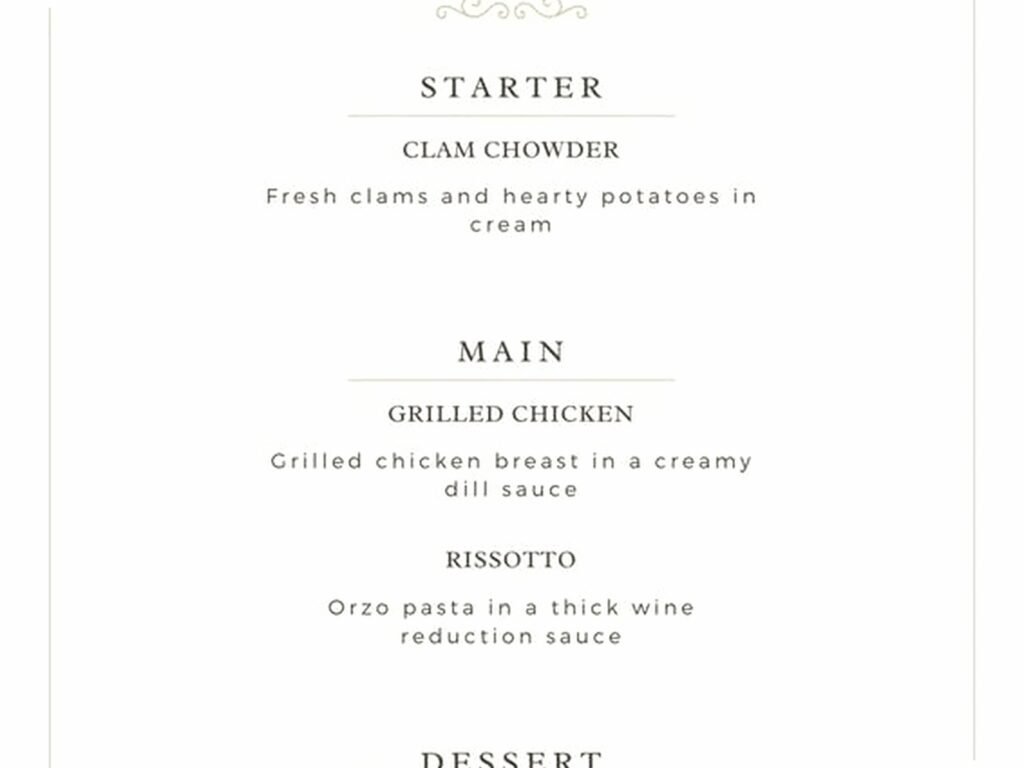
Menu Cards Are Not Just Paper With Food Words On Them
Okay so menu cards are one of those things couples either obsess over or completely forget about until like three weeks before the wedding and then panic-text me at 11pm asking if they even need them. The answer is yeah, you kinda do, especially if you’re doing a plated dinner or have any dietary restrictions guests need to know about.
I had this couple back in spring 2023 who wanted to skip menu cards entirely because they thought it was “too formal” but then their caterer served this really elaborate five-course meal and half the guests had no idea what they were eating. Someone literally asked if the amuse-bouche was the salad course. It was awkward and totally avoidable.
When You Actually Need Menu Cards
Not every reception needs them, just gonna be honest. If you’re doing a buffet where people can see the food, you don’t really need individual menu cards at each place setting. But you DO need them if:
- You’re serving a plated dinner with courses
- Guests pre-selected their meal and need to remember what they chose
- You have fancy food that isn’t immediately recognizable
- You’re trying to create a more formal dining experience
- Your venue or caterer is serving multiple courses
Buffets are different though. For buffets, you want those little tent cards or signs AT the buffet stations telling people what each dish is. I’ve seen so many buffets where everything looks beige and guests are just guessing. Label your food, people.
The Basic Format That Actually Works
Here’s what annoyed me for YEARS and still does sometimes: couples who make their menu cards so decorative and script-heavy that you literally cannot read what you’re about to eat. I’m all for beautiful calligraphy but not when I have to squint under candlelight to figure out if that’s “pan-seared salmon” or “pan-seared scallops” because my fish allergy is not playing games.
A basic menu card should have:
- Your names or monogram at the top (optional but nice)
- The word “Menu” or “Dinner” as a header
- Each course listed in order
- Brief descriptions of each dish
- Any relevant dietary info if needed
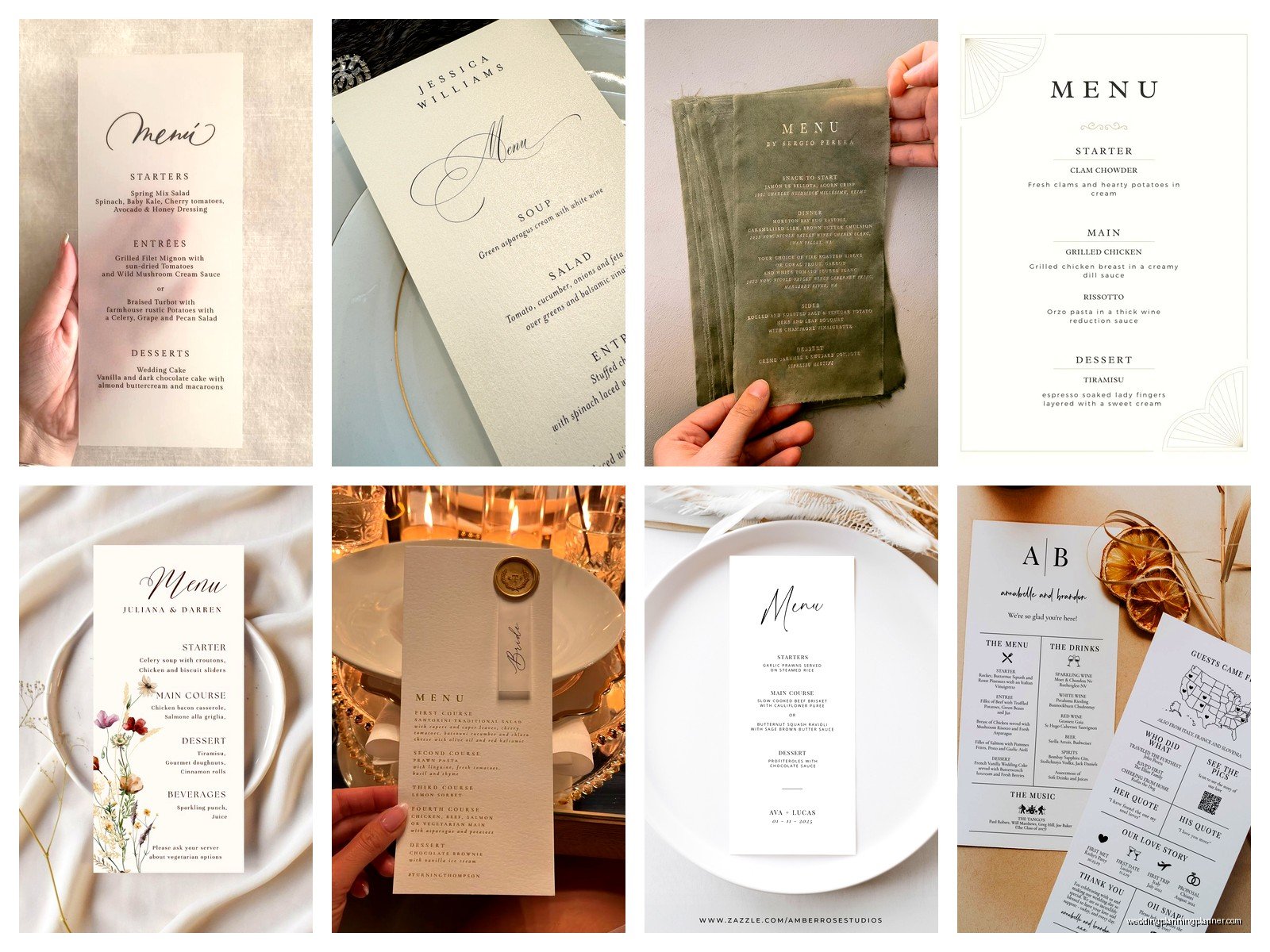
The layout should be simple enough to read but pretty enough to match your wedding vibe. It’s sitting right there at the place setting so it’s definitely part of the tablescape whether you like it or not.
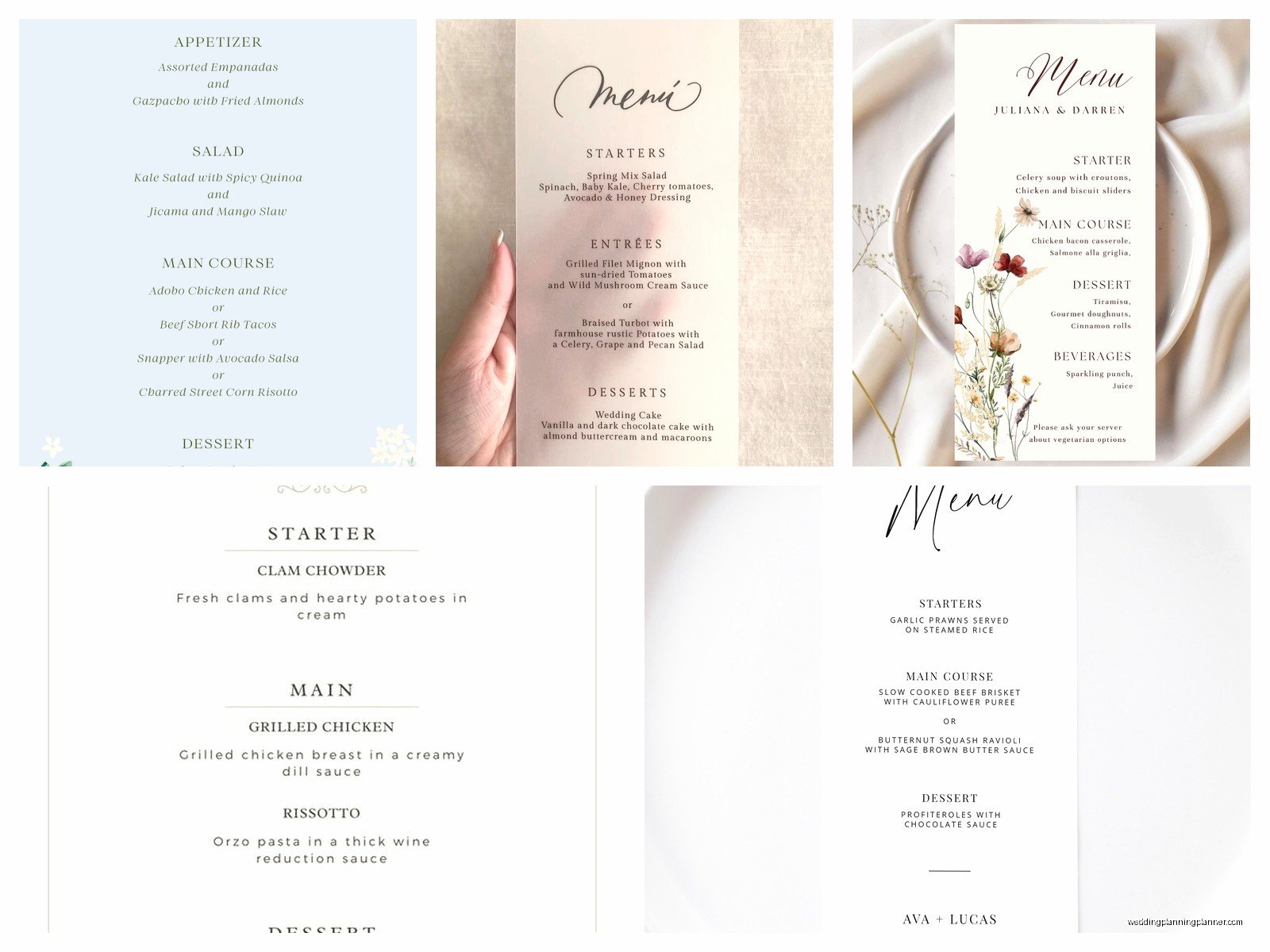
Sample Menu Card Examples By Style
Classic Formal
This is your traditional wedding menu. Clean, elegant, straightforward:
Emma & James
Menu
First Course
Heirloom Tomato Salad
burrata, basil, aged balsamicSecond Course
Herb-Roasted Chicken Breast
truffle mashed potatoes, seasonal vegetables, red wine reduction
or
Grilled Atlantic Salmon
lemon butter sauce, wild rice pilaf, asparagusDessert
Vanilla Bean Wedding Cake
fresh berries, champagne buttercream
See how it’s organized by courses and gives just enough detail? You know what you’re getting but it’s not a whole novel.
Rustic/Casual
For barn weddings, outdoor celebrations, less formal vibes:
Dinner
Garden Salad
mixed greens, cherry tomatoes, house vinaigretteBBQ Pulled Pork
slow-smoked with our signature sauce
and
Herb-Grilled ChickenServed with:
Creamy Coleslaw
Cornbread
Mac & Cheese
Seasonal Grilled VegetablesWedding Cake & Pie Bar for Dessert
Notice this one is less structured because the whole vibe is more family-style or buffet-ish even if it’s plated. The language is more relaxed too.
Modern Minimalist
This is having a moment right now and honestly I love how clean it looks:
MENU
Butter Lettuce Salad
Filet Mignon
fingerling potatoes, broccolini, bordelaise
—
Pan-Seared Sea Bass
cauliflower purée, brussels sprouts, citrus beurre blancChocolate Torte
Super simple. Just dashes or line breaks to separate things. No italics, minimal descriptions. Very editorial looking.
Destination/Cultural
If you’re incorporating specific cuisine or having a destination wedding:
Benvenuti
Antipasti
Caprese Skewers
Prosciutto-Wrapped MelonPrimi
Handmade Pappardelle
wild boar ragù, parmigiano-reggianoSecondi
Osso Buco alla Milanese
saffron risotto, gremolata
or
Branzino al Forno
roasted potatoes, olive tapenadeDolce
Tiramisu
Wedding Cake
Using the Italian course names adds authenticity and gives the menu personality. My cat knocked over my coffee while I was typing this section which feels very on-brand for how my workdays go lately.
The Pre-Selected Meal Situation
Okay this is where it gets tricky and where I see the most confusion. If your guests chose their meals in advance on the RSVP card, you have a few options for the menu card:
Option 1: List everything and mark their choice
Some couples print different menu cards with a small symbol next to what that guest ordered. Like a little star or dot next to “Beef” if they chose beef. This helps the catering staff too.
Option 2: Just list everything, no marks
List all the options and trust that people remember what they ordered or will figure it out when the plate arrives. This is simpler for printing since you don’t need customized cards.
Option 3: Personalized cards with only their meal
This is fancy and requires way more work but some couples do it. Each guest gets a card that only lists what THEY’RE having. Honestly it’s kinda extra and I usually talk clients out of it because the printing costs are ridiculous and the coordinator has to make sure the right card gets to the right seat which is just… it’s a lot.
I had this wedding in summer 2021 where we did Option 1 and the bride insisted on using these tiny gold star stickers to mark each person’s choice by hand the night before. We were there until 2am sticking little stars on 180 menu cards. Never again. Now I tell couples to just have the printer add a subtle symbol if they really want it.
Dietary Restriction Indicators
This is actually super important and I wish more couples thought about it. You can note dietary accommodations right on the menu card:
Main Course
Grilled Chicken Breast
quinoa pilaf, roasted vegetables
(GF, DF)
Or at the bottom of the card:
GF = Gluten-Free | DF = Dairy-Free | V = Vegetarian | VG = Vegan
This way guests with restrictions can see at a glance what’s safe for them or know that accommodations have been made. The catering staff should also know who needs what, but having it on the card is an extra layer of clarity.
Size and Placement
Menu cards are usually one of these sizes:
- 4×6 inches (most common, fits in a standard frame if guests want to keep it)
- 4×9 inches (tall and narrow, very elegant)
- 5×7 inches (bigger, easier to read, takes up more table space)
- Custom sizes that match your invitation suite
You can place them directly on the plate, tucked into the napkin, standing in a little holder, or flat at the place setting above the dinner plate. I usually suggest flat above the plate or in the napkin because anything on the plate has to be moved immediately and can get dirty.
What NOT To Do
Don’t use font smaller than 10pt. Your grandmother cannot read 8pt script font in dim lighting and she will be annoyed about it.
Don’t overcomplicate the descriptions. “Chicken breast with a delicate herb-infused butter sauce featuring notes of thyme and rosemary, accompanied by hand-selected seasonal vegetables harvested from local farms and…” like nah, just say “herb butter chicken, seasonal vegetables.” We don’t need the chef’s memoir.
Don’t forget to proofread. I’ve seen “grilled shrimp” spelled “grilled shirmp” and it was on 200 printed cards. Expensive mistake.
Don’t use colors that don’t show up. Light pink text on white paper? Can’t read it. Gold foil on champagne cardstock? Pretty but illegible.
Buffet Station Cards
Since I mentioned buffets earlier, here’s how those should look. These are usually 4×6 or 5×7 cards in acrylic stands or frames at each food station:
Salad Station
Caesar Salad
Mixed Green Salad
Pasta Salad
Assorted Dressings
Carving Station
Slow-Roasted Prime Rib
Horseradish Cream | Au Jus
Dinner Rolls
Keep them organized by station or food type so guests can navigate easily. Nobody wants to wander around a buffet confused about whether that’s chicken or pork or… you get it.
Drinks Menu Cards
Oh and if you’re doing signature cocktails or have a full bar, you might want a drinks menu too. These can be separate cards at the bar area or at each table:
Signature Cocktails
The Emma
elderflower liqueur, prosecco, fresh strawberriesJames’ Old Fashioned
bourbon, bitters, orange peel, cherryBeer | Wine | Full Bar Available
Makes it feel more curated and gives guests something to try beyond just “vodka soda please.”
Printing and Paper Options
You can print these yourself if you’re crafty and have good paper, or order them from the same place doing your invitations for a cohesive look. Most couples do:
- Professional printing on cardstock (100-120 lb weight looks substantial)
- Letterpress if you’re feeling fancy and have budget
- Digital printing for cost-effectiveness
- Home printing on nice paper from a craft store
The paper should match or coordinate with your invitation suite in terms of color and style but doesn’t have to be identical. I’ve seen couples use the same paper but different fonts, or same fonts but different colors, whatever works.
Timing and Logistics
Order or make your menu cards after you’ve finalized your actual menu with the caterer, which usually happens about 2-3 months before the wedding. Don’t order them too early or you might need to change things. I learned this the hard way when a client ordered menu cards six months out and then the venue changed caterers and the entire menu changed and yeah, those cards went in the trash.
You need one card per guest or one per couple if you’re trying to save money, though I think everyone should get their own because it’s just nicer and also what if the couple ordered different meals and they both want to see what they’re getting or…
Bring them to your rehearsal or have someone deliver them to the venue the day before so your coordinator or venue staff can place them at each setting. Don’t wait until the wedding day because you’ll be too busy getting ready and it’ll be chaos.
Real Talk About Cost
Menu cards can range from like $1-10 per card depending on how fancy you go. Basic cardstock printed at home? Maybe 50 cents each. Letterpress with gold foil and custom die-cut shapes? Could be $8-10 each. For 150 guests that’s anywhere from $75 to $1500 just for menu cards which sounds insane but that’s weddings.
If you’re on a budget, skip the fancy finishes. Nice paper and good design are enough. Or do one menu card per table instead of per person and make it a bigger display piece in a frame that people can reference. Not traditional but it works and saves money.
Digital Menus
Some couples are now doing QR codes that link to a digital menu on their wedding website which is very 2024 of them but honestly I’m not a huge fan because it requires people to pull out their phones during dinner and also assumes everyone has their phone on them and charged and has service in your venue which is not always guaranteed. But it’s an option if you’re really trying to be paperless I guess.
Alright I think that covers pretty much everything about menu cards, from what they should say to how to format them to when you actually need them and when you can skip them entirely.
