
Planning Guides, Style Guide
Wedding Reception Timeline Examples: Sample Ideas & Examples
Apr
The Basic Traditional Timeline (5-6 Hours)
Okay so the most common reception timeline I see is the traditional 5-6 hour setup and honestly it works for like 80% of weddings. You’re looking at cocktail hour starting around 5:30 or 6pm, then dinner, then dancing until 11pm or midnight. Simple enough right?
Here‘s how it typically breaks down:
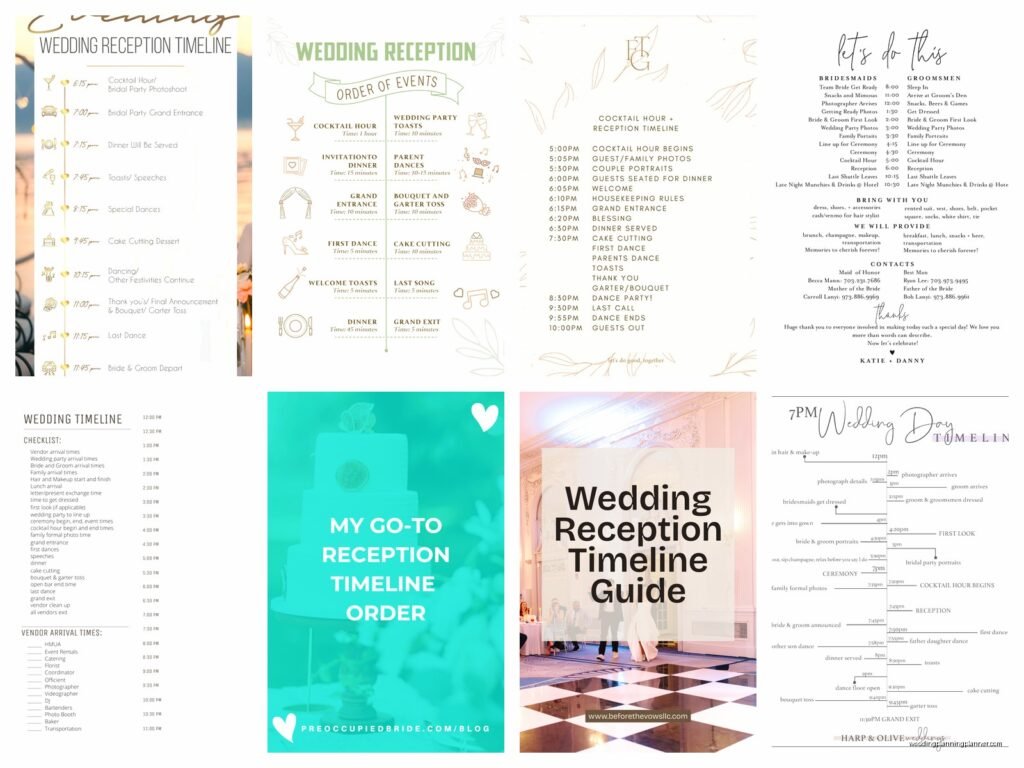
- 5:30-6:30pm: Cocktail hour while you’re off taking photos
- 6:30pm: Grand entrance (this is where the DJ announces you as Mr. and Mrs. Whatever)
- 6:45pm: First dance, parent dances
- 7:00pm: Dinner service starts
- 8:00pm: Toasts during or right after dinner
- 8:30pm: Cake cutting
- 8:45pm: Open dancing
- 11:00pm: Last dance and send-off
I had this couple back in summer 2021 who insisted they wanted a 4-hour reception because they were “not party people” and I’m telling you, by 9pm when things were wrapping up, half their guests were like wait that’s it? The energy was just starting to peak and then boom, over. So unless you’re doing a brunch wedding or have a really good reason, don’t shortchange yourself on time.
The Dinner-First Timeline (My Personal Favorite)
This one’s kinda become my go-to recommendation lately because it just flows better for certain couples. Instead of doing all the formal stuff right when guests arrive, you let people eat first when they’re actually hungry, then do the special moments.
- 6:00pm: Guests arrive and are seated immediately
- 6:15pm: Welcome speech from parents or couple
- 6:20pm: Dinner service
- 7:30pm: Grand entrance after dinner
- 7:35pm: First dance and parent dances
- 7:50pm: Toasts
- 8:15pm: Cake cutting
- 8:30pm: Dancing starts
- 11:30pm: Send-off
The thing about this timeline is people aren’t standing around waiting to eat while you do your first dance. They’re not hangry during toasts. And honestly the energy on the dance floor is better because everyone’s already loosened up from dinner and wine.
When This Works Best
If your ceremony and reception are at the same venue, this is perfect. No cocktail hour needed because there’s no gap to fill. Also if you have older guests or families with kids who need to eat at reasonable times, feeding them first is just… it’s just kinder, you know?
The Brunch or Lunch Reception Timeline
These are totally underrated and also way less expensive but that’s a different conversation. Brunch receptions usually run 11am-3pm or lunch ones go 1pm-5pm.
Sample brunch timeline:
- 10:30am: Ceremony
- 11:00am: Cocktail hour (mimosas, bloody marys, coffee)
- 12:00pm: Grand entrance
- 12:05pm: Welcome and blessing
- 12:15pm: Brunch service (usually buffet style)
- 1:15pm: First dance
- 1:20pm: Toasts
- 1:45pm: Cake cutting
- 2:00pm: Open dancing or lawn games
- 3:00pm: Farewell
One thing that annoyed me about brunch weddings at first is that couples would try to cram in ALL the same traditions as an evening wedding and it felt forced. Like you don’t need a big dramatic send-off at 3pm when it’s bright sunshine outside. Just… say goodbye to people normally? But I’ve learned to let couples do what makes them happy even if it looks weird to me.
The Cocktail-Style Reception (No Seated Dinner)
This is for couples who wanna prioritize mingling over sitting. It’s basically an elevated cocktail party. Usually 3-4 hours max.
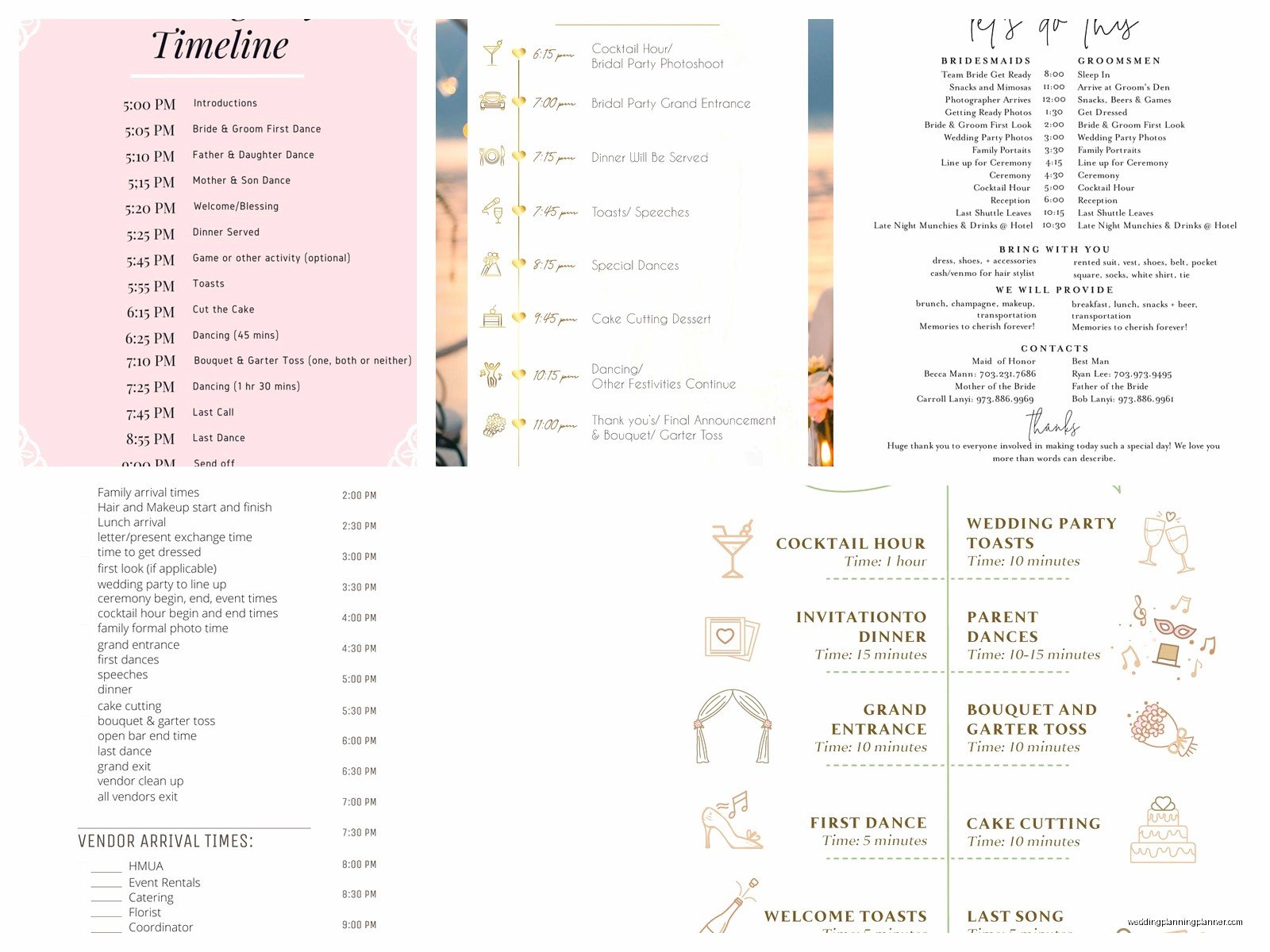
- 6:00pm: Reception begins, passed apps and drinks
- 6:30pm: More substantial food stations open
- 7:00pm: Brief welcome speech
- 7:15pm: First dance
- 7:30pm: Toasts (keep these SHORT)
- 7:45pm: Cake cutting
- 8:00pm: Dancing and mingling
- 10:00pm: Farewell
The key here is you gotta have LOTS of food stations and seating areas even if there’s no assigned seats. People need somewhere to put their plates down. My cat knocked over my coffee while I was planning one of these last month and the stain on my notes kinda looked like… anyway, I learned that you need way more cocktail tables than you think.
Who This Works For
Smaller weddings (under 75 people), couples who hate being the center of attention for long periods, or if you’re doing a venue that doesn’t work well for seated dining. Also it keeps costs down because you’re not doing full plated meals.
The Late Night Party Timeline
Some couples do a ceremony and small dinner earlier, then throw a big party reception later. This is very common in certain cultures or for destination weddings.
- 8:00pm: Guests arrive, immediate dancing and cocktails
- 9:00pm: Couple makes entrance
- 9:15pm: First dance
- 9:30pm: Late night snacks served (think tacos, pizza, sliders)
- 10:00pm: Cake cutting
- 10:15pm: Dancing continues
- 1:00am: Party ends
This timeline assumes people have already eaten dinner on their own or you did a private family dinner earlier. It’s all about the party atmosphere. No toasts usually, or if there are toasts they’re super casual.
Things That Mess Up Every Timeline
Look, I’ve been doing this for almost 20 years and there are certain things that ALWAYS throw off the schedule and you just gotta plan for them.
Photos run late. Always. Build in 15 extra minutes. If your ceremony ends at 5 and cocktail hour is 5-6, tell your photographer you need to be done by 5:45 not 6:00.
Dinner service takes forever. If you’re doing plated dinner with more than 100 people, it’s gonna take at least an hour from when the first person is served to when the last table gets food. You can’t rush this. Well you can but then the catering staff hates you and the food is cold.
Toasts go long. Even when you tell people to keep it to 3 minutes, someone’s dad is gonna tell a 10-minute story about teaching you to ride a bike or… I had this wedding in spring 2023 where the maid of honor’s toast was SEVENTEEN MINUTES and included a PowerPoint presentation that she’d apparently spent weeks on and nobody knew how to stop her without being rude so we all just stood there while the salads wilted.
The cake cutting becomes a whole thing. It should take 5 minutes. It takes 15 because the photographer wants specific shots, then the caterer has to actually cut it and plate it, then suddenly everyone wants a slice RIGHT NOW.
Buffer Time Is Your Friend
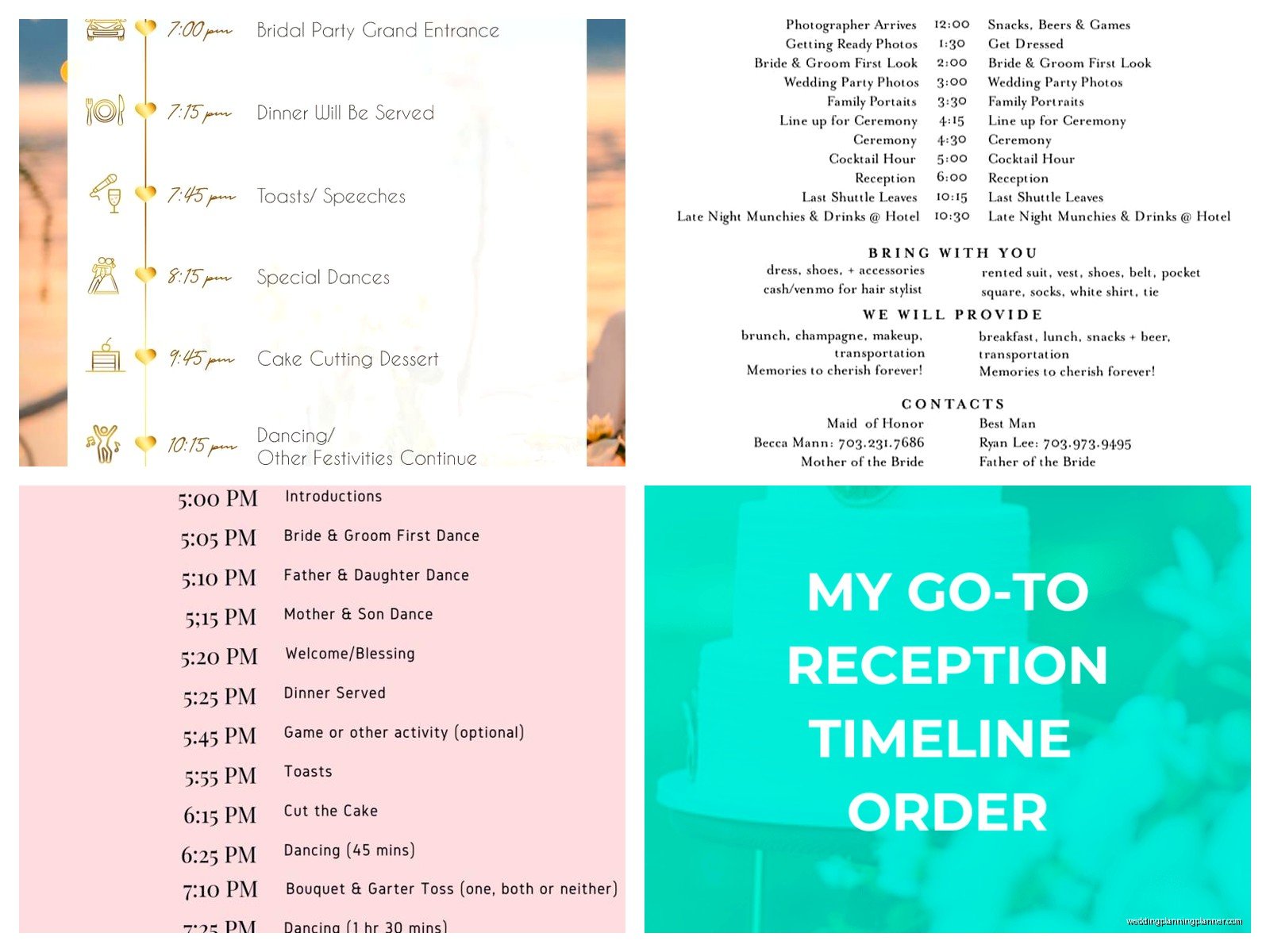
When I’m creating timelines now, I build in buffer periods that aren’t labeled as anything specific. Like between dinner ending and toasts starting, I’ll put 15 minutes that’s just labeled “transition” or something. This gives you breathing room when things run over.
You can also use these buffers for spontaneous stuff. Maybe grandma wants to say something unexpected, or you decide you wanna do a special dance with your brother, or whatever. Having flex time means you’re not constantly behind schedule and stressed.
Cultural Considerations Change Everything
The timelines I’ve shown are pretty standard for American weddings but if you’re incorporating cultural traditions, you’re gonna need to adjust. Indian weddings might have multiple events over several days. Jewish weddings have the hora which needs its own time block. Chinese wedmons include tea ceremonies and specific timing for certain elements.
I always ask couples upfront what cultural or religious traditions they’re including because that affects everything. Like you can’t just stick a 30-minute tea ceremony into a standard timeline and expect everything else to stay the same, that’s not how time works.
Vendor Timing Requirements
Your vendors need specific things to happen at specific times and this is something couples forget about constantly.
Photographers usually want first dance and cake cutting while there’s still good light if you’re in a space with windows. They also need to leave at their contracted time so if you want them for the send-off, that needs to happen before their time is up.
Caterers need to know when to fire certain courses. If you’re running 30 minutes behind, your carefully timed meal service is gonna be affected. Cold apps sit out too long, hot entrees get overcooked.
DJs and bands are usually contracted for specific hours. If you want them to play during cocktail hour AND the reception, make sure that’s in the contract and timeline.
Venues have hard stop times usually. If your venue kicks everyone out at 11pm, you need to be doing last dance by 10:45 and have people clearing out by 11. Not starting the send-off at 11.
The Realistic vs. Ideal Timeline Problem
Here’s something I see all the time – couples create this beautiful, perfectly timed timeline where everything flows smoothly and takes exactly the amount of time they think it will. Then reality hits.
Your ideal timeline might have cocktail hour from 5-6, but what happens when Aunt Susan gets lost and shows up at 5:45? Or when the venue’s AC breaks and everyone’s outside sweating instead of inside mingling? Or when your photographer wants to catch the sunset at 6:15 which means you’re gonna be late to your own grand entrance?
I always create two timelines now. The “official” one that goes to vendors and the wedding party, and then a “realistic” one that builds in delays and has notes about what can be cut or shortened if needed. Because something WILL go wrong or run late, that’s just how weddings work.
What You Can Actually Skip
Not everything needs to be in your timeline. Seriously. The bouquet toss? Optional. Garter toss? Very optional (and kinda outdated honestly). Grand exit? Only if you want it.
I had a couple last fall who cut their timeline down by 45 minutes just by eliminating traditions they didn’t care about. They skipped the bouquet toss, garter toss, anniversary dance, and formal grand exit. Instead they just partied until the venue closed and said goodbye to people casually. It was perfect for them.
Think about what actually matters to you and your partner. If you don’t want a first dance because you hate being watched, don’t do one. If toasts make you anxious, keep them super short or skip them entirely. It’s your wedding.
The Role of the Timeline Captain
Someone needs to be in charge of keeping things on track and it CANNOT be you. You’ll be busy getting married and celebrating. This is usually your wedding planner (hi), but if you don’t have one, assign this job to someone responsible who isn’t in the wedding party.
This person needs:
- A copy of the timeline
- Contact info for all vendors
- Authority to make small decisions without bothering you
- The ability to be slightly pushy when needed
They’re the one who tells the DJ it’s time for cake cutting, who rounds up the family for photos, who makes sure dinner service starts on time. You can’t do this yourself because you’ll be distracted by actually enjoying your wedding.
Seasonal Timing Differences
Summer weddings have different timing needs than winter ones. In summer you might want to avoid the hottest part of the day, so ceremonies at 6pm or later are common. Winter weddings might start earlier because it gets dark at like 4:30pm and nobody wants to arrive in the dark.
Also consider sunset timing if you want golden hour photos. Your photographer will tell you when that is, and you might want to build in 20 minutes during cocktail hour or right before dinner to sneak out for those shots.
Kids and Elderly Guests
If you have a lot of children or elderly guests, earlier timelines work better. A reception that goes until midnight is rough for a 4-year-old or your 85-year-old grandmother. You might want to do a 4-7pm reception, or at least plan the important stuff (toasts, first dance, cake) earlier so those guests can leave without missing everything.
Some couples do a “kids exit” around 8 or 9pm where families with young children leave and then the party continues for the adults. Just make sure the important family moments happen before that cutoff.
How to Communicate Your Timeline
Once you’ve figured out your timeline, you need to share it with the right people. Your vendors need the detailed version with specific times. Your wedding party needs a simplified version with just when they need to be where. Your families might need an even simpler version.
I usually create like three different versions of the same timeline because not everyone needs every detail. Your DJ doesn’t need to know what time hair and makeup starts. Your bridesmaids don’t need to know what time the caterer is setting up.
And put someone’s phone number on every timeline for questions. Usually mine, which is why I answer weird texts at 2am sometimes but that’s part of the job I guess.
