Planning Guides, Style Guide
Wedding Stationery: Complete Paper Suite Guide
Mar
Save the Dates Come First Obviously
So save the dates should go out like 6-8 months before your wedding, maybe even earlier if you’re doing a destination thing. I had this couple in spring 2022 who sent theirs out literally 14 months ahead and honestly? It was smart because half their guests were international and needed time to figure out passports and stuff.
The save the date needs your names, the wedding date, the city/location (not the full venue address yet), and maybe a note that formal invitation to follow. That’s it. You don’t need your whole life story on there. I get so annoyed when couples try to cram their entire wedding website URL in microscopic font at the bottom like… just wait for the actual invitation, you know?
For design, you can do:
- Postcards (cheapest to mail, my personal fave)
- Flat cards in envelopes
- Magnets (guests actually keep these)
- Those weird bookmark things that I’ve only seen work once
Magnets cost more but people stick them on fridges and actually remember your date. Postcards get lost in the junk mail pile sometimes but they’re like half the price to send because no envelope and lighter weight.
Invitations Are Where People Lose Their Minds
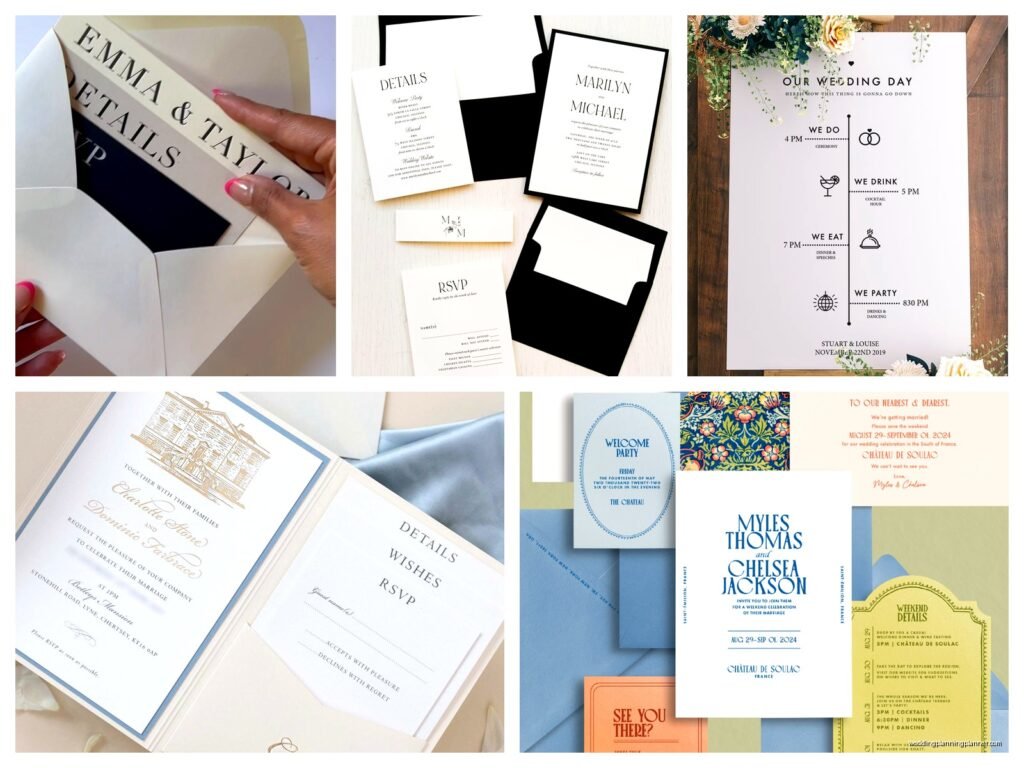
Okay so the actual invitation suite is where things get complicated and also expensive really fast. Your main invitation should go out 8-10 weeks before the wedding. Not earlier because people lose them, not later because that’s just rude and no one can plan.
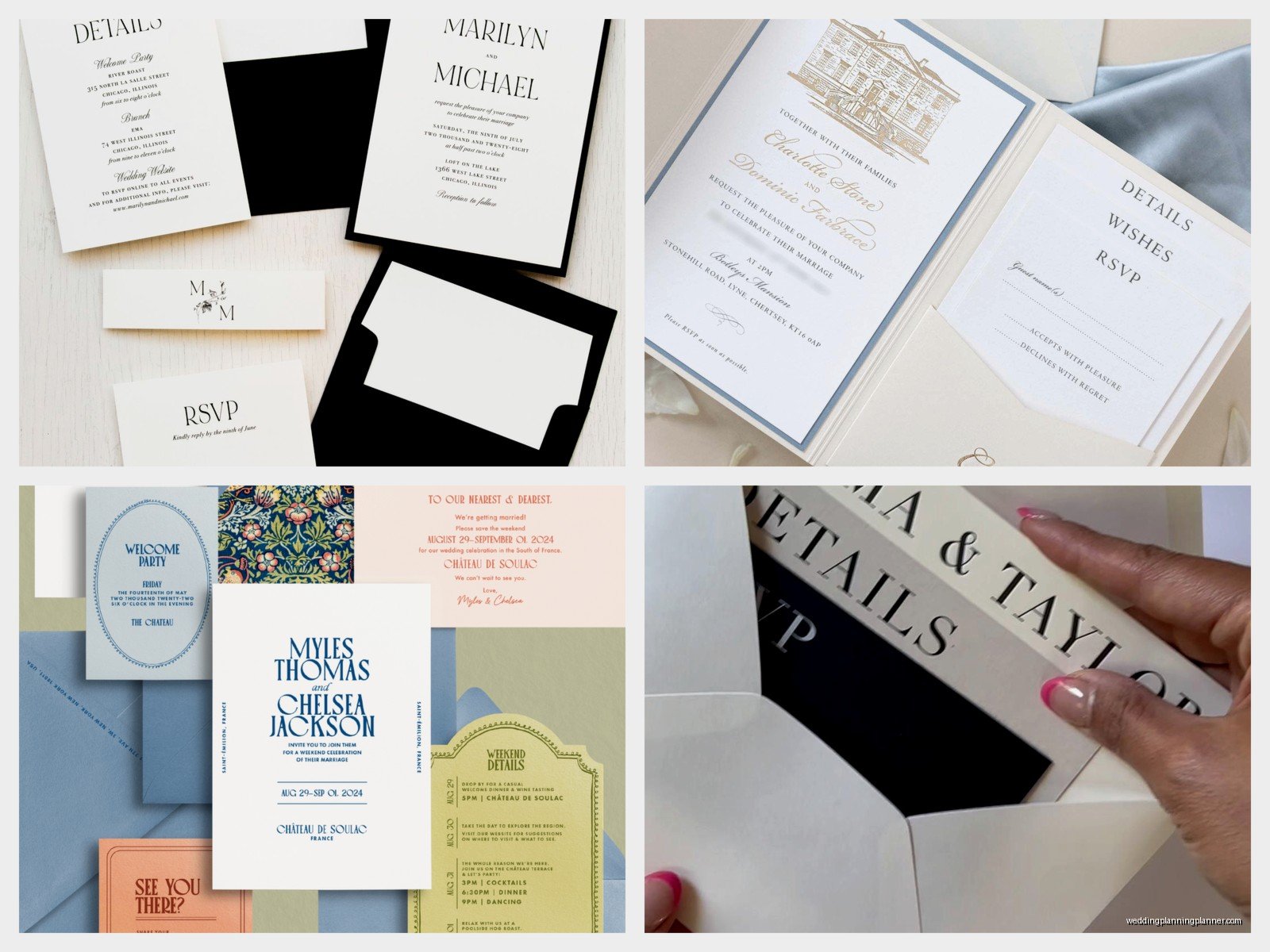
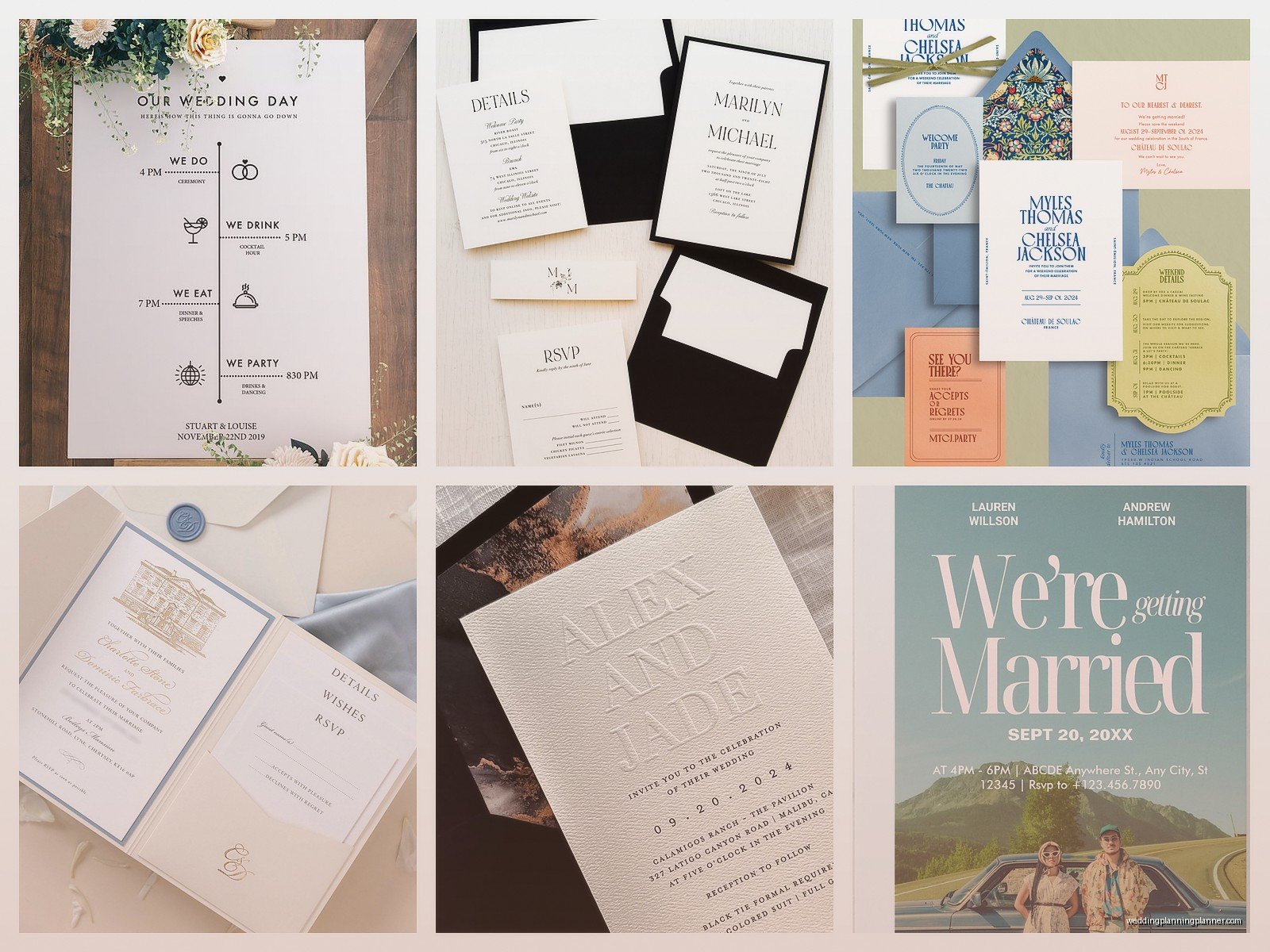
A full traditional suite includes:
- The main invitation card
- Reception card (if ceremony and reception are different locations or times)
- Response card with envelope
- Accommodations card
- Direction/map card (kinda outdated with phones but some people still do it)
- Weekend events card if you’re doing welcome drinks or day-after brunch
But like, you don’t need all of that. Honestly most of my couples now do the main invite, response card, and maybe one details card with hotel info and website. Everything else goes on the wedding website.
My cat just knocked over my coffee mug while I’m writing this, great.
Wording For The Main Invitation
Traditional wording is super formal and follows this format if parents are hosting:
Mr. and Mrs. Parent Names
request the honour of your presence
at the marriage of their daughter
Bride Name
to
Groom Name
But most people now do something like “Together with their families” or just put both their names at the top because they’re paying for it themselves and also it’s 2024, nobody cares about that formal stuff as much.
One thing that drives me absolutely up the wall is when couples use “request the pleasure of your company” for a religious ceremony. It’s “honour of your presence” for religious, “pleasure of your company” for non-religious. Does anyone actually care? Probably not. Does it make my eye twitch when it’s wrong? Yes absolutely.
of
guests will attend” thing to control plus-ones but honestly people still bring extra humans anyway so. And number the back of your response cards with the guest list number in tiny print or light pencil because I promise you, someone will send back a card that just says “can’t wait!! – M” and you’ll have no idea which M out of seventeen M names it is.
I learned that trick summer 2024 when I had a bride literally crying because she had 8 response cards with zero identifying info and 200+ guest list. We figured it out eventually by matching handwriting to addresses but what a nightmare.
Paper Types And Printing Methods That Actually Matter
Okay so paper weight is measured in pounds or GSM. For invitations you want:
- 80-100 lb cover weight (around 220-270 GSM)
- Anything lighter feels cheap and flimsy
- Anything heavier gets really expensive to mail
Card stock types:
- Matte – classic, clean, takes most printing well
- Eggshell/linen texture – hides printing imperfections, looks expensive
- Glossy – looks cheap for invitations honestly, don’t do it
- Cotton fiber – gorgeous and luxe but $$$
- Recycled – has visible texture/flecks, very trendy right now
Printing Methods From Cheapest To Most Expensive
Digital printing is totally fine now, the quality is really good. It’s the cheapest option and works for basically everything. Colors are bright and accurate. No setup fees usually.
Thermography is that raised printing that looks like engraving but isn’t. It’s shiny and dimensional. Costs more than digital, less than letterpress. Some people think it looks dated but I think it’s elegant when done right.
Letterpress is where the text is pressed into the paper so you get an impression. It’s beautiful and very tactile and also very expensive. You need thick soft paper for it to work well – like 100% cotton. The setup costs alone are gonna be several hundred dollars because they have to make custom plates.
Engraving is the most formal and expensive. The text is actually carved below the surface and you can feel it on the back of the paper. It’s what like, the Royal Family uses. Unless you’re doing a super formal traditional wedding or have money to burn, it’s probably overkill.
Foil stamping is metallic foil pressed onto paper. Looks amazing, very trendy, also expensive because of setup. You can do gold, silver, rose gold, copper, even colored foils.
I had this couple who wanted letterpress invitation with foil accents and like… the quote was $4000 for 150 invitations and they almost fainted. We ended up doing digital printing with foil borders and it looked 90% as good for like $800.
Envelope Addressing Because Everyone Asks About This
You’ve got options:
- Handwrite them yourself (free, time-consuming, gets old fast)
- Hire a calligrapher ($2-5 per envelope usually)
- Print directly on envelopes (easy but some people think it’s impersonal)
- Print on clear labels (please don’t, it looks bad)
- Print on white labels cut to size (slightly better but still obviously labels)
If you’re printing on envelopes, do a test run first because printers jam with thick envelopes all the time. And some envelope colors don’t print well – dark colors need light ink which most home printers can’t do.
For formal addressing it’s like:
Outer envelope: Mr. and Mrs. John Smith
Inner envelope: Mr. and Mrs. Smith or John and Jennifer
But again, most people skip inner envelopes now unless they’re doing ultra-formal. Inner envelopes were originally to keep the outer one from getting dirty during delivery by horse or whatever, so… not super relevant anymore.
The Whole Guest Name Thing
If someone gets a plus-one, you write both names if you know the partner’s name. “Ms. Sarah Jones and Mr. Michael Chen” – not “Ms. Sarah Jones and Guest” unless you truly don’t know who they’re bringing.
Kids under 18 go on the inner envelope only in traditional etiquette, but if you’re not doing inner envelopes then you write “The Smith Family” or list the kids names under the parents on the outer. If you DON’T list the kids names, that’s supposed to signal it’s adults-only, but people still show up with kids anyway so you gotta be explicit about that somewhere.
Postage Is More Annoying Than You Think
Take a fully assembled invitation to the post office and have them weigh it before you buy stamps. Square envelopes cost more. Oversized costs more. Anything over 1 oz costs more. Wax seals add weight and thickness and the post office will sometimes hand-cancel them (meaning they don’t go through machines) which costs extra.
Speaking of wax seals – they’re gorgeous but like half of them break off in transit or smudge. If you’re gonna do them, use flexible wax (not the brittle traditional kind) and put them on the back flap where they’re more protected. Or use glue-on wax seals that just look like wax.
Vintage stamps are a thing now where people buy old unused stamps and combine them to make the right postage. Looks cool and unique but it’s time-consuming to stick 5 stamps on every envelope.
Custom stamps with your photo are available through USPS and they’re actually not that expensive – like $20 more than regular stamps for a sheet. Kind of a nice touch if you’re into that.
Assembly Order
This is how you stack everything before putting it in the envelope:
- Invitation card face up (this is the biggest piece, goes on bottom)
- Tissue paper if you’re using it (traditionally protects from ink smudges but not necessary with modern printing)
- Reception card
- Other detail cards
- Response card tucked under the flap of its envelope, printed side up
Or you can stack them all facing up in size order, biggest to smallest. There’s not actually one right way, just make it look neat.
Some people do belly bands or ribbon to hold everything together which looks nice but is SO time-consuming when you’re doing 150 of them. I spent an entire weekend in March helping a bride tie silk ribbons and my fingers were basically bleeding by the end and I was watching trashy reality TV just to maintain sanity.
Timeline Stuff You Gotta Plan For
Design and proofing takes longer than you think. If you’re working with a stationer:
- Initial consultation and design concepts: 1-2 weeks
- Revisions: 1-2 weeks (could be more if you keep changing your mind)
- Final proof approval: you need to review this CAREFULLY
- Printing: 2-3 weeks for digital, 4-6 weeks for letterpress/engraving
- Assembly: depends if you’re DIY-ing this or they’re doing it
So you’re looking at like 8-12 weeks total from start to finish. That means you need to start the invitation process at least 4-5 months before your wedding.
Save the dates need similar timeline, maybe slightly shorter since they’re usually simpler.
What Goes On A Details Card
If you’re including an accommodations/details card, put:
- Hotel names and booking info (including room block codes)
- Wedding website URL
- Dress code if it’s not obvious
- Transportation info if you’re providing shuttles
Keep it concise. I’ve seen details cards that are like full paragraphs of text in 8pt font and it’s just… no one’s reading that.
Dress Code Wording
Just say what it is:
- White tie (basically royalty only)
- Black tie (tuxes and formal gowns)
- Black tie optional (tuxes welcome but dark suits okay, cocktail dresses or gowns)
- Formal or black tie invited (suits and cocktail dresses minimum)
- Cocktail attire (suits and party dresses)
- Dressy casual (this confuses everyone, be more specific)
- Garden party attire or festive attire (floral dresses, lighter colors, summer suits)
Or just describe it like “We’re getting married on the beach, wear whatever you’re comfortable in but heels will sink in the sand” – that’s way more helpful than “beach formal” which is meaningless.
Programs For The Ceremony
Programs are optional but nice if you have a long ceremony or lots of cultural/religious elements that guests might not be familiar with. They also give people something to do while waiting for the bride to walk down the aisle.
Include:
- Order of events/ceremony outline
- Wedding party names and how they know you
- Reading or song lyrics if they’re meaningful
- Explanation of cultural traditions
- Memorial note for deceased loved ones if you want
Programs can be:
- Flat cards (single sheet printed both sides)
- Folded cards or
