
Planning Guides, Style Guide
Wedding Videography Contract: Vendor Agreement Template

Jun
Okay so videography contracts are basically non-negotiable
Look, I learned this the hard way back in summer 2021 when one of my couples had their videographer just… not show up? Like completely ghosted them on the wedding day and there was NOTHING in writing we could use to hold them accountable. It was a nightmare and I’m still annoyed thinking about it because we had to scramble and find someone last minute who charged double and honestly the footage wasn’t even that great.
So here’s the thing about wedding videography contracts – they’re different from photography contracts even though people kinda lump them together. Video has its own specific deliverables, timelines, and technical requirements that you gotta spell out clearly or you’re gonna end up with surprises nobody wants.
What absolutely needs to be in your videography contract
First off, the basic vendor info seems obvious but you’d be surprised how many contracts I’ve seen that don’t have complete contact information. You need full legal names, business names if they operate under an LLC or something, phone numbers, email addresses, and physical business addresses. Not just for you but also because if anything goes sideways legally you need this stuff documented.
The date and location details should include the wedding date, ceremony location with full address, reception venue with full address, and the contracted hours of coverage. This is where it gets tricky because videographers usually offer packages like “8 hours of coverage” but you need to specify WHEN those 8 hours start. Is it getting ready footage? Does it include the rehearsal dinner? Be specific or they’ll interpret it however works best for their schedule.
Package details and deliverables
This section needs to be super detailed and it’s honestly where most problems happen. You need to list exactly what you’re getting. Like is it a highlight reel? Full ceremony footage? Full reception footage? How many minutes is the final edit? Do you get raw footage too?
I had this couple in spring 2023 who thought they were getting all the raw footage included and the videographer was like “umm no that’s an extra $800” and it became this whole thing. The contract just said “wedding day coverage” which meant nothing specific enough to enforce.
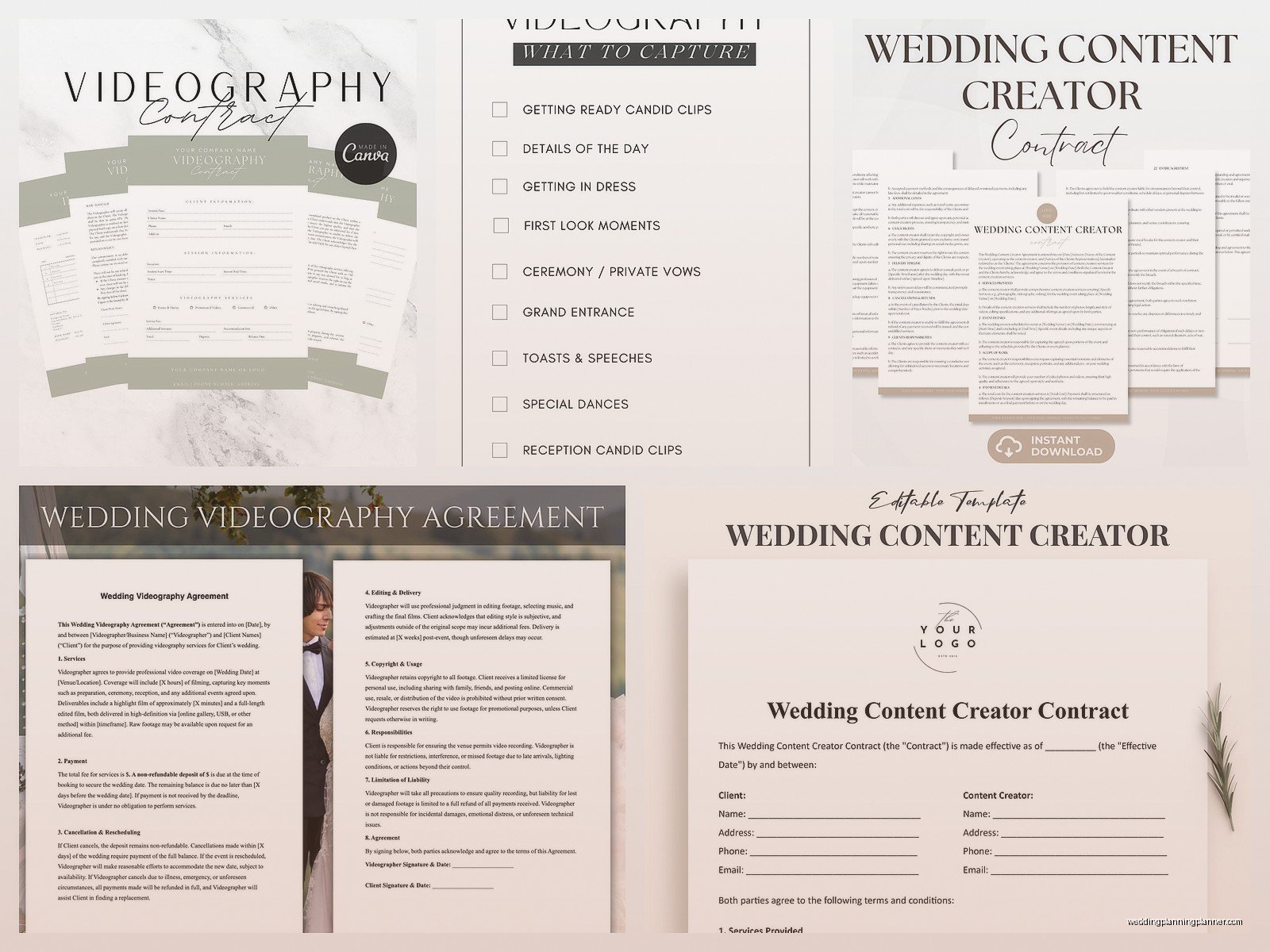
Here’s what should be spelled out:
- Length of final edited video (like “one 45-60 minute feature film”)
- Length of highlight reel if included (usually 3-5 minutes)
- Number of videographers/cameras (one shooter vs two shooter package makes a huge difference)
- Drone footage if applicable – and whether weather conditions might cancel this
- Audio recording equipment (lapel mics, handheld mics for toasts, etc.)
- Any additional videos like a same-day edit or teaser trailer
- Format of delivery – USB drive, download link, DVD (does anyone still use DVDs?), streaming access
- Whether you get raw footage and if there’s an extra charge
- Music licensing – are they using royalty-free music or can you request specific songs
The music thing is actually kinda important because of copyright issues. Some videographers will only use licensed music they have rights to, others will use whatever you want but then you can’t post it on social media without it getting flagged. It’s annoying but you need to know upfront.
Timeline and delivery schedule
Okay so this is probably the part that causes the most frustration for couples. You need a specific delivery timeline in writing. Not “approximately 3-4 months” but like “final edited video will be delivered no later than 16 weeks from the wedding date.”
Most videographers need 8-16 weeks for editing depending on their workload and the complexity of the package. Shorter highlight reels might come faster. Some offer rush delivery for an extra fee. All of this needs to be written down with actual dates or time frames.
Also include what happens if they miss the deadline. Do you get a partial refund? A discount on additional services? Just having this in there usually motivates vendors to stay on schedule because there’s actual consequences.
Payment structure
The payment terms need to be crystal clear and I mean like accounting-level clear. Total package price, deposit amount (usually 25-50% of total), when the deposit is due, when the remaining balance is due (typically 2-4 weeks before the wedding), and what forms of payment they accept.
Also include:
- Whether prices include tax or if that’s added on top
- Any travel fees if the venue is outside their normal service area
- Overtime rates if the event runs longer than contracted hours
- Fees for additional copies of the video
- Charges for expedited editing/delivery
- Late payment penalties if applicable
Some videographers have a payment plan option for the balance which can be helpful for couples on a tight budget, but that needs to be documented with specific due dates for each installment.
Cancellation and postponement policies
Oh boy, after 2020 this became like THE most important section. You need to know what happens if you cancel, if they cancel, or if you need to postpone to a different date.
Typically deposits are non-refundable but you should know under what circumstances you might get it back. If the videographer cancels on you, you should get a full refund. If you cancel, they usually keep the deposit but you shouldn’t owe the balance. If you postpone and they’re available on the new date, the contract should transfer with maybe a small admin fee.
COVID taught everyone that force majeure clauses matter. That’s the fancy legal term for unforeseeable circumstances like natural disasters, pandemics, venue closures, etc. The contract should spell out what happens in these situations – do you get a refund, credit toward a future date, or are you just out of luck?
Vendor responsibilities and limitations
This section protects both parties honestly. The videographer should outline what they’re responsible for and what they’re NOT responsible for.
Their responsibilities usually include:
- Arriving on time with working equipment
- Capturing the agreed-upon footage
- Editing the footage professionally
- Delivering the final product by the deadline
- Having backup equipment on hand
- Carrying liability insurance
What they’re NOT responsible for:

- Shots they couldn’t get because of venue restrictions or timing issues
- Equipment failure beyond their control (though they should have backups)
- Footage that’s unusable due to poor lighting conditions they warned you about
- Coordinating with other vendors – that’s not their job
- Managing your timeline or keeping things on schedule
You should also include that you’re responsible for obtaining any necessary venue permissions for videography, providing a meal for the videographer if they’re there during dinner service, and communicating any specific must-have shots or family dynamics they should know about.
Equipment failure and backup plans
Professional videographers should have backup equipment but the contract needs to state what happens if something catastrophic occurs. Like if all their equipment fails AND their backup fails (unlikely but possible), are they liable? Do you get a refund? Can they send an associate?
The contract should also address what happens if the videographer gets sick or has an emergency. Do they have a network of trusted associates who can fill in? Will you be notified immediately? This stuff matters because wedding days can’t be rescheduled just because a vendor has the flu.
Usage rights and social media
This is something that annoys me SO MUCH when it’s not clear in contracts. You need to know who owns the footage and who can use it where.
Typically you’ll get personal usage rights – meaning you can share your video with family and friends, post it on social media, show it at family gatherings, whatever. But the videographer usually retains the copyright and can use your footage for their portfolio, website, social media marketing, and promotional materials.
If you DON’T want your video used for marketing, that needs to be stated in the contract. Some videographers charge extra for exclusive rights or for keeping your video private.
Also clarify whether you can download the video and upload it yourself or if they’ll handle posting it. Some videographers want to premiere the video on their own social media first before you share it, which is fine but you should know that upfront.
Venue restrictions and cooperation
Some venues have really specific rules about videography – like no drones, no bright lights during the ceremony, videographers can only shoot from certain locations, stuff like that. The contract should state that you’re responsible for informing the videographer about these restrictions and that they’ll comply with venue rules.
There should also be a clause about cooperating with other vendors, especially the photographer. My cat actually knocked over a photographer’s camera once during a getting-ready shoot and it was this whole insurance claim mess but anyway – videographers and photographers need to work together and not block each other’s shots. The contract should acknowledge they’ll coordinate with other vendors professionally.
Editing style and revisions
You need to be on the same page about editing style before you sign anything. Is it cinematic and artsy? Documentary style? Lots of slow-motion? Heavy on the music? This should be discussed and referenced in the contract, maybe with links to sample videos that represent what you’re expecting.
Also address revisions – do you get any? Most videographers include one or two rounds of minor revisions but major re-edits cost extra. Define what counts as minor (like changing a song or trimming a few seconds) versus major (like completely reordering the video or removing entire segments).
Liability and indemnification
This is the legal protection stuff that sounds boring but matters. The videographer should carry liability insurance in case they damage venue property or someone trips over their equipment. The contract should state their insurance coverage amounts.
There should also be language about indemnification – basically that each party won’t sue the other for things outside their control. You won’t hold them liable if your drunk uncle punches their camera, they won’t hold you liable if the venue’s electricity goes out.
Dispute resolution
Nobody wants to think about legal disputes when planning a wedding but you need a clause about how disagreements will be handled. Will you try mediation first? Is there an arbitration requirement? What state’s laws govern the contract?
This section should also include whether the prevailing party in a dispute gets their attorney fees covered. It helps prevent frivolous claims from either side.
Additional services and upsells
If you’re considering add-ons like engagement session videos, rehearsal dinner coverage, or next-day footage, those should be listed as optional services with their prices. Even if you’re not sure you want them now, having the prices locked in your contract means they can’t charge you more later if you change your mind.
The signature section and final details
Both parties need to sign and date the contract. If you’re planning the wedding with a partner, both of you should probably sign. The videographer should sign too, obviously. Keep copies – like multiple copies. I keep them in my planning binder, digitally in cloud storage, and I tell my couples to do the same.
Some contracts include an “entire agreement” clause which basically says this written contract supersedes any verbal agreements or email promises. So if they told you something in an email but it’s not in the contract, it doesn’t count legally. That’s why you gotta get EVERYTHING in writing.
Also look for a severability clause – if one part of the contract is found to be invalid, the rest still holds up. It’s just legal protection stuff that your videographer’s lawyer probably included but you should know it’s there.
Red flags to watch for
If a videographer won’t give you a written contract or keeps saying “don’t worry we’ll figure it out” – nah, that’s a hard pass. If the contract is super vague or missing key details like delivery timeline or specific deliverables, don’t sign until it’s fixed. If they want full payment upfront with no refund policy… I mean, that’s risky unless they’re like incredibly established and have tons of reviews backing them up.
Also watch out for contracts that give them unlimited rights to your footage including selling it to stock video sites or using it in commercials. That’s probably more than you wanna agree to.
Anyway I think that covers the main stuff you need in a videography contract. It seems like a lot but trust me, having everything documented prevents so many headaches later. Just make sure you actually READ the contract before signing because I’ve had clients who signed stuff without reading and then were shocked by terms they agreed to, and at that point there’s not much I can do to help except maybe negotiate with the vendor which they’re not obligated to do