Planning Guides, Style Guide
Wedding Planner Contract: Service Agreement Template
Jun
Getting Your Wedding Planner Contract Actually Right
Okay so the contract thing is honestly something I wish someone had just laid out for me when I started because I spent like three months in 2021 going back and forth with a lawyer and it was expensive and confusing and I basically just needed someone to tell me what actually matters. Your service agreement is literally the only thing standing between you and a nightmare client situation, and I learned this the hard way with a bride in spring 2023 who tried to say I never promised her coordination on the wedding day even though I… definitely did? But it wasn’t in writing the right way.
The Header Section Nobody Thinks About
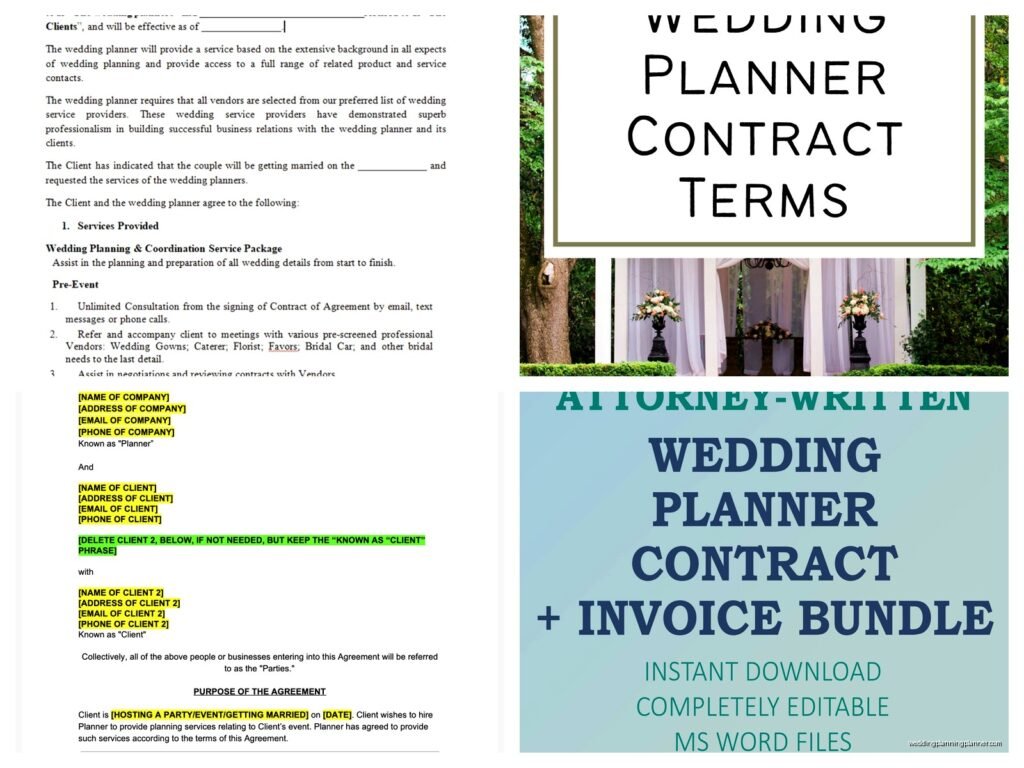
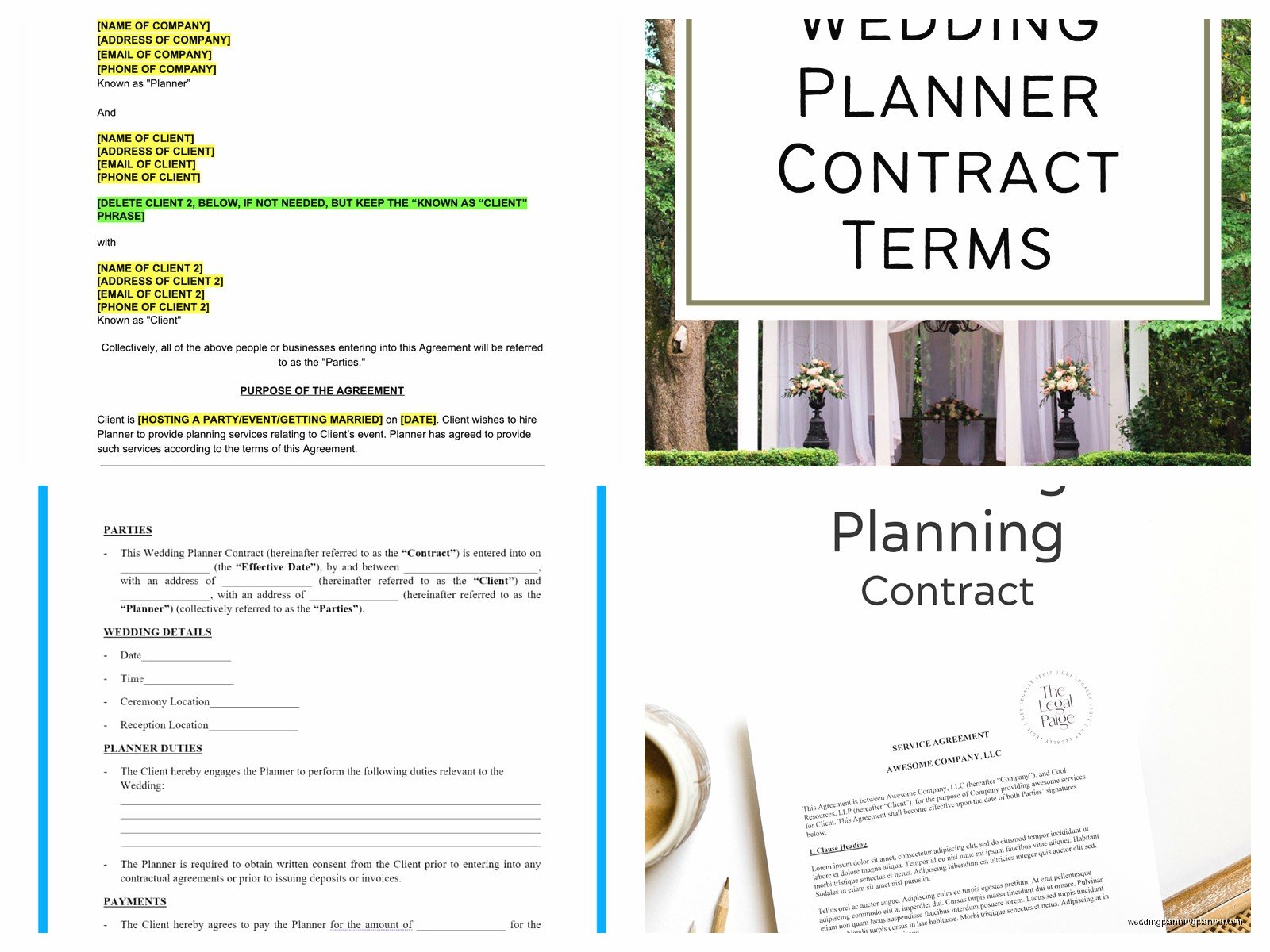
Start with the boring stuff at the top but make it official looking. You need your business name, your LLC or whatever business structure you have, your address, phone, email. Then the client’s full legal names (both people getting married if you’re working with a couple), their address, their contact info. Date the contract. Give it a contract number if you’re feeling organized, which I’m usually not but it helps when you’ve got multiple contracts floating around.
I also put the wedding date right at the top in bold because you’d be surprised how many times clients forget they told you June 15th and then later insist they said June 22nd. Having it right there in the header has saved me more arguments than I can count.
Services Section – Be Stupidly Specific
This is where most planners screw up and just write something vague like “full planning services” and then six months later the client expects you to personally fold 300 origami cranes because that falls under “planning” in their mind. List everything you’re gonna do, and I mean everything:
- Number of planning meetings (I usually do 6-8 for full planning)
- Vendor research and recommendations – specify how many vendors per category
- Contract review for other vendors (but note you’re not their lawyer)
- Budget management and tracking
- Timeline creation
- Floor plan and layout design
- Day-of coordination hours (be specific: “planner will be present from 2 hours before ceremony through end of reception” or whatever)
- Rehearsal attendance
- Unlimited email communication vs. limited – your choice but state it
- How many venue visits you’ll attend
Then, and this is super important, you need a section that says what you DON’T do. I got so annoyed last year when a client asked me to babysit her flower girl the morning of the wedding because “you’re there anyway” like… nah. My contract now explicitly states I don’t provide childcare, I don’t set up or break down decor beyond basic styling touches, I don’t provide my own supplies beyond my emergency kit, I don’t create invitation designs (that’s separate), and I’m not responsible for vendor no-shows or failures.
Payment Terms That Actually Protect You
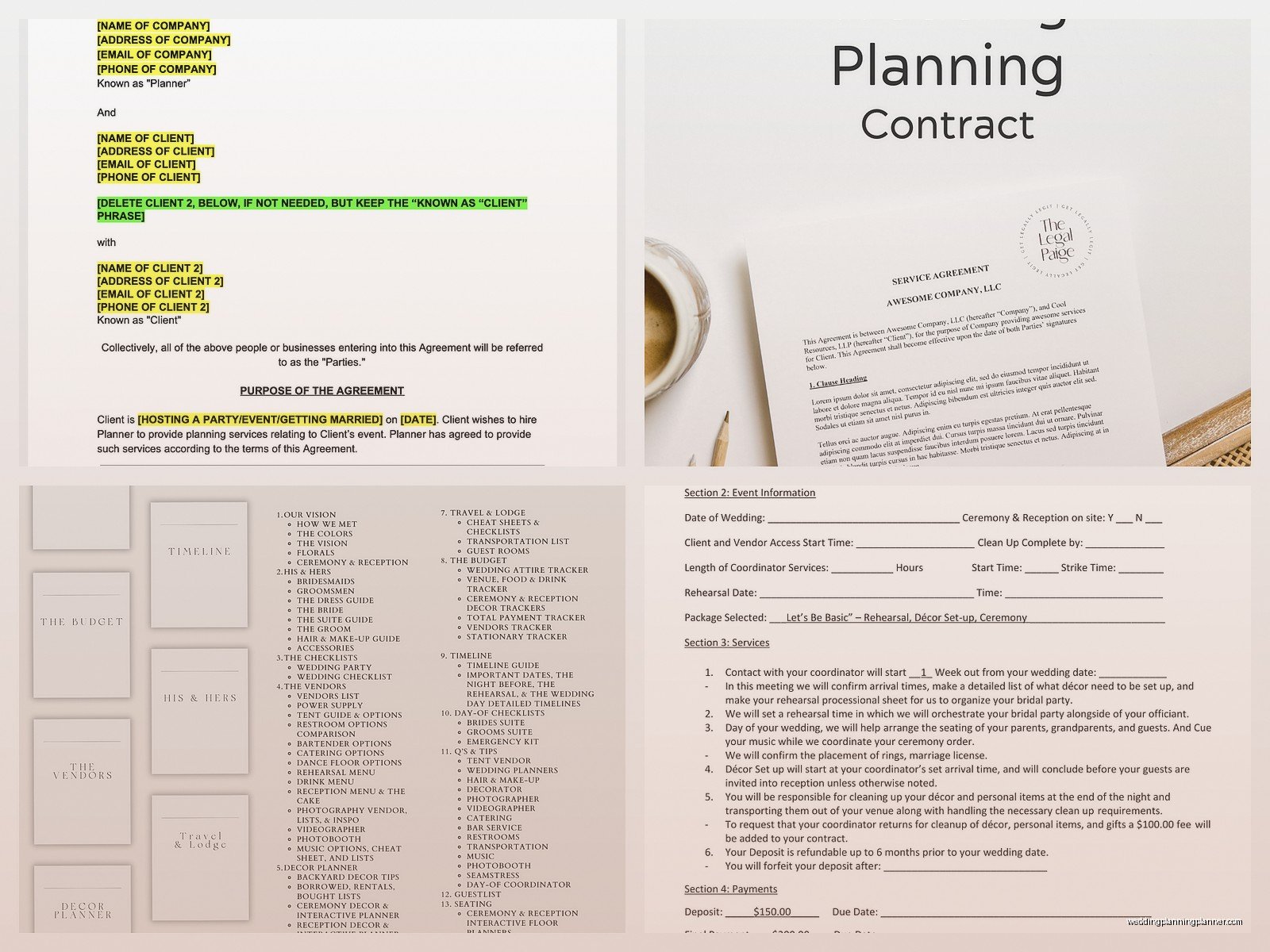
Alright so money is weird to talk about but your contract needs to be crystal clear. I do a non-refundable retainer that’s usually 25-30% of the total fee, due upon signing. Then I break the remaining balance into installments. For a full-service planning client, I usually do:
- 25% retainer when they sign (non-refundable)
- 25% at six months before wedding
- 25% at three months before
- 25% final payment due 2 weeks before the wedding
The final payment being due before the wedding is crucial because you do NOT want to be chasing payment on the wedding day or after. Been there, it’s horrible, never again.
State your accepted payment methods. I take checks, Venmo, Zelle, and credit cards through my invoicing system (though I pass along the processing fee for cards, which needs to be in the contract). Include your late payment policy – I charge $50 for payments that are more than 5 days late, then an additional $25 per week after that. Sounds harsh but it’s actually made clients way better about paying on time.
Cancellation and Refund Policy
This section saved my butt during COVID when like half my 2020 weddings postponed. You need to specify what happens if they cancel, what happens if you need to cancel (medical emergency, family stuff, whatever), and what happens if they postpone.
My policy is the retainer is always non-refundable because that’s holding your date and turning away other clients. If they cancel more than 6 months out, they lose the retainer but get back any other payments. If they cancel less than 6 months out, they lose all payments made because at that point you’ve done substantial work and can’t rebook that date. If they postpone to a date you’re available, I apply all payments to the new date. If you’re not available for their new date, they lose the retainer but get back other payments minus any work you’ve already completed.
For your cancellation – like if you get sick or have an emergency – you need to state you’ll either provide a qualified replacement planner or refund payments minus the retainer and work completed. Having a network of other planners you trust is really important here.
Timeline and Deadlines
I include a section that outlines when the client needs to do certain things. Like, you can plan the most amazing wedding but if they don’t book their venue until 2 months before the date, that’s on them. My contract states:
- Venue must be booked within X weeks of contract signing (I say 4 weeks for weddings more than 8 months out)
- Major vendors (photographer, caterer, etc.) should be booked within X months
- Final guest count due 2 weeks before wedding
- Final timeline approval 1 week before
- All DIY items delivered to me 3 days before wedding if I’m setting them up
And here’s the thing that kinda trails off but matters – if they miss these deadlines, you’re not responsible for the consequences. Can’t find a photographer 6 weeks before the wedding because they ignored your recommendations for months? Not your problem, and the contract needs to say that or they’ll blame you anyway.
Liability and Insurance Stuff
Okay this is the legal-ish part that makes my brain hurt but you gotta have it. State that you carry liability insurance (and actually get it if you haven’t, it’s like $500/year and so worth it). But also clarify what you’re NOT liable for:
You’re not liable for vendor failures, venue issues, weather problems, guest behavior, lost or stolen items, injuries at the event, or basically anything outside your direct control. You’re also not liable for outcomes if the client doesn’t follow your recommendations. Like if you tell them they need a rain plan and they refuse and then it rains… that’s documented as their choice.
I also include that my liability is limited to the amount they paid me for services. So if something goes truly wrong, the most they can sue me for is what they paid, not their entire wedding budget. My lawyer added this and it’s apparently pretty standard.
The Day-Of Responsibilities
Be really specific about what you’re doing on the wedding day because clients will assume you’re doing EVERYTHING. I got into this stupid argument once where a groom thought I was supposed to drive his grandmother to the venue because “someone needs to” and like… I’m coordinating 15 vendors and a timeline, I’m not a car service?
My contract specifies my day-of duties include: managing vendors, keeping timeline on track, handling emergencies and problems, being point of contact for all questions, managing ceremony processional, coordinating with venue staff, handling final payments/tips to vendors if client provides them in advance, basic problem-solving. It does NOT include: transportation, personal assistant duties for guests, fixing family drama, decorating beyond placing items per floor plan, or staying past the contracted end time without additional fee.
Communication Expectations
Set boundaries here or clients will text you at 11pm on a Sunday about napkin colors. I promise. My contract states I respond to emails within 2 business days, phone calls within 24 hours, and texts are for day-of emergencies only. I also note that I’m not available on Sundays except for weddings, because I need one day with my cat and my sanity.
During peak season (May-October for me), I also note that response times might be slightly longer and meetings need to be scheduled at least 1 week in advance. This manages expectations so they’re not mad when you can’t meet them tomorrow.
Changes and Additional Services
Life happens, plans change, scope creep is real. Your contract needs a section about how changes work. If they want to add services, they need to request it in writing, you’ll provide a quote, and they need to approve and pay before you do the work. I learned this when a bride asked me to “just quickly” design her programs and I spent 8 hours on them and never got paid because it wasn’t in the contract.
I also include my hourly rate for additional work beyond the contract scope. For me that’s $150/hour with a 2-hour minimum. So if they want me to attend an extra venue visit or do something random, that’s the rate.
Termination Clause
Sometimes you need to fire a client, or they need to fire you, and having this in writing makes it less awful. Either party can terminate with written notice. If they terminate, refund policy from the cancellation section applies. If you terminate due to their breach of contract (non-payment, abusive behavior, etc.), they get no refund. If you terminate for other reasons, they get back payments minus retainer and completed work.
I had to terminate a contract in summer 2021 because the bride was verbally abusive to me and my assistant, and having this clause made it possible without a huge legal mess. She threatened to sue but her lawyer told her the contract was clear and she had no case.
The Boring But Necessary Legal Stuff
Your contract needs these standard clauses that sound like legal mumbo jumbo but matter:
Force Majeure: Neither party is liable if something crazy happens that’s outside everyone’s control – pandemic, natural disaster, venue burns down, whatever. COVID made everyone realize this clause is actually important.
Entire Agreement: This contract is the whole agreement, any previous emails or conversations don’t override it. Everything needs to be in writing via contract amendments.
Severability: If one part of the contract is unenforceable, the rest still stands. Basically if a judge says one clause is weird, the whole contract doesn’t fall apart.
Governing Law: State which state’s laws apply. Use your state.
Assignment: Can you transfer the contract to another planner? Can they transfer it to someone else? Usually both are “no” without written consent.
Image and Social Media Rights
You’re gonna want to use photos from their wedding for your portfolio and Instagram, right? Get permission in the contract. I include that I have the right to use images from their wedding for marketing purposes unless they specifically request privacy in writing. Some clients are fine with it, some aren’t, but you need to know upfront.
Also state who owns what – they own their event obviously, you own your planning documents and proprietary processes. The timeline and floor plans you create are your work product but they get to keep copies.
Emergency Contact and Backup Plan
Include a section where they provide emergency contacts beyond themselves – parent, sibling, wedding party member who can make decisions if they’re unreachable. Also note who your backup contact is if they can’t reach you (your assistant, a partner planner, whatever).
Signature Section
Both parties sign and date. If it’s a couple, both people should sign even if only one has been communicating with you. I also include a line that says “By signing, you confirm you’ve read and understood all terms and agree to be bound by them” because apparently people will claim they didn’t read it otherwise.
I use digital signatures through HelloSign or similar because it’s 2024 and chasing paper signatures is annoying. Plus you both get a PDF copy automatically.
Random Things I’ve Added Over Time
After various situations, I’ve added these specific clauses that aren’t standard but have saved me:
Weather clause: Outdoor weddings need a rain plan, and if they refuse to make one, any weather-related problems aren’t my responsibility.
Vendor relationship clause: If they book a vendor I’ve never worked with or that I specifically advised against, I’m not responsible for that vendor’s performance.
Guest management clause: I’ll coordinate the event but I’m not responsible for controlling drunk guests, family drama, or people who don’t follow the timeline.
Setup time clause: I need access to the venue at least X hours before the ceremony for setup, and if the venue or previous event runs late, we’ll do our best but timeline might be affected.
Final walkthrough clause: They need to do a final walkthrough with me 1-2 weeks before to approve all details, and after that point, changes will incur additional fees.
Using the Template
So once you’ve got your template created (and honestly, have a lawyer in your state review it at least once), you’ll customize it for each client. Change the names, dates, specific services, payment amounts and schedule, and any special circumstances. I keep mine in Google Docs and just “make a copy” for each new client, fill in the blanks, then export to PDF and send for signature.
Some planners include a separate “scope of work” document that’s more detailed and reference it in the contract, which works too. I prefer having everything in one place so there’s no confusion about what’s part of the agreement.
The thing that really annoyed me when I was starting out was how many planner groups would share these super vague contracts that barely covered anything, and then you’d have experienced planners being like “well obviously you need to protect yourself” but not explaining HOW. Like thanks, very helpful. That’s why I’m being stupidly detailed here because I wish someone had just… told me all this.
Also keep your contracts for like 7 years after each wedding. You probably won’t need them but if someone decides to sue you three years later (rare but happens), you’ll need that documentation. I keep digital copies in Dropbox with a folder for each year.
One more thing – update your contract every year or so based on what you learned. I literally just added a clause about cryptocurrency payments (someone asked, I said no, but now it’s in writing that I only accept standard payment methods) and another about destination weddings requiring a separate travel agreement. Your business evolves, your contract should too.