Planning Guides, Style Guide
Wedding Venue Contract: Location Agreement Guide
Jun
Read Every Single Line Before You Sign Anything
Okay so venue contracts are literally the most important document you’ll sign for your wedding and I learned this the hard way back in summer 2021 when a couple I was working with almost lost their entire deposit because they didn’t read the cancellation clause. Like seriously, I know contracts are boring and full of legal jargon but you gotta actually read this thing line by line because venues are businesses first and they will protect themselves.
The venue contract is basically your insurance policy that you’ll actually have a place to get married on the date you want. Without a signed contract, you don’t have a venue, period. I don’t care if someone verbally promised you the space or sent you a nice email—if it’s not in the contract, it doesn’t exist.
The Basic Stuff That Should Definitely Be In There
First thing you’re gonna look for is the date and time. I know that sounds obvious but you need to verify the exact date, the start time, and the end time. Some venues will say “6pm-11pm” but then you find out load-in isn’t included in that time, or they expect you out by 11pm sharp which means your vendors need to start packing at like 10:30pm while guests are still dancing.
The deposit amount and payment schedule needs to be crystal clear. Most venues want 25-50% down to hold the date, then the rest is due like 30-60 days before the wedding. Make sure you understand what happens if you’re late on a payment—some venues will literally release your date if you miss a deadline.
Rental fee breakdown should list everything you’re paying for. Are tables included? Chairs? Linens? I worked with this venue once that advertised as “all-inclusive” but their contract showed the rental fee only covered the empty room and you had to pay extra for literally everything else including basic folding chairs.
Guest Count Minimums and Maximums
This is where it gets tricky. The contract should state the minimum number of guests you’re required to have and the maximum capacity. Some venues have a minimum spending requirement instead of a guest minimum, which means if you’re having a smaller wedding, you still need to hit like $15,000 in revenue for them or something.
You also need to know when you have to give your final guest count. Usually it’s 2-3 weeks before the wedding, and whatever number you give them is what you’re paying for even if people don’t show up. I had a couple in spring 2023 who gave a count of 150, but only 132 people came, and they still paid for all 150 meals because that’s what the contract said.
What’s Actually Included In Your Rental
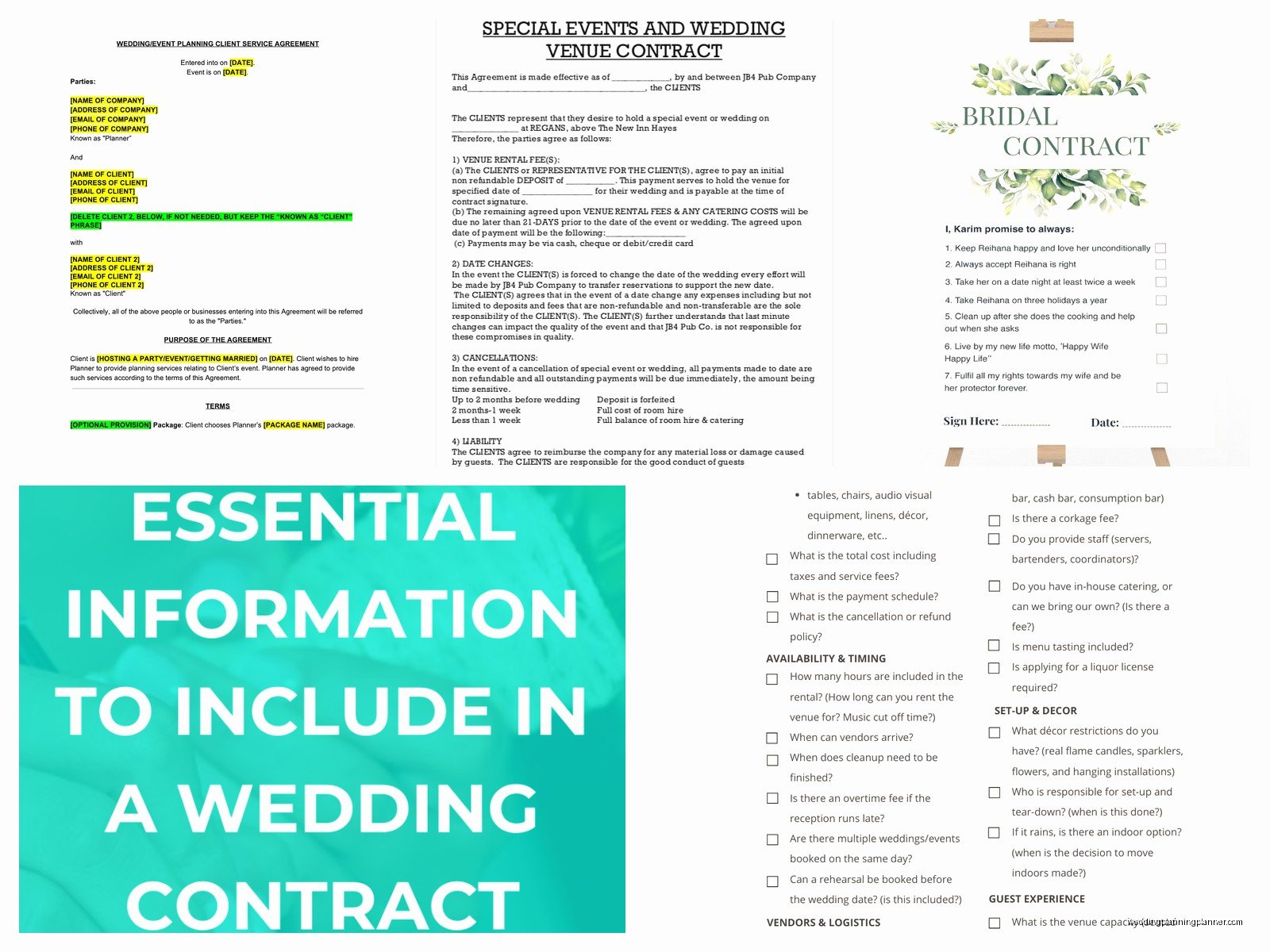
This section drives me crazy because venues are so inconsistent about what they consider “included.” You need a detailed list of every single thing that comes with your rental fee. And I mean everything—tables, chairs, linens, dishes, silverware, glassware, dance floor, stage, getting ready rooms, parking, coat check area, outdoor ceremony space, backup indoor space for weather.
Some venues include an event coordinator but you need to understand what that person actually does. Are they just there to unlock doors and manage the venue space, or are they actually coordinating your wedding timeline? Because those are very different things and most venue coordinators are not the same as a wedding planner.
My cat just knocked over my coffee cup while I’m writing this which is pretty on-brand for her… anyway, back to contracts.
Catering and Beverage Requirements
Lots of venues have exclusive catering, meaning you HAVE to use their in-house catering or a caterer from their approved list. This needs to be clearly stated in the contract. If they allow outside catering, there might be a kitchen fee or a fee to bring in outside food.
Bar service is its own whole thing. Is it open bar, cash bar, or consumption bar? What brands of alcohol are included in the standard package? Can you bring your own wine or champagne, and if so, is there a corkage fee? Some venues charge like $25-35 per bottle for corkage which adds up fast.
The contract should specify if bartender fees are included or if that’s an additional cost. Also check if there’s an automatic service charge or gratuity added to your final bill and what percentage that is. I’ve seen anywhere from 18% to 25% which is… a lot when you’re already spending thousands of dollars.
Vendor Restrictions and Approved Lists
This is the part that annoys me most about venue contracts honestly. Some venues require you to use vendors from their preferred or approved list, and while they’ll say it’s for “insurance purposes” or “quality control,” it also limits your options and sometimes means you’re paying more than you would otherwise.
Make sure the contract specifies which vendors you must choose from their list (usually catering and sometimes bar service) and which vendors you can bring in from outside. If you have to use their list, ask for it before you sign anything so you can research those vendors and make sure they fit your budget and style.
Cancellation and Postponement Policies
After everything that happened with COVID, couples are way more aware of this section now, but you still need to read it carefully. The contract should outline what happens if you need to cancel or postpone, and what happens if the venue needs to cancel on you.
Most venues keep your deposit if you cancel, but some will let you apply it to a different date within a certain timeframe. Postponement policies vary wildly—some venues are flexible and will move your date for free or a small fee, others treat it like a cancellation and make you re-book at current pricing which could be higher.
What if the venue cancels on you though? Like if they go out of business or have a fire or something? The contract should specify that you get a full refund, and ideally you want this in writing. I’ve heard horror stories of venues closing and couples losing everything because the contract didn’t protect them.
Weather and Backup Plans
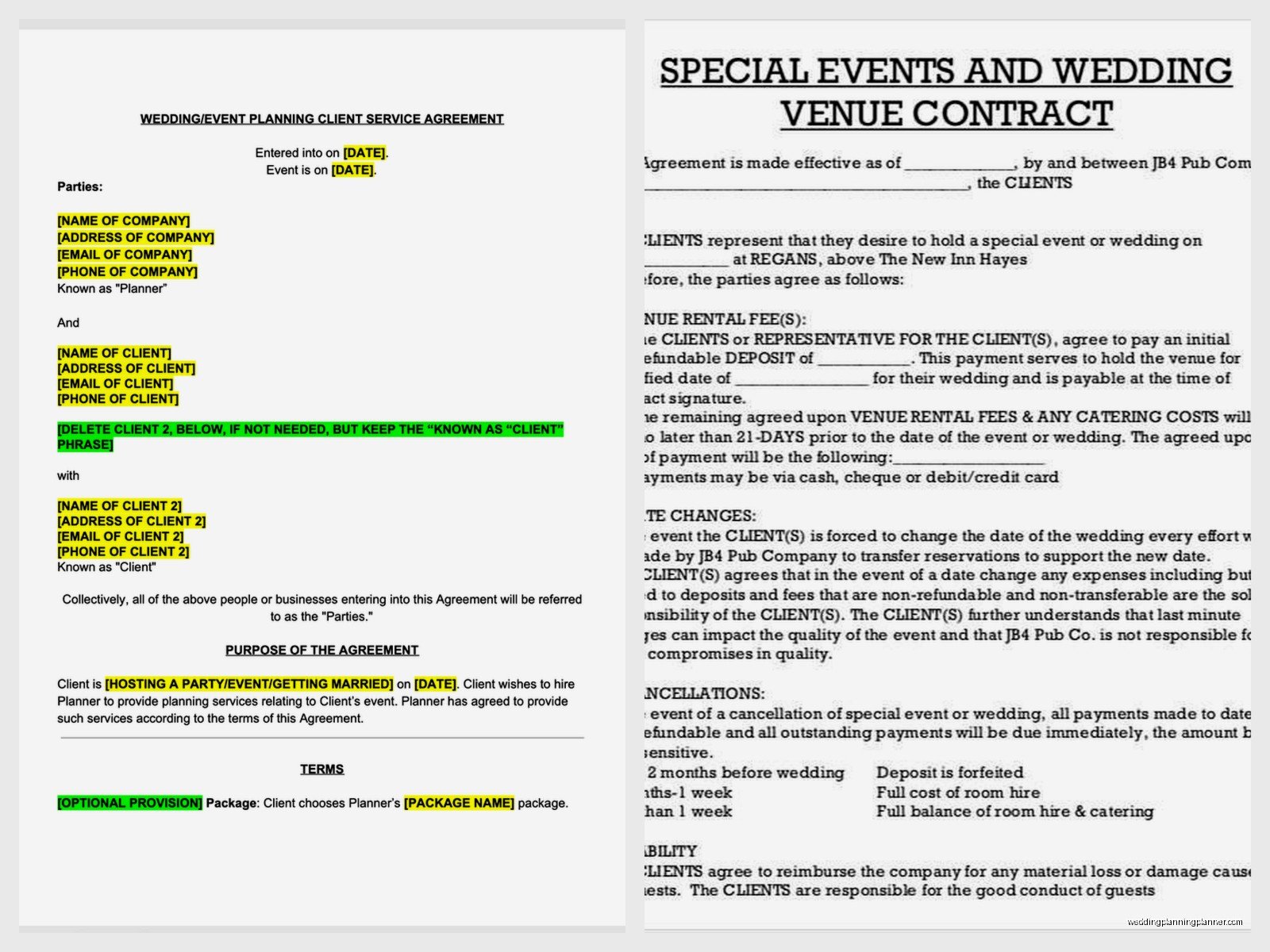
If you’re having any part of your wedding outdoors, the contract needs to address weather contingencies. Is there an indoor backup space included? When do you have to make the decision to move inside—like the day before or can you wait until an hour before the ceremony?
Some venues charge extra for the backup space or require you to make the call days in advance which is kinda impossible when you’re trying to predict weather. Get specific about this because “we’ll figure it out” isn’t gonna cut it when it’s pouring rain on your wedding day.
Timing and Access Details
Your contract should spell out exactly when you get access to the venue. If your reception starts at 6pm, can you get in at 2pm for setup? Or is setup time additional? What about rehearsal time—is that included or do you pay extra?
End times are super important too because overtime fees can be brutal. I’m talking like $200-500 per hour if you go over your contracted time. Make sure you factor in enough time for your vendors to break down and load out, because that counts toward your rental time at most venues.
Also check if there are noise ordinances or curfews. Some venues in residential areas have to end music by 10pm or 11pm which… if you want a party wedding, that’s not gonna work for you.
Liability and Insurance Requirements
Almost every venue will require you to carry liability insurance for your event. Sometimes they include this in their fee, but usually you need to purchase a special event insurance policy. The contract should specify the coverage amount they require (usually $1-2 million) and when you need to provide proof of insurance.
The contract should also clarify who’s responsible for what if something gets damaged. Are you liable for damages caused by your guests? What about normal wear and tear? I had a situation where a venue tried to charge a couple for scratches on the floor from dancing in heels, which was ridiculous, but because the contract was vague about damage liability, it became this whole thing.
Payment Terms and Additional Fees
Beyond the basic rental fee, you need to identify every possible additional charge. Service charges, administrative fees, cleaning fees, security deposits, overtime fees, early access fees, vendor meal fees, parking fees—these all add up and can increase your venue cost by 30-40% or more.
The payment schedule should be clear about when each payment is due and what forms of payment they accept. Some venues only take checks or wire transfers, no credit cards. Others let you pay with a card but charge a processing fee.
There should also be a clause about final billing and when you’ll receive your final invoice. Some venues do final billing within 30 days after your event, which means if you went over on bar service or had overtime, you might get a surprise bill weeks after your wedding.
Exclusivity and Other Events
You need to know if you’re the only event happening at the venue that day or if they book multiple events. If it’s a multi-event venue, will you be sharing any spaces like parking lots, restrooms, or getting ready areas? Can you hear other events happening?
Some venues book ceremonies and receptions in the same spaces on the same day, which means you might have to clear out between events or work around another couple’s timeline. This isn’t necessarily a dealbreaker but you should know about it upfront.
Decoration and Setup Restrictions
Venues usually have rules about what you can and can’t do decoration-wise. No open flames, no hanging things from the ceiling, no nails or tape on walls, no glitter or confetti—these are all common restrictions that should be in your contract.
If you’re planning anything specific like hanging a floral installation or bringing in a photo booth or having sparkler send-offs, make sure those are allowed. I’ve seen couples plan entire design concepts only to find out the venue doesn’t allow it.
Getting Changes In Writing
Here’s the thing—anything the venue promises you verbally needs to be added to the contract as an amendment. If they say “oh yeah, you can definitely have your ceremony in the garden” but it’s not in the contract, they can change their mind later and you have no recourse.
Don’t be afraid to ask for changes or additions to the contract. Cross out things you don’t agree with, add clauses that protect you, negotiate terms. The first version of the contract is usually their most venue-friendly version, and there’s often room for negotiation especially if you’re booking during their off-season or it’s a weekday wedding or…
Actually that reminds me, make sure the specific spaces you’re renting are listed by name in the contract. Not just “ceremony and reception” but “Garden Terrace for ceremony, Grand Ballroom for reception” so there’s no confusion later.
Before You Sign
Take the contract home and read it when you’re not rushed or distracted. Have your partner read it. If you have a wedding planner, definitely have them review it. Some couples even have a lawyer look at it, especially if it’s a really expensive venue or the contract is super complicated.
Make a list of questions about anything you don’t understand or anything that seems unfair. Then schedule a call or meeting with the venue to go through your questions. Their willingness to explain things and work with you on concerns is actually pretty telling about what they’ll be like to work with leading up to your wedding.
Don’t let anyone pressure you to sign immediately. If a venue is giving you like “sign today or we’re giving your date to someone else” ultimatums, that’s a red flag. You should have at least a few days to review the contract properly.