
Planning Guides, Style Guide
Free Wedding Photography Contract: Template Downloads

Jul
Why You Actually Need a Wedding Photography Contract
So here’s the thing about wedding photography contracts – they’re not just for the fancy professionals charging $8000 a session. Even if you’re doing free wedding photography (maybe for a friend, a portfolio builder, or you’re just starting out), you absolutely need a contract. I learned this the hard way in spring 2023 when a couple I shot for free ended up demanding I reshoot their entire reception because they didn’t like how the venue lighting came out in some photos. No contract meant I had zero protection and honestly it was a nightmare that lasted like three months of back-and-forth emails.
A contract protects both you and the couple. It sets expectations, outlines what you’re actually providing, and makes sure everyone’s on the same page about deliverables, timelines, and what happens if something goes wrong.
What Should Be In Your Free Photography Contract
Alright so even though you’re not charging money, your contract needs most of the same elements as a paid gig. Here’s what I always include:
Basic Information Section
You need the obvious stuff – your name, business name if you have one, the couple’s names, wedding date, venue location, and contact info for everyone. I also put the contract date on there because it matters for legal reasons or whatever.
Make sure you spell their names right. Sounds dumb but I once had a bride get super annoyed because I put “Sara” instead of “Sarah” on the entire contract and she thought it meant I wasn’t taking her wedding seriously.
Scope of Services
This is where you get specific about what you’re gonna do. Like really specific. Don’t just write “wedding photography” because that means nothing when disputes happen.
Include:
- How many hours you’ll be shooting (ceremony only? getting ready photos? reception?)
- Exactly what parts of the day you’ll cover
- How many edited photos they’ll receive
- What format the photos come in (digital downloads, prints, USB drive)
- Timeline for delivery – I usually say 6-8 weeks but be realistic with yourself
- Whether you’re providing an engagement session or just the wedding day
The more detailed you are here, the less room there is for people to expect things you never promised. Trust me on this.
The “Free” Part Explanation
You gotta spell out why this is free and what that means. Are you building your portfolio? Is this a favor for a friend? Whatever the reason, write it down. I usually include language like “Photographer is providing services at no charge in exchange for portfolio use and testimonial” or something similar.
This section should also clarify that just because it’s free doesn’t mean they own everything or can demand unlimited revisions or… I’m getting ahead of myself but you see where I’m going.
Copyright and Usage Rights
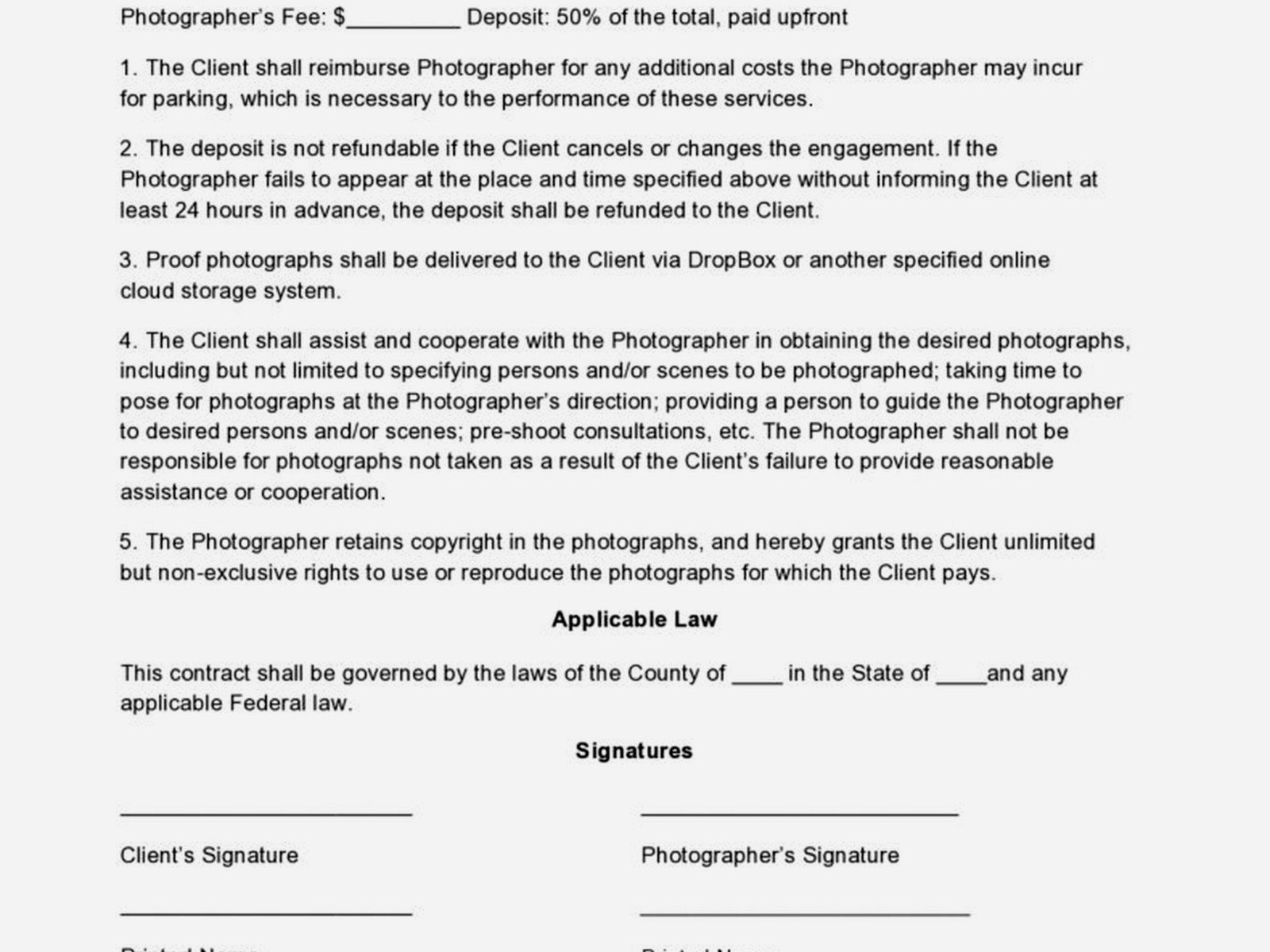
Okay this is the part that annoys me the most when people don’t understand it. Just because someone’s wedding photos feature them doesn’t mean they own the copyright. YOU own the copyright as the photographer, even if you shot it for free.
Your contract needs to state clearly:
- You retain all copyrights to the images
- The couple gets a license to use the images for personal use (social media, prints for their home, sharing with family)
- They cannot sell the images or use them commercially
- They cannot edit the photos and repost them (some photographers are fine with filters, I personally hate when people put those weird Instagram filters on my work but that’s just me)
- You have the right to use the images in your portfolio, website, social media, and marketing materials
I once had someone argue with me that because I shot their wedding for free, they should own all the rights. Nah. That’s not how copyright law works, and having it in writing saved me from that headache escalating.
Model Release Language
Since you’re gonna use these photos for your portfolio, include model release language that gives you permission to use their images and likenesses for promotional purposes. Most free contracts include this automatically as part of the trade – they get free photos, you get portfolio material.
Cancellation and Rescheduling Policies
Even for free work, you need terms about what happens if they cancel or reschedule. Your time is valuable even if you’re not charging. I learned this when a couple rescheduled THREE times and I’d already blocked off those dates and turned down other opportunities.
Include terms like:
- How much notice they need to give you for cancellation
- Whether rescheduling is allowed and how many times
- What happens if YOU need to cancel (illness, emergency, etc.)
- Whether you’ll try to provide a backup photographer or just release them from the contract
Be reasonable but also protect your time. Just because you’re not being paid doesn’t mean people should be able to jerk you around.
Liability Limitations
This is kinda important – you need to limit your liability. Include language that says if something goes wrong (memory card corrupts, you get sick, your equipment fails), your liability is limited. For paid contracts, photographers usually limit liability to the amount paid, but for free work, you’re basically saying “I’ll do my best but if something catastrophic happens, you can’t sue me for thousands of dollars.”
Also include that you’re not responsible for:
- Family drama that prevents you from getting certain shots
- Venue restrictions on photography
- Weather conditions for outdoor shots
- Other vendors interfering with your work
My cat literally walked across my keyboard while I was editing a wedding last month and somehow changed a bunch of settings in Lightroom, so now I’m extra paranoid about technical issues, but anyway…
Backup and Equipment Failure
You should mention that while you’ll take precautions (shooting with backup equipment, using multiple memory cards), you’re not guaranteeing anything. Professional photographers carry insurance for this stuff, but when you’re starting out and doing free work, you probably don’t have that yet.
Delivery Timeline and Format
Be super clear about when they’ll get their photos and in what format. I typically deliver via online gallery (Pixieset or Google Photos work fine when you’re starting out) and give them download rights.

Specify:
- Exact timeline (6-8 weeks is standard, but if you need longer for free work, say so)
- How they’ll receive the photos (download link, USB, whatever)
- How long the gallery will be available
- File format and resolution
- Whether photos are edited or just culled
Don’t promise things you can’t deliver. If you’re swamped with your day job and can only edit on weekends, maybe say 10-12 weeks instead of rushing and delivering crappy work.
Where to Actually Find Free Templates
Okay so now that you know what should be in the contract, where do you actually get one? There are tons of free templates out there but some are better than others.
Photography-Specific Sites
Sites like The Law Tog, Photographer’s Edit, and ShootProof offer free basic contract templates. Some require you to sign up for their email list but whatever, just make a separate email for that stuff if you don’t want spam.
The Law Tog is run by an actual lawyer who specializes in photography law, so their stuff is pretty solid. They have both free and paid versions – the free ones are basic but totally usable for starting out.
Legal Template Sites
Rocket Lawyer and LawDepot have wedding photography contract templates. Some are free, some cost like $40, depends on what you need. The paid ones are more comprehensive but honestly for free wedding work when you’re building a portfolio, the free templates are probably fine.
Just make sure you customize them – don’t just fill in the blanks. Read through the entire thing and adjust it to match what you’re actually offering.
Photography Forums and Groups
Facebook groups for wedding photographers often share templates. Reddit’s photography communities sometimes have them too. Just be careful because you don’t know if these were written by someone who knows what they’re doing or just some random person who Googled “photography contract” and slapped something together.
Customizing Your Template
Once you download a template, you can’t just use it as-is. Well, you CAN, but you shouldn’t. Every wedding situation is different and your contract should reflect the specific arrangement you have with this couple.
Things to customize:
- The specific hours and coverage you’re providing
- Number of edited photos they’ll receive
- Your equipment backup situation (be honest about what you have)
- Portfolio usage rights – some couples might not want their photos on your public Instagram, so discuss this upfront
- Any special circumstances (destination wedding, multiple day event, cultural traditions that require specific shots)
I usually spend like 30 minutes going through a template and adjusting it for each wedding. It’s annoying but less annoying than dealing with disputes later.
Getting It Signed
So you’ve got your contract customized and ready to go. Now you need signatures. Even for free work, get it signed BEFORE the wedding. I cannot stress this enough.
You can do this a few ways:
- Print two copies, both people sign both copies, everyone keeps one (old school but it works)
- Use a free e-signature service like DocuSign’s free tier or HelloSign
- PDF editors often have signature features built in
- Even just emailing a PDF and having them reply “I agree to these terms” creates a digital paper trail, though it’s not as solid as actual signatures
Make sure both people in the couple sign it if you’re dealing with a couple. Don’t just get one signature because then the other person can claim they never agreed to anything.
What If They Won’t Sign
If someone refuses to sign a contract for free photography, that’s a red flag bigger than… I dunno, a really big flag. It usually means they’re gonna be difficult to work with or they have unrealistic expectations.
I’ve had people say things like “we’re friends, we don’t need a contract” or “this seems really formal for free work.” My response is always the same – the contract protects both of us, and if they’re not willing to spend five minutes signing something, they’re probably not gonna be respectful of my time and effort.
You can politely decline to shoot the wedding if they won’t sign. Your time and skills have value even when you’re not charging money for them.
Additional Clauses You Might Want
Depending on your situation, you might want to add some extra stuff to your contract:
Shot List Limitations
If the couple wants to provide a shot list, include terms about how long that list can be and that you’ll do your best but can’t guarantee every single shot. Some people will hand you a list of 500 specific photos they want and that’s just… not realistic for one photographer.
Guest Interference
Add a clause about guests with cameras. Uncle Bob with his iPad blocking your shots is a real problem at weddings. Your contract can include language asking the couple to make an announcement that guests should stay out of the photographer’s way during key moments.
Meal and Break Provisions
If you’re shooting for more than 6 hours, you might want to include that you’ll need a meal break. Even for free work, you gotta eat. Some couples assume you’ll just grab snacks between shots but if you’re there for 10 hours, you need actual food.
Travel and Accommodation
If the wedding isn’t local, clarify who’s paying for travel and lodging. Just because photography is free doesn’t mean you should be out hundreds of dollars for gas and a hotel room.
Storing Your Signed Contracts
Once you’ve got signed contracts, keep them organized. I use a Google Drive folder with subfolders for each wedding year, but you could use Dropbox, OneDrive, whatever. Just make sure you can find them if you need them.
Keep these contracts for at least 3-5 years after the wedding. You never know when someone might come back with a request or dispute, and having that signed contract is your protection.
When to Actually Use These Contracts
Use a contract for EVERY free wedding you shoot. I don’t care if it’s your sister’s wedding, your best friend from college, or a stranger you met on Facebook who needs portfolio photos. Every. Single. Time.
The weddings where you think “oh we don’t need a contract, we’re close” are exactly the ones that end up causing problems. Personal relationships and business arrangements don’t mix well without clear boundaries, and that’s what contracts provide.
Also, getting in the habit of using contracts for free work means you’ll already have your process down when you start charging. You’ll know what terms work for you, what language is clear, and what protections you need.
Red Flags to Watch Out For
When you’re offering free photography, some people will try to take advantage. Watch out for couples who:
- Want to negotiate the terms of a FREE contract to get more from you
- Expect you to provide prints, albums, or other physical products beyond digital files
- Demand specific expensive equipment you don’t have
- Want you to work with a second shooter at your expense
- Ask for raw, unedited files (nope nope nope)
- Want the photos within an unreasonably short timeline
- Refuse to let you use any photos for your portfolio
If someone’s treating your free work like they paid $5000 for it but without actually paying anything, walk away. There are plenty of couples who will appreciate free photography without being entitled about it.
Updating Your Contract Over Time
Your contract template isn’t set in stone. After each wedding, think about what went well and what caused confusion. Update your template to address those issues for next time.
I probably update my contract template twice a year based on experiences I’ve had. Like after that spring 2023 disaster I mentioned earlier, I added way more specific language about lighting conditions and how I can’t control venue ambiance. Live and learn, right?
Also, photography laws and copyright stuff changes sometimes, so every year or so, check if your contract language is still current. You don’t need a lawyer for this necessarily – just Google “photography contract updates 2024” or whatever year it is and see if anything major has changed.
The Bottom Line
Look, I know contracts seem like overkill for free work, but they’re not. They’re basic professional practice and they protect everyone involved. Download a template, customize it for your situation, get it signed before the wedding, and keep a copy somewhere safe. It takes maybe an hour total and could save you from months of headaches later. Even free work deserves professional treatment, and that starts with a solid contract that outlines exactly what you’re providing and what everyone can expect.