
Planning Guides, Style Guide
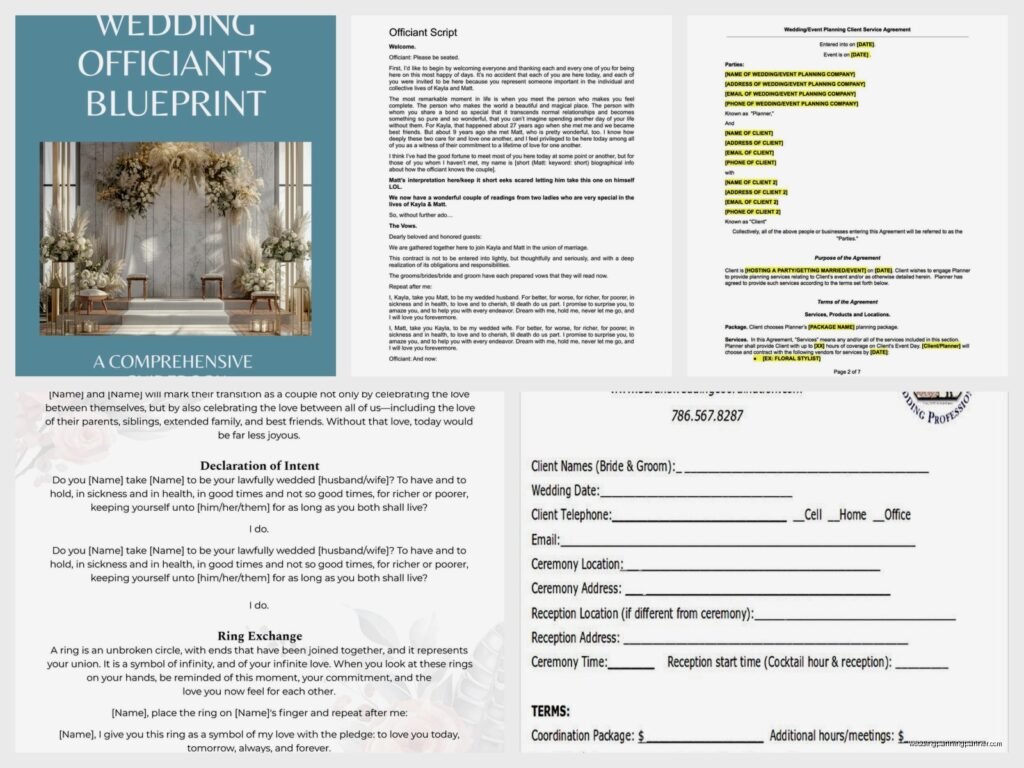
Wedding Officiant Contract Template: Ceremony Agreement
Jul
Okay so wedding officiant contracts are kinda crucial and here’s why
Look, I learned this the hard way back in spring 2023 when a couple’s officiant just… didn’t show up. No contract, no recourse, just chaos thirty minutes before the ceremony. The officiant claimed they “never confirmed” even though there were texts everywhere. That whole mess could’ve been avoided with a proper contract, and honestly it still makes me annoyed thinking about how preventable it was.
So you’re gonna need a solid ceremony agreement between your couple and whoever’s officiating. Whether it’s a professional celebrant, a friend who got ordained online, or a religious figure, get it in writing. Trust me on this.
What Actually Needs to Be in This Thing
The basics first because you can’t skip these even if you want to:
- Full names and contact info for both the couple AND the officiant
- Wedding date, time, and location (include the full address, not just “that vineyard we talked about”)
- Ceremony start time and how early the officiant needs to arrive
- Total fee and what it includes
- Payment schedule with specific dates
- Cancellation policy for both parties
I always tell couples to get the officiant’s phone number, email, AND a backup contact. Like their partner or assistant or whoever. Because the number of times I’ve seen officiants go radio silent the week before a wedding is… well, it’s more than zero and that’s too many.
The Money Part That Everyone Gets Weird About
Alright so here’s where it gets specific. Your contract needs to spell out exactly what the fee covers. Does it include:
- Initial consultation meeting (in-person or video)
- Unlimited email correspondence
- Custom ceremony writing
- Rehearsal attendance
- Travel fees if the venue is beyond a certain radius
- Filing the marriage license
I had this situation once where the couple assumed the $500 fee included the rehearsal but the officiant charged an extra $150 for that. Nobody was happy. The contract didn’t specify, so technically the officiant wasn’t wrong but like… you can see how that created tension.
Break down the payment schedule clearly. Most officiants want a deposit to hold the date—usually 25-50% of the total fee. Then specify when the balance is due. I typically see “two weeks before the ceremony” or “one week prior.” Some officiants won’t perform without receiving full payment beforehand, which is totally their right, but it needs to be stated upfront.
Services Included Section
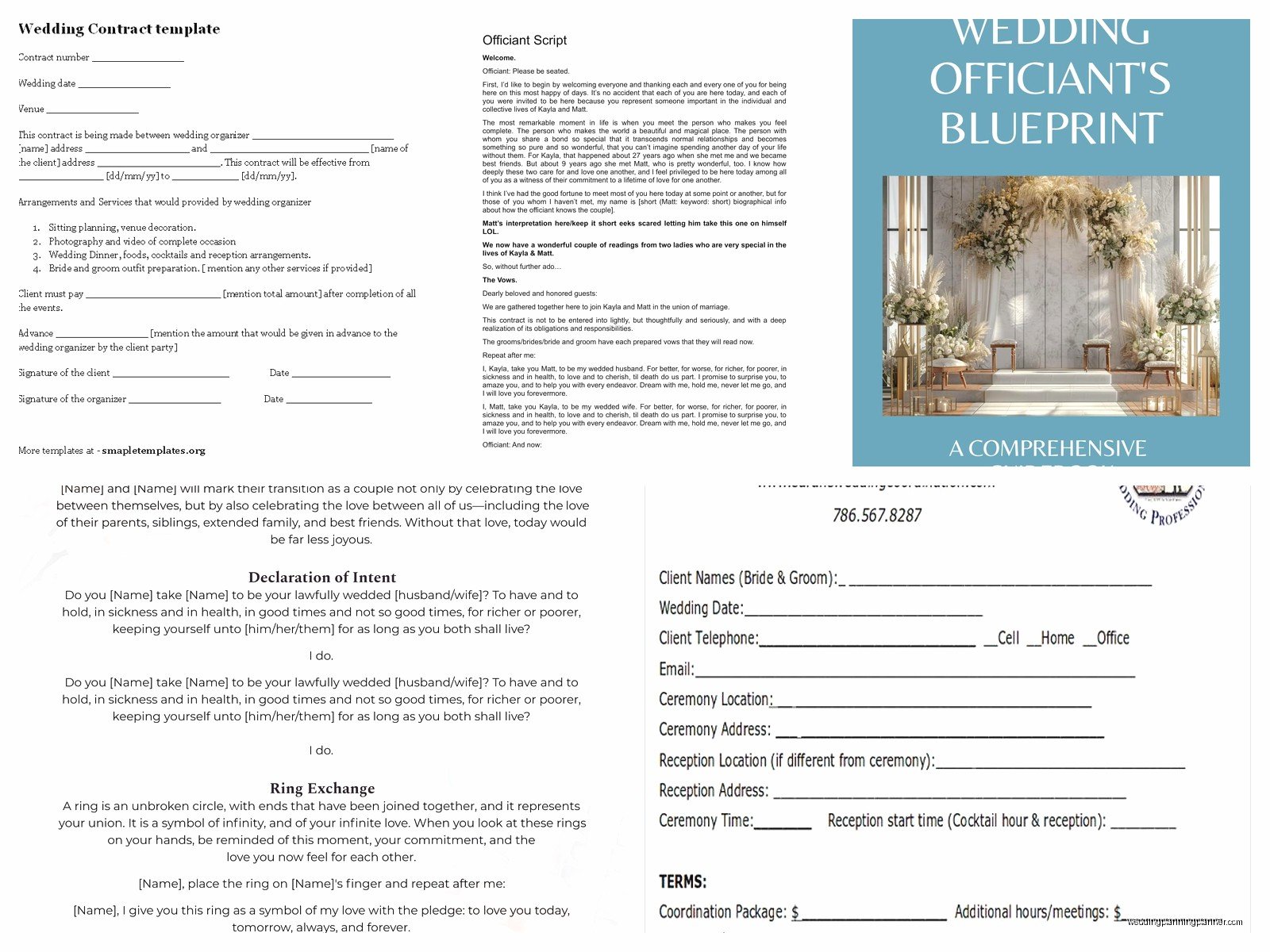
This is where you list everything the officiant will actually do. Be specific because vague language is how arguments start. Include stuff like:
Pre-Wedding Services:
- Number of planning meetings or calls included
- Ceremony script development and how many revision rounds
- Guidance on vows, readings, and ceremony structure
- Coordination with other vendors if needed
- Rehearsal attendance (or state if it costs extra)
Day-Of Services:
- Arrival time before ceremony
- Performing the ceremony (duh, but write it anyway)
- Providing their own microphone or if they’re using venue equipment
- Signing and filing the marriage license
- How long they’ll stay for photos if needed
My cat just knocked over my coffee while I’m writing this, perfect timing buddy. Anyway, where was I… oh right, the services section.
Ceremony Details and Customization
You need a section about what kind of ceremony this will be. Religious, secular, spiritual-but-not-religious, whatever. The contract should specify:
- The general tone and style the couple wants
- Any religious or cultural elements to include or avoid
- Whether the couple is writing their own vows or using traditional ones
- Special rituals like unity candles, sand ceremonies, handfasting, etc.
- Any readings or music cues the officiant needs to work around
This matters because I’ve seen officiants show up with a completely different vibe than what the couple wanted. Like, the couple wanted casual and personal but the officiant delivered this super formal traditional script that felt… wrong. Having these preferences documented means everyone’s on the same page.
The Legal Stuff You Can’t Skip
Okay so this part is kinda boring but also really important. Your contract needs to confirm that the officiant is legally authorized to perform marriages in your state. Different states have different requirements, and you don’t wanna find out on the wedding day that your marriage isn’t actually legal.
Include language about:
- Confirmation that the officiant is registered/ordained/licensed in your state
- Who is responsible for obtaining the marriage license (usually the couple)
- When the couple needs to provide the license to the officiant
- Timeline for the officiant to file the signed license with the county
- Who gets the certified copies and how many
Some states require the officiant to register with the county before performing ceremonies. Make sure your officiant has done this if it’s required where you are. I learned this when working with a couple in a different state than I usually work in and their online-ordained friend almost couldn’t legally marry them because he hadn’t registered. We figured it out but it was unnecessarily stressful.
Cancellation and Refund Policy
This is the part that everyone hopes they won’t need but you gotta have it anyway. Both sides need protection here.
If the couple cancels:
Spell out what happens to deposits and payments based on timing. A typical structure looks like:
- More than 6 months out: deposit refunded minus administrative fee
- 3-6 months out: 50% of total fee retained
- Less than 3 months: full fee retained
These timelines vary based on what the officiant prefers, but the point is to have it written down so nobody’s surprised.
If the officiant cancels:
The officiant should be required to provide as much notice as possible and help find a replacement. The contract should state that all fees paid will be refunded in full if the officiant cancels for any reason other than the couple’s breach of contract.
Weather and Backup Plans
For outdoor ceremonies, include language about weather contingencies. What happens if it rains? Is there an indoor backup location? Does the officiant charge extra if the ceremony location changes last minute? These questions sound nitpicky until you’re standing in a downpour trying to make decisions.
Rehearsal Details
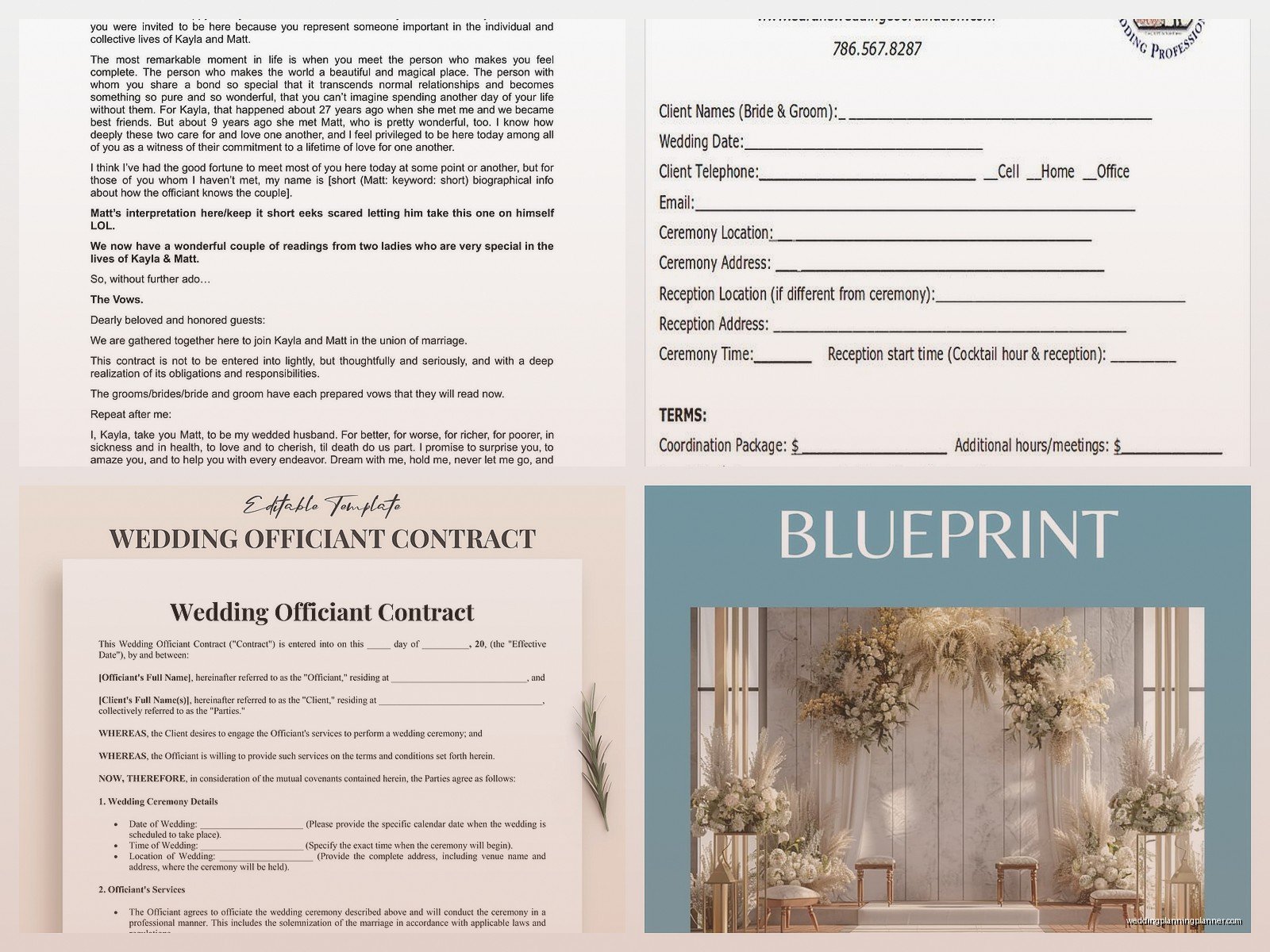
If the rehearsal is included, specify:
- Date, time, and location of rehearsal
- How long it will last (usually 30-60 minutes)
- Who needs to attend
- What will be covered during rehearsal
If it’s NOT included or costs extra, make that super clear. I mentioned this earlier but it’s worth repeating because it’s such a common point of confusion.
Liability and What-Ifs
This section covers everyone’s butt basically. Include:
- What happens if there’s an emergency and the officiant genuinely cannot make it (illness, family emergency, act of God)
- Whether the officiant has backup officiants they work with
- Liability limitations (officiants usually aren’t responsible for things beyond their control)
- What happens if the couple or their guests cause damage to the officiant’s equipment
Also—and I know this sounds weird—but include something about appropriate behavior. I’ve heard stories of drunk guests harassing officiants or couples being disrespectful during planning. Having language about mutual respect and the right to terminate services if someone’s being abusive is… unfortunately sometimes necessary.
Technical Requirements
Don’t forget to specify technical stuff:
- Is the officiant providing sound equipment or does the venue need to?
- Do they need a table or stand for their notes?
- What about shade or covering for outdoor ceremonies?
- Parking arrangements and vendor meal if it’s a long event
These details seem small but they matter for making sure the officiant can actually do their job properly.
Intellectual Property and Ceremony Scripts
This might not apply to everyone, but some officiants retain rights to their ceremony scripts and don’t want them shared publicly or reused. If the couple wants a copy of their ceremony script as a keepsake, make sure that’s addressed. Some officiants provide a printed copy, some don’t, some charge extra for a fancy version.
Photography and Social Media
Include whether the officiant can use photos from the wedding for their own marketing. Most couples are fine with this, but some prefer privacy. Also specify if the officiant plans to share anything on social media and whether they’ll tag the couple or keep them anonymous.
Going the other direction, if the couple plans to post reviews or testimonials, having that expectation in the contract can be helpful too, though you can’t really require someone to leave a review…
Signatures and Making It Official
Both parties need to sign and date the contract. Include spaces for:
- Couple’s names and signatures (both partners)
- Officiant’s name and signature
- Date signed
- Witness signature if you wanna be extra thorough
Keep copies for everyone. Digital signatures are generally fine—DocuSign, HelloSign, whatever works. Just make sure everyone has access to the signed version.
Random Additional Clauses That Might Matter
Depending on your situation, you might also want:
Travel fees: If the venue is more than X miles away, is there an additional charge? What about accommodation if it’s a destination wedding?
Overtime charges: If the ceremony runs long or the officiant is asked to stay for photos beyond the agreed time, what’s the hourly rate?
Ceremony changes: What if the couple wants major script revisions three days before the wedding? Is there a deadline for changes or an extra fee for last-minute requests?
Force majeure: Fancy legal term for “what happens during a pandemic or natural disaster when everything gets postponed.” After 2020, this clause became way more important than it used to be.
Dispute resolution: How will disagreements be handled? Mediation? Which state’s laws apply?
I know that last one sounds intense, but for professional officiants who work across state lines or with high-budget weddings, it’s worth including.
Making the Contract Actually Readable
Here’s the thing that annoys me about most contracts—they’re written in such dense legal language that nobody actually reads them. Then people are surprised by what they agreed to. Use clear, straightforward language whenever possible. Yes, it should be legally sound, but it should also be understandable to normal humans.
Break it into sections with headers like I’m doing here. Use bullet points. Make it easy to scan and find information. If you’re an officiant creating a template, consider having a lawyer review it once to make sure it’s solid, then use that template going forward.
Common Mistakes People Make
Just gonna list these real quick because I see them all the time:
- Not getting a contract at all because “we trust them”
- Using a contract but not reading it carefully
- Assuming things are included without checking
- Not discussing the ceremony style in enough detail
- Forgetting to confirm the officiant’s legal credentials
- Waiting until the last minute to sign
- Not keeping a copy of the signed contract
That spring 2023 disaster I mentioned at the beginning? The couple had exchanged texts with the officiant but never formalized anything. When the officiant flaked, there was no contract to point to, no deposit to refund, nothing. We ended up having a venue coordinator get ordained online during the cocktail hour and perform the ceremony late. It worked out but it was absolutely chaotic and could’ve been avoided.
Templates and Resources
You can find contract templates online through sites like LawDepot or Rocket Lawyer, or through wedding industry associations. Just make sure you customize them for your specific situation and state laws. Don’t just fill in the blanks and call it done—actually read through and adjust the language to match what you’ve agreed to.
Professional officiants usually have their own contracts already, which is great. Just review it carefully before signing. If something seems unclear or doesn’t match your understanding, ask about it. Better to clarify now than be confused later.
The contract is basically there to make sure everyone knows what to expect and has protection if something goes wrong. It’s not about assuming the worst will happen, it’s just about being prepared and professional. Even if your officiant is your best friend from college who got ordained to marry you, having stuff in writing prevents awkward conversations and hurt feelings down the road.
Make sure you’re getting the officiant’s contract at least a few months before the wedding, not like two weeks before when you’re already stressed about seating charts and… sorry, got distracted thinking about a seating chart nightmare from last month, anyway. Get the contract early, review it, ask questions, sign it, keep a copy somewhere you can find it.