
Planning Guides, Style Guide
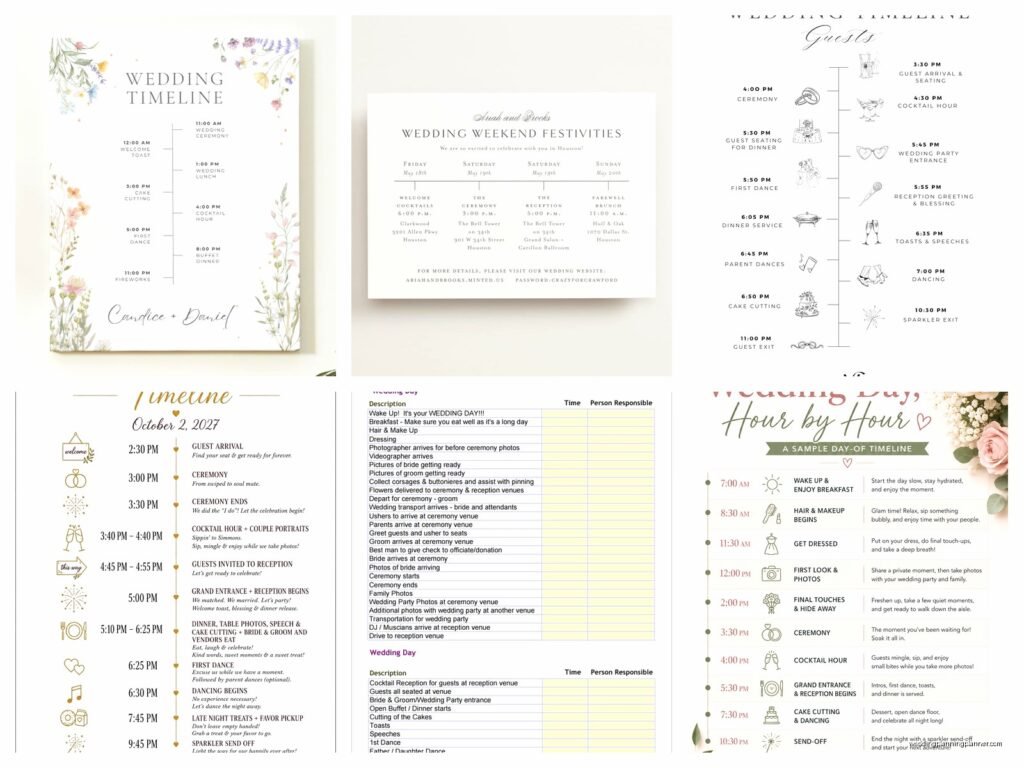
Wedding Day Schedule Template: Timeline Organizer
Jul
Getting Your Wedding Day Timeline Actually Organized
Okay so the biggest mistake I see couples make is thinking they can just wing the timeline on their wedding day and like… nah. That’s how you end up with your photographer standing around for 45 minutes waiting for hair and makeup to finish while your venue coordinator is texting you asking where you are for first look photos. I had this happen in summer 2021 with a bride who insisted she didn’t need a detailed schedule and we literally lost an entire hour of golden hour lighting because nobody knew what was happening when.
The thing about wedding day timelines is they need to work backwards AND forwards at the same time which sounds confusing but makes sense once you start doing it. You gotta start with your ceremony time because that’s usually the one thing that’s locked in, then work backwards for getting ready stuff and forwards for reception events.
Start With The Non-Negotiables
Your ceremony time is obviously fixed. Your venue probably has a hard stop time too – like if you rented the space until 11pm, that’s it, they’re kicking everyone out. Your photographer’s contract probably specifies how many hours they’re there. These are your anchor points that everything else has to fit around.
I always tell clients to write these down first:
- Ceremony start time
- Venue access time (when you can actually get in)
- Vendor arrival times (especially hair/makeup)
- Sunset time (if you want those photos)
- Venue end time
- Any cultural or religious timing requirements
The Getting Ready Block Is Always Underestimated
This is the part that annoys me SO much because people always think “oh hair and makeup takes an hour” but like… for who? Just you? What about your bridesmaids? Your mom? And that’s not even counting the time for everyone to actually GET to the getting ready location, or the time you’ll spend taking getting-ready photos, or the inevitable moment when someone realizes they forgot their shoes.
Here’s what I typically budget for a bridal party of 5-6 people:
- Hair for bride: 90 minutes (yes really, with the trial run and adjustments)
- Hair for each bridesmaid: 45-60 minutes
- Makeup for bride: 60-75 minutes
- Makeup for each bridesmaid: 30-45 minutes
- Getting dressed and detail photos: 30-45 minutes
- Buffer time because something WILL go wrong: 30 minutes
If you have two hair stylists and two makeup artists working simultaneously, you can cut this down significantly. But most people don’t have that budget and that’s totally fine, you just need to plan accordingly.
Working Backwards From Ceremony Time
Let’s say your ceremony is at 4pm. You need to be photo-ready and at your ceremony location by like 3:30pm at the latest, maybe earlier if you’re doing a first look. So that means:
3:30pm – Arrive at ceremony venue, fully ready
3:00pm – Leave getting ready location (build in travel time)
2:45pm – Final touches, getting into dress
2:00pm – Last bridesmaid finishes hair and makeup
And then you keep working backwards…
I had my cat jump onto a bride’s dress during getting ready photos once and we had to spend 20 minutes lint-rolling white fur off ivory silk, which is why buffer time is NOT optional.
The First Look Decision Changes Everything
If you’re doing a first look, you can knock out like 80% of your photos before the ceremony which is honestly genius for timeline purposes. You can do all your couple portraits, wedding party photos, family photos… everything except the actual ceremony shots and maybe some sunset photos later.
Without a first look, all those photos have to happen during cocktail hour which means you’re gonna miss your own cocktail hour, your guests will be wondering where you are, and your photographer is rushing through family combinations while Aunt Marie keeps wandering off to get another drink.
For a first look timeline, I usually suggest:
- First look: 2 hours before ceremony
- Couple portraits: 45 minutes
- Wedding party photos: 30 minutes
- Family photos: 30 minutes (this is ambitious but doable with a good coordinator)
- Buffer/travel to ceremony: 15 minutes
Ceremony Length Reality Check
Your ceremony is probably gonna be 20-30 minutes unless you’re having a full mass or specific cultural ceremony. Don’t just guess on this – ask your officiant exactly how long it’ll be. I’ve seen couples budget 20 minutes for a ceremony that ended up being 55 minutes and it threw off the entire rest of the day.
Cocktail Hour Isn’t Just For Guests
Standard cocktail hour is 60 minutes but you can adjust this. If you didn’t do a first look, you NEED this time for photos. Your coordinator should be managing your family photo list like a military operation – seriously, give them a list with names and relationships and maybe even photos of people because “Aunt Susan” could be three different people in some families.
Pro tip that I learned the hard way: assign a couple of outgoing family members to be “wranglers” who help gather people for family photos. Otherwise you’ll waste 10 minutes tracking down your cousin who went to the bathroom.
Reception Timeline That Actually Works
Okay so this is where people get really creative with their timing and sometimes that’s great and sometimes it’s… not great. Here’s a standard reception flow that you can modify:
Grand entrance: 5 minutes (don’t make this longer, people get bored)
First dance: 3-4 minutes (full song)
Welcome speech: 5 minutes max
Dinner service: 45-60 minutes for plated, 60-75 for buffet
Toasts: 15-20 minutes (that’s like 3-4 toasts, and yes you need to limit this or your uncle will tell his entire life story)
Parent dances: 6-8 minutes
Cake cutting: 10 minutes
Open dancing: however much time you have left
Bouquet/garter: 10 minutes if you’re doing this
Last dance/send-off: 10-15 minutes
The Dinner Service Time Trap
People ALWAYS underestimate how long dinner takes and it drives me crazy. Your caterer might say service takes 45 minutes but that’s just the time to get food to tables – it doesn’t include the time people spend actually eating, chatting, going to the bathroom, refilling drinks, etc.
I usually tell couples to budget 75-90 minutes from the start of dinner service until you move into the next phase of reception. In spring 2023 I had a couple who wanted to squeeze dinner into 45 minutes so they could have more dance time and it was just… chaos. People were still eating when we were trying to do cake cutting and it felt rushed and awkward.
Sunset Photos Are Worth Rescheduling Things For
If you want those gorgeous golden hour photos (and you do, trust me), you need to actually look up what time sunset is on your wedding date and block out 20-30 minutes around that time. This might mean stepping away from your reception for a bit, which some couples hate the idea of but the photos are SO worth it.
Just tell your DJ/band to keep the party going, maybe do parent dances or cake cutting right before you leave so people don’t notice you’re gone as much.
Building In Buffer Time
This is gonna sound excessive but I build in 10-15 minute buffers between major timeline blocks because something WILL run late. Hair takes longer than expected, traffic is bad, your groom’s boutonniere falls apart and needs to be redone, someone’s zipper breaks… I’ve seen it all.
These buffers are also when you can breathe, eat something (please eat something), touch up makeup, or just have a moment that’s not scheduled to the minute.
The Timeline Template I Actually Use
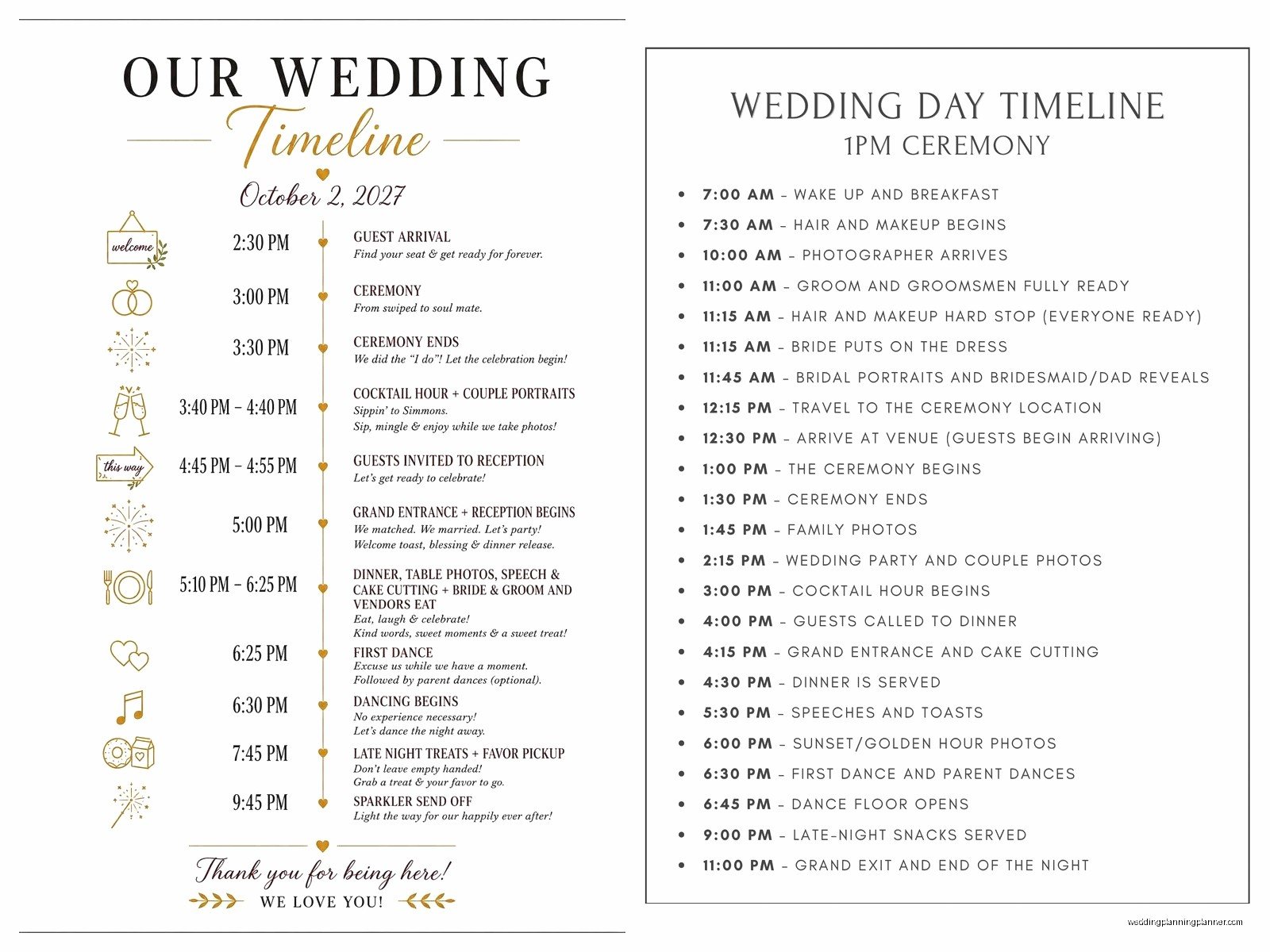
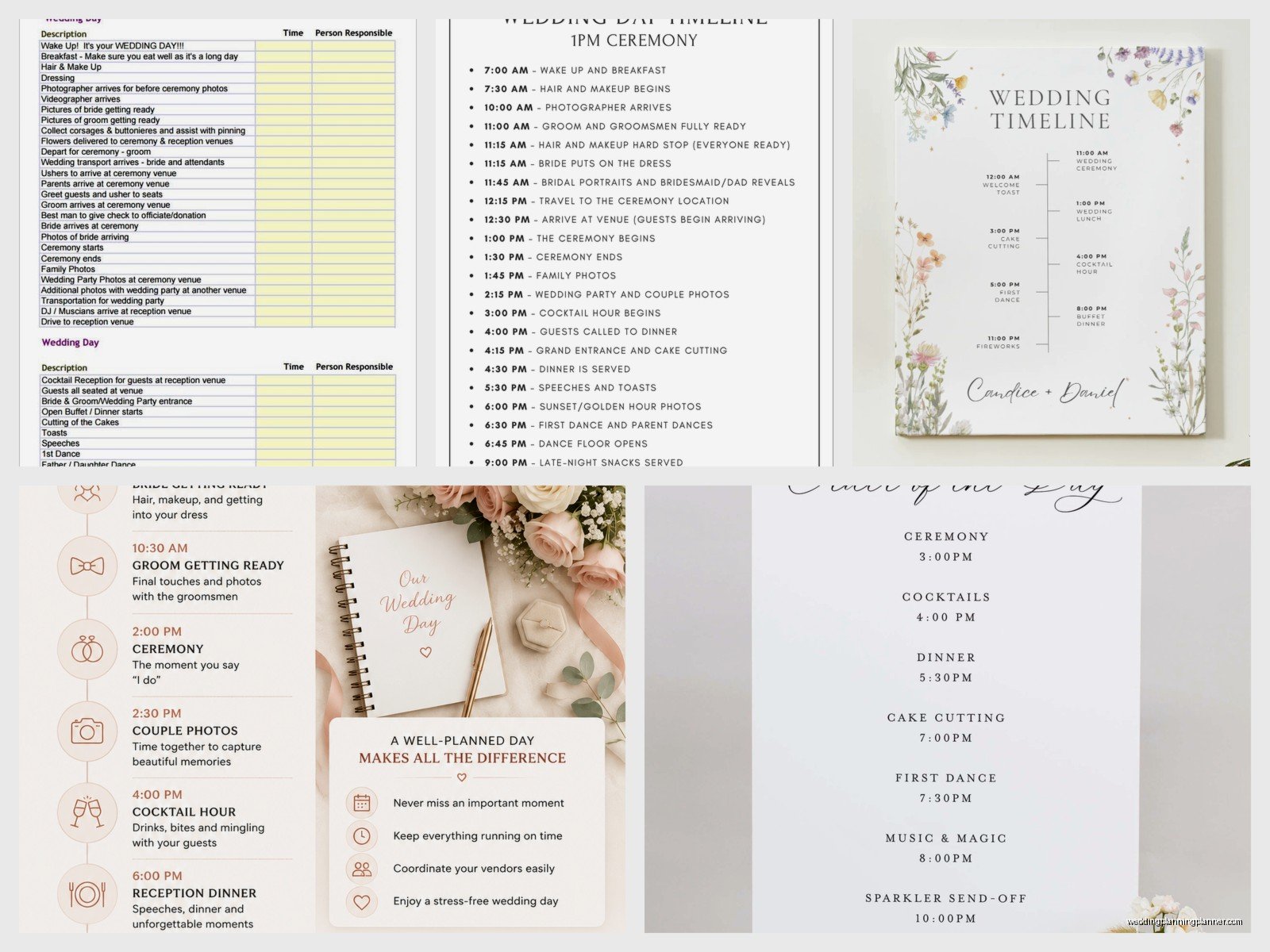
I’m gonna give you the basic template structure I use for most weddings. Obviously adjust times based on your specific situation but this is a good starting point:
10:00am – Hair and makeup team arrives
10:15am – Bridesmaids start hair/makeup rotation
12:30pm – Bride starts hair
1:30pm – Bride starts makeup
2:00pm – Photographer arrives
2:15pm – Detail photos, getting ready photos
2:45pm – Bride gets into dress
3:00pm – First look
3:20pm – Couple portraits
4:00pm – Wedding party photos
4:30pm – Family photos
5:00pm – Guests begin arriving
5:30pm – Ceremony begins
6:00pm – Ceremony ends, cocktail hour begins
7:00pm – Reception entrance
7:10pm – First dance
7:15pm – Welcome toast
7:20pm – Dinner service begins
8:15pm – Toasts during dinner
8:45pm – Parent dances
8:55pm – Cake cutting
9:00pm – Open dancing
10:45pm – Last dance
11:00pm – Venue ends
Who Needs This Timeline
Don’t just make one copy and call it done. You need to distribute this to like… everyone:
- Your photographer and videographer
- Your DJ or band
- Your venue coordinator
- Your wedding planner/day-of coordinator
- Your caterer
- Your hair and makeup team
- Your wedding party (at least the key people)
- Your parents
- Your officiant
- Anyone doing a reading or toast
I usually create a “master timeline” with every detail and then a simplified “vendor timeline” that just has the parts relevant to each specific vendor.
The Week-Of Timeline Review
About a week before the wedding, I always schedule a call or meeting to review the timeline with the couple and make sure it still makes sense. Sometimes things have changed – a vendor’s arrival time shifted, you decided to add something, whatever. Better to catch it now than day-of.
This is also when I make sure everyone actually HAS the timeline because you’d be surprised how many vendors are like “oh yeah I never got that” a week before the wedding.
Day-Of Timeline Management
Even with the most detailed timeline, someone needs to be in charge of actually keeping things on schedule day-of. This is your wedding planner, day-of coordinator, or a very organized friend who you’re trusting with this job. They need to have the timeline, a watch, and the authority to tell people “okay we need to move on now.”
The couple should NOT be watching the clock on their wedding day. That’s not your job. Your job is to show up where you’re supposed to be when someone tells you to.
Common Timeline Mistakes I Keep Seeing
Not budgeting enough time for family photos – this always takes longer than you think because families are chaos and someone’s always missing or needs their wine refilled first or…
Scheduling the ceremony right at sunset – seems romantic but then your ceremony photos are all backlit and weird, or it’s too dark by the time you’re done.
Forgetting to include travel time between locations – if your ceremony and reception are at different venues, you need to account for loading everyone into cars, driving, parking, walking in, etc.
Making dinner service too short – people need time to eat, seriously.
Not scheduling time to eat as a couple – you will be starving and someone needs to make sure you actually sit down and eat something at some point.
Flexibility vs Structure
Here’s the thing about timelines – you need one, it needs to be detailed, but you also can’t be so rigid that any small delay ruins everything. This is why buffer time is important and why your coordinator needs to be able to make judgment calls about what to skip or shorten if you’re running behind.
If you’re 20 minutes behind schedule, maybe you cut one of the parent dances or skip the garter toss or do fewer family photo combinations. The day doesn’t have to be perfect to be perfect, if that makes sense… you just need the important stuff to happen and everyone to have a good time.
I always tell couples to identify their top 3 must-have moments – like maybe it’s the first look, sunset photos, and dancing with your grandma. Those things happen no matter what, even if we have to rearrange other stuff.
Digital vs Paper Timeline
I usually create timelines in Google Sheets or Excel because they’re easy to share and update. You can give edit access to your planner and key vendors so everyone’s working from the same document. But on the day-of, I print physical copies too because phones die and WiFi is unreliable and trying to pull up a Google doc while coordinating 200 people is just asking for trouble.
Some couples use wedding planning apps that have timeline features built in which is totally fine, just make sure you can easily share it with all your vendors in a format they can actually use.