
Planning Guides, Style Guide
Rehearsal Dinner Menu Template: Pre-Wedding Meal Card
Jul
Okay So Rehearsal Dinner Menus Are Actually More Important Than You Think
Look, I learned this the hard way back in spring 2023 when I had this couple who just completely winged their rehearsal dinner menu situation and half their guests ended up confused about what they were ordering because the restaurant just verbally listed everything and people kept asking the servers to repeat items and it became this whole thing. So now I’m like super passionate about having an actual printed menu card even if it feels a bit extra.
The rehearsal dinner menu template is basically your roadmap for what everyone’s eating the night before the wedding. It’s not just about listing food—it’s about setting expectations, handling dietary restrictions without making it awkward, and honestly just making the whole evening feel more organized. You want people to know what they’re getting into before the server shows up.
What Actually Goes On This Thing
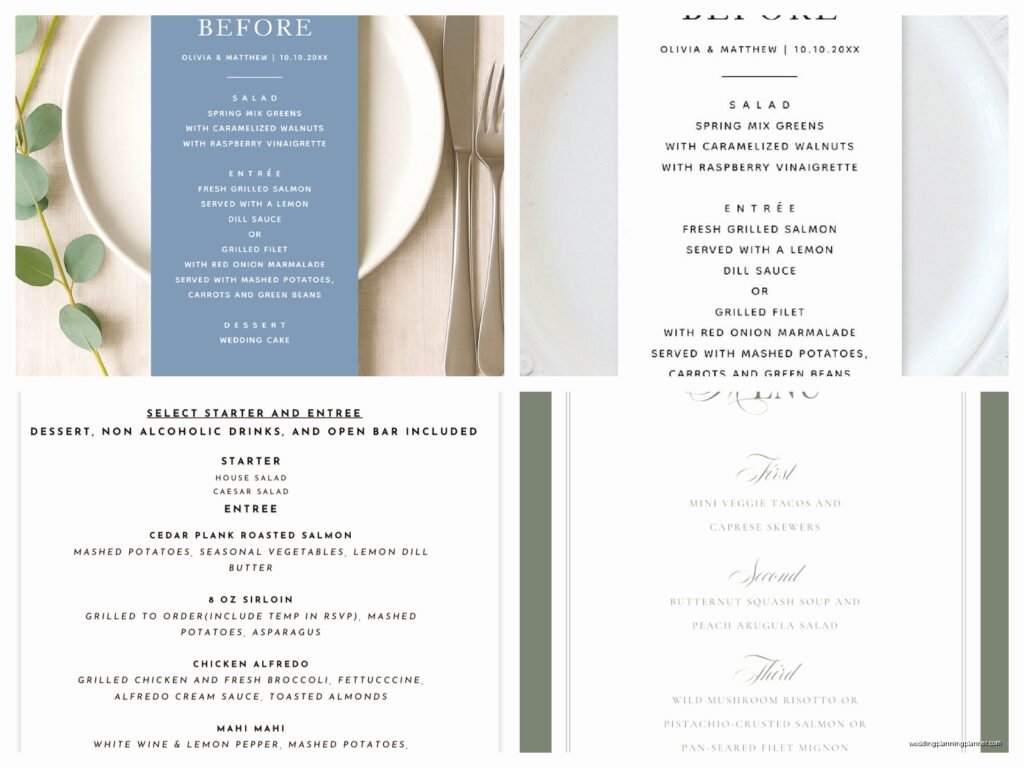
So the basic structure is gonna include your header section with the couple’s names or monogram or whatever you’re using for branding across all your wedding stationery. I always tell clients to keep it consistent with their invitation suite but like, the rehearsal dinner can be slightly more casual? It doesn’t have to match exactly.
Then you’ve got your actual menu sections. Most rehearsal dinners follow either a prix fixe format or a limited choice format. Prix fixe means everyone gets the same thing—way easier for the restaurant, way easier for you to template. Limited choice means maybe two or three options per course that guests select from.
Here’s what I typically include:
- Event header (names, date, location)
- Welcome message or quote if you’re into that
- Appetizer or first course
- Salad or soup course
- Main course options
- Side dishes
- Dessert
- Beverage information
- Dietary accommodation note
The Format That Actually Works
I’ve tried like a million different layouts and honestly the simplest ones work best. You don’t need to get fancy with this. A single-page card, maybe 5×7 inches, printed on nice cardstock is perfect. Sometimes people do the menu on the back of their seating card which is kinda smart if you’re trying to save on printing costs.
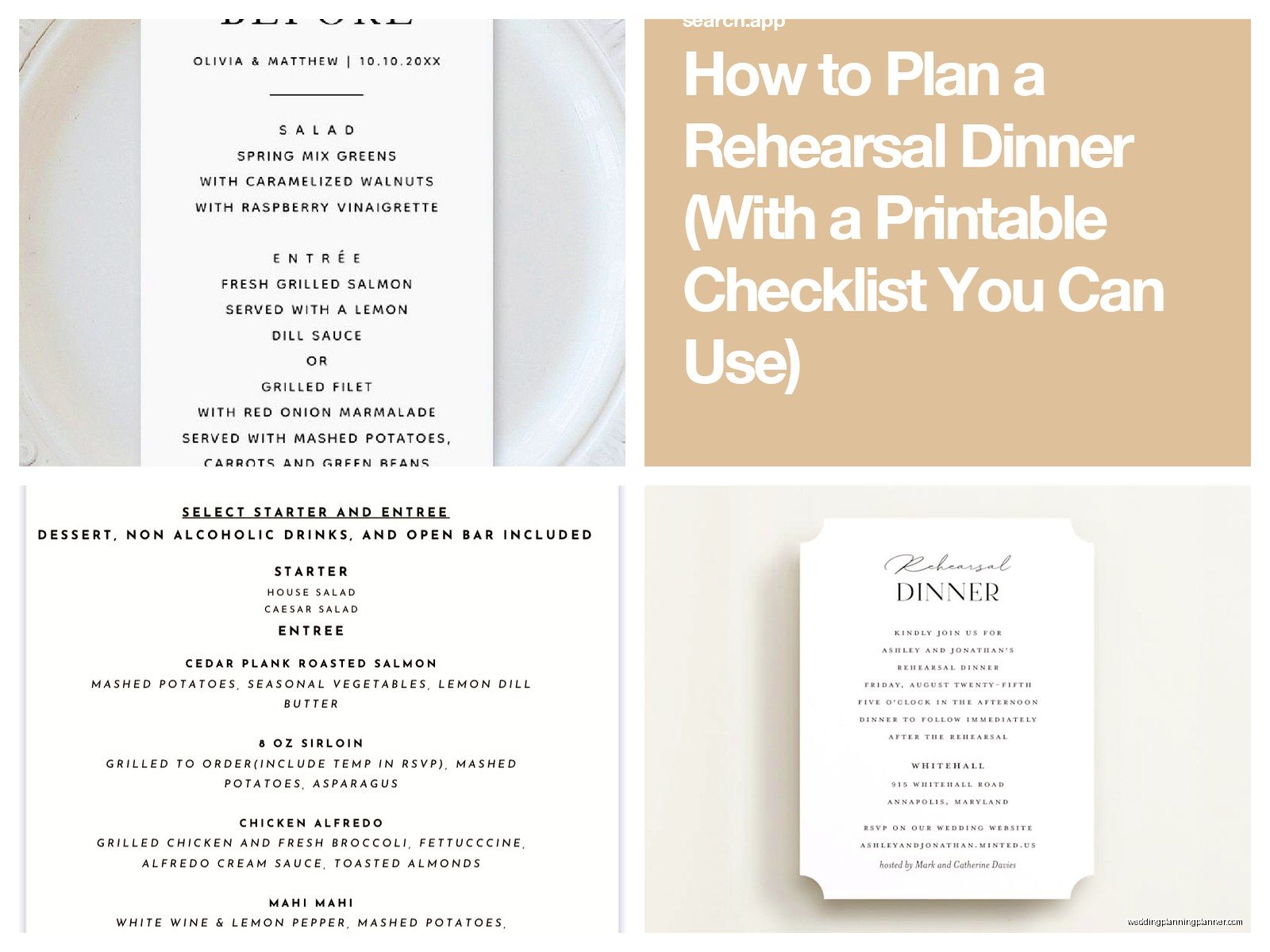
For the actual text layout, I usually go with centered alignment for headers and left-aligned for the menu items themselves. It reads better. And please, PLEASE use a readable font size—nothing smaller than 10pt. I once had a mother-of-the-groom complain she couldn’t read the menu in the dim restaurant lighting and she was right, we’d gone down to like 8pt to fit everything and it was ridiculous.
The Wording Part That Everyone Overthinks
You don’t need flowery descriptions for every single dish unless you’re at some super high-end restaurant where that’s expected. Most rehearsal dinners are at nice but not ultra-formal places. So instead of “Pan-seared Atlantic salmon with a delicate lemon-butter reduction, accompanied by roasted fingerling potatoes and seasonal vegetables” you can just say “Grilled Salmon with lemon butter, roasted potatoes, and vegetables.”
But DO include allergen information or major ingredients that people commonly avoid. Like if something has nuts, shellfish, gluten, dairy—call it out. I learned this when my cat knocked over my coffee all over a draft menu I was working on and I had to reprint it anyway, so I added an allergen line at the bottom and the client was so relieved because her aunt has a severe shellfish allergy.
Sample Template Structure I Use All The Time
Here’s basically what I copy and paste and then customize for each couple:
Top section:
Sarah & Michael
Rehearsal Dinner
Friday, June 14th, 2024
Bella Vista Restaurant
First Course (choose one):
Caesar Salad
Tomato Basil Soup
Mixed Green Salad with balsamic vinaigrette
Main Course (choose one):
Filet Mignon with garlic mashed potatoes and asparagus
Herb-Roasted Chicken with wild rice and green beans
Vegetarian Pasta Primavera with seasonal vegetables
Dessert:
Tiramisu or New York Cheesecake
Beverages:
Wine, beer, and soft drinks included
Please inform your server of any dietary restrictions or allergies
The Pre-Selection Question That Drives Me Nuts
Okay so here’s something that really annoys me—when couples want to do pre-selected meals where everyone chooses ahead of time and you have to track it all. Like I get it, it speeds up service, but unless you’ve got 80+ people at your rehearsal dinner (which would be insane), it’s overkill. The only time I really push for pre-selection is when the venue absolutely requires it or when you’ve got a really tight timeline.
If you DO go the pre-selection route, you need a different template. You’ll send the menu ahead of time (usually with the rehearsal dinner invitation or via email) and include a response mechanism. I usually create a simple form or just have people email their choices. Then you make individual place cards with each person’s selection printed on them so the servers know who gets what.
Design Elements That Don’t Suck
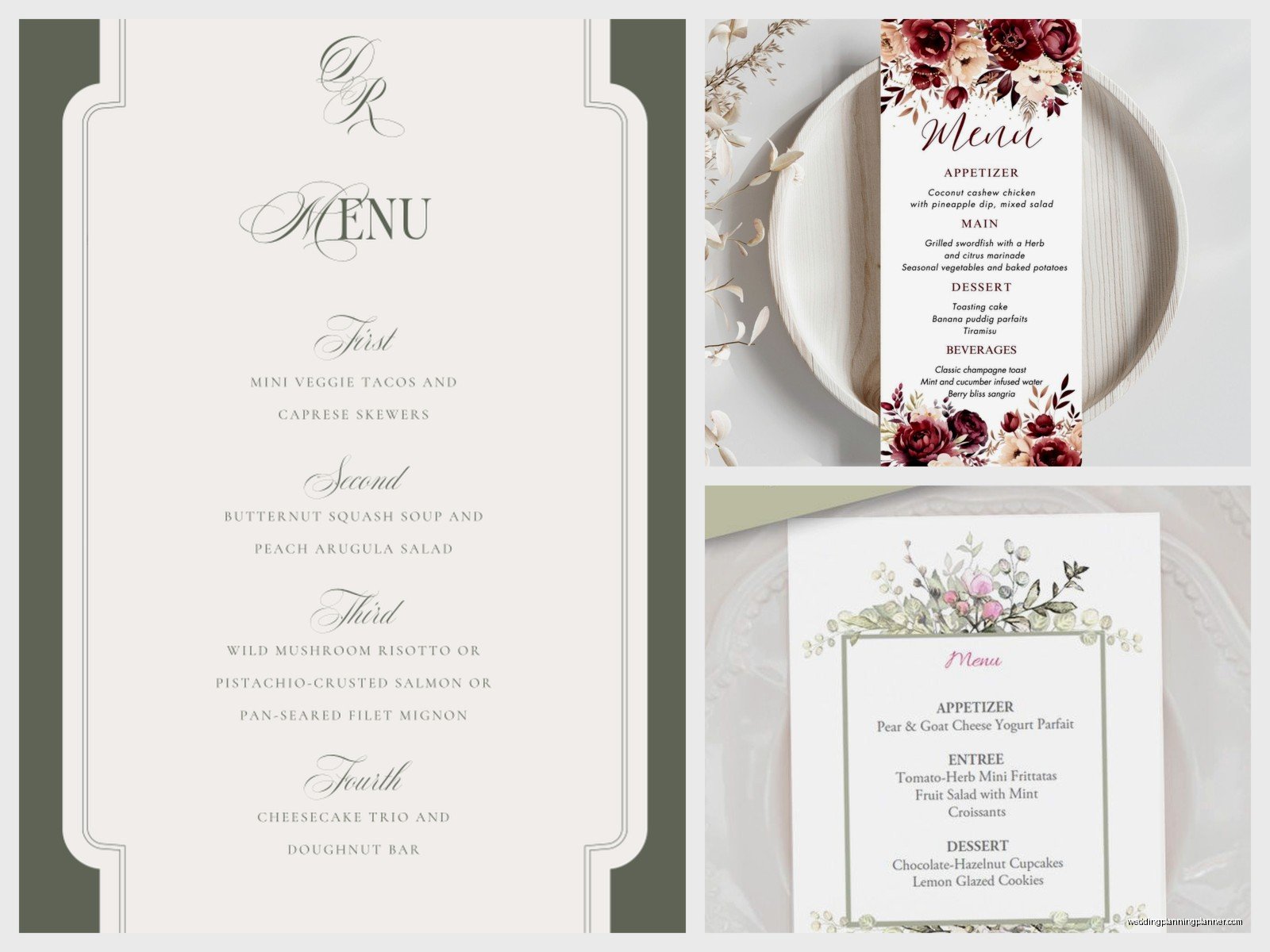
The visual design should complement your wedding aesthetic but can be more relaxed. If your wedding invitations are super formal with engraved script, your rehearsal dinner menu can be printed with a simpler font. I typically use one decorative font for headers and a clean sans-serif or serif for the body text.
Color-wise, you can either match your wedding colors or go neutral. Honestly neutral is easier because it photographs well and doesn’t clash with table settings. I’m partial to black text on cream or white cardstock with maybe a simple border or monogram at the top.
Paper and Printing Considerations
For paper, I usually recommend 80lb or 100lb cardstock. It feels substantial but isn’t so thick that it’s awkward on the table. Matte finish is better than glossy because glossy shows fingerprints like crazy and can have glare issues in restaurant lighting.
You can print these at home if you’ve got a decent printer, but I typically send couples to a local print shop or use online services like Minted or Vistaprint. The cost is usually pretty minimal—like $30-50 for 50 menus depending on the fancy factor.
Timing and Logistics Nobody Tells You
Get your menu finalized at least two weeks before the rehearsal dinner. This gives you time to print, receive, and review everything. I’ve had so many couples try to finalize menus three days before and then freak out about shipping times or… actually, you need to confirm the menu with the restaurant first, THEN create your cards. I cannot tell you how many times people design beautiful menus and then the restaurant is like “oh we don’t have that dish anymore” or “we can’t accommodate that on a Friday night.”
Call the restaurant or venue at least a month out. Get their standard rehearsal dinner menu options. Ask about customization possibilities. Confirm pricing. Ask about their dietary accommodation procedures. Some places are amazing about this, others are gonna be difficult.
Special Situations and Variations
If you’re doing a buffet-style rehearsal dinner, your menu card becomes more informational. You list what’s on the buffet rather than giving choices. I actually prefer this format for larger rehearsal dinners because it’s less complicated. Just list everything that’ll be available with clear sections for proteins, sides, salads, desserts, etc.
For family-style meals where platters come to the table, same thing—you’re listing what to expect rather than asking for choices. These are honestly my favorite because they feel more communal and relaxed which is kinda perfect for a rehearsal dinner vibe.
The Dietary Restrictions Minefield
This is where things get tricky. You need to handle dietary restrictions gracefully without making special meals feel like an afterthought. I always include a line at the bottom like “vegetarian, vegan, and gluten-free options available upon request” or something similar.
But here’s what I actually do behind the scenes—I gather dietary restrictions ahead of time (usually when sending the rehearsal dinner invitation) and work with the restaurant to have appropriate meals ready. Then on the actual menu cards, I sometimes print customized versions for guests with restrictions so they can see their specific options. Is this extra work? Yes. Do people really appreciate it? Also yes.
One time I had a wedding party where three people were vegan, two were gluten-free, and one had a severe nut allergy, and we created a master menu card plus individual cards for each restricted diet and it worked perfectly. Well, except for when the restaurant accidentally put regular cheese on one of the vegan meals but we caught it before service.
Digital vs. Physical Menus
Some couples ask about digital menus, especially if they’re trying to be eco-friendly or cut costs. You can absolutely do this—create a PDF and either email it ahead of time or display it on a sign at the entrance. But I gotta say, I still prefer physical menu cards at each place setting. There’s something about having it in front of you that makes the meal feel more intentional and special.
If you go digital, make sure the venue has WiFi and consider that not everyone (especially older guests) will check their email before arriving. A large printed display menu as backup is smart.
Cost Breakdown Because You’re Probably Wondering
DIY printing at home: $10-20 (cardstock and ink)
Online printing service: $30-75 depending on quantity and upgrades
Local print shop: $50-150 for professional quality with design help
Professional designer + printing: $150-300+
Most couples spend around $40-60 total on rehearsal dinner menus which is pretty reasonable in the grand scheme of wedding expenses.
What to Do With Them After
Some people like to save one as a keepsake. I usually recommend the couple keep one for their wedding memory box. Sometimes creative guests take them home, which is fine—it’s not like you need them back. They’re basically a one-time use item that serves a practical purpose and then becomes a small memento if anyone wants it.
Common Mistakes I See Constantly
Using fonts that are too decorative to read easily. Forgetting to include the restaurant name (useful if guests arrive separately). Not leaving enough white space so the menu looks cramped. Including too many options which slows down service. Not confirming menu items with the venue first—this is the big one.
Also, and this might seem obvious, but proofread the thing multiple times. I once let a menu go to print with “chicken breast” spelled as “chicken beast” and thankfully the bride caught it but it was gonna be printed like that. Check for typos, check for correct dates and spelling of names, check everything.
Templates and Resources
You can find free templates on Canva, Etsy has tons of customizable options for like $5-15, and Microsoft Word has basic templates if you’re comfortable with formatting. I usually start with a Canva template and customize it because their interface is pretty user-friendly even if you’re not super design-savvy.
For wording inspiration, honestly just look at restaurant menus you like. Notice how they describe dishes, how they format sections, what information they include. You’re basically creating a mini restaurant menu, so use actual restaurant menus as your guide.