Planning Guides, Style Guide
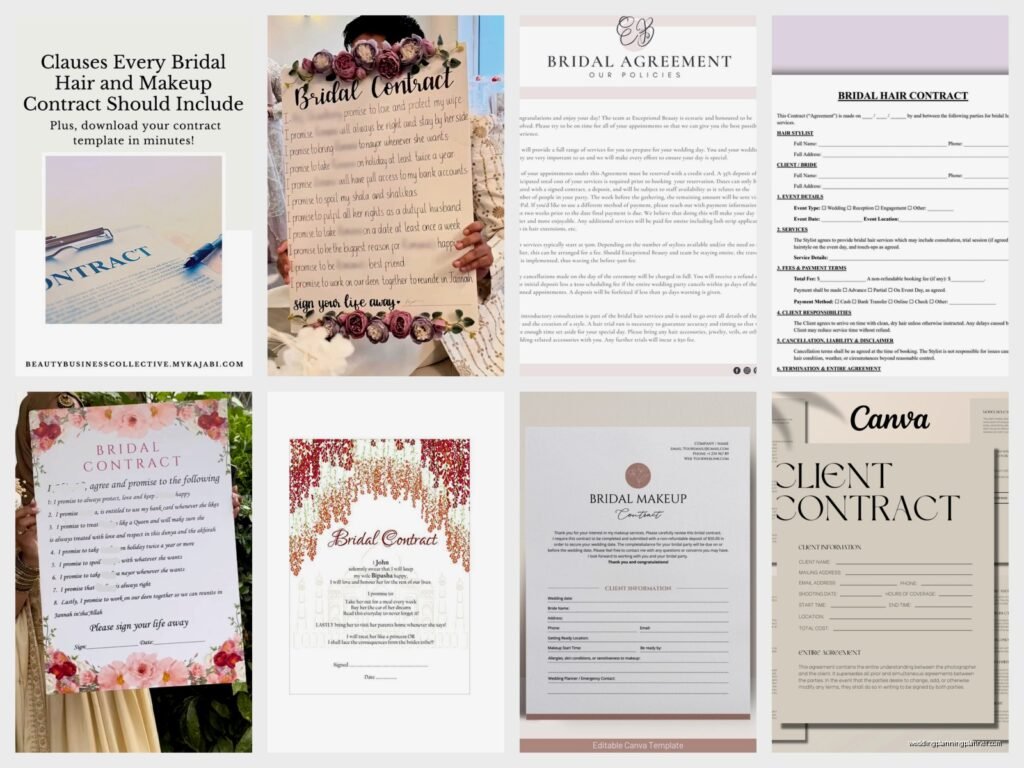
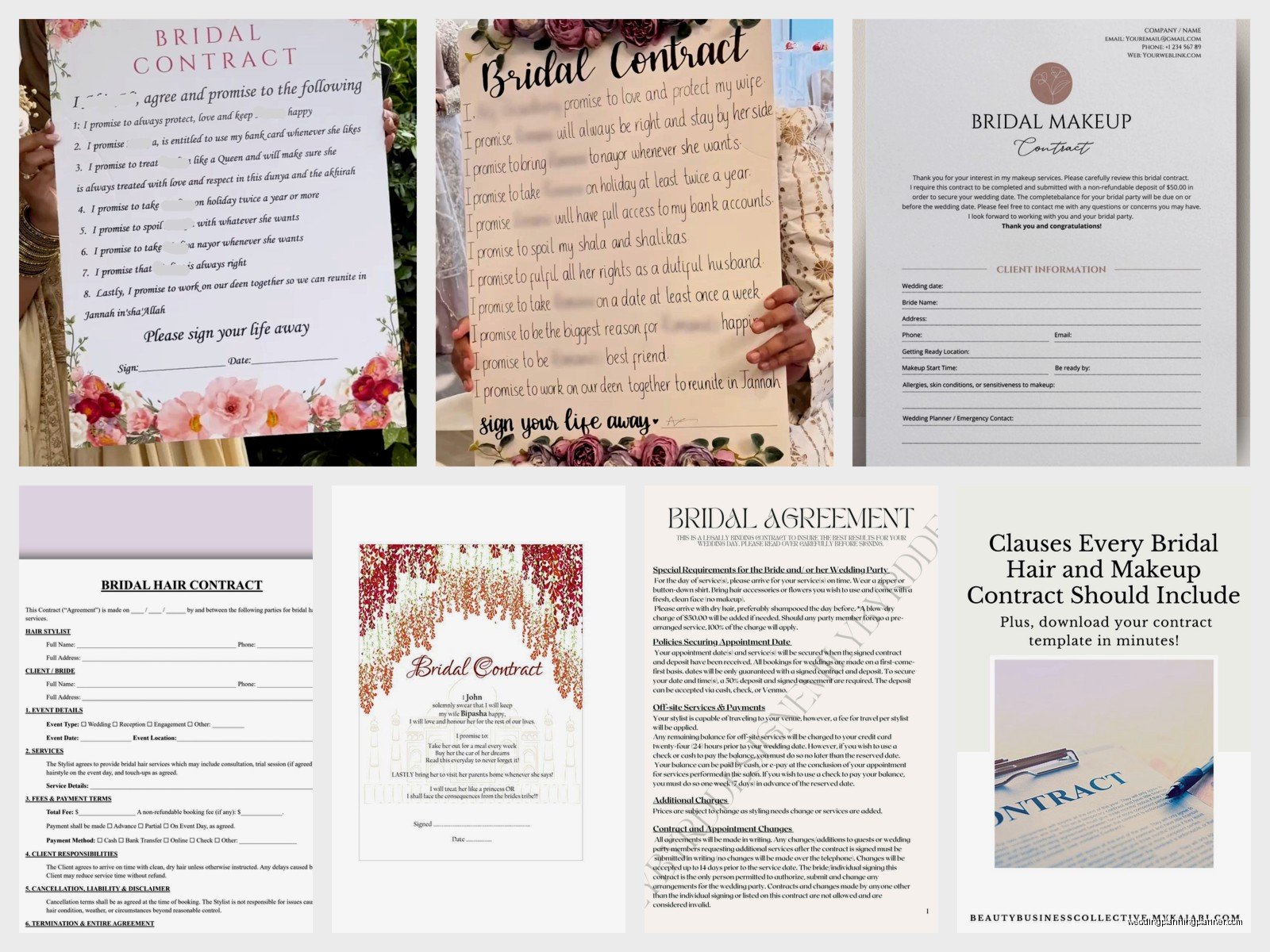
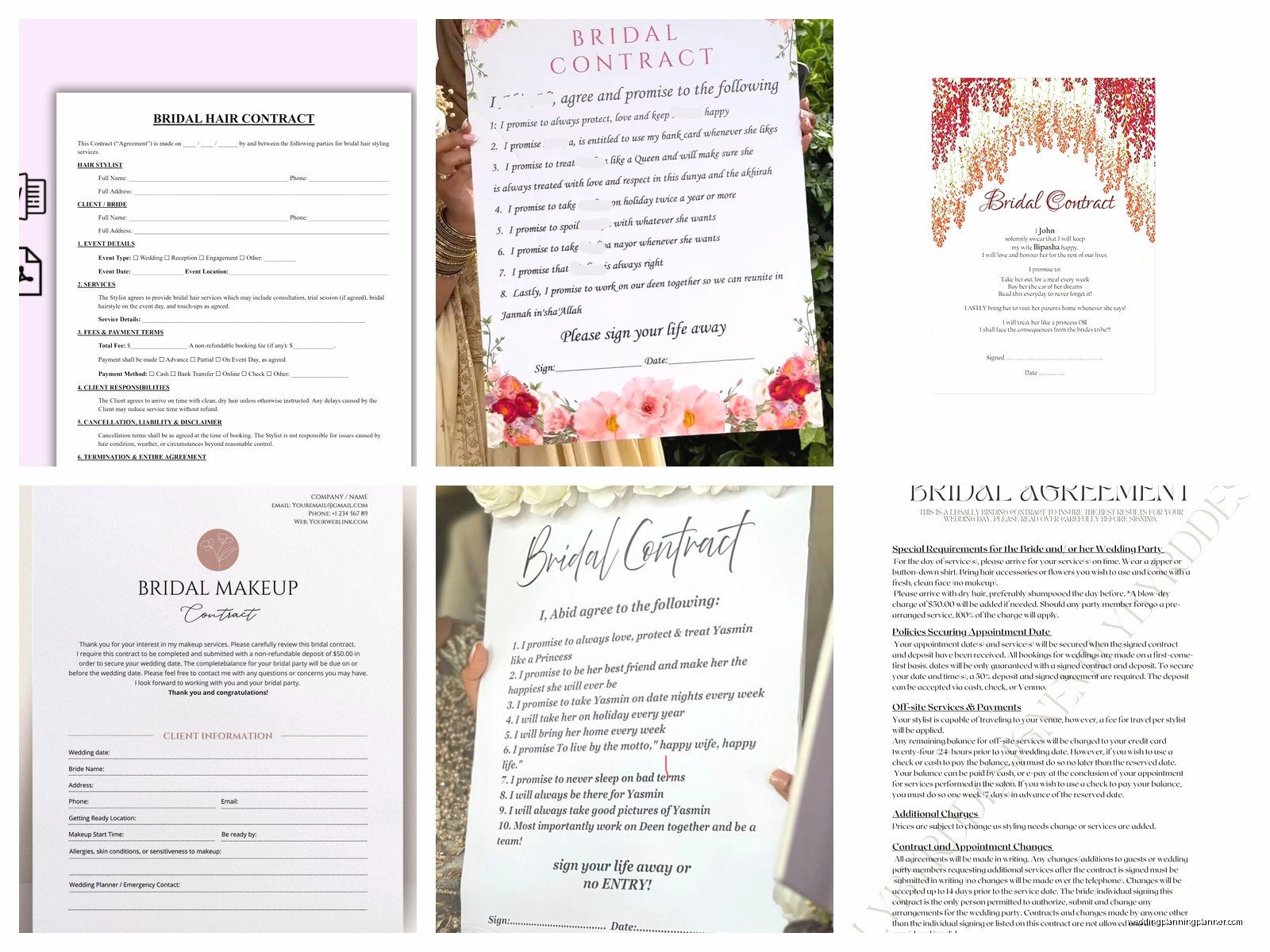
Bridal Contract: Wedding Service Agreement Template
Jul
What Actually Needs to Be in Your Wedding Service Agreement
Okay so you need a bridal contract and honestly this is the ONE thing that saved my entire business back in spring 2023 when a bride tried to say we never agreed on centerpiece counts even though we literally had three email chains about it. Without that contract I would’ve eaten the cost of 47 extra arrangements and probably cried for a week straight.
The thing that annoys me most about wedding contracts is that people think they’re just formalities or like, something you print from a random template site and call it done. Nah. This document is your protection, your client’s protection, and honestly the thing that keeps everyone sane when memories get fuzzy six months into planning.
The Absolute Must-Haves
Start with the basics that seem obvious but I’ve seen vendors skip: full legal names of everyone involved, the wedding date, venue name and address, and your business details. I mean ALL your business details – LLC name if you have one, your business address, phone, email, the works.
Then you gotta spell out exactly what services you’re providing. And I mean EXACTLY. Don’t write “full wedding planning services” because that means nothing when disputes happen. Write it like:
- Monthly planning meetings (specify how many)
- Vendor sourcing and coordination (list how many vendors)
- Day-of coordination from X hours before ceremony through reception end
- Timeline creation and distribution
- Rehearsal attendance and direction
- Setup supervision for ceremony and reception
The more specific you are, the less room there is for someone to say “but I thought you were gonna handle the flower girl’s basket” when that was never discussed.
Money Stuff Because Obviously
Break down your pricing structure clearly. Total package cost, deposit amount, when remaining payments are due, and what happens if they’re late. I do a 25% non-refundable deposit, then 50% at six months out, and final 25% two weeks before the wedding. Some planners do it differently but find what works for your cash flow.
Include your accepted payment methods too. I take checks, Venmo, Zelle, and credit cards through Square but there’s a 3% processing fee for cards and you need to state that upfront. Had a groom lose his mind over that fee once because “it wasn’t in the contract” except it totally was, he just didn’t read page 3.
Late payment penalties – yeah you need those. I charge $50 for payments that are 1-7 days late, then $100 for 8-14 days, and after that we’re in breach of contract territory. Sounds harsh but it’s literally in there to motivate people to pay on time because your mortgage doesn’t care about their cash flow issues.
Refund and Cancellation Policies
This is where things get real messy if you don’t have it in writing. My policy is that the deposit is non-refundable under any circumstances because once they book me, I’m turning away other clients for that date. If they cancel more than 6 months out, they lose the deposit but don’t owe remaining payments. Less than 6 months, they owe 50% of the remaining balance. Less than 3 months, they owe everything.
I know it seems strict but I had a couple cancel 8 weeks before their wedding in summer 2021 and because I didn’t have this clause tight enough, I lost out on a $4,500 booking AND couldn’t fill the date because it was too close. Never again.
What Happens When Things Go Wrong
You need a force majeure clause which is fancy lawyer speak for “what if something completely insane happens that nobody could predict.” COVID taught us this lesson hard. Your contract should address natural disasters, venue closures, government restrictions, basically anything that makes the wedding impossible.
My clause says if the wedding is postponed due to force majeure, all payments transfer to the new date if I’m available, and if I’m not available, they get 50% of payments back minus the deposit. It’s a compromise that feels fair.
Also spell out what happens if YOU can’t fulfill the contract due to illness, emergency, or… I don’t even wanna think about it but death. I have a network of backup planners who’ve agreed to step in, and that’s written into my contracts. Clients deserve to know there’s a plan B.
Scope Creep is Real
This part might seem unnecessary but trust me it’s not – you need to define what’s NOT included in your services. I literally have a section that says “Services not included unless separately contracted and paid for” and then I list things like:
- Invitation assembly or mailing
- Wedding website creation beyond template setup
- Dress shopping appointments
- Guest list management and RSVPs
- Personal attendant services for bride or groom
- Setup or breakdown of personal decorations
Because inevitably someone will ask you to do something and be like “well isn’t that part of planning?” and you can point to this section and say nope, but I can add it for an additional fee.
Additional Services and Hourly Rates
Speaking of additional fees, state your hourly rate for services beyond the contract scope. Mine is $125/hour with a 2-hour minimum. So if a bride suddenly decides she needs me at her bachelorette party to coordinate the Airbnb check-in or whatever – which happened and yes I’m still confused about why – that’s billed separately.
Communication Expectations
Set boundaries around how and when you communicate. I respond to emails within 48 business hours, phone calls are by appointment only (because I can’t be answering calls during other clients’ weddings), and I don’t do planning discussions via text unless it’s day-of coordination.
This might sound rigid but you’ll burn out SO FAST if you’re available 24/7. I learned this the hard way when I was responding to “what do you think about these napkins” texts at 11pm while watching The White Lotus and my cat was literally sitting on my keyboard trying to get attention.
Vendor Relationships and Liability
Here’s something people forget – you need to clarify that you’re not responsible for vendor performance. You coordinate vendors, you communicate with them, you create timelines, but if the caterer shows up late or the DJ plays the wrong song, that’s between the client and that vendor.
Your contract should state something like “Planner is not liable for vendor errors, omissions, or failure to perform” because otherwise you become the insurance policy for every single vendor mishap and that’s just… no.
Also include that you’re not responsible for lost or damaged personal items. I’ve had brides leave their jewelry in my emergency kit, grooms hand me their wallets, family members give me heirloom items “for safekeeping” and while I’m careful, I’m not a security service.
The Actual Day-Of Stuff
Be specific about your hours on the wedding day. I typically contract for 10 hours starting 4 hours before ceremony time, but I spell out that if the wedding runs over, additional hours are billed at $150/hour because my sitter charges me overtime and also I have a life.
Include how many planning team members will be present. I bring an assistant for weddings over 150 guests, and that’s stated clearly. Some planners charge extra for assistants, I build it into my pricing, but either way it needs to be documented.
Vendor Meals
Oh and this is kinda random but super important – require that clients provide vendor meals for you and your team. Not guest meals, vendor meals are fine, but you need to eat during a 10-hour workday. I’ve had clients push back on this and it’s like… you want me to coordinate your reception while I’m dizzy from hunger? Cool cool cool.
The Legal Protection Stuff
Every contract needs indemnification language which basically means the client agrees not to sue you for things beyond your control. Work with a lawyer in your state to get this wording right because it varies, but generally it protects you from liability for injuries, accidents, or losses that aren’t directly caused by your negligence.
Include a photo release if you plan to use any wedding photos for marketing. I have a clause that gives me permission to share vendor photos on my website, social media, and portfolio unless the client specifically opts out in writing.
Arbitration clause – this says that if there’s a dispute, you’ll try to resolve it through mediation or arbitration before going to court. It saves everyone money and time and honestly the threat of legal fees usually motivates people to find compromises.
Random But Important Clauses
Severability clause means that if one part of your contract is found invalid, the rest still holds up. It’s like a safety net for the whole document.
Governing law section states which state’s laws apply to the contract. Usually it’s your state where your business is based, but if you’re planning destination weddings this gets more complicated and honestly you should talk to a lawyer about that because I’m not gonna pretend to understand interstate contract law.
Assignment clause – this says the contract is between you and the specific clients and can’t be transferred to someone else without written agreement. Prevents weird situations where someone tries to give their wedding planning package to a friend or something.
How to Actually Use the Thing
Send the contract before or during your first official planning meeting. I send mine right after the initial consultation if they want to book, with a “this holds your date for 7 days while you review” message. Gives them time to read it without pressure but also creates urgency.
Go through it together, either in person or on a video call. I know it seems like overkill but when you walk clients through each section, they actually READ it instead of just signing. Takes maybe 20 minutes and prevents so many misunderstandings.
Use electronic signature software like DocuSign or HoneyBook or even HelloSign. Makes everything faster, keeps copies organized, and you can’t lose a paper contract in your disaster of a filing cabinet or is that just me.
Keep executed contracts forever. I have a Google Drive folder organized by year and client name with every signed contract going back to when I started my business. You never know when you’ll need to reference something from three years ago.
Updating Your Contract
Review your contract at least once a year, preferably with a lawyer who specializes in small business or contract law. Laws change, your services evolve, you learn from past mistakes – your contract should reflect all of that.
I update mine every January based on what issues came up the previous year. After that 2023 centerpiece disaster I mentioned earlier, I added way more detail to the décor section and started requiring clients to sign off on final counts in writing 30 days before the wedding.
Don’t use the same contract for every service level if you offer different packages. I have separate templates for full planning, partial planning, day-of coordination, and consulting services because they’re genuinely different scopes of work.
And look, I’m not a lawyer obviously, so before you use any template you find online or even if you use mine as inspiration, have an actual attorney in your state review it. Contract law varies by state and what works in California might not hold up in New York or Texas or wherever you’re based. The couple hundred bucks you spend on legal review is nothing compared to what you could lose in a dispute with an invalid contract.
One more thing – never, ever start work without a signed contract and deposit. I don’t care if they’re your cousin’s best friend’s sister and they promise the check is in the mail. No signature and payment means no date hold, no planning work, nothing. I’ve been burned exactly once by making an exception and that was enough for me to become absolutely rigid about this rule.