
Planning Guides, Style Guide
Wedding Decor Planner: Professional Services Guide
Oct
What Wedding Decor Planners Actually Do
So wedding decor planners are basically the people who make sure your venue doesn’t look like a sad middle school dance. We handle everything visual—from the florals to the linens to those tiny details nobody thinks about until they’re missing. Like charger plates. Nobody cares about charger plates until suddenly the tables look naked and everyone’s panicking.
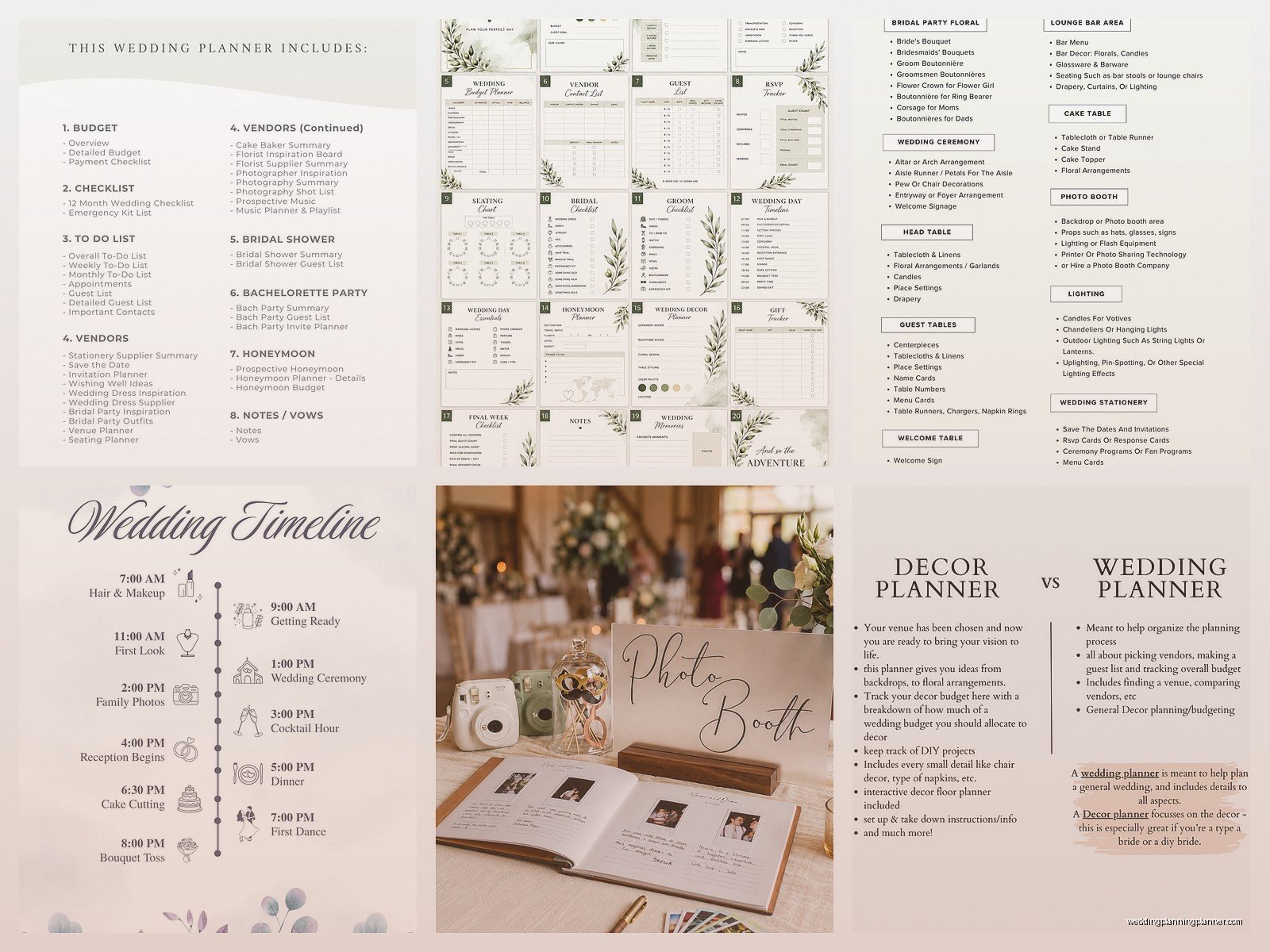
The main difference between a regular wedding planner and a decor planner is that I’m not dealing with your vendor payments or family drama or timeline management—I’m laser focused on making the space look incredible. Some planners do both, but a lot of us specialize because honestly the design side alone is a full-time brain workout.
Services You Should Expect
When you hire a professional wedding decor planner, you’re gonna get a bunch of different service tiers usually. Most of us offer consultation-only packages where we meet once or twice, give you a complete design plan with mood boards and shopping lists, then you execute it yourself or with your venue coordinator. This works great for DIY brides who just need direction.
Then there’s partial planning where we design everything, source some key items, coordinate with your florist and rental company, but we’re not there on the day. And full-service is what it sounds like—we’re there from concept through teardown, managing the setup team, adjusting things throughout the day, handling emergencies.
I had this bride in spring 2023 who booked consultation-only because budget was tight, but then two weeks before the wedding she called me absolutely losing it because the rental company sent the wrong color linens and she didn’t know how to fix the whole color scheme. We upgraded her package last-minute and I basically redesigned everything in 72 hours. My cat didn’t see me that entire weekend.
Initial Consultation and Vision Building
The first meeting is where we figure out if we’re a good match and what you actually want. I always ask couples to bring inspiration photos but here’s the thing that annoyed me for YEARS—people bring like 47 Pinterest images that have absolutely nothing in common. Rustic barn vibes mixed with modern minimalist mixed with Bridgerton maximalism. It’s chaos.
What I do now is send a pre-consultation questionnaire asking specific questions: What feeling do you want guests to have when they walk in? What’s one wedding you attended that you loved the look of? What’s your absolute dealbreaker? This helps so much more than random Pinterest boards.
During this meeting we talk budget really honestly because you can’t design in a vacuum. If someone has $3,000 for decor at a 150-person wedding, I’m gonna approach that completely differently than someone with $15,000. Neither is wrong, but the expectations need to match reality.
Design Development Process
After the initial consultation, I disappear into my office for like a week and create the actual design plan. This includes a color palette (usually 3-5 colors), mood boards for different areas of the venue, detailed floor plans showing table layouts and decor placement, and inspiration images for each element.
I use a mix of Photoshop and this program called AllSeated for floor plans, though some planners use CAD software which feels like overkill to me but whatever works. The mood boards go into a presentation deck—I’ve used Canva, PowerPoint, even just PDF documents depending on the client.
Sourcing and Vendor Coordination
This is where the real work happens honestly. Once the design is approved, I’m reaching out to rental companies, florists, linen suppliers, lighting designers if needed, sometimes custom fabricators for specialty items. I get quotes, compare pricing, negotiate when possible, and present options back to the couple.
The vendor coordination part is kinda like being a translator because the couple speaks in feelings and vibes, vendors speak in specifications and quantities, and I’m in the middle making sure everyone understands each other. When a bride says she wants “romantic lighting,” I need to tell the lighting company she wants warm uplighting at 2700K with maybe some pin-spotting on centerpieces.
I keep everything organized in a massive spreadsheet—every item, which vendor it’s coming from, quantity, cost, delivery time, setup requirements. Summer 2021 I had three weddings in one weekend and my spreadsheet crashed the night before and I literally… I almost cried in a Starbucks parking lot. Now I keep backup copies in like four different places.
Custom Design Elements
For couples who want something unique, we might create custom elements. I’ve designed custom signage, worked with fabricators on specialty backdrops, created paper goods that tie into the overall design, even coordinated custom linen printing once (expensive but looked incredible).
The stationery side of my background comes in handy here because I can design menus, place cards, table numbers, welcome signs, all that stuff to perfectly match the decor. Some planners outsource this but I like keeping it in-house because then everything coordinates down to the exact shade of blush or whatever.
Timeline and Logistics Management
About a month before the wedding, we finalize everything and create detailed setup plans. This includes diagrams for the setup team showing exactly where every single item goes, timing schedules for when each vendor arrives and sets up, and contingency plans for weather if it’s outdoors.
I create what I call a “decor bible”—a binder or digital document with photos of every element, setup instructions, diagrams, vendor contact info, backup plans. This way if I get hit by a bus the week of the wedding, someone could theoretically execute the plan. Not that I want to test that theory.
Setup Day Coordination
For full-service clients, I’m on-site typically 6-8 hours before the ceremony starts. I’m directing the rental delivery, working with the florist on centerpiece placement, adjusting lighting, placing all those tiny details like votive candles and scattered rose petals or whatever we’ve planned.
You gotta be prepared for things to go wrong because they always do. Flowers arrive wilted. The rental company forgets the gold flatware and brings silver. The custom backdrop is three inches too wide for the space. I’ve learned to bring a emergency kit with fishing line, floral wire, safety pins, double-stick tape, extension cords, and a hot glue gun. MacGyvering solutions is like half the job.
One time—I think it was fall 2022—a groom’s grandmother decided she didn’t like the centerpieces literally as guests were arriving and started moving things around. I had to very diplomatically redirect her while simultaneously fixing everything she’d messed up. That’s not in the job description but it happens.
Different Service Models and Pricing
Most decor planners charge either a flat fee or a percentage of the decor budget. Flat fees are typically $2,000-$10,000+ depending on the scope and your market. Percentage-based is usually 15-20% of the total decor budget, which I personally don’t love because it incentivizes recommending expensive stuff but some planners prefer it.
Some offer a la carte services—$500 for a design consultation, $1,500 for design plus sourcing, $3,000 for full planning, etc. This gives couples flexibility to pick what they actually need.
What’s Actually Included
Make sure you understand what’s included in the quoted price. Are design revisions included or do you charge for those after the first round? Is setup day supervision included or extra? What about teardown? Do you provide any decor items from your own inventory or is everything sourced?
I include two rounds of revisions in my standard packages because honestly most couples need that to really dial in the vision. After that I charge hourly for additional changes because otherwise you get stuck in revision hell with indecisive clients.
Setup and teardown are always included in my full-service packages, but I charge extra if they want me to stay throughout the reception to make adjustments or if teardown extends past midnight because… I have a life and also overtime for my assistant.
Working With Different Venue Types
The venue type completely changes the decor needs and approach. Blank slate venues like warehouses or tents need EVERYTHING—lighting, furniture, all the decor, sometimes even basic infrastructure. It’s more work but also more creative freedom.
Hotel ballrooms usually have built-in lighting and furniture but often need help looking less corporate. Country clubs and historic venues have their own vibe that you’re either working with or trying to transform, which can be tricky.
Outdoor venues are gorgeous but logistically complicated—you’re dealing with weather contingencies, potentially uneven ground, wind concerns for tall centerpieces, temperature control, bugs. I always have backup plans for outdoor weddings. Always.
Destination Weddings
Destination wedding decor planning is a whole different beast. You’re either shipping items (expensive and risky) or sourcing everything locally in a place you might not know. I’ve done a few and honestly they stress me out more than regular weddings.
For destinations, I usually travel there at least once before the wedding to meet local vendors, see the venue in person, understand what’s actually available. Some planners do this virtually but I don’t trust it—photos lie and you need to see the space yourself.
Specialty Services Some Planners Offer
Some decor planners have expanded into related services. I know planners who offer rental inventory—they own arches, backdrops, specialty linens, vintage furniture that they rent to clients. It’s a good revenue stream but requires storage space and maintenance.
Others offer floral design in-house, which makes sense because florals are such a huge part of decor. I don’t because I’m not a trained florist and I’d rather work with professionals, but it’s definitely a thing.
Some focus on specific styles—I know a planner who ONLY does bohemian weddings and she’s incredible at it. Another specializes in luxury Indian weddings. Niching down can actually help you build expertise and charge premium rates.
DIY Support Services
There’s a growing market for DIY support where couples want to do the setup themselves but need professional guidance. For these clients, I provide detailed design plans, shopping lists with links to specific products, setup diagrams, and maybe a quick call the week before to answer questions.
It’s less money than full-service but honestly sometimes less stressful because I’m not responsible for execution. Though I did have one DIY client text me photos at 11pm the night before her wedding asking if the centerpieces looked okay and they definitely didn’t but what am I gonna say at that point?
Red Flags and When to Walk Away
Not every client is a good fit and that’s okay. If someone’s budget is truly unrealistic for their expectations and they won’t adjust either one, that’s gonna end badly. If they’re rude to vendors during the planning process, they’ll probably be rude on the wedding day. If they change their mind constantly with no direction, you’ll never make them happy.
I’ve learned to trust my gut in initial consultations. There was this one couple who kept talking about their wedding like it was a competition with the bride’s sister and red flags were just everywhere… I should’ve declined but I needed the booking and it was genuinely my worst wedding experience. Never again.
Also if someone asks you to do something unsafe or against venue rules, walk away. I’ve been asked to hang things from sprinkler systems, use open flames where they’re prohibited, exceed weight limits on balconies—nope nope nope.
Building Your Vendor Network
Your vendor relationships are everything in this business. I have a core group of florists, rental companies, lighting designers, and other pros I trust completely. We’ve worked together enough that they know my standards and I know their capabilities.
When you’re starting out, attend industry events, do styled shoots to meet vendors, offer to assist established planners to learn their processes. The wedding industry is surprisingly small and your reputation matters a lot. Be someone vendors actually want to work with—respond promptly, pay on time, don’t throw them under the bus when things go wrong.
I try to send thank you notes after weddings to vendors who went above and beyond, refer clients to them when I can, and generally treat these relationships like the valuable assets they are. Because when you need someone to rush an order or fix a last-minute problem, those relationships save you
