
Planning Guides, Style Guide
Venue Planner: Professional Services Guide

Oct
What Venue Planners Actually Do (And Why You Might Need One)
So venue planners are basically the people who work directly for the venue itself, not your wedding planner. I know, confusing, because there’s like five different types of planners in the wedding world and nobody explains this properly. A venue planner is employed by the hotel, country club, event space, whatever—and their job is to make sure YOU can successfully execute your event at THEIR location.
They’re not the same as your wedding coordinator or day-of planner. Your venue planner knows every electrical outlet, every fire code, every stupid rule about candles (ugh, we’ll get to that), and exactly how many chairs fit in the ballroom when you include a dance floor. They’re your liaison to the venue’s resources and restrictions.
When I Figured Out How Crucial These People Are
Back in spring 2023, I had this bride who booked this gorgeous historic mansion for her wedding. Absolutely stunning place, but it came with approximately one million rules that nobody had properly explained. The venue planner they’d assigned was… let’s just say she was new and overwhelmed. Three weeks before the wedding, we discovered that the “bridal suite” the bride had been promised was actually being renovated and wouldn’t be available. The venue planner hadn’t communicated this. I spent an entire weekend rearranging logistics, finding a nearby hotel suite, coordinating transportation timing, and basically redoing half the day’s schedule.
That situation taught me that a GOOD venue planner is worth their weight in gold, and a bad one (or an overworked one) can create chaos you didn’t see coming.
What Services They Actually Provide
Alright so here’s what you’re actually getting when you work with a venue planner:
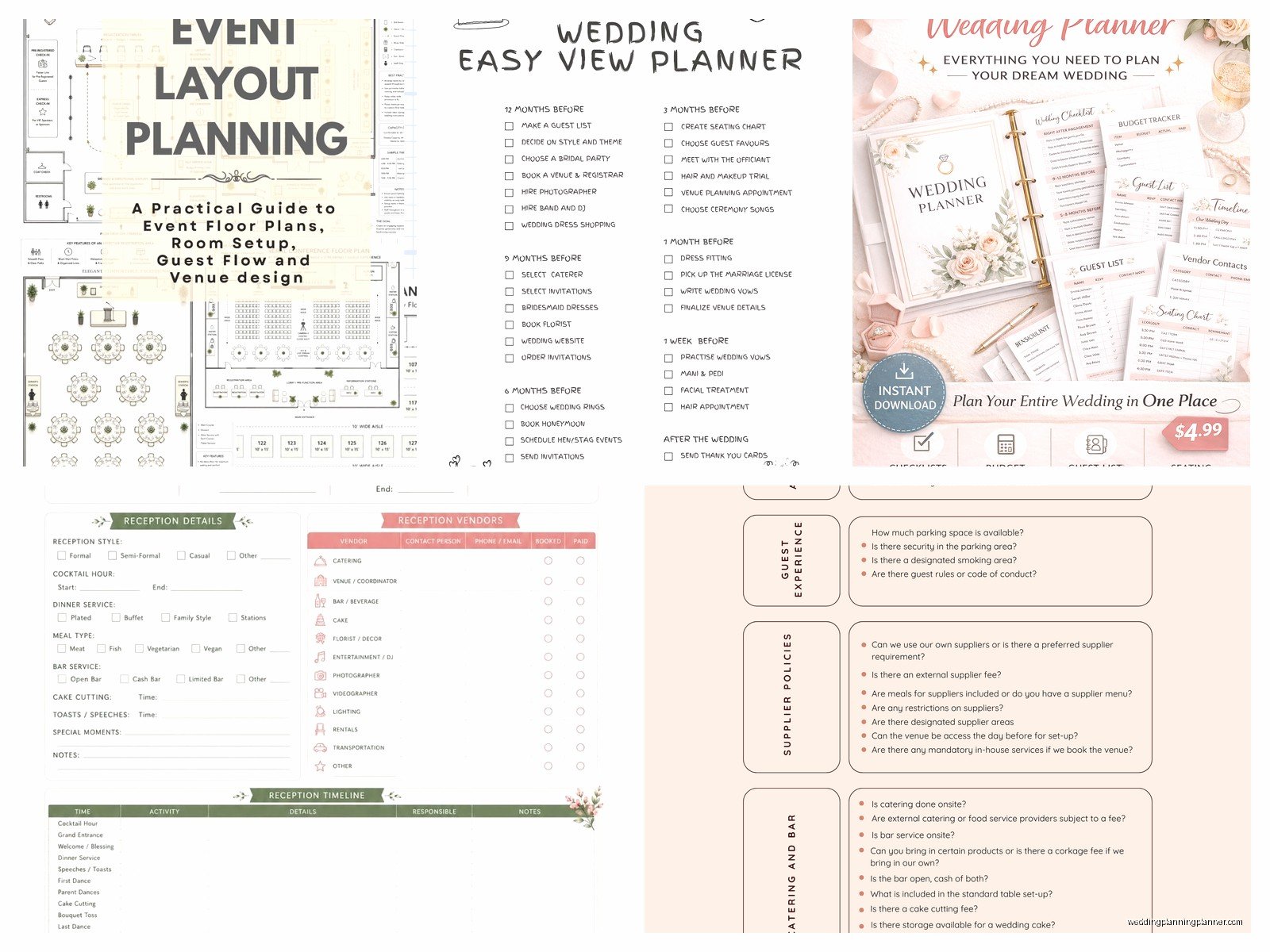
Space Planning and Layout Design – They’ll create floor plans showing where your tables go, where the DJ sets up, ceremony seating, cocktail hour flow. They know the space better than anyone, so they can tell you “nah, that won’t work because guests will bottleneck at that entrance” or “if you put the bar there, the catering staff can’t access the kitchen efficiently.”
Vendor Coordination – Most venue planners maintain a preferred vendor list. Sometimes this is genuinely helpful because they’ve worked with these vendors before and know they’re reliable. Other times… it’s kinda restrictive and you might feel pushed toward certain companies. More on that annoyance in a sec.
Timeline Development – They help create the day’s schedule, especially regarding setup and breakdown times. They know how long it takes to flip the ceremony space into reception mode, when catering needs access, all that logistical stuff.
Technical Support – Got questions about the sound system, lighting capabilities, projector setup, wifi strength? That’s them. They’ll coordinate with your AV vendor or tell you what the venue’s built-in systems can handle.
Catering Management – If the venue has in-house catering (most do), your venue planner works directly with the chef and service staff. You’ll do menu tastings with them, discuss service style, talk about dietary restrictions, all that.
Contract and Payment Processing – They handle your venue contract, payment schedule, and any amendments or additions you need.
Day-of Venue Management – On your wedding day, they’re making sure the venue side of things runs smoothly—climate control, facilities issues, vendor load-in, etc. They’re NOT managing your personal timeline or cueing your ceremony or making sure your grandmother gets to her seat. That’s your wedding coordinator’s job.
The Preferred Vendor List Thing That Drives Me Nuts
Okay so this is gonna sound ranty but hear me out. A lot of venues have “preferred vendor lists” and some are REALLY pushy about it. Like, you can only use vendors from this list or you’ll pay a fee. I get it from the venue’s perspective—they’ve worked with these vendors, trust them, know they won’t damage property or miss deadlines. But sometimes it feels like… I dunno, it limits your options artificially?
I had a venue planner once tell a client that bringing in an outside florist would incur a $500 “coordination fee” even though the venue planner wasn’t doing any extra coordination work. The bride had found this amazing florist who was $1200 cheaper than anyone on the preferred list and did exactly the style she wanted. That fee felt like a money grab, honestly.
My advice: Ask about the preferred vendor policy BEFORE you book the venue. Find out if it’s required or just recommended. Ask what the actual reasons are (insurance? experience with the space? financial kickbacks?). Some venues are flexible, some aren’t. You gotta know what you’re walking into.
Questions You Should Ask Your Venue Planner During the Booking Process
When you’re touring venues and meeting with their planners, here’s what you need to ask:
- What exactly is included in your planning services? (Some venues include extensive planning, others basically just hand you the keys)
- Will you be our planner for the entire process, or do you assign different planners for different stages?
- How many events do you personally manage per weekend?
- What’s your communication style and response time? (If they take a week to answer emails during planning, imagine the stress closer to your date)
- Can we bring in outside vendors, and are there any restrictions or fees?
- What are ALL the venue rules? (Seriously, ask for the complete list. Candles, confetti, end time, noise restrictions, decoration limitations)
- What happens if there’s a facility issue on our wedding day—AC breaks, pipe bursts, whatever?
- Is there a backup plan for outdoor spaces?
- What’s included in our rental and what costs extra? (Tables, chairs, linens, setup labor, etc.)
- When do we get access for setup and when must we be completely out?
The Difference Between Venue Planner and Wedding Planner
I cannot stress this enough—your venue planner is NOT a replacement for a wedding planner or coordinator. I see couples make this mistake all the time, thinking “well the venue comes with a planner so we’re good.” Nope.
Your venue planner cares about the venue running smoothly. Your wedding planner cares about YOUR day running smoothly. Those overlap but they’re not the same thing. Your venue planner isn’t gonna bustle your dress, carry your emergency kit, wrangle your wedding party for photos, handle family dynamics, or manage your personal timeline. They’re not gonna notice that your grandmother needs a chair or that the best man forgot his boutonniere at the hotel.
Think of it this way: the venue planner is like the stage manager at a theater. They make sure the stage, lights, and technical stuff work. Your wedding planner is like your personal director who’s making sure you and your performance go perfectly.
Red Flags to Watch For
Some warning signs that your venue planner situation might be problematic:
They’re managing too many events. If your venue planner has three weddings on your same day, you’re gonna get divided attention. Ask about this upfront.
Poor communication during the planning process. If they’re slow to respond or vague in their answers six months before your wedding, it won’t magically get better as your date approaches.
They seem unfamiliar with their own venue. This sounds obvious but I’ve encountered venue planners who were new and didn’t know basic stuff about capacity, layout options, or venue policies. Not their fault necessarily, but it becomes your problem.
They’re weirdly pushy about certain vendors. Recommendations are fine. Pressure is not. If they’re getting aggressive about you using specific vendors, ask why.
They dismiss your concerns or questions. You’re paying a lot of money to use this space. Your questions deserve real answers, not dismissive “don’t worry about it” responses.
Making the Relationship Work
Okay so assuming you’ve got a decent venue planner, here’s how to work with them effectively:
Get everything in writing. Every promise, every detail, every “oh yeah we can definitely do that”—get it documented. I learned this the hard way when a venue planner verbally promised a bride that she could have her ceremony on the rooftop, then later claimed she’d never said that and it wasn’t available. Email everything.
Schedule regular check-ins. Don’t just communicate randomly. Set up actual meetings or calls at key milestones—6 months out, 3 months out, 1 month out, final walkthrough. This keeps everyone on the same page.
Create a shared document. I usually make a Google Doc with all the venue-specific details, layout plans, vendor info, timeline, etc. Share it with your venue planner, wedding planner (if you have one), and key vendors. Everyone’s working from the same info.
Do a final walkthrough. Like a week or two before your wedding, walk through the venue with your planner. Confirm every detail, see the space again, visualize how things will flow. This is when you catch potential issues.
Introduce them to your wedding planner. If you have a separate wedding coordinator, make sure they connect with your venue planner well before the wedding day. They need to work together smoothly. I’ve seen some territorial nonsense between planners before and it’s… just unnecessary drama.
What to Do When Your Venue Planner Drops the Ball
So let’s say your venue planner is falling short. Maybe they’re unresponsive, or they made a mistake, or they’re just not meeting your expectations. Here’s how to handle it:
First, document everything. Save all emails, texts, communication. If you have phone conversations, follow them up with an email summarizing what was discussed.
Second, escalate calmly and professionally. Most venue planners have a manager or director of events above them. If you’re not getting resolution, go up the chain. Don’t be aggressive about it, just factual: “I’ve reached out three times about X without response, and I need this resolved by Y date.”
Third, bring in backup if needed. If you don’t already have a wedding coordinator, this might be the time to hire one, even if just for day-of coordination. They can interface with the venue planner and handle issues you shouldn’t have to deal with.
My cat just knocked over my coffee while I’m writing this and I’m trying really hard not to let it affect my mood but seriously, Mochi, why?
The Venue Planner’s Perspective (Because It Helps to Understand)
Okay so I’ve got friends who work as venue planners and hearing their side is… illuminating. They’re usually managing multiple events per week, dealing with demanding clients (not you, obviously, but some people are A LOT), coordinating with difficult vendors, and handling facility issues they have no control over. They’re juggling like 10-15 weddings at various planning stages simultaneously.
That doesn’t excuse poor service, but it does explain why sometimes communication lags or details slip through cracks. The best venue planners are incredibly organized, use good systems, and set realistic expectations. The overwhelmed ones are just trying to keep their heads above water.
Be patient but firm. Be clear about your needs. Don’t assume they remember every detail from a conversation three months ago—send reminders and confirmations. Treat them like the professional partners they are, and usually you’ll get good results.
Cost Considerations
Usually the venue planner’s services are included in your venue rental fee. You’re not paying them separately. But understand that their time and expertise is part of what you’re buying when you book that space.
Some venues charge differently based on how much planning support you need. Like, a basic rental might be $3000 and includes minimal planner interaction, while a full-service package is $5000 and includes extensive planning meetings and coordination. Make sure you understand what level of service you’re getting for your money.
Also, venue planners sometimes have the authority to waive certain fees or make accommodations if you ask nicely. Need an extra hour for setup? They might be able to make that happen. Want to bring in one outside vendor? Sometimes they’ll approve it if you explain why. Doesn’t hurt to ask, though don’t expect miracles.
Special Venue Types and Their Planners
Different venue types have different planner situations:
Hotels usually have very experienced event planners who’ve done hundreds of weddings. They’re professional but sometimes a bit… formulaic? They know what works and might not be super flexible about creative ideas.
Country clubs often have planners who are excellent at traditional, formal events. They know all the etiquette and protocol. Can be less flexible with modern or non-traditional weddings though.
Restaurants might have an events coordinator who’s kinda doing this in addition to their regular job. Sometimes great, sometimes overwhelmed.
Unique venues (barns, museums, historic sites, gardens) vary wildly. Some have super experienced planners who understand the quirks of the space. Others have someone who just… works there and got assigned to handle events.
Blank slate venues (warehouses, raw spaces, etc.) might have minimal planning support because you’re literally bringing in everything yourself.
Tech and Tools
Most professional venue planners use software to manage their events—AllSeated, Social Tables, or venue-specific platforms. Ask if you can access their planning software to see floor plans, make changes, etc. It’s way easier than emailing diagrams back and forth.
Some venues have virtual tour capabilities now which is actually super helpful for planning, especially if you’re not local or can’t visit frequently.
The Candle Thing I Mentioned Earlier
Okay so this is my personal annoyance: venues and their candle policies. I swear every venue has different rules and they’re all kind of arbitrary? Some allow real candles in enclosed hurricanes. Some only allow LED candles (which, fine, but they don’t look the same). Some charge a fee for real candles. Some allow them on tables but not anywhere else. And venue planners are the ones enforcing these policies, which means they catch all the frustration from couples who want real candles.
It’s a fire code thing, I know. Insurance, liability, I get it. But the inconsistency across venues is just… anyway. Ask about candle policy early because if you’re dreaming of a candlelit reception, you need to know what’s actually possible.
Working With Venue Planners Remotely
If you’re planning a destination wedding or your venue isn’t local, working with the venue planner becomes even more critical. You can’t just pop by to check on things.
Schedule video calls instead of just phone calls so you can see the space and any changes. Ask them to send photos or videos of setup options. Create very detailed written plans since you won’t be there to point at things. And seriously consider hiring a local coordinator who can be your eyes and ears on the ground.
I had a couple once who planned their wedding from across the country and their venue planner was amazing about sending weekly photo updates of the venue’s gardens so they could see what would be blooming for their date. That level of service is rare but wonderful.
Final Reality Check
Look, venue planners are human. They’re gonna make mistakes sometimes. They’re juggling a lot. But you’re also spending thousands of dollars on this venue, and you deserve professional service and clear communication. Don’t be afraid to advocate for yourself while also being reasonable and understanding that they’re not miracle workers.
The best venue planner relationships I’ve seen are collaborative partnerships where the couple, venue planner, and wedding planner (if there is one) all work together as a team. Everyone’s clear about their roles, communication flows easily, and problems get solved quickly. When that happens, the wedding day itself runs so much smoother because all those months of planning actually pay off.
And honestly? A great venue planner can save your butt in ways you’ll never even know about because they fixed problems before they became your problems. That’s worth appreciating.
