
Planning Guides, Style Guide
Formal Wedding Invitations: Traditional Etiquette Guide
Nov
So You Need to Know About Formal Wedding Invitation Etiquette
Okay so formal wedding invitations are honestly one of those things where traditional etiquette still matters like A LOT and I cannot stress this enough because I had this bride back in spring 2023 who insisted she didn’t need to follow any rules and then her future mother-in-law basically had a meltdown over the wording and it became this whole thing that could’ve been avoided if we’d just stuck to the basics from the start.
The outer envelope is where you’re gonna start and this is serious business. You need to write out full names, no abbreviations except for Mr., Mrs., Ms., Dr., and military titles. So it’s “Doctor and Mrs. James William Patterson” not “Dr. and Mrs. J.W. Patterson” – see the difference? Street names get spelled out too. “Street” not “St.” and “Apartment” not “Apt.” which honestly annoys me because it makes addressing envelopes take like three times longer than it needs to but whatever, that’s tradition for you.
The Whole Name Thing Gets Complicated
Married couples with the same last name are pretty straightforward: “Mr. and Mrs. Robert James Anderson” is the traditional format. But here’s where it gets tricky and I’m constantly explaining this – if the wife kept her maiden name, you write “Ms. Catherine Marie Thompson and Mr. Robert James Anderson” with names on the same line or separate lines depending on length.
For unmarried couples living together, you list both names on separate lines in alphabetical order by last name. Like:
- Ms. Jennifer Ann Brooks
- Mr. Michael Scott Davis
Same-sex couples follow the same rules – alphabetical order or whoever you’re closer to first, honestly both work. The key is just being respectful and using their proper titles.
Children under 18 don’t get their names on the outer envelope at all. They’re only listed on the inner envelope if you’re using one. If you’re NOT inviting kids, you simply don’t include their names anywhere and people should get the hint, though let me tell you… they don’t always.
Inner Envelopes Are Optional But Classy
Inner envelopes are kinda old-fashioned but they serve a purpose. This is where you can be slightly less formal and clarify exactly who’s invited. So the outer envelope says “Mr. and Mrs. Robert Anderson” but the inner envelope can say “Mr. and Mrs. Anderson and Family” if you’re inviting their kids, or just “Robert and Susan” if you’re being more casual.
I usually recommend inner envelopes for really formal weddings or when you need to be crystal clear about plus-ones because there’s always that one guest who thinks their boyfriend of three weeks is automatically invited and… nah.
The Actual Invitation Wording
This is where people get really in their heads about it. Traditional formal wording follows a specific structure and honestly once you know the formula it’s not that hard.
The host line comes first. Traditionally this was the bride’s parents because they paid for everything:
Mr. and Mrs. Richard Allen Morrison
request the honour of your presence
at the marriage of their daughter
Notice it’s “honour” with a U – that’s the traditional British spelling that’s used for formal invitations. If you’re having a religious ceremony, you use “honour of your presence” but if it’s a non-religious ceremony, technically you should use “pleasure of your company” though I see this rule broken all the time and nobody really cares anymore.
These days, lots of couples pay for their own weddings or both sets of parents contribute, so the wording changes. If both sets of parents are hosting:
Mr. and Mrs. Richard Morrison
and
Mr. and Mrs. Thomas Patterson
request the honour of your presence
at the marriage of their children
If the couple is hosting their own wedding (which is super common now), you can do:
The honour of your presence is requested
at the marriage of
Miss Emily Rose Morrison
to
Mr. James William Patterson
Or just use first names: “Emily Rose Morrison and James William Patterson request the honour of your presence at their wedding” – this works fine and sounds less stuffy.
The Date and Time Format
Okay so this is where it gets weirdly specific and I had to look this up like fifty times when I first started because who naturally knows this stuff? You spell everything out. Everything.
Saturday, the twenty-first of June, two thousand twenty-five, at half after five o’clock in the evening.
See? No numbers at all. The year is optional actually – some people leave it off because it looks cleaner. Times before noon are “in the morning,” noon to five is just “o’clock” with no modifier, and after five is “in the evening.” You never say “in the afternoon” which seems arbitrary but that’s the rule I guess.
For half-hour times, you say “half after five” not “five-thirty” and for quarter hours, it’s “quarter after” or “quarter to” – though honestly I try to talk couples out of quarter-hour start times because it’s awkward to write out.
The Venue Information
The venue name gets spelled out in full on one line, then the city and state on the next line. No street address on the formal invitation itself – that goes on a separate details card if needed.
St. Mary’s Cathedral
Boston, Massachusetts
If the ceremony and reception are in the same place, you can add “and afterward at the reception” or just “reception to follow” on the invitation. If they’re different locations, you need a separate reception card.
Reception Cards and Other Inserts
Speaking of reception cards – these are necessary when your reception is at a different location than the ceremony. The wording is simpler:
Reception
immediately following the ceremony
The Fairmont Hotel
123 Commonwealth Avenue
Boston, Massachusetts
You CAN include the street address on reception cards and detail cards, which is helpful because people need to actually find the place.
RSVP cards are pretty standard now even though traditionally people were supposed to write their own response on personal stationery (lol can you imagine expecting that today?). The RSVP card should have a response deadline – usually three to four weeks before the wedding. Include a pre-addressed, pre-stamped envelope because if you make people find their own stamp, I’m telling you right now, you’re gonna get fewer responses.
My cat just jumped on my desk and stepped on the keyboard sorry – anyway, the RSVP card should be simple:
M___________________
accepts with pleasure / declines with regret
Kindly respond by the fifteenth of May
That “M” is for guests to write their names with their title – Mr., Mrs., Ms., etc. Some people find it confusing though, so you can also do “Name(s)” instead.
Other Insert Cards You Might Need
Details cards are super helpful for including information that doesn’t fit on the main invitation – hotel room blocks, transportation info, dress code, wedding website. This is where you can be less formal with the wording because it’s practical information.
Direction cards used to be common but now most people just include the wedding website where they can link to Google Maps. I still see them occasionally for venues that are hard to find or for older guests who might not use smartphones as much.
If you’re doing a destination wedding or weekend wedding, you might need a whole schedule of events card listing the welcome party, ceremony, reception, and farewell brunch or whatever.
Dress Code Wording
This goes on the lower right corner of the invitation or on a details card. The traditional formal dress codes are:
- White Tie (the most formal – think royal wedding)
- Black Tie (tuxedos and formal gowns)
- Black Tie Optional (tuxes welcome but dark suits okay)
- Formal or Black Tie Invited (suits and cocktail dresses)
- Cocktail Attire (suits and party dresses)
If you don’t specify a dress code, guests will assume it’s semi-formal based on the time and location. Evening weddings are automatically more formal than afternoon weddings in people’s minds.
One thing that really annoyed me was this couple who put “Creative Black Tie” on their invitation and then got mad when guests interpreted that differently – some wore normal black tie, some wore colorful formal wear, some wore like… artistic interpretations of formal wear? Just stick to standard terminology or be very specific on your website.
Timing for Sending Invitations
Formal invitations should go out six to eight weeks before the wedding. For destination weddings, eight to twelve weeks is better. Save-the-dates go out six to eight months in advance, or even earlier for destination weddings when people need to book travel.
You want RSVP cards back three to four weeks before the wedding so you have time to finalize your headcount with the caterer and make a seating chart. Although let me tell you, there are always people who don’t respond and you have to track them down anyway, which is why I always tell couples to build in a buffer.
Paper Quality and Printing Methods Matter
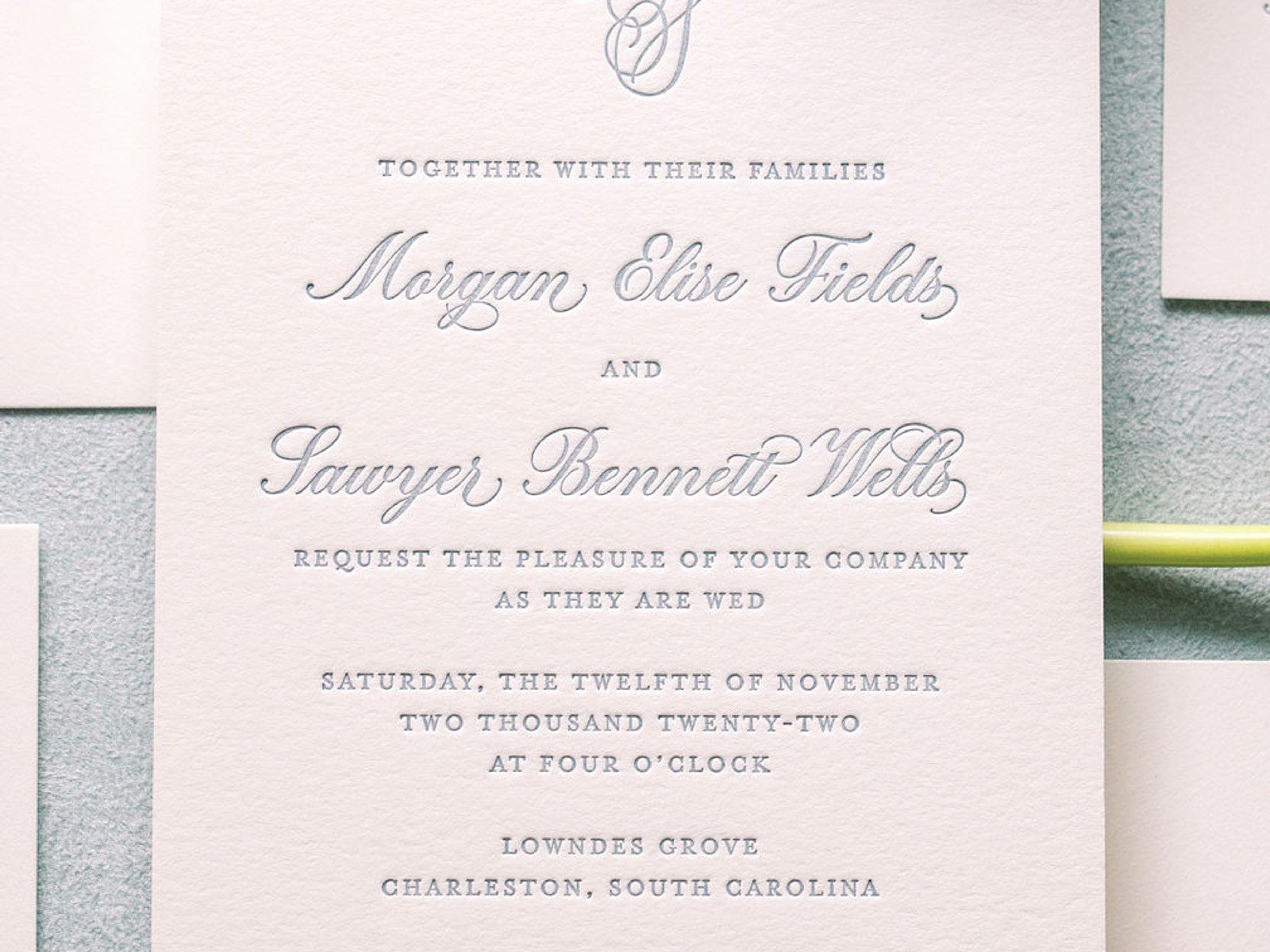
For truly formal invitations, you’re looking at cotton paper (usually called “cotton rag” – it’s thick and has a nice texture), and traditional printing methods are engraving or letterpress. Engraving is the most formal but also the most expensive because the letters are raised and you can feel the imprint on the back. Letterpress makes an impression INTO the paper and looks gorgeous but also costs a lot.
Thermography is the budget-friendly option that mimics the raised letters of engraving but costs way less. It looks almost identical from the front. Digital printing is the cheapest but doesn’t have that formal texture – though honestly the quality has gotten so good that most guests won’t notice or care.
I had this moment during summer 2021 when everything was delayed because of supply chain issues and we couldn’t get the paper stock we wanted and the bride was freaking out, but we found an alternative that actually looked better and cost less, so sometimes the universe works out… or sometimes you just gotta be flexible because perfection isn’t always possible.
Titles and Tricky Situations
Doctors: If both people are doctors, it’s “The Doctors Anderson” or “Drs. Susan and Robert Anderson” – medical doctors outrank academic PhDs in social situations, so if one has an MD and one has a PhD, the MD goes first.
Military titles: These get used and ranked properly – a Captain outranks a Lieutenant, etc. “Captain Robert Anderson, United States Navy, and Mrs. Anderson”
Judges: “The Honorable Susan Anderson and Mr. Robert Anderson”
Widowed or divorced parents hosting: You don’t use “Mr. and Mrs.” if they’re not married anymore. It’s “Mrs. Patricia Morrison” (widow) or “Ms. Patricia Morrison” (divorced), then on a separate line, “Mr. Richard Morrison” if both are hosting but not together.
Deceased parents: If you want to honor a deceased parent, the wording is tricky because technically deceased people can’t “request the honour of your presence” – so you’d say something like “daughter of Mrs. Patricia Morrison and the late Mr. Richard Morrison”
Modern Variations That Still Work
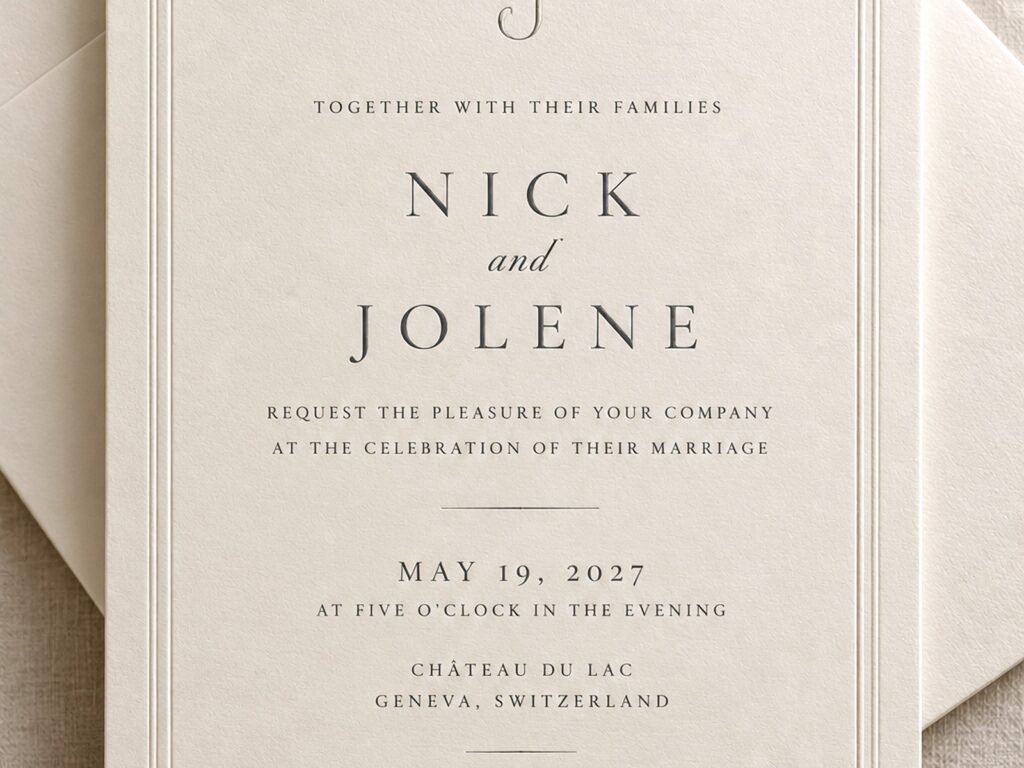
Look, not everyone wants super traditional wording and that’s totally fine. You can adapt these rules to fit your situation. I’ve seen beautiful formal invitations that say “Together with their families” as the host line, or couples who include a favorite quote or poem.
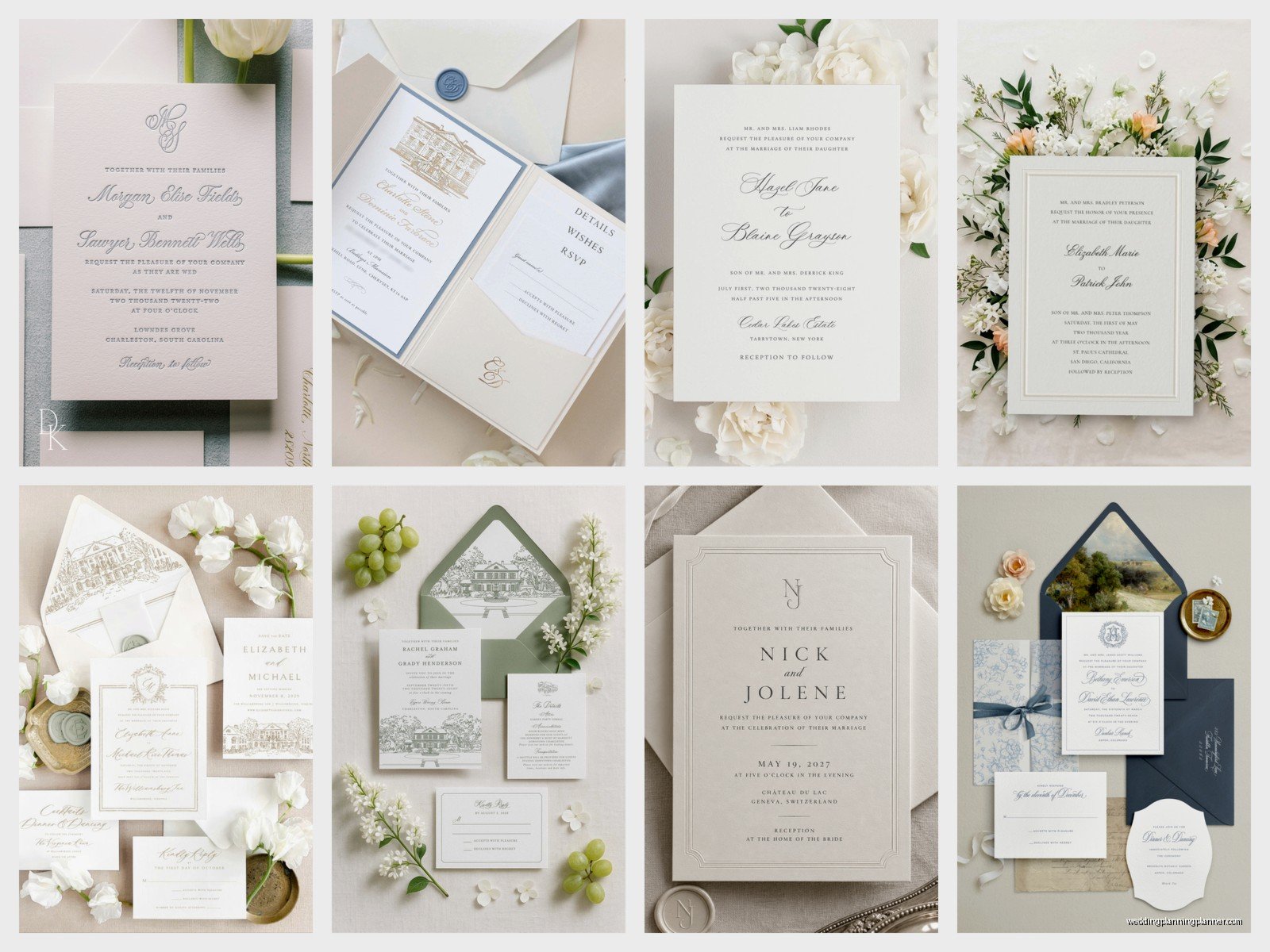
The key is being consistent – if you’re going formal, commit to it fully. Don’t mix super traditional wording with casual fonts or vice versa because it looks confused. Pick your level of formality and stick with it throughout all your paper goods.
You can also adapt traditional etiquette for cultural differences – lots of cultures have their own wedding invitation traditions that are just as valid as European-American etiquette rules. I’ve worked with couples who incorporated bilingual invitations, cultural symbols, or completely different structural formats, and they were gorgeous and respectful and formal in their own way.
The whole point of etiquette is showing respect to your guests and clarity about the event details, not following arbitrary rules just because that’s how it’s always been done… although sometimes you do need to follow the rules because certain family members will absolutely judge you and cause drama if you don’t, and sometimes avoiding family drama is worth using “honour” with a U and spelling out “Saturday” instead of using “Sat.”
Just remember that your invitation sets the tone for your entire wedding, so if you want a formal elegant event, your invitation should reflect that through proper wording, quality materials, and traditional etiquette even if some of the rules seem outdated or unnecessarily complicated.
