
Planning Guides, Style Guide
Hindu Wedding Planner: Professional Services Guide
Oct
What Hindu Wedding Planning Actually Involves
So you’re thinking about offering Hindu wedding planning services or you need to hire someone who actually knows what they’re doing. Let me tell you, this isn’t your standard “pick a venue and choose flowers” situation. Hindu weddings are basically multi-day festivals with religious ceremonies that have been happening for thousands of years, and if you mess up the timing or forget a ritual, you’re gonna hear about it from approximately 47 aunties.
I learned this the hard way in summer 2021 when I planned my first big Hindu wedding and almost scheduled the baraat (groom’s procession) during an inauspicious time according to the pandit. The bride’s mother literally gasped when she saw my initial timeline. That moment taught me more than any certification course ever could.
The Ceremonies You Actually Need to Know
Hindu weddings aren’t just one ceremony. They’re like… okay, imagine if someone took a regular wedding and said “let’s do this over three to five days with completely different outfits, locations, and guest lists for each event.” That’s what you’re working with.
Mehendi/Henna Night: Usually happens a day or two before the main wedding. You need to coordinate henna artists (and good ones book up MONTHS in advance, which is super annoying because couples always wait until the last minute to think about this). The bride needs intricate designs that can take 4-6 hours. You’re also planning decor, food, music, and managing like 50-100 guests who are all taking photos for Instagram.
Sangeet: This is the fun one. It’s basically a concert and dance party where both families perform choreographed dances. I’ve seen families hire professional choreographers six months out. You need a good sound system, stage, lighting, and a timeline that keeps things moving because everyone thinks their performance needs to be 15 minutes long when really it should be 3.
Haldi Ceremony: This is where family members apply turmeric paste to the bride and groom. Sounds simple, right? Nah. You need to think about: where this happens (it gets MESSY), what people wear (old clothes), how to protect surfaces, photography setup, and the actual turmeric mixture preparation. Some families do this at home, some want it at the venue.
The Main Wedding Ceremony: This is where your real planning skills show up. The ceremony itself can be 2-4 hours depending on how traditional the family is. You’re working with a pandit (priest) who has specific requirements for the mandap setup, sacred fire, flowers, and about a million little items that need to be arranged just so.
Reception: Sometimes this is the same day, sometimes it’s separate. This part is more like Western weddings – dinner, dancing, speeches – but with way more people and probably multiple outfit changes.
Working With the Pandit
Here’s something nobody tells you until you’re in the middle of it – the pandit is basically your co-planner for the religious portions. You need their phone number, you need to meet with them early, and you need to understand that they might show up and change things based on astrological considerations you didn’t even know existed.
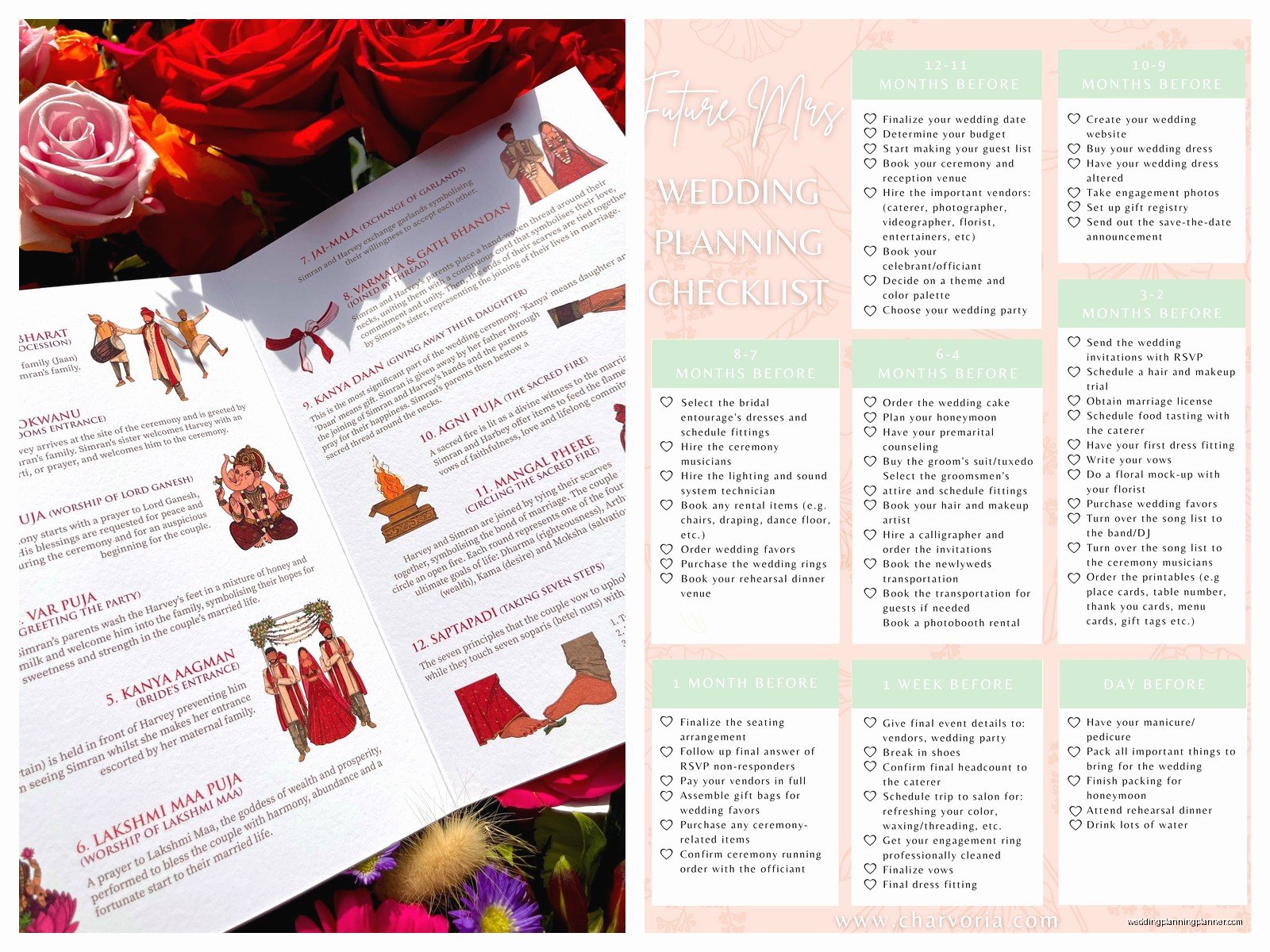
I always schedule a call with the pandit at least 6 weeks before the wedding. We go through the ceremony step by step, I take notes on every single item needed (and there are SO many items – rice, coconut, specific flowers, ghee, red thread, betel nuts, the list goes on), and I confirm timing. Some pandits are super flexible and modern, others are very traditional and want everything done at specific muhurat times.
One thing that really annoyed me when I first started was that some pandits wouldn’t give me a solid timeline. They’d say “approximately 2-3 hours” and I’m like… I have 300 guests, a catering schedule, and a venue that charges overtime, I need better than “approximately.” You learn to build in buffer time everywhere.
The Mandap Situation
The mandap is the ceremonial structure where the actual wedding happens, and couples have OPINIONS about this. Some want traditional wooden mandaps with four pillars and a canopy. Others want elaborate floral installations that cost more than my first car. Some want crystal mandaps, some want ones that match specific regional styles from different parts of India.
You need to coordinate with decorators who specialize in this. Regular wedding decorators often don’t understand the structural requirements – like the mandap needs to support the weight of the canopy and decorations, it needs to be positioned correctly according to direction (north-facing is common), and it needs enough space for the couple, pandit, and sometimes parents to sit comfortably.
I usually bring in the decorator and pandit for a site visit together. Saves everyone headaches later.
The Item Checklist That Will Save Your Life
I have a master checklist that’s like 8 pages long, but here are the categories you absolutely need:
- Puja items for ceremonies (varies by region and family tradition)
- Flowers – fresh flowers for mandap, garlands for couple, loose petals, specific flowers for specific rituals
- Fabric and draping for mandap and venue
- Seating arrangements that accommodate different ceremony needs
- Sound system that can handle both ceremony and reception
- Catering that understands dietary restrictions (many Hindu families are vegetarian, some are vegan, some avoid onion and garlic)
- Photography and videography team that knows when key moments happen
- Transportation for baraat (this could be a horse, a decorated car, even an elephant if permits allow)
- Guest welcome bags if you’re doing a destination wedding
- Outfit coordination and styling (many couples change 3-4 times across all events)
Regional Differences That Matter
Okay so here’s where it gets complicated – Hindu weddings vary MASSIVELY by region. A North Indian Punjabi wedding is completely different from a South Indian Tamil wedding, which is different from a Gujarati wedding, which is different from a Bengali wedding. The ceremonies, timing, customs, food, everything changes.
When I take on a new client, one of my first questions is “What’s your regional background and how traditional do you want to be?” Some couples want to blend traditions from both families, which means I’m basically planning two different cultural ceremonies and finding ways to make them flow together.

South Indian weddings often happen in the morning. Like, 7 AM start time. Which means you’re doing hair and makeup at 4 AM. North Indian weddings might start in the evening. The actual ceremony structure is different too – South Indian weddings have the tying of the thali (a sacred thread), North Indian weddings have the saat phere (seven circles around the sacred fire).
You gotta do your research for each family. I literally take notes during our initial meetings and then spend hours googling and watching YouTube videos of similar weddings to understand what I’m working with. My cat thinks I’m obsessed because I’m constantly watching wedding videos at midnight… which, fair.
The Baraat Process
The baraat is when the groom arrives with his family and friends in a procession, usually with dancing and music. This sounds fun and simple but logistically it’s kind of a nightmare?
You need to coordinate: the arrival time (which depends on muhurat), the route (especially if you’re at a venue with specific entry points), the DJ or dhol players, possibly a horse rental, crowd control because everyone wants to dance in front of the groom, and the milni ceremony that happens when both families greet each other.
I always walk the baraat route before the wedding day. I’m looking for obstacles, uneven pavement (if someone’s on a horse), space for the crowd to gather, and where the bride’s family will be waiting. Spring 2023 I had a wedding where we didn’t do this walkthrough and the baraat tried to go through a corridor that was way too narrow for the crowd – it was chaos and we lost 30 minutes getting everyone redirected.
Managing Family Expectations
This is probably the biggest part of Hindu wedding planning that isn’t about logistics – it’s about people. You’re not just working with a couple, you’re working with their parents, grandparents, aunts, uncles, and family friends who all have opinions about how things “should” be done.
I’ve learned to have a clear communication structure from day one. Usually the couple is my primary contact, but I also need to build relationships with both sets of parents because they’re often funding different portions and have specific must-haves. Some mothers want to be involved in every decision, others are happy to let the couple handle it.
One technique that works: I create a shared decision-making document where we list out all the major elements and who gets final say on what. Sounds corporate but it prevents so many arguments later. Like, maybe the bride’s family is traditional and wants specific ceremony elements, while the groom’s family is paying for the reception and wants certain entertainment or… you get it.
The Vendor Team You Need
You can’t do Hindu wedding planning alone. You need a solid vendor network who understands these events:
Decorator who specializes in Indian weddings: They understand mandap construction, draping techniques, and can source the right materials. Regular wedding decorators often underbid because they don’t realize how labor-intensive these setups are.
Caterer experienced with Indian cuisine: This isn’t just about cooking Indian food – it’s about understanding the flow of a multi-day event, dietary requirements, and timing. Some ceremonies have specific food offerings that need to be prepared fresh. Also, quantities are different because Indian weddings typically have more guests than Western ones.
Photographer/videographer who knows the ceremony: They need to know when the key moments happen so they don’t miss them. The saat phere, the kanyadaan, the sindoor application – these happen quickly and you can’t ask the pandit to redo them for better lighting.
Mehendi artists: Book these early. The good ones are doing 4-5 weddings per weekend during wedding season.
DJ or live musicians: Depending on the family’s preference. Some want traditional live music for ceremonies and DJ for reception, some want full live bands, some want specific regional music styles.
Hair and makeup team: They need to be able to work with different skin tones and create looks that last through long ceremonies in various weather conditions. Also, they’re often doing multiple looks across multiple days for the bride, sometimes for the groom too.
Timeline Management
Creating the timeline for a Hindu wedding is like playing Tetris with ceremonies, meals, outfit changes, and travel time. And then you have to factor in muhurat times which might not align with your logical flow at all.
I typically work backwards from the ceremony time (which the pandit determines based on the couple’s birth charts). Then I figure out when the baraat needs to start, when the groom needs to be ready, when hair and makeup starts. For the bride it’s even more complex because she might need 2-3 hours for makeup and outfit, then there’s photo time, then waiting for the groom to arrive.
Buffer time is your friend. I add 30 minutes of buffer between major elements because things WILL run late. The baraat will take longer than planned because everyone’s having fun. The ceremony might take longer if the pandit is being thorough or if family members want to participate more.
Dealing With Venue Constraints
Not all venues understand Hindu weddings. I’ve had venues freak out about the sacred fire (it’s contained and safe, but they see “fire” and panic). Some venues have noise ordinances that conflict with late-night sangeet plans. Some don’t allow certain decorating methods we need for mandap installation.
When I’m touring venues with clients, I ask specific questions: Can we have an open flame for the ceremony? What are the load-in times for decorators who need 6-8 hours to set up an elaborate mandap? Can we block multiple rooms for multi-day events? Is there kitchen space that can handle Indian catering requirements? Where would the baraat enter and is there space for 100+ people to gather?
Hotels are often easier for multi-day events because you can book the ballroom and guest rooms together, but they’re more expensive. Outdoor venues are gorgeous but you need serious backup plans for weather and the mandap setup is more complex.
Budget Real Talk
Hindu weddings are expensive. Like, really expensive. I tell couples to expect $50,000-$150,000 for a full-service wedding with 200-300 guests, and it can go way higher. The decor alone for an elaborate mandap can be $10,000-$30,000. Catering for multiple events adds up fast. Photography and videography packages for multi-day coverage are pricier than single-day weddings.
As the planner, your fee structure needs to reflect the complexity. I charge either a percentage of the total budget (usually 15-20% for full planning) or a flat fee based on the scope. Partial planning or day-of coordination is also an option but honestly, with Hindu weddings, you kinda need someone involved from early on because there’s too much coordination required.
Some planners charge per event (one fee for sangeet, one for ceremony, one for reception) which can work if families want to handle some portions themselves.
What Couples Actually Care About
After planning dozens of these weddings, I can tell you what couples consistently care most about: they want their personalities reflected in the celebration while also honoring their families’ traditions. They want guests to have fun and be comfortable. They want the ceremony to feel meaningful, not rushed. They want good photos. And they really, really don’t want to stress about logistics on their actual wedding days.
That’s where you come in as the planner. You’re the buffer between the couple and all the chaos. You’re the one who knows the pandit is running 20 minutes late and adjusts everything accordingly. You’re the one who has backup flower garlands because the original ones started wilting in the heat. You’re the one managing the uncle who had too much to drink at the sangeet and now wants to give a speech.
During a particularly stressful client situation in fall 2022, we had a venue double-book us and only discovered this two weeks before the wedding. I had to find a new venue, coordinate moving all vendor contracts, redesign the decor plan for a different space, and keep the couple calm through all of it. That’s the kind of problem-solving you need to be ready for because something will go wrong – it always does – and your job is to fix it before anyone notices or to minimize the impact when they do.
Building Your Knowledge Base
If you’re new to Hindu wedding planning, you need to educate yourself constantly. Read blogs, watch ceremonies online, talk to pandits, attend weddings as a guest when you can, join South Asian wedding planning groups on social media. I’m part of like three Facebook groups where planners share vendor recommendations and troubleshoot problems together.
Also, be humble about what you don’t know. I always tell couples upfront if their specific regional tradition is new to me, and I bring in cultural consultants or ask family members to walk me through what’s important to them. Nobody expects you to know every variation of every ceremony, but they do expect you to care enough to learn and get it right for their family.
