Planning Guides, Style Guide
Modern Wedding Card Design: Design & Ordering Guide
Apr
Okay so wedding card design is literally one of those things that couples stress about way more than they need to
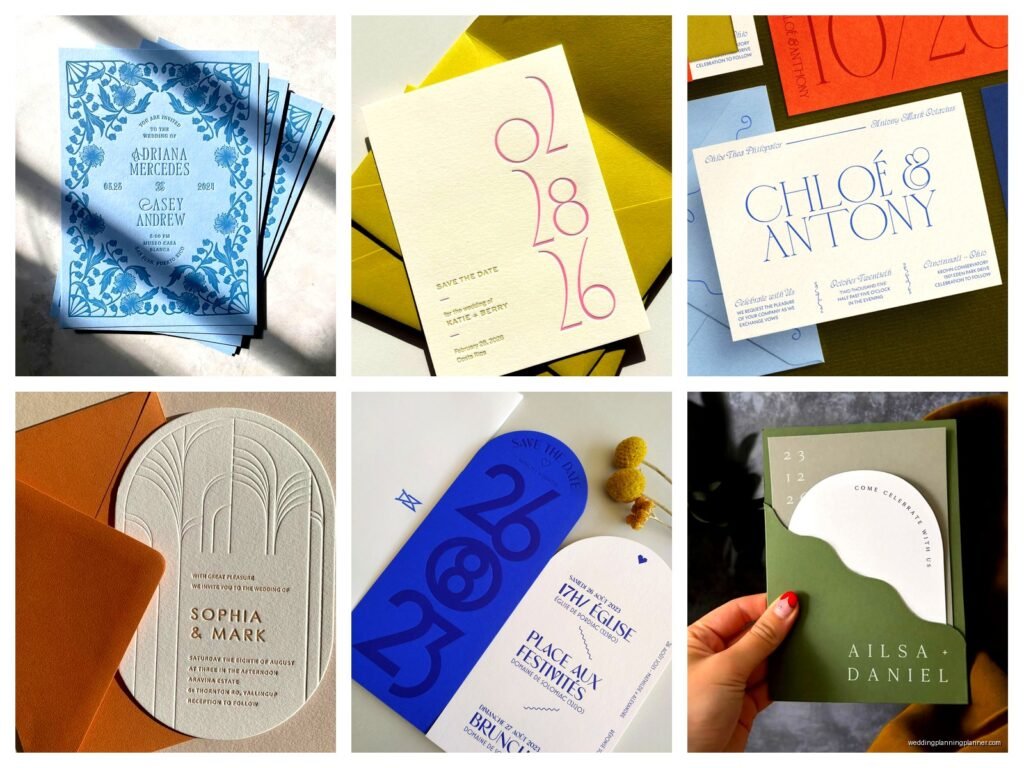
The first thing you gotta know is that wedding invitations have changed SO much in the past few years. Like back in spring 2023 I had this couple who showed me their parents’ wedding invitation from 1989 and it was this super formal engraved thing with tissue paper inserts and honestly it looked like a legal document. Now everyone wants their personality to shine through and I’m here for it but also there are still some etiquette rules you can’t just ignore even if you’re doing something modern.
Timeline for ordering because this trips everyone up
You need to order your save-the-dates like 6-8 months before the wedding. Invitations should go out 8-10 weeks before. I know that sounds early but trust me people are busy and they need time to request off work and book hotels and all that. One thing that really annoys me is when couples wait until the last minute and then panic-order rush printing which costs literally double or triple and the quality isn’t even as good because the printer is stressed and rushing.
Save-the-dates are kinda optional if you’re having a short engagement or a really small wedding but for most weddings you’re gonna want them. They don’t need to match your invitations exactly but they should feel like they’re in the same family if that makes sense.
What actually needs to be on your invitation suite
The main invitation card needs: your names (obviously), date, time, venue name and city/state. You don’t need the full street address on the actual invitation card because that’s what the details card is for. Some people do “together with their families” or list parents’ names if parents are hosting but honestly in 2024 most couples are hosting themselves or it’s a combo situation.
Then you’re gonna have insert cards which might include:
- Details card with the full venue address, website, and maybe hotel block info
- RSVP card with a return envelope (make sure it’s stamped, you’re asking them for a favor)
- Reception card if ceremony and reception are at different locations
- Weekend events card if you’re doing welcome drinks or a day-after brunch
- Directions or map card but honestly most people just use their phone now so this feels dated
Design styles that are actually popular right now
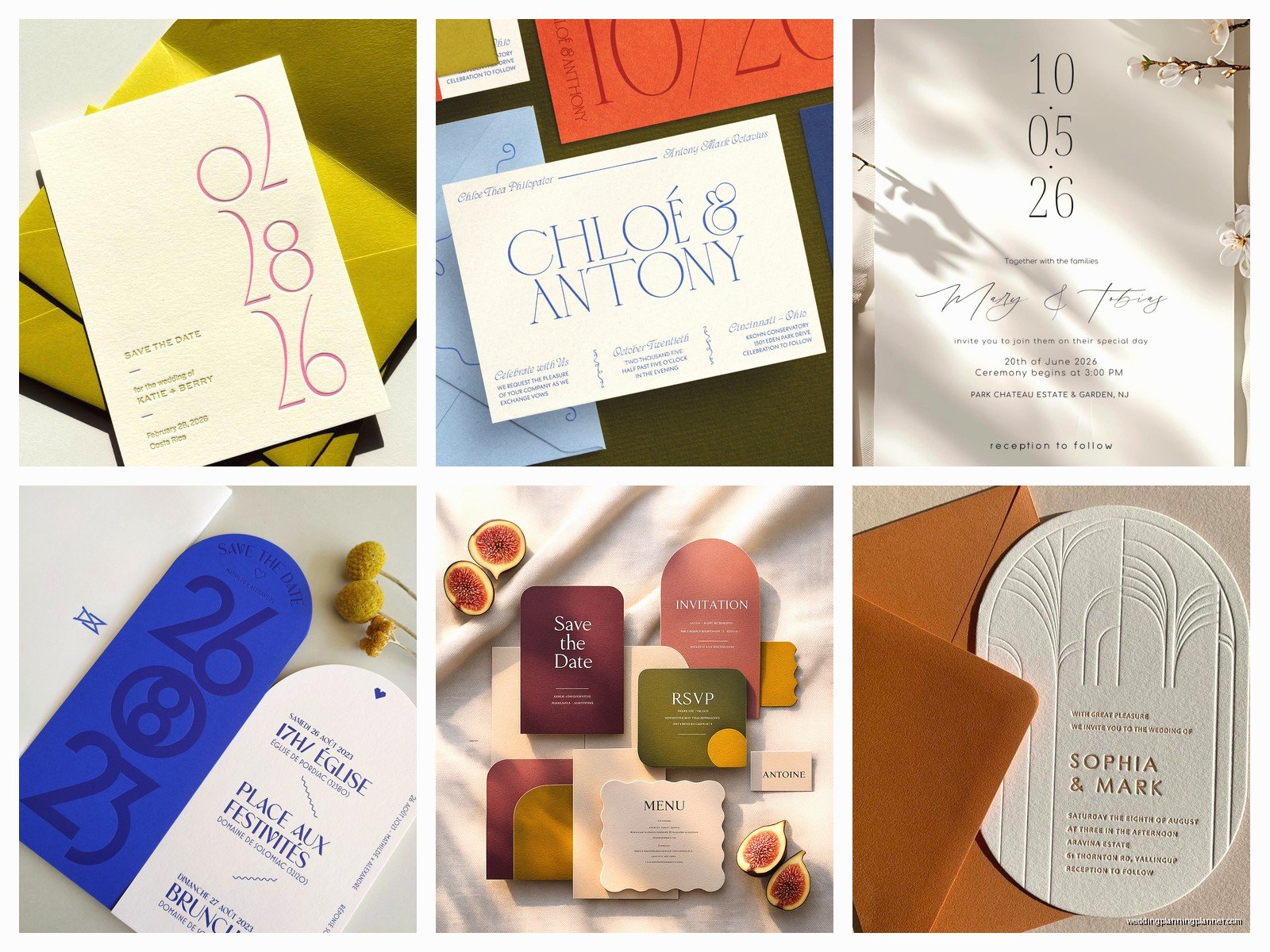
Minimalist designs are huge. Clean lines, lots of white space, maybe one delicate illustration or a simple monogram. I’m talking about designs that look expensive without being fussy. Acrylic invitations are also having a moment where the text is printed directly on a clear or frosted acrylic sheet and it looks really modern and elegant.
Watercolor designs are still around but they’re way more subtle now. Not those super saturated floral explosions from like 2016. More like a gentle wash of color in sage green or terracotta.
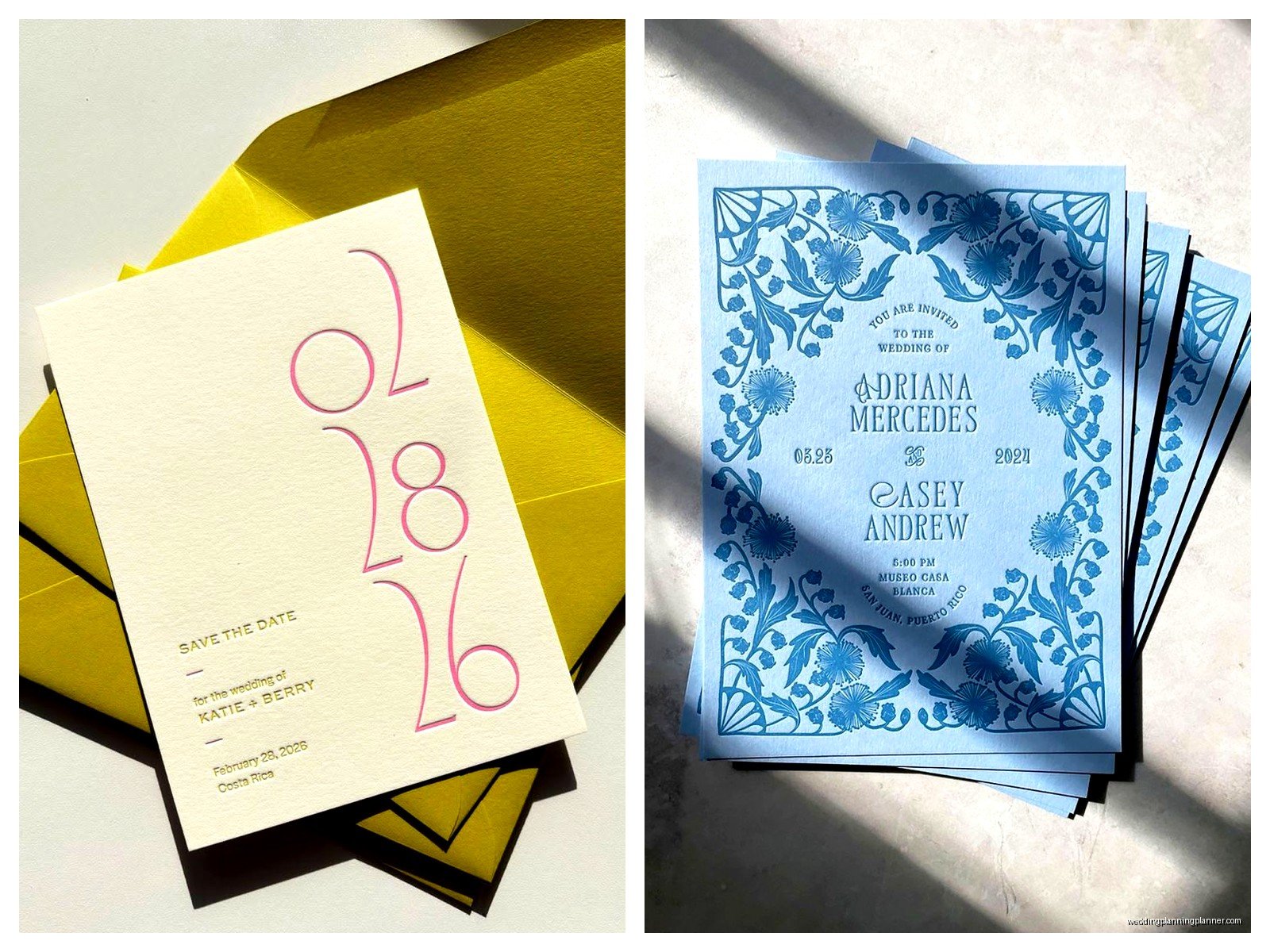
Vintage-inspired is also big but done in a fresh way. Think art deco geometric patterns or 1970s typography but with modern colors. During summer 2021 I had a bride who was obsessed with her grandmother’s vintage wallpaper and we actually scanned it and used elements of it in her invitation design and it was honestly gorgeous.
Letterpress is still the gold standard for luxury invitations. It’s expensive but you can literally feel the impression in the paper and it just has this quality that digital printing can’t match. Foil stamping (gold, silver, rose gold, or even colored foils) is another upgrade that makes invitations feel special.
Ordering from online companies vs working with a stationer
Alright so you have options. Online companies like Minted, Paperless Post (for digital), Zazzle, Etsy shops, and even places like Vistaprint have come a long way. The advantage is they’re usually cheaper and you can customize templates yourself without needing a designer. The disadvantage is you’re kinda on your own and if something goes wrong or you need custom wording help you’re dealing with customer service chat bots.
Working with a stationer or invitation designer means you get personalized service, they’ll help with wording etiquette, they can source special papers and printing techniques, and they’ll usually do the envelope addressing too. It costs more but if you want something truly custom or if you’re having a formal wedding where etiquette really matters, it’s worth it.
Independent designers on Etsy are a middle ground. You can find really unique designs and many of them offer semi-custom work where they’ll adjust their template designs with your colors and wording. Just make sure to read reviews and check their turnaround times because some Etsy shops are just one person working from their dining room table and they might get overwhelmed during wedding season.
Paper quality actually matters sorry
You’re gonna see terms like cardstock weight (measured in pounds or GSM), cotton paper, recycled paper, linen texture, smooth, matte, glossy. For invitation cards you want something substantial, like 110-130 lb cardstock minimum. Anything thinner feels cheap and flimsy.
Cotton paper (like Crane’s Lettra) is the fancy stuff that letterpress printers love. It’s thick, has a beautiful texture, and feels luxurious. Recycled paper can actually be really nice now and lots of eco-conscious couples want this. Linen texture is that subtle crosshatch pattern that gives paper a classic elegant look.
My cat literally just knocked over my coffee while I’m writing this but anyway—
Wording etiquette because this is where people get confused
Traditional wording is super formal: “Mr. and Mrs. John Smith request the honour of your presence at the marriage of their daughter Jennifer Marie to…” and honestly most couples don’t talk like that anymore. Modern wording is more relaxed: “Jennifer Smith and Michael Johnson invite you to celebrate their wedding.”
Some quick rules though:
- Spell out everything on formal invitations (no abbreviations except Mr., Mrs., Ms., Dr.)
- Use “honour” if it’s in a church, “pleasure” if it’s not (or just ignore this rule honestly)
- Times should be spelled out: “half after six o’clock” not 6:30pm
- If you’re doing black tie, you gotta say so on the invitation
- Reception details can be more casual: “Dinner and dancing to follow” or “Reception immediately following”
You don’t have to follow all the traditional rules but know what they are first so you’re breaking them intentionally not just because you didn’t know. Like I tell all my clients the rules exist for a reason but your wedding invitation should sound like you not like a wedding from 1952.
Addressing envelopes is its own whole thing
Inner and outer envelopes are traditional but most people skip the inner envelope now. Outer envelope should be formal with full names and addresses. Don’t use labels if you can avoid it—they look cheap. Hand calligraphy is beautiful but expensive (like $3-5 per envelope). Digital calligraphy or a nice printed font is a good compromise.
How to address different situations:
- Married couple same last name: Mr. and Mrs. Thomas Anderson
- Married couple different last names: Ms. Sarah Jones and Mr. Michael Smith
- Unmarried couple living together: Ms. Emma Taylor and Mr. James Wilson (on two lines)
- Single person with plus one: Ms. Rachel Green and Guest
- Families with kids: The Anderson Family or Mr. and Mrs. Anderson and children’s names listed below
If you’re inviting someone with a plus one but you don’t know the plus one’s name yet, just write “and Guest” on the envelope and include both names on the RSVP card somehow or on your website.
Digital invitations are actually acceptable now
This would have been scandalous ten years ago but electronic invitations are totally fine for casual weddings, destination weddings, or if you’re on a tight budget. Paperless Post, Greenvelope, and even custom email designs can look really sophisticated. You lose some of the tangible specialness of paper invitations but you save money and trees and it’s way easier to track RSVPs.
I wouldn’t recommend digital-only for very formal weddings or if your guest list includes a lot of older relatives who might not be comfortable with technology, but for everyone else it works. You can also do a hybrid where you send paper to your VIPs (parents, grandparents, wedding party) and digital to everyone else.
RSVP systems that actually work
Traditional RSVP cards with return envelopes still work fine. Include a stamped return envelope (seriously, stamp it) and give people a clear deadline that’s like 3-4 weeks before your wedding. Put a line for them to write their name, checkboxes for accepts/declines, meal choice if you’re doing plated dinner, and maybe a line for dietary restrictions.
Wedding websites with online RSVP systems are honestly easier for everyone. Your guests can RSVP from their phone, you can track responses in real-time, and you don’t have to decipher anyone’s handwriting. The Knot, Zola, Minted, and Withjoy all have good website platforms. Just make sure the URL is on your details card.
One thing that drives me crazy is when couples make the RSVP process too complicated. Don’t make people create an account or download an app or… I had a couple once who wanted guests to scan a QR code that led to a Google Form and then the form had like 15 questions about song requests and what decade they met the couple in and it was just too much.
Ordering quantities and extras
Order about 10-20% more invitations than your guest count to account for last-minute additions, mistakes, and keepsakes. So if you’re inviting 150 guests, order like 175 invitations. You’ll want extras for your parents, your planner, yourself, and inevitably someone will spill coffee on theirs and need another one.
RSVP cards and envelopes should match your invitation quantity. Save-the-dates you can be more conservative with since those go out earlier and your list might still be in flux.
Most printers offer sample packs so you can see paper quality and printing before you commit. Always order a proof or sample of your actual invitation before you print the full quantity because what looks good on a screen might look different in person and you don’t wanna be stuck with 200 invitations where the color is wrong or there’s a typo.
Postage costs more than you think
Standard wedding invitations usually need extra postage because they’re heavier than regular mail and they’re often square or oversized which costs more. Take a fully assembled invitation to the post office and have them weigh it before you buy stamps. You need enough postage for the invitation going out AND for the RSVP envelope coming back.
Custom stamps with your photo or monogram are cute and available through USPS or services like Zazzle. Vintage stamps are also popular—you can buy old unused stamps on Etsy and mix denominations to get the right postage amount and it looks really cool.
Hand-canceling is when the post office manually processes your invitations instead of running them through machines, which prevents the envelopes from getting chewed up or the stamps from getting that ugly black postmark bar across them. Not all post offices do this anymore but you can ask. Some couples take their invitations directly to a postal distribution center to request it.
Common mistakes I see all the time
Not ordering early enough and then panicking. Forgetting to include important info like the venue address or website. Making the text too small to read (especially for older guests). Using fonts that are so fancy nobody can read them—I’m looking at you, super swirly script fonts. Forgetting to include a return address on the RSVP envelopes so they can’t get back to you. Not proofreading and then having to reorder everything because you spelled someone’s name wrong or put the wrong date.
Also people forget that their wedding invitation is gonna be the first impression of their wedding for most guests. It sets the tone and expectation. If you send a super formal engraved invitation, people are gonna expect a formal wedding. If you send something casual and fun, they’ll dress and prepare accordingly. Make sure your invitation matches the vibe of what you’re actually planning.
The colors you choose matter too—fall weddings look good with burgundy and gold and burnt orange, spring weddings with pastels or bright florals, summer with bold colors or nautical themes, winter with deep jewel tones or silver and white. Or just ignore seasons entirely and do what you want because it’s your wedding, I’m just saying there are traditional associations that people subconsciously respond to.
Eco-friendly options if that’s your thing
Seed paper invitations that guests can plant, recycled paper, soy-based inks, digital invitations, skipping unnecessary insert cards, using plantable favors instead of paper programs. You can also do a beautiful day-of paper suite (programs, menus, place cards) and keep the mailed invitations simple and minimal to reduce waste. Some companies even offer carbon-neutral shipping or tree-planting programs for every order.
Honestly the most eco-friendly option is just sending fewer physical items and utilizing your wedding website for most information but I get that some people really want that tangible invitation experience and there are ways to make it less wasteful if you try—
Look I could keep going because there are so many details about envelope liners and wax seals and belly bands and vellum overlays but you probably have enough information now to make decisions and not feel totally overwhelmed. The main thing is to start early, know your budget, figure out what’s actually important to you versus what you think you’re supposed to do, and work with vendors who communicate clearly and deliver on time because nothing is worse than invitation drama when you’re trying to plan a whole wedding.