
Planning Guides, Style Guide
Order Wedding Invitations: Online Purchasing Guide
Oct
Okay So You Need to Order Wedding Invitations Online
First thing – don’t panic order at 2am after scrolling Pinterest for three hours. I did that once in spring 2023 with a client’s invitations and we ended up with this weird metallic finish that looked nothing like the screen showed and I had to reorder everything. Cost us an extra two weeks and honestly I’m still kinda annoyed about it because the preview image was SO misleading.
Start by figuring out your actual guest count. Not the “maybe we’ll invite them” count – your real, definite list. Then add like 15-20 extras because you’re gonna mess up addressing some, you’ll want keepsakes, and someone will inevitably spill coffee on theirs and ask for another one. It happens literally every time.
Picking the Right Website
There are SO many sites now. Minted, Zola, Paperless Post (though that’s digital), Shutterfly, Etsy, Basic Invite, Ann’s Bridal Bargains, Wedding Paper Divas merged with Shutterfly so that’s confusing… umm, yeah the list goes on.
Here’s what I actually look at when I’m comparing sites for clients:
- Sample options – can you order physical samples? Some places charge like $5-8 per sample, others give you a sample kit. Always order samples. The paper quality matters SO much more than you think.
- Customization level – are you stuck with preset templates or can you actually move things around, change fonts, adjust colors?
- Turnaround time – this varies wildly. Some places are 2-3 weeks, others are like 5-7 business days if you pay extra.
- Customer service – read reviews specifically about their customer service because if something goes wrong you’re gonna need them to fix it fast.
- Pricing structure – watch for the sneaky stuff. Base price looks great but then envelopes are extra, addressing is extra, envelope liners are extra, and suddenly you’re paying double.
Minted is probably my go-to recommendation for most couples because their quality is consistent and they have that artist community designing stuff so it doesn’t all look the same. But they’re pricier. If budget is tight, Basic Invite gives you way more customization for less money, though the paper isn’t quite as luxe.
The Sample Ordering Phase
Order samples from like 3-4 different companies. I know it feels excessive but paper weight, color accuracy, printing quality – they all vary. What looks crisp and beautiful on one site might look washed out and cheap on another.
When your samples arrive, look at them in different lighting. Natural daylight, indoor lighting, evening light. I had this whole thing happen where invitations looked perfect in my office but at the venue in the evening light they looked completely different and the bride was… not happy. That was summer 2021 and I still check everything in multiple lighting situations now.
Check the back of the invitation too. Some printing methods leave marks or smudges on the back and if you’re doing a belly band or ribbon detail, that back side might show.
Design Choices That Actually Matter
Okay so you’re looking at designs and everything is pretty but here’s what you actually need to think about:
Readability – I cannot stress this enough. Your grandma needs to be able to read this without a magnifying glass. Script fonts are gorgeous but if the entire invitation is in a swirly script, people will struggle. Mix script with a clean sans-serif or serif font for the details.
Color contrast – Light gray text on white paper looks elegant in the mockup but it’s hard to read. If you’re going for a subtle look, make sure there’s still enough contrast that the info is clear.
Information hierarchy – the most important info (who, what, when, where) should be the most prominent. I see so many invitations where the couple’s names are tiny and the decorative elements are huge and it’s like… what are we even doing here.
You don’t need to match your wedding colors exactly on the invitation. Honestly sometimes it’s better if you don’t because then the invitation becomes its own thing rather than trying to be a paper version of your centerpieces or whatever.
What to Actually Include
Main invitation should have: your names, the date, the time, the venue name and city/state, and reception details if it’s same location. If reception is elsewhere or later, you can do a separate reception card.
RSVP cards are still standard even though everyone wants guests to RSVP online. Include both options if you can because guaranteed some people won’t figure out the online system. My cat literally walked across my keyboard while I was setting up a client’s RSVP site once and changed a bunch of settings and we didn’t catch it until people started complaining they couldn’t submit their responses, so yeah, have a backup plan.
Details card – this is where you put hotel information, wedding website, dress code, whatever else people need to know. Don’t cram everything onto the main invitation.
Direction cards are kinda old-fashioned now since everyone has GPS, but if your venue is hard to find or in a rural area, maybe include one.
The Actual Ordering Process
Once you’ve picked your design and customized it, do NOT just click order. Take a screenshot, send it to like three people who will actually read it carefully, and ask them to check for typos, wrong dates, missing info, whatever.
Common mistakes I see all the time:
- Wrong year (especially if you’re ordering early)
- Wrong venue address or name spelling
- Missing the start time
- Forgetting to update placeholder text – I’ve seen invitations that still say “Bride and Groom” instead of actual names
- Wrong RSVP deadline – it should be like 3-4 weeks before the wedding, not 2 weeks
- Typos in website URLs
Most sites make you approve a proof before they print. Read this proof like your life depends on it. Read it backwards, read it out loud, have someone else read it. Once you approve, that’s it – they’re printing it and if there’s an error, that’s on you.
Envelope Addressing Options
You’ve got a few options here and they all have pros and cons.
Hand addressing – looks beautiful, very personal, takes forever. If you have good handwriting and under 50 invitations, maybe. Otherwise gonna be honest, it’s probably not worth your time.
Printed envelopes – most online companies offer this. You upload your guest list in their format (usually a spreadsheet), they print directly on the envelopes. It’s clean, it’s easy, it’s not super formal looking but it works.
Printed labels – cheaper than printed envelopes, but they can look a bit… budget? Clear labels are better than white labels. Some people hate labels on wedding invitations, some people don’t care.
Calligraphy – you can hire someone on Etsy to do this. Costs vary wildly from like $2 per envelope to $8+ per envelope depending on the style and calligrapher. If budget allows and you want that formal look, it’s worth it.
Pro tip: whoever’s addressing them, make sure they use the names people actually go by. Don’t address something to “Robert” if he’s gone by “Rob” his entire life, you know?
Timing This Whole Thing
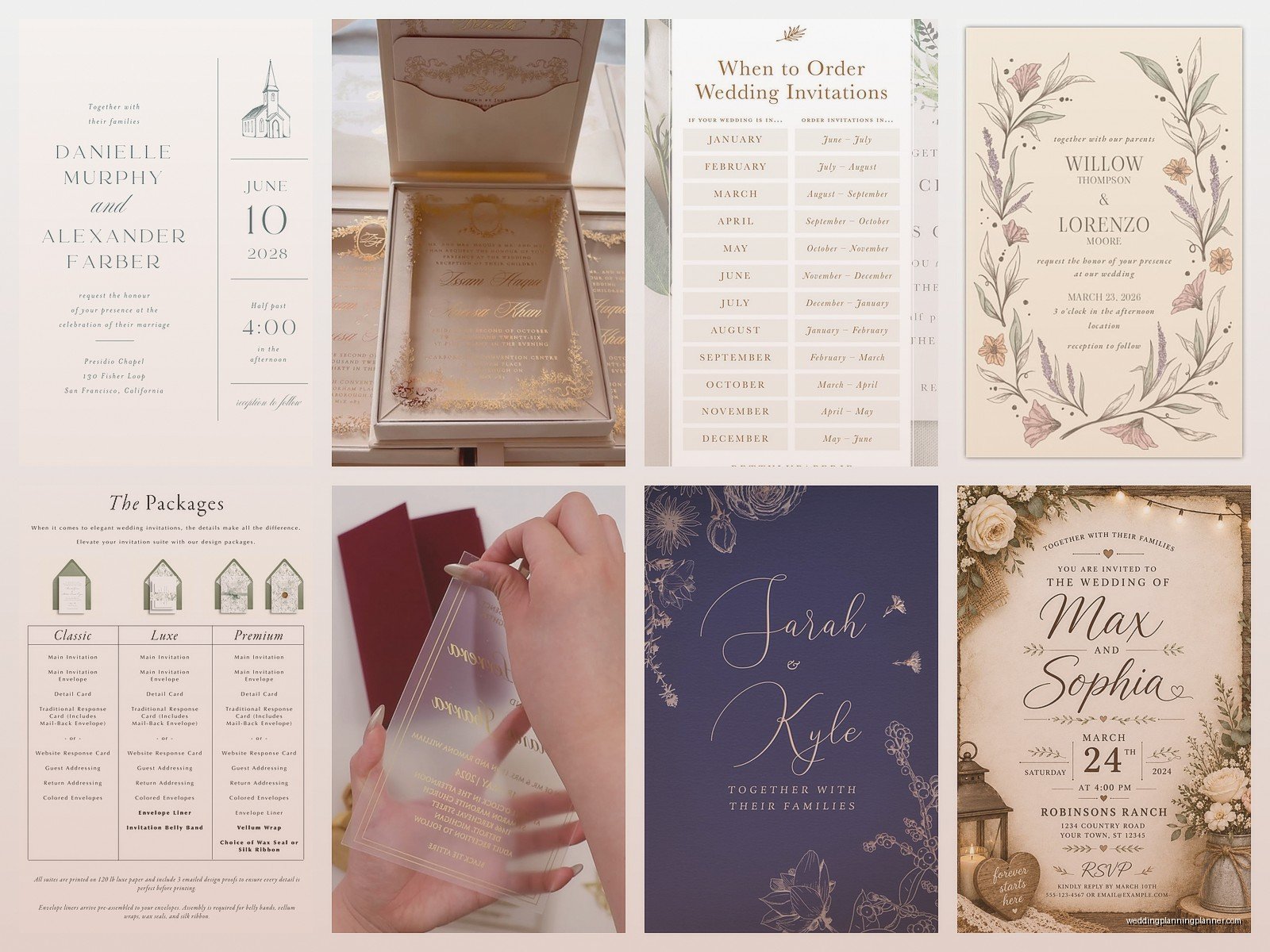
Invitations should mail 6-8 weeks before the wedding. Which means you need to order them like 8-10 weeks before the wedding to account for production time, shipping, and addressing time.
Save the dates go out 6-8 months before (or earlier for destination weddings). You can order these online too, same sites usually.
If you’re doing custom or letterpress invitations, add more time. Those can take 6-8 weeks just for production.
Budget Real Talk
Invitation costs are all over the place. You can spend $1 per invitation or $15+ per invitation depending on what you’re doing.
Basic online invitations (simple design, standard paper, digital printing): $200-400 for 100 invitations with envelopes
Mid-range (better paper, some customization, maybe foil or letterpress): $400-800 for 100
High-end (custom design, letterpress, fancy paper, all the extras): $800-2000+ for 100
Don’t forget to budget for postage. Wedding invitations are usually over 1 oz with all the inserts, so you’re looking at extra postage. And if you’re doing square envelopes or anything oversized, that costs more to mail too. I always tell people to take a fully assembled invitation to the post office and have them weigh it before you buy stamps.
Extra Stuff You Might Want
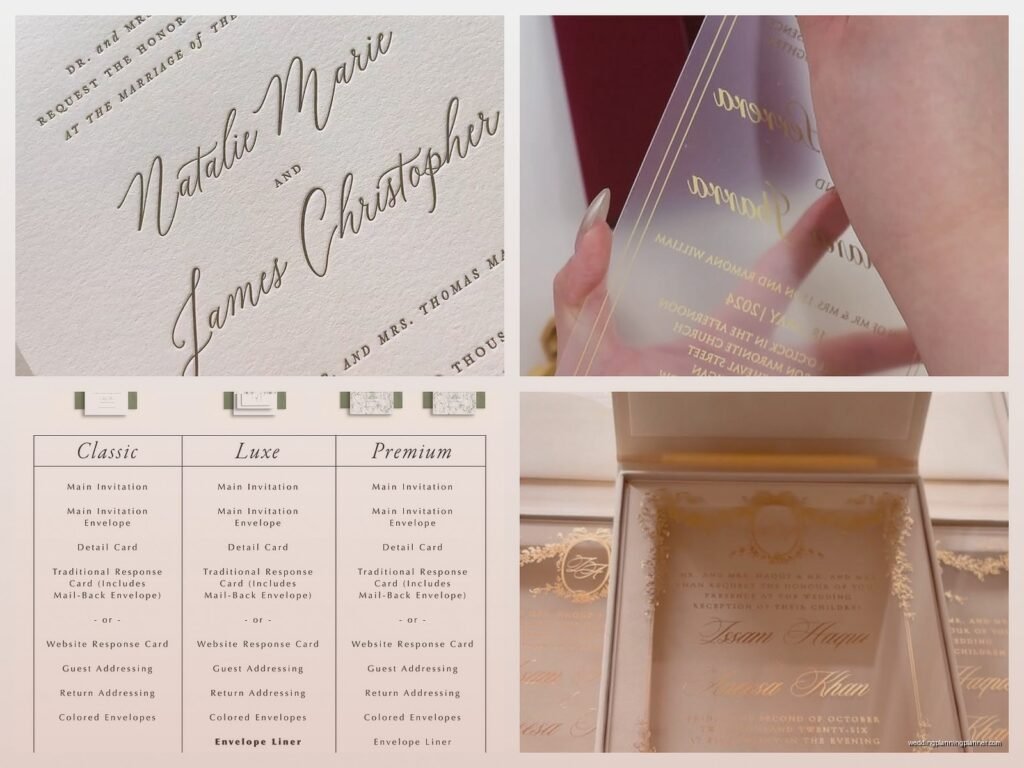
Envelope liners – pretty but add cost and assembly time. They’re that decorative paper inside the envelope flap.
Belly bands or ribbon – holds everything together, looks fancy, also adds assembly time.
Wax seals – very trendy right now. They look gorgeous but they can break in the mail and they sometimes require hand-canceling at the post office which is annoying.
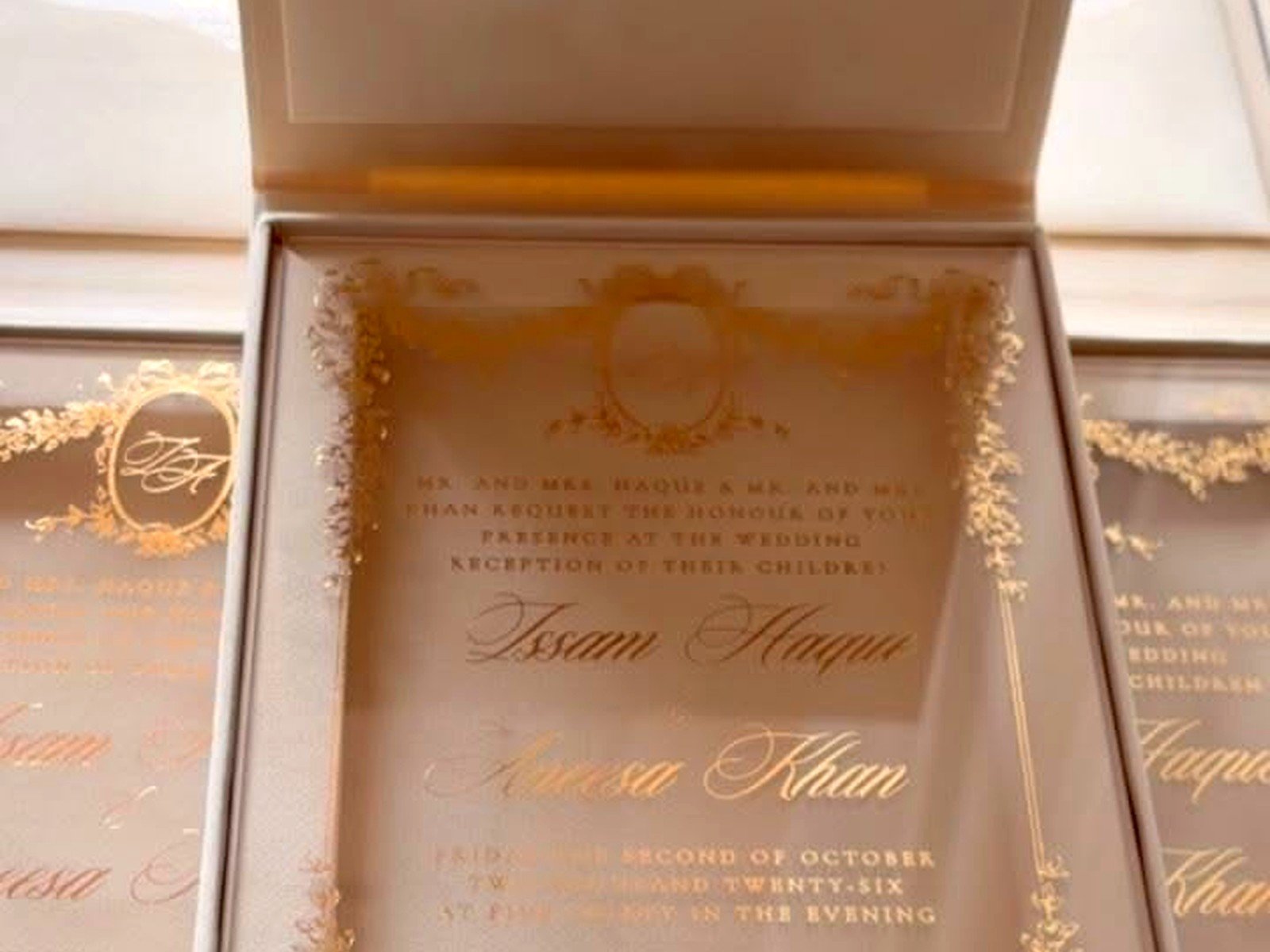
Vellum overlays – that translucent paper over the invitation. Pretty, trendy, but can shift around in the envelope.
Honestly? You don’t need all the extras. A well-designed invitation on good paper with clear information is better than an over-decorated invitation that’s hard to read.
Proofreading Checklist Before You Order
I made a checklist for clients because otherwise something always gets missed:
- Names spelled correctly (both yours and the venue’s)
- Date is correct (day of week matches the date)
- Year is correct
- Time is correct and includes AM/PM
- Venue name and address are correct
- RSVP deadline is 3-4 weeks before wedding
- RSVP address or website is correct
- Wedding website URL is correct and typed exactly right
- All placeholder text has been replaced
- Fonts are readable
- Colors look right in the proof
- Quantity is correct (guest count plus extras)
- Envelope quantity matches invitation quantity
When Things Go Wrong
Sometimes orders get messed up. The color is wrong, there’s a typo you didn’t catch, the printing is smudged, whatever.
Contact customer service immediately with photos. Most companies will reprint if it’s their error (printing issue, color way off from proof, damaged in shipping). If it’s your error (you approved a proof with a typo), you’re probably gonna have to pay for a reprint.
This is why you build extra time into your timeline. If you’re ordering invitations and planning to mail them the day they arrive, you’re setting yourself up for stress.
Also why you order extras – if a few are messed up but most are fine, you might be able to work with it rather than reordering everything.
Assembly Tips
Once everything arrives, set up an assembly station. You’ll need the invitations, all the insert cards, envelopes, whatever embellishments you’re adding, and probably a glass of wine.
Assemble one complete invitation first to make sure everything fits in the envelope properly and looks right. Then assembly-line the rest.
Standard order of inserts (from bottom to top): invitation on bottom, then reception card, then details card, then RSVP card and envelope on top. But honestly the order doesn’t matter that much as long as everything’s in there.
If you’re doing belly bands or ribbon, YouTube has tons of tutorials. It’s not complicated but it’s time-consuming.
For sealing envelopes, those little envelope moistener things are life-savers. Don’t lick 100 envelopes, your tongue will hate you.
Etsy vs. Big Companies
Etsy can be great for unique designs and supporting small businesses. You’re often working directly with a designer who can customize things exactly how you want.
Downsides: timeline can be less predictable, customer service is just one person who might be juggling multiple orders, and if something goes wrong there’s less infrastructure to fix it quickly… though honestly I’ve had great experiences with Etsy sellers being super accommodating.
Big companies like Minted or Shutterfly have more standardized processes, faster turnaround usually, and established customer service departments. But less personal and the designs can feel more generic even when you customize them.
I use both depending on what the couple wants. Etsy for couples who want something really unique and have a bit more time. Big sites for couples who want reliable, quick, and straightforward.
Digital Invitations Are Also Fine
Real quick – if you want to do digital invitations, that’s totally legitimate now. Paperless Post, Greenvelope, even just a nice design sent via email. They’re eco-friendly, cheaper, and you get instant RSVPs.
Some older guests might prefer paper, so you could do a hybrid approach – digital for most people, paper for the handful who’d appreciate it.
Don’t let anyone make you feel bad about going digital if that’s what works for you and your budget. The invitation’s job is to communicate information, and digital does that just fine.
Okay I think that covers most of it. The main things are: order samples, proofread everything multiple times, build in extra time, and don’t stress too much about making it perfect because people mostly just want to know when to show up and where to go. Everything else is just pretty decoration, and that’s nice but it’s not what people will remember about your wedding anyway.
