
Planning Guides, Style Guide
Wedding Bliss Planner: Professional Services Guide
Oct
What Wedding Planning Services Actually Include (And What They Don’t)
Okay so you’re thinking about hiring a wedding planner or maybe you ARE a planner trying to figure out what services to offer, and honestly the whole “professional services” thing is kinda confusing because every planner structures their packages differently and there’s no like… official rulebook? Which drives me nuts sometimes.
Let me just jump into the main service categories because that’s probably what you actually need to know. Most professional wedding planners offer three basic tiers: full planning, partial planning, and day-of coordination. But here’s where it gets messy—every planner defines these differently and I had this bride back in spring 2023 who thought she was getting full planning from another planner but it turned out to be like… partial at best? Anyway, that’s a whole story.
Full Planning Services (The Whole Shebang)
Full planning usually starts the moment you sign the contract—typically 10-18 months before the wedding. This is where I’m involved in literally everything. And I mean everything. You’re paying for someone to be your wedding project manager, your therapist (kinda), your vendor liaison, your budget spreadsheet keeper, and your “is this idea completely insane” reality checker.
Here’s what’s typically included:
- Unlimited meetings and communication (though I usually specify “within reason” because one time a groom texted me at 2am about napkin colors and I was like… we gotta set some boundaries here)
- Complete budget creation and management
- Venue research and site visits
- Vendor recommendations and contract reviews
- Design conceptualization and mood board creation
- Timeline creation for the entire planning process
- Guest list management and RSVP tracking
- Invitation timeline and etiquette guidance
- Seating chart assistance
- Rehearsal coordination
- Full day-of coordination
The thing that annoys me most about full planning? When couples hire you for full planning but then don’t actually… use you? Like they’ll go book vendors without telling you first and then you find out they hired their cousin’s boyfriend’s photography “business” and now you’re stuck trying to make sure this person actually shows up with a working camera. Just trust the process, people.
Partial Planning (The Middle Ground That’s Actually Really Popular)
Partial planning is for couples who want professional help but maybe they’ve already booked their venue or they’re the type who wants to be involved in some decisions but not ALL the decisions. This usually kicks in about 4-6 months before the wedding, though I’ve had clients hire me with 8 months left or even just 2 months (that was stressful, don’t recommend).
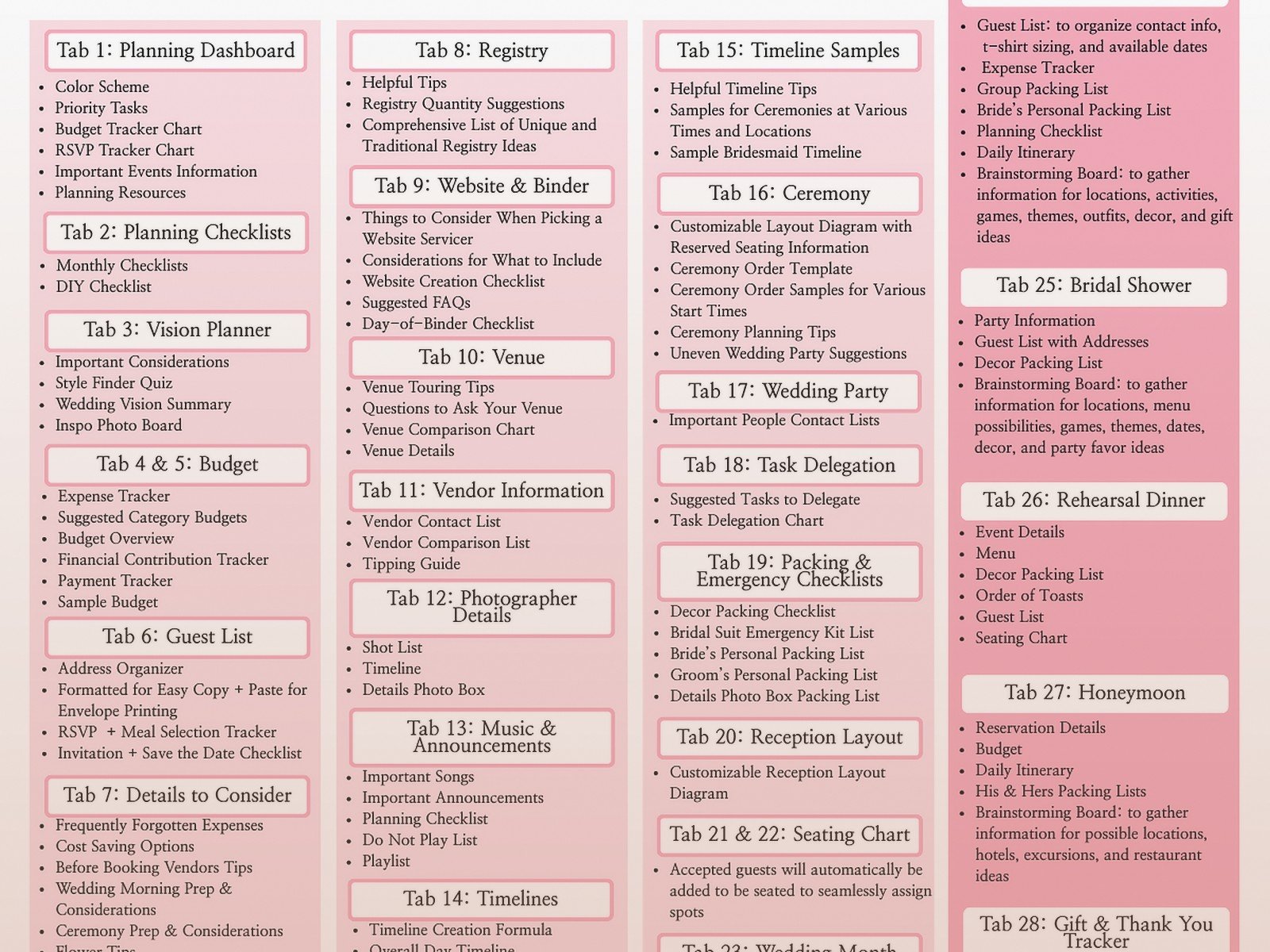
Partial planning typically includes:
- Limited number of meetings (I usually do monthly check-ins plus extra meetings as needed)
- Vendor recommendations for remaining categories
- Review of contracts you’ve already signed
- Budget review and tracking (not creation from scratch)
- Design assistance and vendor coordination for decor
- Timeline creation for wedding day
- Rehearsal coordination
- Full day-of coordination
What’s NOT usually included: venue selection, guest list management, invitation addressing, or the really early-stage planning stuff. You’ve already done some legwork, and I’m coming in to refine, coordinate, and make sure nothing falls through the cracks.
Day-Of Coordination (Month-Of, Really)
Okay here’s the thing that everybody gets wrong about “day-of” coordination—it’s never actually just day-of. It’s more like month-of coordination because I need at least 4-6 weeks before your wedding to actually understand what’s happening, contact your vendors, create timelines, and not just show up the day of being like “umm so what’s the plan?”
Month-of coordination includes:
- Initial meeting about 6 weeks out to review all your planning
- Collection of all vendor contracts and contact info
- Creation of detailed wedding day timeline
- Vendor confirmation calls/emails about 2 weeks out
- Rehearsal coordination
- Wedding day management (usually 8-12 hours)
- Setup coordination and breakdown oversight
- Problem-solving for any day-of issues
What’s NOT included: vendor recommendations, design help, budget management, or any of the actual planning. You’ve done all that yourself, and I’m just making sure it actually happens the way you planned. Think of it like… you wrote the screenplay and I’m the director making sure the actors hit their marks?
Additional Services You Can Offer (Or Look For)
Beyond those main three, there are a bunch of à la carte services that professional planners offer. I added some of these to my business around 2021 when I realized couples needed specific help with certain things but didn’t want full planning.
Design and Styling Services
Some planners (including me) offer standalone design services where we create the entire visual concept for your wedding—color palette, floral design, linen selections, lighting plans, all that aesthetic stuff—but we’re not actually coordinating vendors or managing the planning. This works well for couples who are organized and can handle logistics but need help with the creative vision. Or like when someone knows they want “romantic garden vibes” but has no idea how to actually achieve that with real flowers and rentals and stuff.
Vendor Sourcing and Contract Review
This is basically research and negotiation help. I’ll find you 3-5 vendor options in each category based on your style and budget, set up meetings, and review contracts before you sign. Super helpful if you’re in a new city or just overwhelmed by the sheer number of photographers who all somehow look the same on Instagram.
Invitation and Stationery Consulting
Okay this is obviously my jam since I do stationery consulting anyway, but not all planners offer this. It includes:
- Stationery timeline and ordering guidance
- Etiquette and wording help
- Vendor recommendations for printers and designers
- Proofreading (which is SO important because I once saw invitations go out with the wrong date and it was a nightmare)
- Coordination of save-the-dates, invitations, programs, menus, signage, etc.
My cat just knocked over my coffee which is perfect timing because I need a break from thinking about the time a bride insisted on DIY-ing her invitations and then called me crying two months before the wedding because she’d only finished 30 out of 200 and her hand hurt and could I please just find someone to print them professionally.
Destination Wedding Planning
This is its own beast entirely. Destination wedding planning includes everything in full planning PLUS:
- Location research and venue scouting (often with site visits)
- Travel logistics coordination
- Welcome event and multi-day itinerary planning
- Guest accommodation blocks and room management
- Local vendor sourcing (which is harder because you can’t just use your usual vendor list)
- Marriage license and legal requirement navigation
- Welcome bag coordination
Destination planning typically costs more because there’s travel involved for the planner, more complicated logistics, and honestly just more things that can go wrong when you’re dealing with international vendors or language barriers or different cultural expectations about weddings.
What’s Actually Involved in Day-Of Coordination
Let me break down what I’m actually doing on a wedding day because I think people don’t realize how much is happening behind the scenes while you’re getting your hair done or taking photos or whatever.
I usually arrive 2-3 hours before guests (sometimes earlier if setup is complicated). I’m checking in with every vendor as they arrive, making sure the ceremony space is set up correctly, that the florist put arrangements in the right spots, that the caterer has the right timeline for service, that the DJ knows when to start playing processional music… it’s a lot of walkie-talkie conversations and checking things off lists.
During the ceremony, I’m usually in the back making sure the wedding party lines up correctly, that someone has the rings, that your grandmother gets seated in the right row, that the flower girl doesn’t run down the aisle before the music starts (happened in summer 2021 and it was actually adorable but not what we planned).
During cocktail hour, I’m flipping the ceremony space or coordinating with venue staff to do so, making sure the reception space looks right, that place cards are set out correctly, that any last-minute seating changes get handled, that the cake looks good and is positioned where the photographer can get shots of it.
During reception, I’m cueing the DJ for announcements, making sure catering staff are clearing plates at appropriate times, handling any guest questions or issues, keeping the timeline on track (or adjusting it if needed), coordinating cake cutting and bouquet toss and whatever other traditions you’re doing, and generally making sure you can actually enjoy your wedding instead of worrying about logistics.
At the end of the night, I’m overseeing breakdown, making sure your gifts and cards get packed safely, that any rental items you’re keeping go home with the right person, that the venue is left in good condition, and that any remaining decor gets to wherever it’s supposed to go.
What Day-Of Coordinators DON’T Do
This is important: I’m not your personal assistant on the wedding day. I’m not gonna bustle your dress (that’s your maid of honor’s job), hold your bouquet during the ceremony (also MOH), feed you appetizers, or fix your makeup. I’m also not decorating—I’m coordinating decoration setup, which means telling people where things go, but I’m not spending three hours tying ribbons on chairs myself unless that was specifically negotiated in the contract.
I’m also not a therapist for family drama. Like I can redirect a difficult relative or smooth over a small conflict, but if your mom and future mother-in-law hate each other, that’s… beyond my pay grade? I had a wedding once where the two moms were literally not speaking and I spent half the day playing telephone between them and it was exhausting and not really what coordination is supposed to be.
How to Structure Your Service Packages (If You’re a Planner)
Alright so if you’re a planner trying to figure out your own service offerings, here’s my advice based on what’s actually worked for me. You’re gonna want to think about what you actually enjoy doing, what you’re good at, and what makes financial sense for your time.
Start with clear package tiers. I do three main packages (full, partial, month-of) with very specific inclusion lists so there’s no confusion about what clients are getting. Every single thing is spelled out in the contract. When I first started, I was way too vague about what was included and I ended up doing SO much more work than I was being paid for because clients would be like “well I assumed timeline creation meant you’d also create my ceremony program” and I’d be like… no? But also I hadn’t specified that, so…
Build in boundaries around communication. Unlimited email is fine, but specify response times (I do 24-48 hours for non-urgent matters). I learned this the hard way when I was answering emails at all hours and completely burning out.
Consider offering à la carte add-ons like:
- Additional planning hours beyond package inclusion
- Extra site visits or vendor meetings
- Design services for ceremony programs, menus, signage
- Guest list management in a specific platform
- Invitation assembly and mailing
- Welcome party or rehearsal dinner coordination
- Post-wedding brunch coordination
This lets clients customize their experience and lets you earn more for services that take significant time.
Pricing Your Services
This is probably what you really wanna know about, right? Wedding planner pricing is all over the place depending on your location, experience level, and what you’re offering. In major markets, full planning might run $5,000-$15,000+, partial planning $3,000-$8,000, and month-of coordination $1,500-$4,000. In smaller markets, everything might be 30-50% less.
I price based on the complexity of the wedding more than a strict percentage of budget. A $50,000 backyard wedding with DIY elements is actually way more work than a $50,000 country club wedding where the venue does half the coordination. So I look at guest count, number of events, venue complexity, amount of DIY, and how involved the couple wants to be.
Some planners charge a flat fee, some charge percentage of budget (usually 10-20% for full planning), and some do hourly ($100-$300/hour depending on market and experience). I do flat fees because it’s clearer for everyone and I don’t have to track every single minute I spend thinking about someone’s wedding.
What to Look for When Hiring a Planner
If you’re on the couple side trying to hire a planner, here’s what actually matters:
First, make sure their package actually includes what you need. Read the contract carefully. If something’s not listed, ask if it’s included before you assume it is. The number of times I’ve had consultations where couples are like “so you’ll help us create our invitations, right?” and I have to explain that’s not included in month-of coordination… it’s a lot.
Look at their vendor relationships. A good planner should have solid relationships with quality vendors in your area and be willing to recommend people. If they’re cagey about recommendations or only push one vendor per category, that’s kinda weird? You want options.
Ask about their coordination style on the wedding day. Some planners are very visible and hands-on, some prefer to work behind the scenes. Neither is wrong, but you should know what to expect. I’m more of a behind-the-scenes person—you probably won’t see me during your wedding except when I’m cueing you for something, and that’s intentional because I think the focus should be on you, not on me running around visibly “coordinating.”
Check their availability and workload. I limit myself to 15-20 weddings per year so I can actually give each couple proper attention. If someone’s doing 50+ weddings a year, they might have a team (which is fine) or they might be stretched too thin (not fine). Ask directly: how many weddings do you take per year, and how many do you have on my date or that weekend?
Trust your gut on personality fit. You’re gonna be communicating with this person a LOT, and if their communication style or personality doesn’t mesh with yours, it’s not gonna work no matter how experienced they are. I’ve turned down clients when it was clear we weren’t a good fit, and it’s always the right call.
Common Service Add-Ons and Extras
There are a bunch of services that aren’t always included in standard packages but that you can often add:
Rehearsal Dinner Coordination: Most planners include rehearsal coordination (the actual run-through of the ceremony) but not rehearsal dinner coordination. If you want help planning and coordinating the dinner itself, that’s usually extra.
Welcome Party or Post-Wedding Brunch: Same deal—coordinating additional events beyond the wedding day itself typically costs more.
Invitation Assembly and Mailing: Some planners offer this, some don’t. It’s tedious work (assembling 150 invitations with envelopes and inserts and belly bands and wax seals takes HOURS) so if it’s offered, it’ll probably cost a few hundred dollars minimum.
Hotel Room Block Management: Negotiating room blocks, managing the booking process, following up with guests—this is time-consuming and not always included, especially in month-of packages.
Vendor Meal Coordination: Making sure your vendors get fed (which you should do, by the way—vendors work better when they’re not starving) is usually included, but some planners charge extra if it’s complicated or if you want vendor meals to be a specific thing rather than just whatever the caterer provides.
The key is just to ask what’s included and what costs extra. Don’t assume anything, because every planner structures their services differently and what one person includes as standard might be an add-on for someone else. It’s not trying to be difficult, it’s just that there’s no industry standard for what goes in which package, which is honestly kinda frustrating for everyone involved but it is what it is at this point
