
Planning Guides, Style Guide
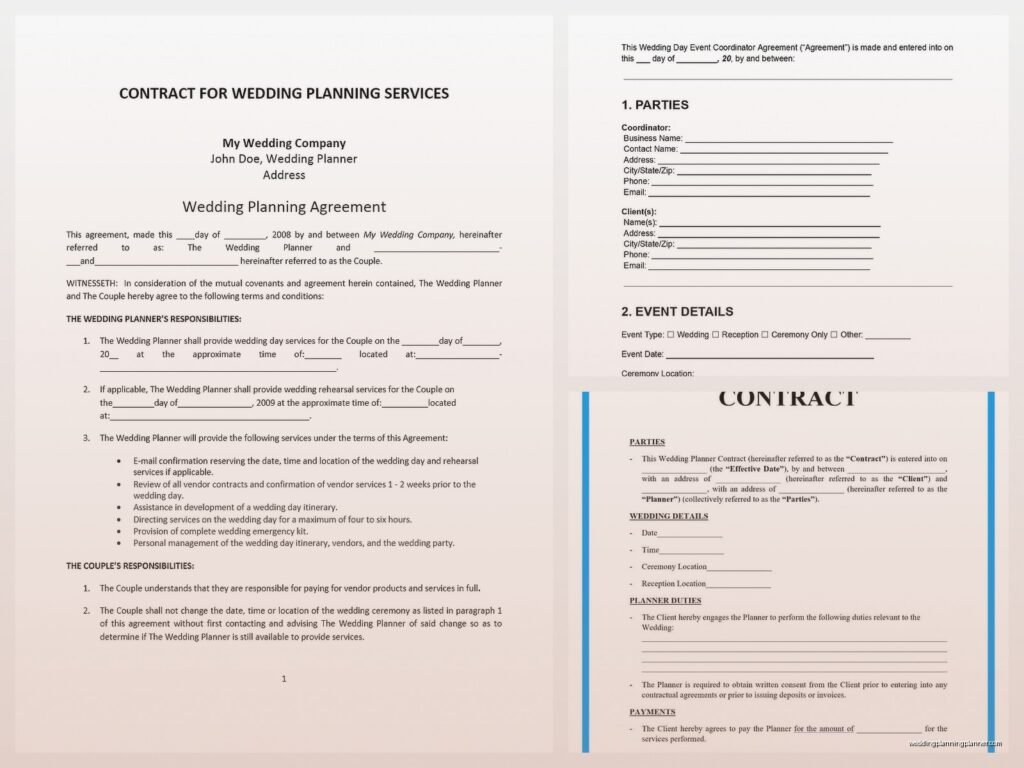
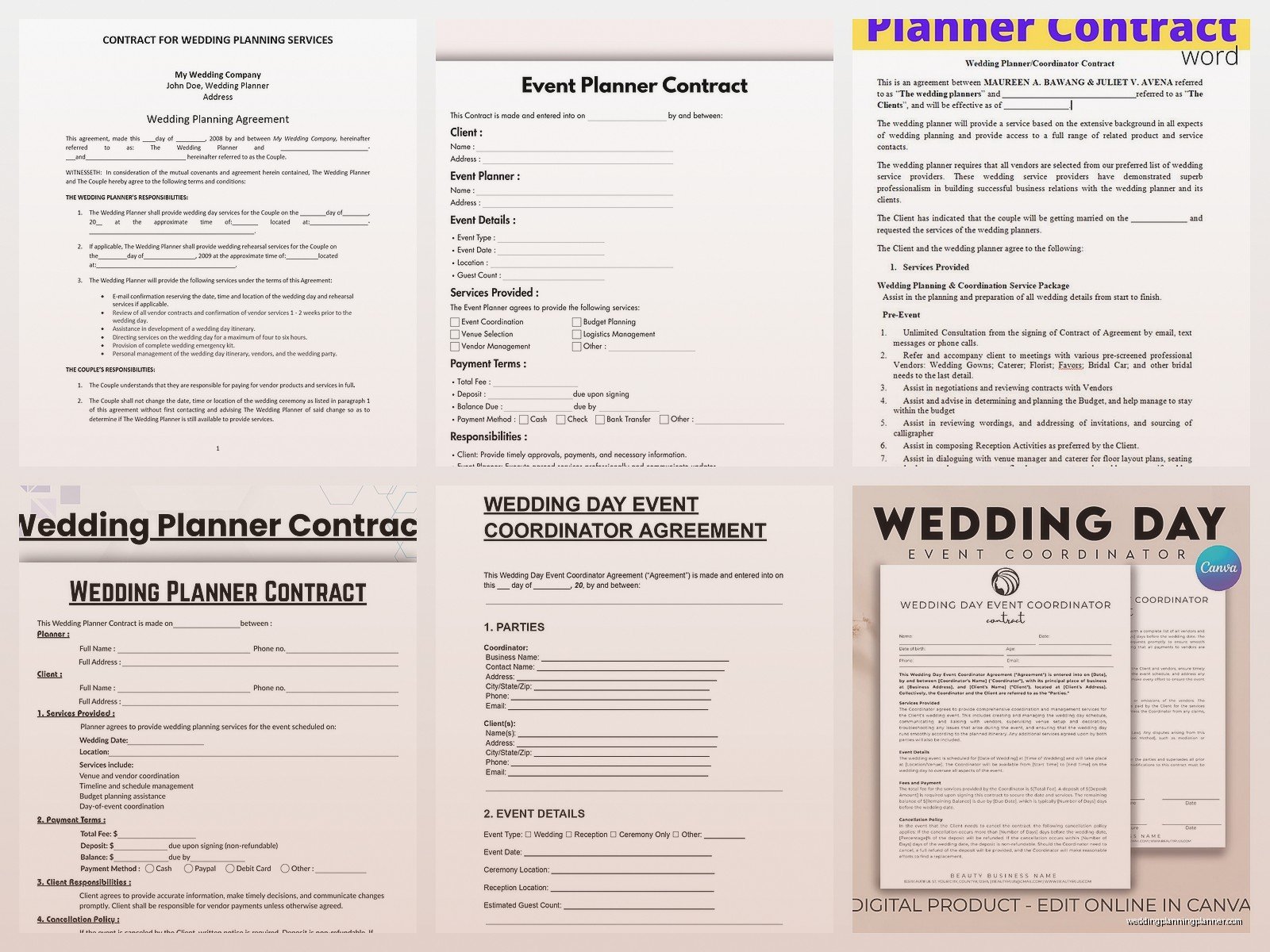
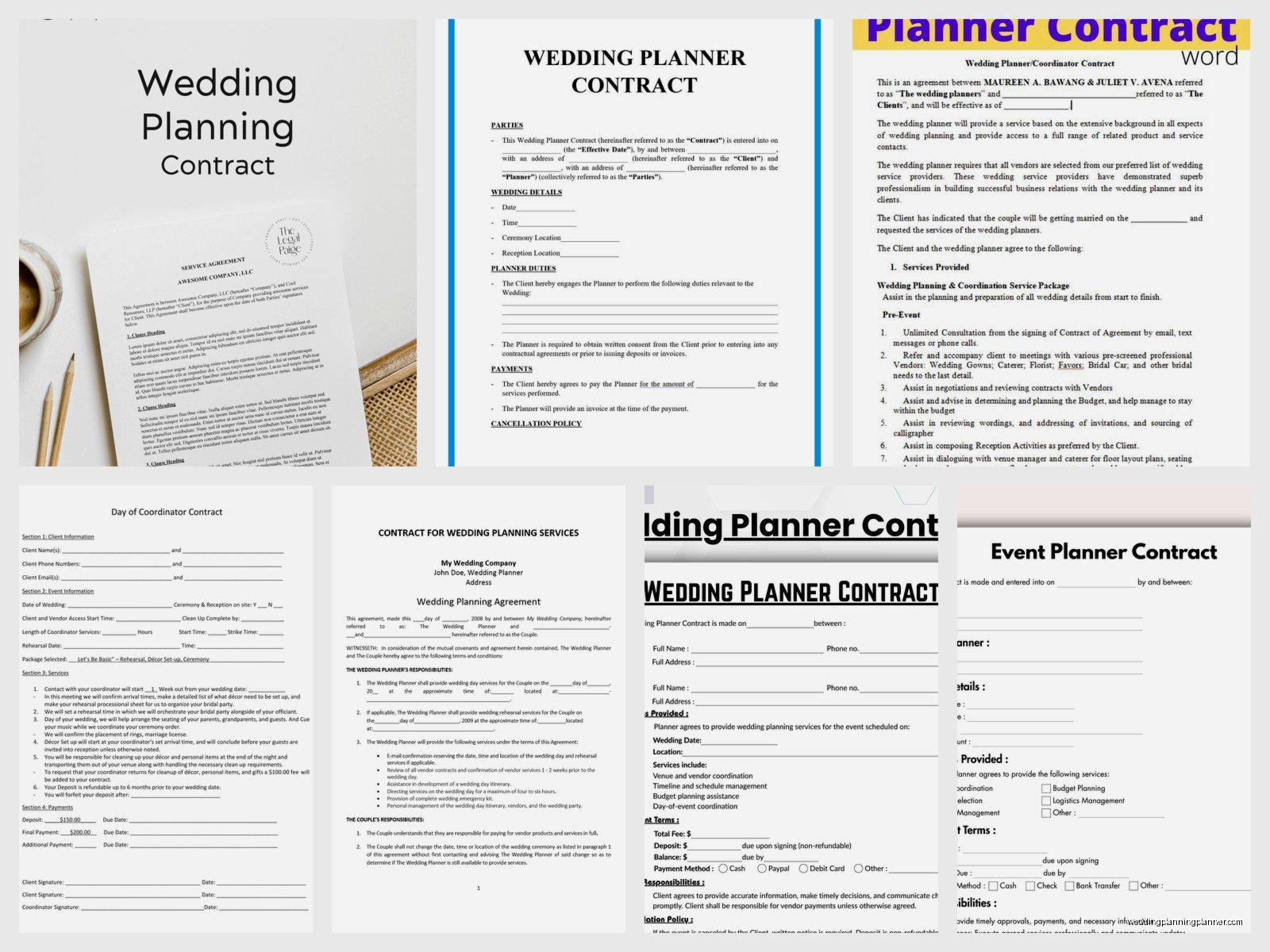
Wedding Coordinator Contract Template: Service Agreement
Jul
The Stuff You Actually Need in Your Wedding Coordinator Contract
So you’re putting together a wedding coordinator contract and honestly this is one of those things I wish someone had just handed me a checklist for back when I started because I made SO many mistakes. Like that whole situation in spring 2023 where a bride tried to add her entire extended family’s hotel bookings to my responsibilities three weeks before the wedding and I had literally nothing in my contract about scope creep? Yeah. Learn from my pain.
First thing – and I cannot stress this enough – your contract needs to spell out EXACTLY what services you’re providing. Not “wedding coordination services” because that means absolutely nothing when you’re standing there at 11pm and the mother of the groom is asking you to drive to three different hotels to deliver welcome bags. I mean like, itemized services.
Services Section That Actually Protects You
Break it down into categories. I do it like this: Pre-Wedding Services (how many meetings, phone calls, email response time), Day-Of Services (how many hours, what time you arrive, what time you leave), and then a whole section called “Services NOT Included” which honestly might be more important than what IS included.
Under Pre-Wedding I’ll put stuff like:
- Number of in-person meetings (I do 3 max)
- Unlimited email correspondence but I’ll respond within 48 hours on weekdays
- Timeline creation and vendor coordination
- Rehearsal attendance and coordination (specify how long, usually 1 hour)
- Final walkthrough at venue if needed
For Day-Of Services you gotta be specific about hours because clients will absolutely try to get you there at 8am for a 6pm ceremony if you let them:
- Arrival time (I usually do 2 hours before ceremony)
- Departure time (I say 30 minutes after reception ends or midnight, whichever comes first)
- Number of coordinators/assistants included
- Setup supervision and vendor management
- Emergency kit provision
- Ceremony and reception coordination
Then the NOT included section is where you put stuff like: vendor research and booking, guest list management, hotel room blocks, transportation arrangements for guests, décor shopping, invitation addressing (omg this one – people think we do EVERYTHING), personal errands, and setup/teardown of personal items beyond what’s specified.
Payment Terms Because Money Gets Weird
Alright so payment structure needs to be crystal clear. I do a non-refundable retainer of 50% to book the date, then the remaining 50% due 30 days before the wedding. Some coordinators do payment plans and that’s fine but you need late fee policies spelled out.
Here’s what annoyed me SO much when I started – I didn’t have a clause about additional fees for extra services and clients would just… keep asking for more stuff? And I felt awkward bringing up money every time. Now my contract has a whole section on additional services with hourly rates clearly listed. Extra meetings beyond the 3 included? $150 per meeting. Need me to stay past midnight? $100 per hour. Want me there earlier than 2 hours before ceremony? Additional fee.
Also put in there what happens if THEY cancel. Non-refundable retainer stays with you obviously, but what about if they cancel like 6 months out versus 2 weeks out? I have a sliding scale – more than 6 months out I keep the retainer, less than 90 days I keep 75% of total, less than 30 days I keep it all. Sounds harsh but I’ve turned away other clients to hold that date.
The Liability Section Nobody Wants to Think About
You need liability protection in there and it’s gonna feel awkward to write but do it anyway. I learned this the hard way when a groomsman got drunk and punched a hole in the venue wall and somehow the venue tried to come after ME for it? My contract now clearly states I’m not responsible for:
- Guest behavior or damages they cause
- Vendor no-shows or poor performance (though I coordinate them, I don’t guarantee them)
- Venue issues or damages
- Weather-related problems
- Acts of God, natural disasters, pandemics (yeah we all added that after 2020)
- Lost or stolen items
And you should carry liability insurance anyway but the contract should mention that clients are responsible for their own event insurance.
Vendor Coordination Boundaries
This part is important because clients think “coordinator” means you’re like… psychically connected to all their vendors or something. Specify that you’ll create and distribute the timeline to all vendors, you’ll be the point of contact on the wedding day, you’ll coordinate setup and breakdown, BUT you are not responsible if a vendor doesn’t show up or does a bad job.
I also put in there that all vendors must be booked and contracts signed at least 60 days before the wedding. Because I had this situation once where a bride didn’t book a caterer until TWO WEEKS before and expected me to just magically make it work and like… nah. That’s not coordination, that’s performing miracles.
Timeline and Planning Deadlines
Your contract should include deadlines for when the client needs to provide you with information. I have a whole timeline attachment that says stuff like:
- 90 days before: Final vendor list with contact info
- 60 days before: Complete timeline details (ceremony start time, reception flow, etc)
- 45 days before: Final meeting to review all details
- 30 days before: All vendor payments must be settled (because I’m not dealing with that drama on the wedding day)
- 14 days before: Final headcount and seating chart
- 7 days before: Any last-minute changes must be communicated
And then I have a clause that says if they don’t provide this stuff on time, I’m not responsible for any resulting issues. Like if you give me the seating chart the morning of the wedding, I’ll do my best but I’m not guaranteeing perfection.
Cancellation and Postponement Policies
After 2020 we all learned that postponement clauses are essential. My current contract says if the couple needs to postpone for reasons beyond their control (venue closure, travel restrictions, serious illness), they can apply their payment to a new date within 18 months based on my availability. If I’m not available for the new date, they get back 50% of what they’ve paid minus the retainer.
If they cancel just because they want to, the payment terms I mentioned earlier apply. If I need to cancel (which has happened exactly once when I had emergency surgery), they get a full refund or I provide a qualified replacement coordinator at no additional cost.
Communication Expectations
Set boundaries around communication because otherwise you’ll be answering texts at 11pm about napkin colors. I specify:
- Email response time: within 48 business hours
- Phone calls: by appointment only (I include my scheduling link)
- Emergency contact: defined as venue/vendor crisis on wedding day only
- No communication expected on Sundays (my cat Mochi and I need our day off)
During wedding season I’m usually doing 2-3 weddings per weekend and if I don’t have these boundaries I’d literally never sleep.
The Annoying Legal Stuff You Can’t Skip
Every contract needs a governing law clause – like which state’s laws apply if there’s a dispute. And an arbitration/mediation clause because going to court is expensive and nobody wants that. I require mediation first, then arbitration if that doesn’t work.
Force majeure clause is essential (that’s the fancy term for “stuff nobody can control”). This covers natural disasters, war, pandemics, government restrictions, venue closures, etc. Basically anything that makes it impossible to perform the services.
Severability clause means if one part of the contract is found to be unenforceable, the rest still stands. And an entire agreement clause states that this contract is the whole agreement and supersedes any previous discussions or emails – because clients will definitely say “but you said in that email…” and you need to be able to point to the contract as the final word.
Photo and Social Media Rights
Don’t forget to include whether you can share photos from their wedding on your website and social media. I ask for the right to use any professional photos for marketing purposes unless they specifically request a private event. Some coordinators charge less for public events they can promote versus private ones they can’t share – totally up to you.
Also specify who owns the planning documents you create. The timeline, floor plans, etc – I retain the templates but they get copies of their specific versions.
Rehearsal Details Matter
Be specific about rehearsal coordination. I include one hour of rehearsal coordination, usually the night before the wedding. If they want me to attend a rehearsal dinner after? Additional fee. If the rehearsal is more than 30 miles from the venue? Travel fee. If it’s scheduled for a different day than the night before? We gotta discuss availability and potentially additional costs.
I learned this in summer 2021 when a family wanted me at their rehearsal on a Thursday evening, then the wedding was Saturday, but they also wanted me at a Friday welcome party “just in case” – like that’s three separate events and you booked me for one wedding.
Travel and Accommodation
If the wedding is outside your normal service area, specify who pays for travel. I don’t charge travel fees within 30 miles of my office, but beyond that it’s $0.75 per mile or actual travel expenses, whichever is less. If it’s a destination wedding or requires an overnight stay, accommodations are covered by the client and that needs to be in the contract.
Also put in there that travel time doesn’t count against your coordination hours – because I’ve had clients try to say “well you arrived at 2pm and left at midnight so that’s 10 hours but you were only contracted for 8” when like, babe, I drove 2 hours each way, that’s not coordination time.
Assistant Coordinators and Substitution
If you work with assistants, clarify how many are included in the package. I include myself plus one assistant for weddings under 150 guests, myself plus two for larger weddings. If they want additional assistants, there’s a fee for that.
And you need a substitution clause – what happens if you get sick or have an emergency? I have a network of trusted coordinators who can step in, and my contract says I’ll provide a qualified substitute at no additional charge if I’m unable to perform services due to illness or emergency. The client can’t refuse the substitute and demand a refund if I’ve given them adequate notice and the substitute is qualified.
Setup and Teardown Specifications
Define what “setup coordination” means because clients think it means you’re physically setting up everything. Nope. I coordinate and supervise vendor setup, I direct where things go, I do final detail placement like place cards and favors, but I’m not moving tables and chairs or unloading a truck. If they need actual physical setup help beyond detail work, they need to hire setup crew or rely on their vendors or… ask their wedding party, I don’t know, but that’s not standard coordination.
Same with teardown – I supervise and coordinate vendor breakdown, I gather personal items and make sure nothing is left behind, but I’m not packing up 200 centerpieces into someone’s car at midnight.
The Signature and Date Stuff
Both parties need to sign and date the contract. I use electronic signatures through various contract platforms which is way easier than printing and scanning. Make sure both people are signing if it’s a couple – I’ve had situations where one partner signed and the other claimed they never agreed to the terms.
Include a line for printed names too because some signatures are completely illegible and you need to know who actually signed.
And attach any relevant documents as exhibits – your service area map, the timeline deadline schedule, your emergency contact procedures, whatever makes sense for your business model.
Oh and one more thing that’s sorta obvious but I’ve seen coordinators forget – put your business information at the top. Legal business name, your name, address, phone, email, website. And get their information too – both partners’ names, address, phone numbers, emails, and their wedding date and venue obviously.
The contract should also state when services officially begin – is it when they sign the contract, when they pay the retainer, or on a specific date? I consider services to begin when both the signed contract AND retainer payment are received, not before. Because I’ve had people sign contracts and then ghost on the payment and I’m not doing work until I’m actually booked.
One last thing about the whole payment situation – specify accepted payment methods. I take credit cards, checks, and bank transfers but not cash because cash is weird for business accounting and also I’m not meeting people to collect cash like some kind of… I don’t know what, but it feels weird. Credit cards have processing fees and my contract states that client pays those fees if they choose that payment method.
Anyway that’s basically everything you need in a wedding coordinator contract. Have a lawyer in your state review your template obviously because I’m not a lawyer and every state has different requirements, but this covers all the stuff that’s actually come up in my 15+ years doing this. The contract protects both of you and sets clear expectations which honestly prevents like 90% of potential conflicts before they even start.