Planning Guides, Style Guide
Wedding Planner Proposal: Coordinator Pitch Template
Jul
The Proposal Template That Actually Gets You Hired
So you need a wedding planner proposal template that doesn’t make couples’ eyes glaze over. I get it. Back in spring 2023 I lost three potential clients in one week because my proposals were basically novels nobody wanted to read, and honestly that was the wake-up call I needed to completely restructure how I pitch my coordination services.
Your proposal needs to hit different than everyone else’s because couples are getting like 5-10 of these things if they’re shopping around. They’re tired. They’re overwhelmed. They don’t wanna read your life story or how you “fell in love with love” okay that’s annoying and we all need to stop.
The Opening Section Nobody Talks About
Start with their names and their wedding date right at the top. Sounds obvious but you’d be surprised how many planners send generic proposals. I use:
Proposal for Sarah & Michael
Wedding Date: October 14, 2024
Venue: The Ashford Estate
Prepared by: Olivia Hart, CWP
That’s it. Clean. Personal. They immediately know this is THEIR proposal, not some copy-paste job you sent to twelve other couples. Then I jump straight into a brief section called “What I Understood From Our Conversation” where I basically prove I was listening during our consultation call.
Something like: “You mentioned wanting a romantic garden vibe without it feeling too rustic, and that managing your vendor team is stressing you out more than the actual design decisions. You’ve got about 120 guests and your biggest concern is making sure your grandmother can navigate the venue easily.”
This section shouldn’t be more than 3-4 sentences but it’s gold because it shows you GET them. I learned this after… well after I sent a proposal talking about “rustic barn elegance” to a couple who specifically said they hated barn venues and I wanted to disappear into the floor.
Services Breakdown (The Part Everyone Messes Up)
Here’s where most coordinator proposals die. They either list services in the most boring way possible or they’re so vague the couple has no idea what they’re actually getting. You gotta be specific but not overwhelming.
I break mine into clear sections with actual explanations:
Planning Phase (4-6 months before wedding):
- Detailed timeline creation – I build your minute-by-minute wedding day schedule and distribute it to all vendors
- Vendor coordination – I become your point person so vendors stop emailing you at 11pm
- Two planning meetings (virtual or in-person) – we review progress, address concerns, finalize logistics
- Venue walkthrough – I visit your venue, take measurements, identify potential issues before they become problems
See how each bullet explains what AND why? Don’t just write “timeline creation” because that could mean anything.
Final Month Services:
- Rehearsal coordination – I run your rehearsal so everyone knows where to stand and when to walk
- Final vendor confirmations – I contact every vendor to confirm times, deliveries, and details
- Floor plan finalization – working with your venue to ensure table placement, dance floor, and traffic flow makes sense
- Emergency kit preparation – I bring the kit with 67 items you didn’t know you needed until someone’s heel breaks
My cat just knocked over my coffee which is kinda perfect timing because I need a break from typing anyway…
Wedding Day Coverage:
- 8 hours of coordination coverage (can extend if needed)
- Vendor management – I handle all vendor arrivals, setup, and troubleshooting
- Timeline execution – keeping everyone on schedule without being annoying about it
- Guest assistance – answering questions, giving directions, handling the random stuff that comes up
- Setup and styling – I place your personal items, arrange card boxes, set up place cards, handle detail work
- Emergency problem-solving – whatever goes wrong, I fix it before you know it happened
The Investment Section That Doesn’t Sound Weird
Nobody wants to write this part. I get it. But you can’t just throw a number at people and hope they understand the value. I structure mine like:
Month-Of Coordination Package: $2,800
This includes everything listed above plus:
- Unlimited email communication starting 4 months out
- Access to my preferred vendor list
- Wedding day emergency kit
- Setup and breakdown coordination
- One assistant coordinator for weddings over 100 guests
Then I add optional add-ons because not everyone needs everything:
Available Add-Ons:
- Rehearsal dinner coordination: $400
- Additional planning meetings: $150 per meeting
- Extended wedding day coverage: $200 per hour
- Day-after brunch coordination: $350
Some planners hate showing add-ons because they think it makes them look nickel-and-dimey but honestly couples appreciate knowing what’s possible and what costs extra. You’re running a business not a charity.
Timeline and Next Steps
This is where you tell them exactly what happens if they book you. I cannot stress enough how many couples don’t book because they’re confused about the process. Make it brain-dead simple:
If you’d like to move forward:
- Review this proposal and let me know if you have questions
- Sign the attached contract
- Submit the $500 retainer (remaining balance due 30 days before wedding)
- I’ll send you a welcome packet and we’ll schedule our first planning meeting
I also include: “This proposal is valid for 14 days. After that, I may need to adjust pricing or availability depending on my booking calendar.”
That little urgency nudge? It works. Not in a gross sales-y way but in a “I’m a professional with limited availability” way.
The Stuff That Makes You Different
Somewhere in your proposal you need a section about why they should pick YOU specifically. Not wedding planners in general. You. This is hard to write without sounding braggy or desperate but here’s my approach:
Why I’m Different:
I’ve coordinated 200+ weddings and I still get excited about the little details that make your day uniquely yours. I’m gonna be honest with you when something won’t work (like that unity ceremony idea involving live butterflies in November… trust me). I have backup plans for my backup plans. And I’m genuinely good at making your family members feel important without letting them take over your wedding.
Also I have a background in stationery design which means I notice when your programs don’t match your signage or when your escort cards are getting lost in the wind, and I’ll actually do something about it before it becomes a problem.
See? Personal but professional. Specific but not weird. You’re showing personality without being too casual for people who are spending thousands of dollars.
Testimonials But Make Them Useful
Don’t just slap random five-star reviews in there. Pick 2-3 testimonials that address specific concerns YOUR potential clients mentioned. If they’re worried about family drama, include a testimonial about how you handled difficult family dynamics. If they’re concerned about timing, show a review about how you kept everything on schedule.
I keep a document of testimonials organized by topic so I can quickly pull the right ones for each proposal. Game changer.
What NOT To Include (This Is Important)
Don’t include your entire life story. They don’t need three paragraphs about how you planned your first wedding at age 12 for your Barbies. Keep your bio to 2-3 sentences max or just skip it entirely if you covered the important stuff in your “why I’m different” section.
Don’t include a million photos of other people’s weddings unless they’re relevant. Like if this couple is doing a garden wedding, show garden weddings you’ve coordinated. But don’t include your entire portfolio because that’s what your website is for.
Don’t use weird fonts or colors that make it hard to read. I learned this one the hard way when I thought a fancy script font would make me look more “elegant” and instead I just got feedback that my proposals were hard to read on phones. Most couples are reviewing these on their phones between other stuff so make it mobile-friendly.
The Format Thing Nobody Agrees On
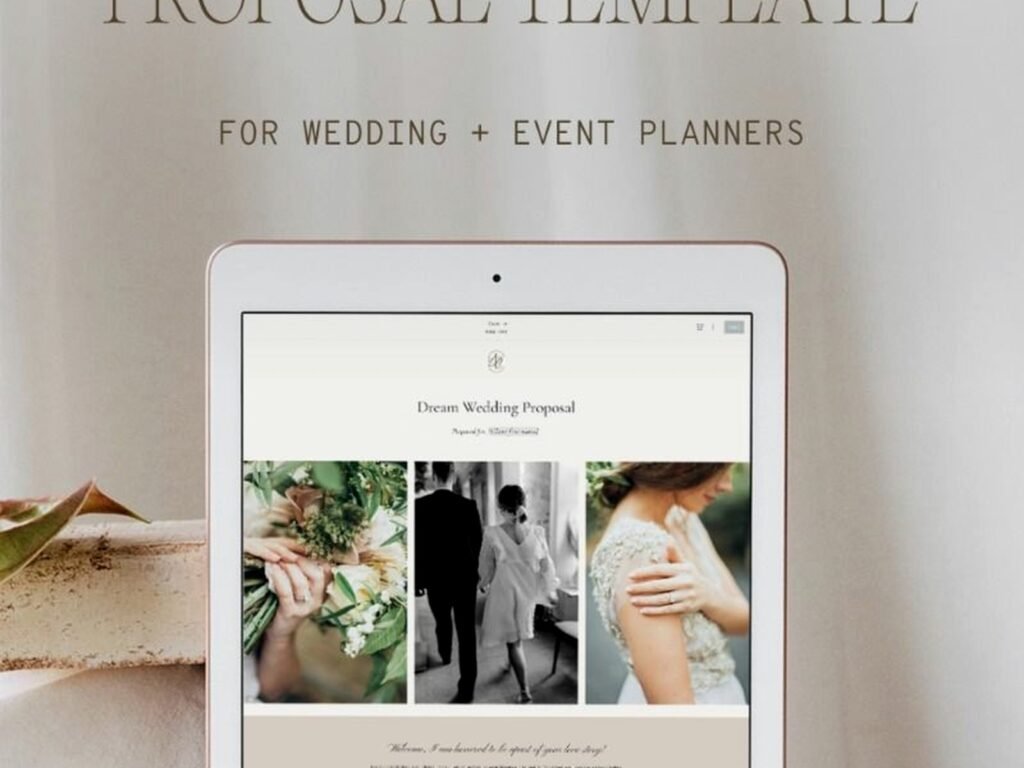
PDF or Word doc or online proposal software? Honestly I’ve tried all three and here’s what I landed on: I create mine in Canva using a simple template that looks professional but not over-designed, export as PDF, and send it attached to a personal email.
Some planners swear by proposal software like HoneyBook or Dubsado and that’s fine if it works for you, but I found couples sometimes don’t click through or they get confused by the interface. A simple PDF they can save and review is usually enough. Plus you can embed your contract right in the same document which makes everything smoother.
Following Up Without Being That Person
After you send your proposal, follow up in 3-4 days if you haven’t heard back. Not immediately. Not the next day. Give them time to actually review it and discuss it.
My follow-up email is super simple: “Hi Sarah and Michael! Just checking if you had any questions about the proposal I sent over. Happy to jump on a quick call if you want to talk through anything. Also wanted to mention I have two other couples looking at dates in October, so if you’re interested in moving forward, sooner is better to hold your date.”
That last line isn’t manipulation if it’s true. And it usually is true because wedding season books up fast. You’re just being transparent about your availability.
Pricing Real Talk
The thing that annoyed me most when I was starting out was other planners being SO secretive about pricing. Like we’re all supposed to figure it out in a vacuum? So here’s some real talk: month-of coordination typically ranges from $1,500 to $4,000+ depending on your market, experience, and what’s included.
Don’t underprice yourself because you’re “new.” Price yourself based on the value you provide and the market you’re in. I started at $1,800 for month-of coordination even though I was nervous about it, and couples paid it because I presented it confidently and showed them exactly what they were getting.
If you’re in a major metro area, you should be higher. If you’re in a smaller market, adjust accordingly. But don’t go so low that couples think something’s wrong or that you’re not experienced enough to handle their wedding.
The Actual Template Structure
Okay so putting it all together, here’s the order that makes sense:
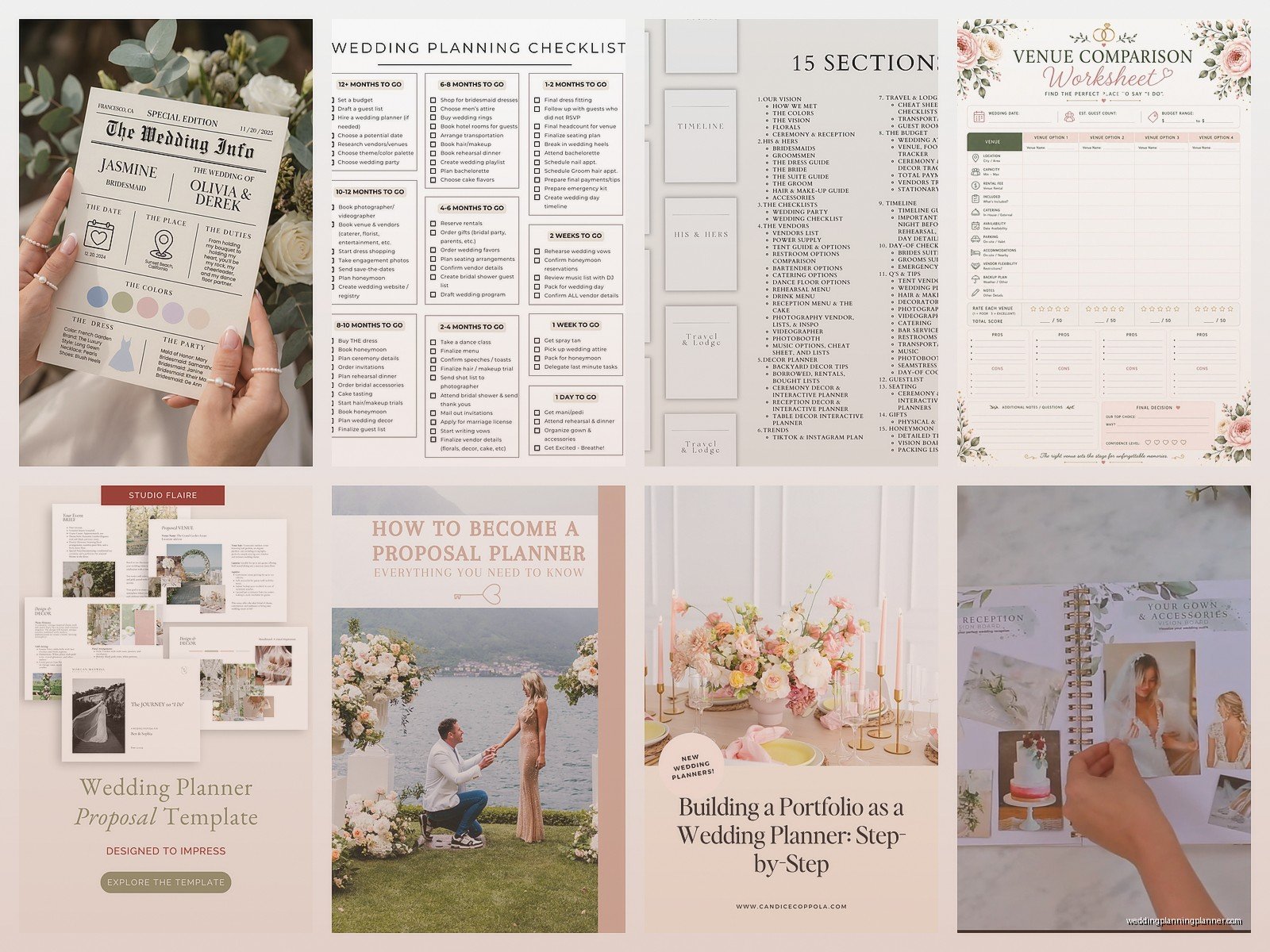
- Personalized header with their names and date
- What I understood from our conversation (3-4 sentences)
- Services breakdown (planning phase, final month, wedding day)
- Investment and package details
- Optional add-ons
- Why I’m different (brief)
- 2-3 relevant testimonials
- Next steps and timeline
- Contract (if you’re including it)
Keep the whole thing to 4-6 pages max. Any longer and you’re losing them. Any shorter and you’re probably not including enough detail to justify your pricing.
Customizing For Each Couple
Yes you need a template. Yes you also need to customize it every single time. At minimum change the header, the “what I understood” section, and pick relevant testimonials. If you have time, adjust the services section to emphasize what THEY care about most.
Takes an extra 15 minutes per proposal but it’s the difference between looking like you care and looking like you’re just trying to fill your calendar with anyone who’ll pay you. During that stressful situation in spring 2023 when I was losing clients, I realized they could TELL I was sending the same generic thing to everyone. Once I started customizing, my booking rate went from like 30% to 65%.
Also keep notes from your consultation calls. I use a simple Google Doc for each potential client where I jot down everything they mention – their concerns, their style, their family situation, their budget red flags, everything. Then when I’m creating their proposal, I reference those notes to make sure I’m speaking directly to what they need. It sounds like extra work but it’s really just being organized, and it makes you look like you have your stuff together which you do because you’re reading this and taking notes right.
One more thing – save every proposal you send in a organized folder system. I organize mine by month and year so I can go back and see what worked, what didn’t, what pricing I quoted, and what services I offered. This becomes super valuable data over time and helps you refine your template as you learn what actually converts inquiries into bookings.