
Planning Guides, Style Guide
Wedding Print Out: Complete Guide
Sep
Wedding Printouts You Actually Need (And How Not To Mess Them Up)
Okay so wedding printouts are basically every printed item that isn’t your invitations suite, and trust me, there’s gonna be way more than you think. I’m talking programs, menus, place cards, signage, table numbers, escort cards, thank you notes for the tables, cocktail napkins if you’re doing custom ones, and like a million other things that crop up two weeks before the wedding when someone asks “wait, how will people know where the bathroom is?”
Let me just say upfront what drives me absolutely nuts about this whole category—couples who spend $800 on their invitation suite and then print their programs on their home inkjet printer the night before. The paper curls. The ink smears. It looks terrible in photos. I had this happen in spring 2023 with a bride who insisted she could handle it and then called me at 11pm crying because her printer died halfway through and now half the programs were in a different font. Don’t be that person.
The Big Categories You Need To Think About
So there are ceremony printouts and reception printouts and then the stuff that kinda bridges both. For ceremony you’ve got programs (if you’re doing them, which honestly not everyone needs to), any signage for directing guests to the ceremony site, maybe an unplugged ceremony sign if you care about that, reserved seating signs for family rows, and memorial table stuff if you’re honoring people who’ve passed.
Reception is where it gets wild. Menus, place cards, table numbers, seating chart display, bar menus, favor tags, bathroom basket signs, guest book signs, cards and gifts signs, and whatever cute sayings you found on Pinterest that you absolutely must have printed. Also cocktail hour signage if that’s in a separate space.
Timeline For Getting This Stuff Done
You need your final guest count before you can finalize most of this, which means you’re usually working on printouts in that crazy final month. But here’s what I tell clients: get your designs approved way earlier. Like, have your designer or your Etsy template person show you mockups at least 2-3 months out. That way you’re only adjusting quantities, not scrambling to create something from scratch when you’re also dealing with final fittings and vendor payments and your mom’s opinions about everything.
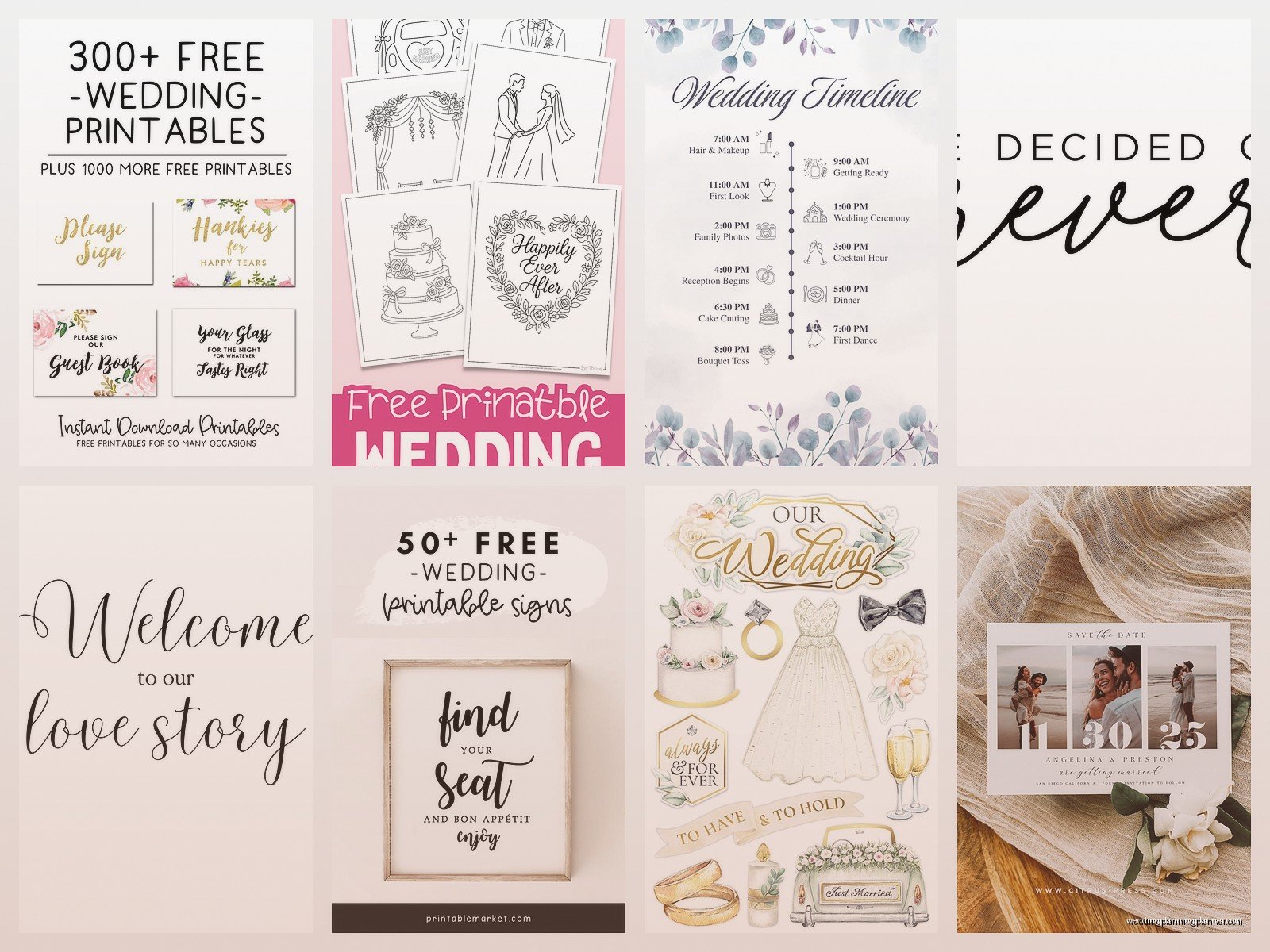
Table numbers and signage you can print whenever since those don’t depend on guest count. I usually recommend getting those done first so you feel accomplished and can check something off your list.
Place cards and escort cards—wait until you have your final seating chart. Which realistically means like two weeks before the wedding, maybe three if you’re super organized. And you’ll probably need to reprint a few because someone will drop out last minute or you’ll realize you spelled a name wrong.
DIY Printing vs Professional Printing
Alright so if you’re printing at home, you need good cardstock, a decent printer (not the $40 one from Walmart), and realistic expectations. Home printing works fine for things like programs if you’re doing simple designs, black and white or minimal color. It does NOT work well for place cards if you’re trying to do calligraphy fonts in colored ink, or anything with bleeds, or anything on dark paper.
I printed my own table numbers once for a small backyard wedding I helped coordinate and it was fine but also my cat knocked over my coffee onto the first batch and I had to start over, so… just saying, factor in disaster time.
Professional printing through places like Catprint, Minted, Vistaprint, or a local print shop gives you way better quality but you gotta plan ahead for shipping times. Minted is great for design help but pricey. Catprint is my go-to for when couples have their own designs ready—super affordable and good quality. Vistaprint is hit or miss honestly, sometimes great, sometimes the colors are off.
Local print shops are clutch if you need something last minute or if you want to see paper samples in person. They cost more but the customer service is usually better and you can pick stuff up same day sometimes.
Paper Weights And Finishes That Actually Matter
Okay this is where people’s eyes glaze over but it matters I promise. Cardstock weight is measured in pounds (in the US) or GSM elsewhere. Regular printer paper is like 20-24 lb. For wedding printouts you want heavier.
Programs: 80 lb cover stock minimum, 100 lb is better. If you go lighter it feels cheap and flimsy.
Place cards and escort cards: 110 lb cardstock or higher. These need to stand up (literally if you’re doing tent cards) and survive being handled.
Menus: Depends on size. Single-page menus should be 100-110 lb. If you’re doing folded menus or menu cards that sit on plates, you can go slightly lighter like 80 lb since they’re not being handled much.
Table numbers: If they’re in frames you can go lighter, but if they’re standing on their own you need thick cardstock, like 130 lb, or mount them on foam board.
Finish matters too—matte, glossy, or uncoated. Matte looks more elegant and sophisticated. Glossy can look cheap unless you’re doing photo-heavy designs. Uncoated is good for anything you want to write on by hand later, like place cards where you might add a personal note.
The Actual List Of What You Might Need
Let me just brain dump everything I’ve ever printed for weddings and you can pick what applies:
- Ceremony programs (or program fans if outdoor summer wedding)
- Welcome sign at ceremony entrance
- Unplugged ceremony sign
- Reserved seating signs
- Processional order signs (if you’re fancy)
- Cocktail hour menu or signature drink signs
- Escort cards or seating chart display
- Place cards (if doing assigned seats at tables)
- Table numbers
- Dinner menus (one per person, one per couple, or one per table—your choice)
- Bar menu sign
- Guest book sign and instructions
- Cards and gifts sign
- Favor table sign and favor tags
- Bathroom basket signs
- Send-off instructions (sparkler send-off, etc.)
- Late night snack signs
- Photo booth instructions
- Memorial table sign and photos
- Instagram hashtag sign
- Timeline of the night sign (some couples do this)
- Thank you cards for vendors (printed ahead to give day-of)
That’s not even everything. Some weddings I’ve worked on had like thirty different signs. It can get out of control real fast.
What You Can Actually Skip
You don’t need programs if your ceremony is short or straightforward. Most guests don’t keep them anyway and honestly half the time they’re left on chairs or used as fans. If you’re doing a traditional ceremony that everyone understands (standard religious service or simple secular ceremony), skip them.
You don’t need place cards if you’re doing open seating at tables, just escort cards to tell people which table. That’s like half the printing right there.
You don’t need menus at every place setting. One per table standing in the center is fine, or just let the catering staff explain dishes. Unless you have complex dietary accommodations that need labeling.
You probably don’t need a sign for every single thing. Your guests can figure out that the table with the book on it is the guest book. They can see the bathroom signs that the venue already has. You don’t need a sign that says “sign our guest book” and another sign explaining how to sign the guest book and another sign… you get it.
Design Consistency (Or Not)
Everything should kinda match your invitation suite but it doesn’t have to be identical. Same color palette, same general vibe, but your programs can be simpler than your invites. Your place cards don’t need all the fancy flourishes.
I worked with a couple in summer 2021 who had this gorgeous letterpress invitation with gold foil and they were stressing about matching that for everything else, which would’ve cost like $3000. We ended up using the same fonts and color scheme but printing everything else digitally and it looked cohesive without breaking the bank. The key is keeping fonts consistent—if your invite used a specific script font for names, use that same font for place cards.
If you’re using templates from Etsy or Minted or wherever, most designers offer matching sets so you can get like fifteen different items all in the same design. Makes life easier.
The Technical Stuff Nobody Tells You
If you’re DIYing designs, work in CMYK color mode, not RGB. RGB is for screens, CMYK is for printing, and colors will look different. That beautiful bright blue on your screen might print purple. Always do a test print.
Bleeds matter if your design goes to the edge of the paper. You need to extend your design 0.125 inches beyond the cut line so there’s no white edge if the cutting is slightly off. Most print shops have templates that show you where the bleed should be.
Fonts—make sure any fonts you use are embedded in your PDF or the print shop might substitute them with something random. Export as PDF, high quality, with fonts embedded. Also make sure you have commercial licenses for any fonts if you’re using a designer who’s printing them.
Resolution needs to be 300 DPI minimum for printing. Your phone photos are usually 72 DPI and will look pixelated if you try to print them large. If you’re using photos on any printouts, make sure they’re high res.
Quantities To Order
Programs: one per person or one per couple, your call. I usually say one per couple saves money and paper and works fine. So if you have 150 guests, order 80-85 programs.
Menus: if you’re doing one per person, order your guest count plus 10-15 extra. If one per couple, half your guest count plus extras. If one per table, just count your tables and add two extras.
Place cards: exactly your guest count. Don’t order extras ahead because you don’t know final count yet, but order them in a size/format where you can easily print more on the same paper if needed.
Table numbers: however many tables you have plus two spares. People knock these over or they get taken as souvenirs sometimes.
Signage: one of each sign plus maybe one extra of your welcome sign if it’s going in multiple locations.
Assembly And Setup
If you’re doing tent-fold place cards or programs, score the fold line first with a bone folder or the back of a butter knife along a ruler. Makes them fold cleanly. Don’t just crease them with your fingers unless you want wonky folds.
Cutting—if you’re cutting things yourself, get a paper trimmer, not scissors. The $25 ones from Amazon work fine for small batches. Or take your printed sheets to a print shop and pay them like $10 to cut everything precisely.
Programs can be hole-punched and tied with ribbon if you want them fancy. Or just folded. Or flat single-sheet. Don’t overthink it.
Assign someone (NOT you) to place all the printouts on the wedding day. Your day-of coordinator or a responsible family member. Everything should be clearly labeled in boxes—”table numbers,” “place cards in alphabetical order,” etc. I once had a wedding where the place cards got shuffled and we spent twenty minutes re-alphabetizing them while guests waited to sit down. Not fun.
Budget Real Talk
You can spend $50 on printouts or $5000, truly. If you’re budget conscious, prioritize. Spend money on the things guests interact with directly—menus and place cards—and go simple on signage. Print signage at Staples for like $3 a poster and put them in nice frames from HomeGoods.
Template route from Etsy: usually $8-30 per template set, then you edit them yourself and print wherever. Total cost maybe $150-300 for everything if you’re printing at a place like Catprint.
Custom designer: you’re looking at $300-800 just for design services, then printing on top of that. Worth it if you want something really unique or if you’re terrible at design software.
Full service through places like Minted: they design and print everything, super easy, but you’ll spend $500-1000 easily for a full set of printouts for 150 guests.
Honestly most couples I work with spend around $400 total on all their printouts beyond invitations. That gets you decent quality without going overboard.
Common Mistakes To Avoid
Not proofreading. I’ve seen place cards with names spelled wrong, menus with typos, signs with incorrect times. Have three people proofread everything before you print.
Printing too early and then having changes. Don’t print place cards until your seating chart is FINAL final. Like, day before the wedding final, because someone will cancel last minute.
Wrong paper size—make sure your printer can handle the paper size you’re designing for. Standard 8.5×11 is safe. Weird custom sizes might not feed through your home printer properly.
Not accounting for weather—if you’re outdoors, your paper printouts might blow away or get rained on or… anyway, have a backup plan. Acrylic signs or weighted bases or bring everything inside.
Over-designing. Sometimes simple is better. Your guests don’t need a decorative border and three different fonts and floral illustrations on every single item. It gets busy and hard to read.
Forgetting about setup logistics. Your ten-foot fabric seating chart is gorgeous but who’s hanging it and how? Your table numbers are perfect but do you have stands for them? Think through the actual physical setup.
Last Minute Printing Emergencies
If you need something printed same-day, FedEx Office and Staples can do basic stuff while you wait. It won’t be the fanciest but it’ll work. I’ve done emergency program printing at FedEx Office more times than I can count.
If your printer dies or you run out of ink, don’t panic—just go to the drugstore and get basic programs printed. Or honestly, skip them. No one will riot if there are no programs.
If you forgot something entirely, sometimes you can handwrite a sign in nice lettering and it looks intentionally rustic. I’m not saying this is ideal but I’ve seen it work.
Keep a few blank sheets of your cardstock and a matching pen at the wedding for emergency place card additions. Someone always brings a plus-one you didn’t account for or a kid that wasn’t RSVPed.
The main thing is just… don’t let printouts stress you out more than they need to. They’re paper. They matter for like six hours and then they’re trash or recycling. Do them nicely but don’t lose sleep over whether the cream cardstock or ivory cardstock is better. Your guests will remember the food and the dancing, not whether your table numbers were printed on 110 lb or 130 lb cardstock, I promise you that much.
