
Planning Guides, Style Guide
Wedding Weekend Itinerary Template: Multi-Day Schedule
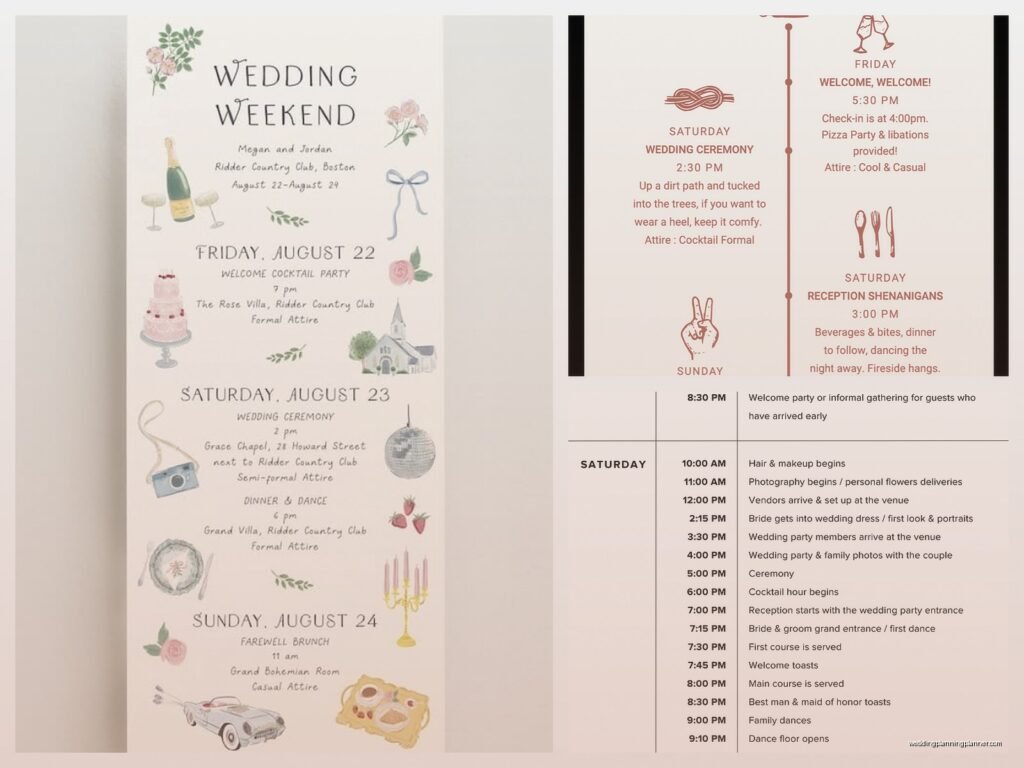
Jul
Okay So Multi-Day Wedding Schedules Are Actually Not That Scary
The biggest thing everyone gets wrong about wedding weekend itineraries is they try to make them look like those Pinterest-perfect timelines with calligraphy headers and color-coded sections and honestly? Your guests just need to know where to be and when. That’s it.
I learned this the hard way in summer 2021 when I had a three-day wedding at a vineyard in Sonoma and the couple insisted on this gorgeous printed itinerary with all these fancy details but zero practical information about parking or what to wear to each event. Guests were calling me at 7am asking if the welcome brunch was casual or dressy and I was like… this is why we can’t have nice things.
Start With Your Anchor Events First
So here’s what you’re gonna do. Open a Google Doc or whatever and just list out the main events first. Don’t worry about formatting yet, just brain dump:
- Rehearsal and rehearsal dinner
- The actual ceremony time
- Reception start and end
- Next-day brunch if you’re doing one
Everything else builds around these. I always tell clients to pick their ceremony time first because that determines literally everything else about the weekend schedule. You’d think this would be obvious but you’d be surprised how many people try to plan backwards from their reception venue’s availability.
Friday Usually Looks Something Like This
Most wedding weekends kick off Friday afternoon or evening. Here’s a basic template I use:
3:00 PM – 6:00 PM: Guest arrival window (if you have hotel room blocks, this is when people check in)
5:00 PM – 6:00 PM: Rehearsal at ceremony venue (wedding party and immediate family only)
7:00 PM – 10:00 PM: Rehearsal dinner or welcome party
The thing that annoys me SO much is when couples don’t specify who’s invited to what on Friday. Like you’ll have random cousins showing up to the rehearsal dinner because they assumed everyone was invited, or worse, people who SHOULD be there staying away because they thought it was private. Just be clear about it.
Actually Let Me Back Up About Welcome Events
You don’t have to do a full rehearsal dinner for everyone. Some couples do a casual welcome party at a brewery or hotel lobby bar instead, and that’s open to all guests. Then the wedding party and family do a smaller dinner separately. Or you do one big thing. There’s no rule here but you gotta communicate it clearly.
I had this client in spring 2023 who did a taco truck welcome party and it was honestly genius because it was casual, people could come and go, and it cost like a fraction of what a seated dinner would’ve been. Plus everyone was relaxed and not stressed about dress codes.
Saturday Is Obviously The Main Event
Okay so Saturday is where you need the most detail because this is when everyone needs to be places at specific times. Here’s a realistic timeline:
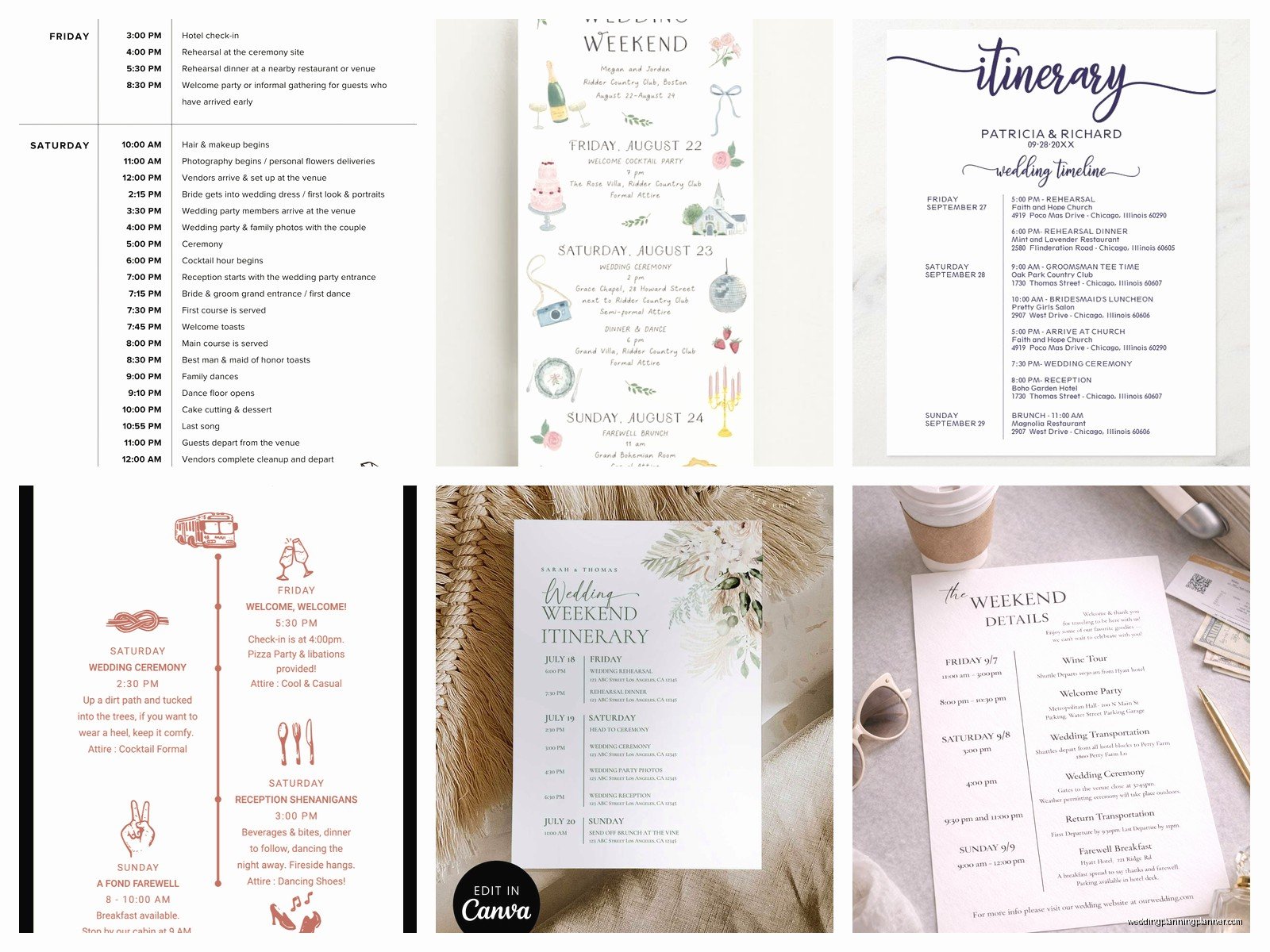
10:00 AM – 12:00 PM: Optional group activity (golf, spa, brunch, whatever) – make it VERY clear this is optional
2:00 PM: Hair and makeup starts for wedding party (you don’t need to put this on the guest itinerary but I include it on the wedding party version)
4:30 PM: Guests should start heading to ceremony venue
5:00 PM: Ceremony begins (always say “begins” not “starts” because it sounds more official and people take it seriously)
5:30 PM: Cocktail hour
6:30 PM: Reception doors open
7:00 PM: Dinner service
11:00 PM: Reception ends (or midnight, or 1am, whatever your venue allows)
11:30 PM: After-party at hotel bar (optional)
The gap between ceremony and reception is where people get confused. If you’re doing photos during cocktail hour and guests are waiting around, tell them that. Give them something to do or somewhere to be. I once had guests just wandering around a golf course for 90 minutes because nobody told them cocktail hour was on the terrace and they thought they were supposed to wait in the parking lot.
Transportation Notes Are Critical
If you’re providing shuttles or transportation, put those times RIGHT next to each event. Like:
Shuttles depart hotel for ceremony venue: 4:15 PM and 4:30 PM
Shuttles return to hotel from reception: 10:30 PM, 11:00 PM, and 11:30 PM
My cat just knocked over my water bottle so now I’m typing this with a wet notebook next to me but anyway… transportation timing is something people always underestimate. Build in extra time because someone’s always late.
Sunday Is Usually More Relaxed But Still Needs Structure
The farewell brunch or breakfast is typically way more casual but you still need to give people enough info:
10:00 AM – 12:00 PM: Farewell brunch at [location]
Dress code: Casual (seriously, say this or people will show up in cocktail attire again)
Note: This is a come-and-go event, no need to stay the whole time if you have travel plans
Some couples skip Sunday entirely and honestly that’s fine too. Not every wedding weekend needs a farewell event, especially if people are traveling from far away and need to catch flights.
Dress Code For Each Event Or People Will Panic
I cannot stress this enough. For EVERY single event on your itinerary, include what people should wear. Even if it seems obvious to you, it’s not obvious to your guests. Here’s what I usually write:
- Friday welcome party: Casual (jeans totally fine)
- Saturday ceremony and reception: Cocktail attire (suits and party dresses)
- Sunday brunch: Whatever you want, seriously, show up in your travel clothes
The number of panicked texts I get about dress codes is… I mean it’s probably 40% of all wedding weekend questions.
Weather Backup Plans Need To Be Mentioned
If your ceremony is outdoors, just add one line that says “Rain location: [wherever]” so people know you have a plan. You don’t need to elaborate or get into the details of your weather anxiety, just acknowledge it exists.
The Actual Format Of Your Itinerary
Okay so now that you have all the info, how do you actually present this to people? You’ve got a few options:
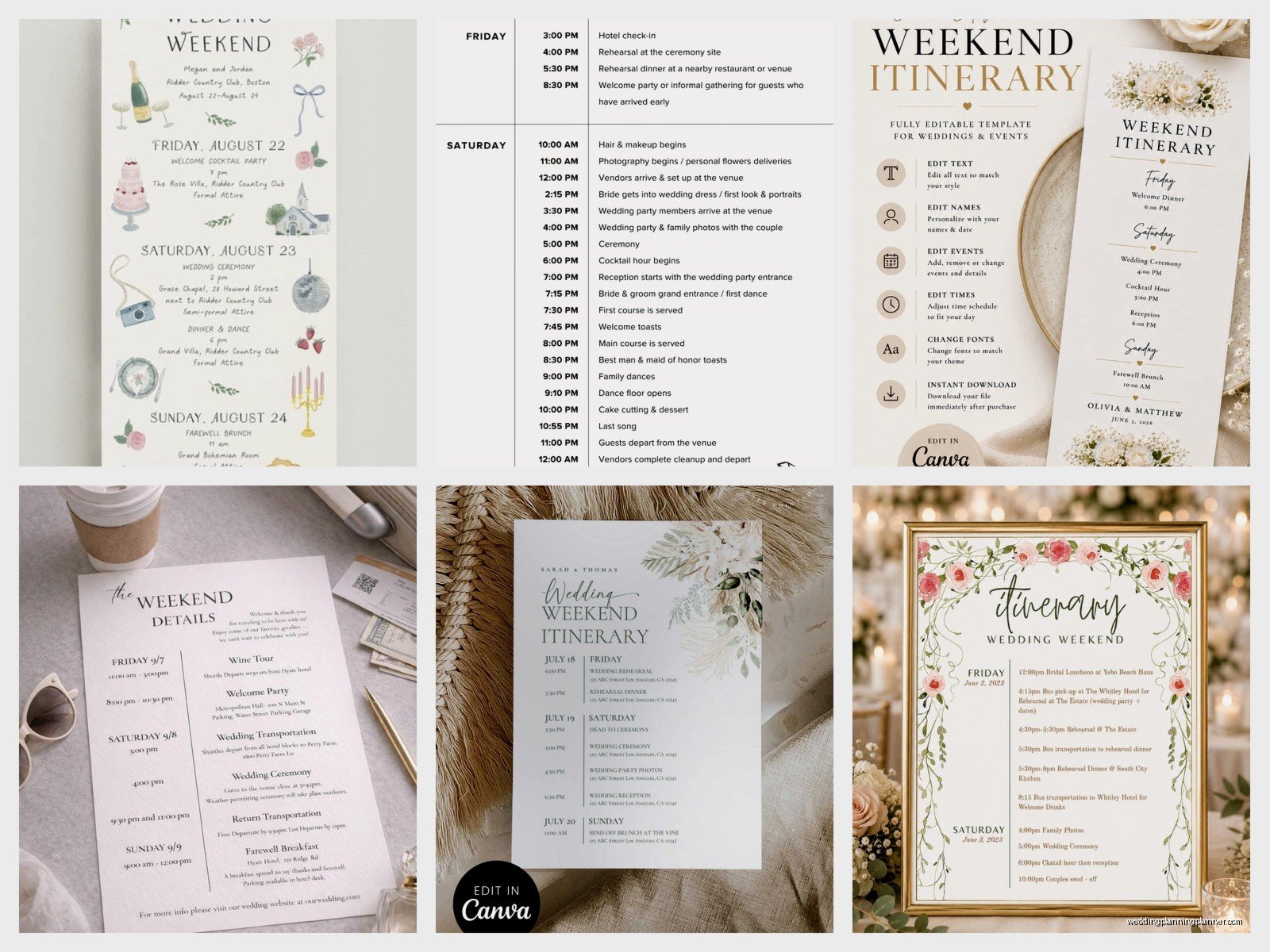
Printed cards in welcome bags: Classic, works well, people can stick it in their pocket. Print these on cardstock, nothing fancy needed. I use Vistaprint usually because it’s cheap and fast.
Wedding website: Put the full schedule on your website under an “Itinerary” or “Schedule” tab. This is where you can include more detail than the printed version.
Group text or email: For your wedding party, send them a more detailed version with call times and specific responsibilities.
I usually recommend doing both a printed version and website version because some people are phone people and some people are paper people and you kinda just gotta accept that everyone’s different.
Things To Actually Include In The Details
Under each event time, add these bits of info:
- Full address (not just venue name)
- Parking information or lot location
- Any entry instructions (check in at front desk, walk around to garden entrance, whatever)
- Who’s hosting (like “Hosted by the bride’s parents” for rehearsal dinner)
- Food situation (will there be dinner? just appetizers? full bar or beer and wine?)
That last one might seem weird but I’ve seen people skip the welcome party because they assumed it was just drinks and they wanted to get dinner, but actually there was a full buffet. Communication!
Free Time Is Important To Schedule Too
Don’t pack every single hour with planned activities. People need time to nap, get ready, or just hang out. When I’m building these itineraries I actually block out “free time” so couples can see where the gaps are:
Saturday 12:00 PM – 2:00 PM: Free time (get ready, relax, grab lunch on your own)
This also manages expectations so guests don’t think they’re supposed to be doing something official during those hours.
Special Schedules For Different Groups
You’re probably gonna need like three versions of this itinerary actually:
Guest version: Just the public events and relevant details
Wedding party version: Everything plus hair/makeup times, photo times, where to meet for pre-ceremony stuff
Family version: Guest version plus any family-specific things like when immediate family should arrive for photos or if there’s a private family moment before the ceremony
I keep all three versions in the same Google Doc with different sections so I don’t lose track of what I’ve told who.
Maps And Visual Stuff Can Help
If your venues are confusing to find or you’re at a big resort property, include a simple map. Doesn’t have to be professionally designed, just a screenshot from Google Maps with some arrows drawn on it works fine. I use Canva for this sometimes or honestly just my iPhone markup tool.
For resort weddings especially, mark where the ceremony space is, where cocktail hour moves to, where the reception room is… because those big properties are mazes and your 80-year-old grandmother is not gonna figure it out from the generic resort map.
Contact Information At The Bottom
Always put day-of contact numbers at the bottom of the itinerary:
- Wedding planner cell: [number]
- Bride’s phone: [number] (or maid of honor’s if bride doesn’t want to be bothered)
- Groom’s phone: [number] (or best man’s)
- Venue main line: [number]
This way if someone’s lost or confused they know who to call and they’re not just guessing.
Timing Buffer Zones Are Your Friend
Build in 15-30 minute buffers between events, especially if people need to travel between locations. Your ceremony might end at 5:30 but don’t say cocktail hour starts at 5:30, say it starts at 5:45 or 6:00. This gives you breathing room for photos running long or traffic or whatever chaos inevitably happens.
I learned this from a wedding where we scheduled everything back-to-back with zero buffer and the ceremony ran 20 minutes late because the groom’s grandmother needed extra time getting down the aisle and then EVERYTHING was delayed and people were stressed and it was just… yeah. Buffer zones.
Optional Events Should Really Look Optional
When you list something as optional, make it LOOK optional on the itinerary. I usually put optional things in italics or add “(optional)” in the same line as the event name, not buried in the description where people might miss it:
10:00 AM – Group Yoga (optional)
Because otherwise people feel obligated to show up to everything and then they’re exhausted and cranky by the actual wedding.
Send The Itinerary Out At The Right Time
Don’t send this too early or people will lose it. I usually recommend:
- Post it on your wedding website 4-6 weeks before
- Email it directly to all guests 2 weeks before
- Include printed copies in welcome bags when people arrive
- Send a reminder text to wedding party the week of with their specific schedule
If you send it months in advance, people will forget or lose the email or think the details might change anyway so they don’t pay attention.
The other thing I do is create a shared Google Calendar with all the events and send people the link so they can add it to their phones. Some people love this, some people ignore it, but it’s a nice option to offer.
What About Destination Weddings
If you’re doing a destination wedding, your itinerary needs even MORE detail because people don’t know the area. Include:
- Recommended restaurants for meals you’re not hosting
- Local activities people can do during free time
- Transportation tips (do they need to rent a car? is Uber available? are you providing shuttles everywhere?)
- Any cultural notes or dress code considerations for the location
I had a destination wedding in Mexico once where we forgot to tell people the welcome beach party was literally on the beach and half the guests showed up in regular shoes and then couldn’t walk on the sand comfortably. Small detail, big impact on people’s experience.
Also for destination weddings, think about how you’re gonna handle people arriving at different times throughout Thursday and Friday. You can’t schedule anything mandatory until Friday evening usually because people are coming in on different flights all day.