
Planning Guides, Style Guide
Wedding Budget: Complete Cost Planning Guide
Apr
Okay so first things first – figure out what you actually HAVE
Before you start pinning gorgeous centerpieces or falling in love with that vineyard venue, you gotta sit down and have the money talk. I mean really have it. Not the “oh we’ll figure it out” conversation but the actual numbers conversation. In spring 2023 I had this couple who kept saying they had a $30K budget but turned out they meant that’s what they WISHED they had, not what they actually had saved or could realistically spend. We were three months into planning before this came out and it was… not fun.
So grab your partner, maybe a glass of wine, and list out every possible funding source. Your savings account. That amount your parents mentioned they’d contribute (get the actual number, not “we’ll help out”). His parents’ contribution if they’re offering. Are you gonna use credit cards? Please be careful with that one. Do you have investments you’re willing to cash out? A rich aunt who loves weddings?
Write down the REAL numbers. Not aspirational numbers. Real ones.
The percentage breakdown that actually works in real life
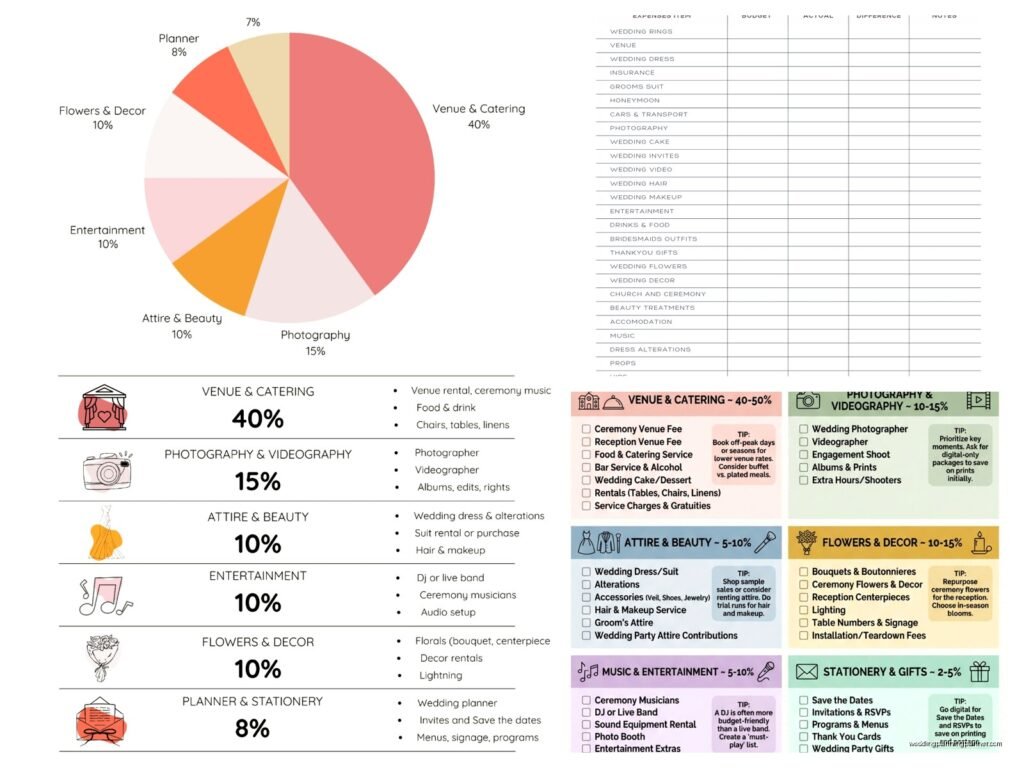
Alright so there’s this traditional breakdown that gets thrown around, and honestly it’s kinda helpful as a starting point even though every wedding is different. Here’s roughly how costs typically shake out:
- Venue + catering: 45-50% (yeah, it’s that much)
- Photography + videography: 10-15%
- Flowers + decor: 8-10%
- Music/entertainment: 8-10%
- Attire (dress, suit, accessories): 8-10%
- Invitations + stationery: 2-3%
- Wedding planner: 10-15% if you’re hiring one
- Everything else (favors, transportation, misc): 5-8%
But here’s the thing – you might care way more about photography than flowers, or you might be having a backyard wedding where venue cost is zero but you’re spending more on rentals. The percentages are just a guide, not rules. I’ve planned $15K weddings and $150K weddings and the couples who were happiest were the ones who spent more on what mattered to THEM specifically.
Build your actual budget spreadsheet
I’m gonna be honest, you need a spreadsheet. I know some people hate them but there’s no way around this. Google Sheets is free and you can both access it. Set up columns for: category, vendor name, estimated cost, actual cost, deposit paid, amount still owed, and due date.
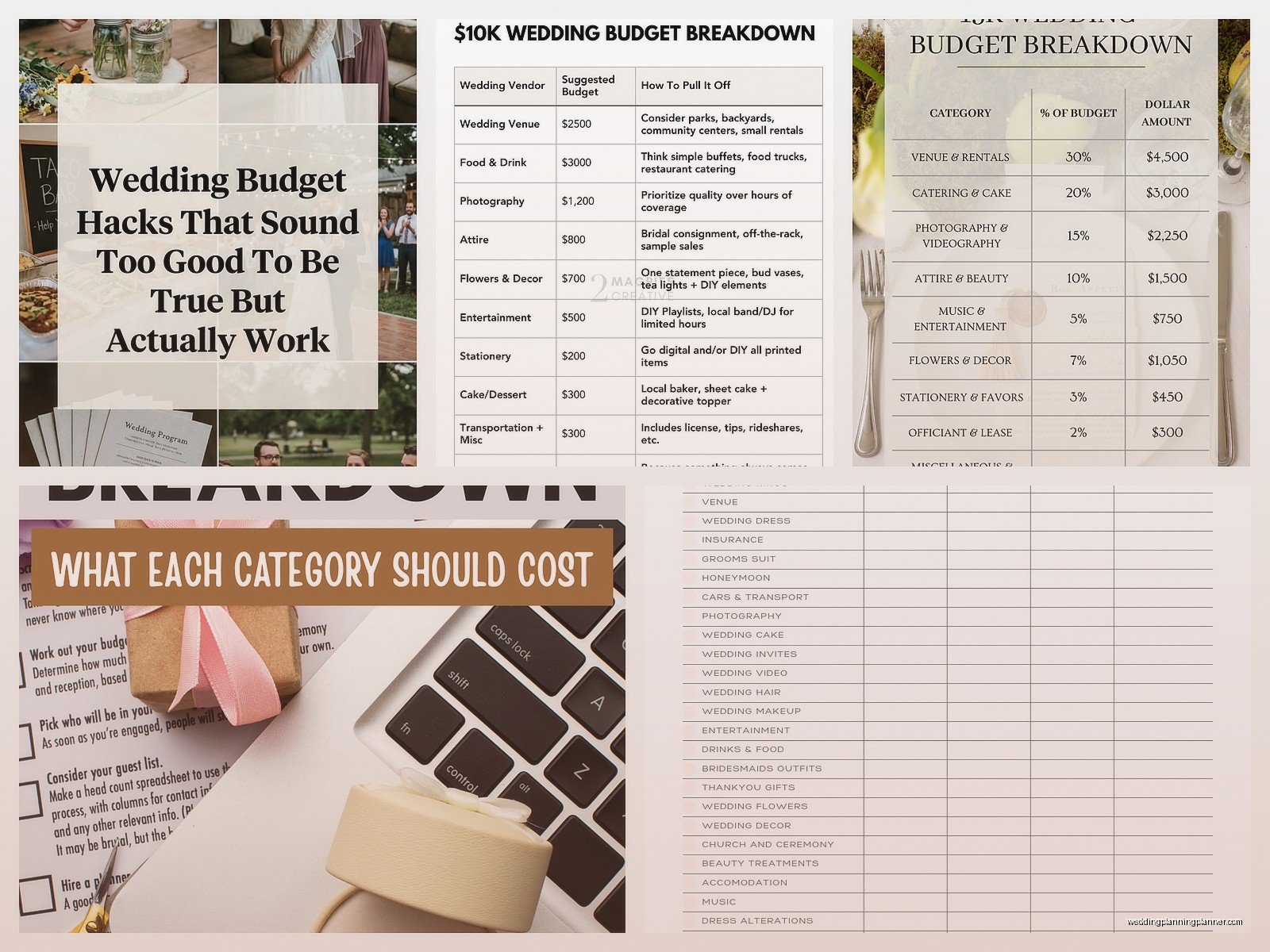
Start filling in the estimated costs by researching vendors in your area. Don’t just guess. Actually look at websites, send inquiry emails, make some calls. Wedding costs vary SO much by location. What costs $3K in rural Ohio might cost $8K in Brooklyn.
The venue thing that nobody tells you upfront
Your venue choice is gonna dictate like 80% of your other costs, which is something that really annoyed me early in my career because venues don’t always make this clear. A blank-slate venue (barn, warehouse, tent) seems cheaper initially but then you’re renting literally everything. Tables, chairs, linens, plates, glasses, lighting, bathrooms sometimes, climate control, generators… it adds up SO fast.
An all-inclusive venue or hotel costs more upfront but includes tables, chairs, linens, basic lighting, bathrooms, parking, liability insurance, and sometimes even a coordinator. Do the actual math on both options before you fall in love with that rustic barn.
Also venues have hidden costs. Is there a required insurance policy? Vendor fees? Overtime charges? Cleaning fees? Parking fees? My cat knocked over my coffee while I was typing this and I… anyway, make sure you ask about ALL possible fees during your tour.
Catering is where your money goes
Food and drink will eat up (ha) most of your venue budget. The national average is like $70-100 per person but that varies wildly. In major cities you’re looking at $150-300+ per person. That includes food, beverages, service staff, and rentals if needed.
Here’s what affects catering cost:
- Service style – buffet is cheapest, plated dinner is mid-range, stations or family-style can go either way, passed appetizers for cocktail hour adds cost
- Bar situation – open bar costs way more than beer and wine only, top-shelf vs house liquor, length of bar service
- Time of day – brunch or lunch weddings are cheaper than dinner
- Menu complexity – chicken costs less than filet mignon (obviously), but also simple preparations cost less than fancy ones
- Dietary restrictions – having lots of special meals adds cost
Get itemized quotes from at least three caterers. Make sure they’re quoting the same thing – some include service staff and rentals, others don’t.
Photography is not where you should cheap out but also
Look, I’ve seen couples regret skimping on photography more than almost anything else. Your flowers will die, you’ll maybe wear your dress once, but you’ll have those photos forever. That said, you don’t necessarily need the $10K photographer if your budget is $25K total.
Most professional wedding photographers charge $2,500-6,000 for full-day coverage in most markets. What you’re paying for: their skill obviously, but also years of experience shooting in difficult lighting, managing family dynamics, knowing when to be invisible vs directive, editing time (SO much editing time), professional equipment and backups, liability insurance, and the ability to stay calm when the timeline goes sideways.
Ways to save without sacrificing too much: book fewer hours (do you really need getting-ready photos?), skip the second shooter, get digital files only without an album, or find a talented newer photographer building their portfolio.
The stationery budget reality check
Since I consult on stationery I have opinions here. You can spend $500 or $5,000 on invitations and everything in between. For a typical 100-150 person wedding, plan on $400-800 for decent quality printed invitations with envelopes. That’s usually save-the-dates, invitations, and maybe programs or menus.
Save money by: doing digital save-the-dates, skipping envelope liners and fancy extras, using online RSVPs instead of reply cards (saves postage both ways), or going fully digital for everything except the invitation itself. Printing your own from a template can work but factor in your time and sanity – it’s more work than you think.
Flowers and decor where everyone overspends
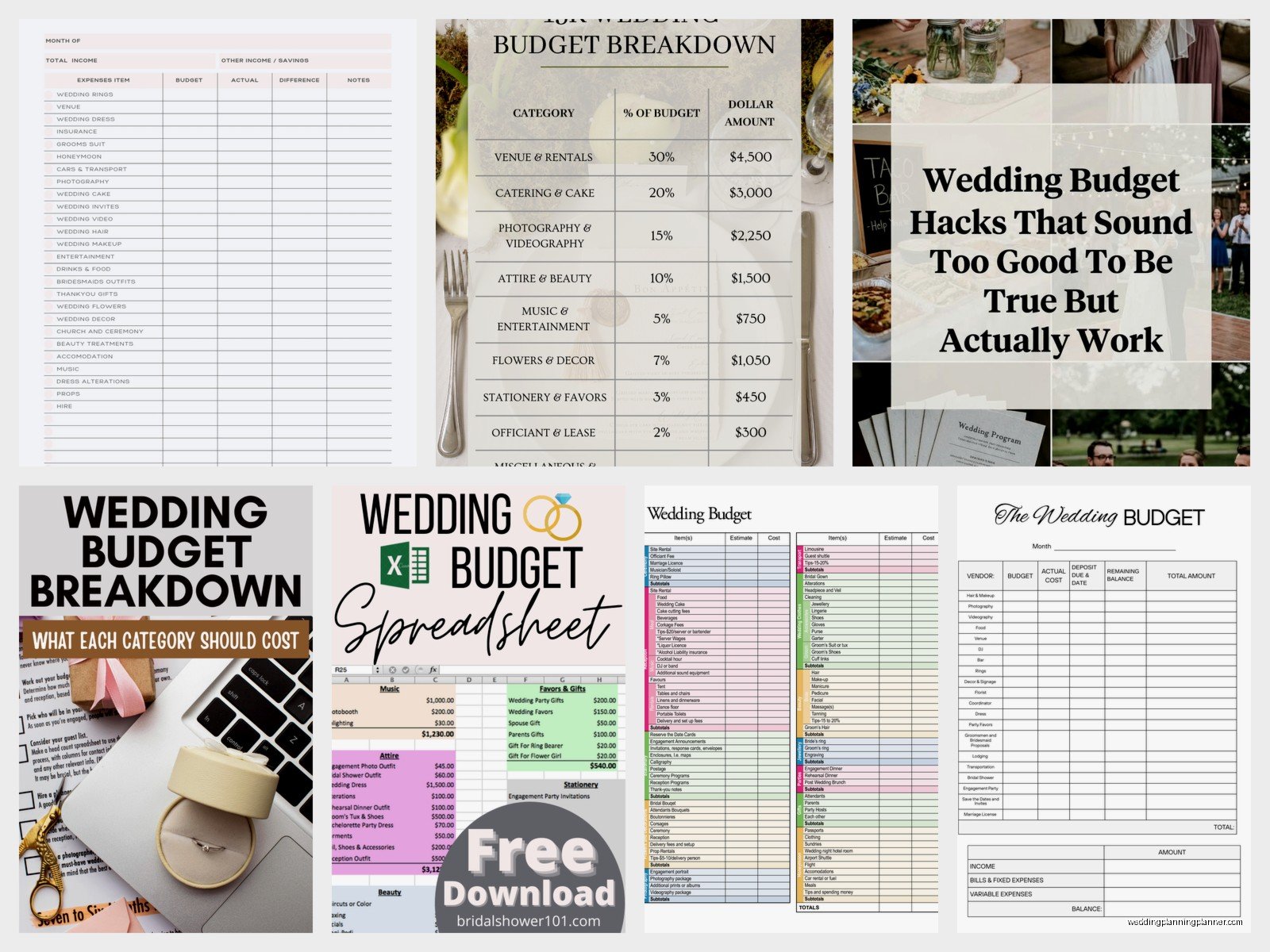
This is where budgets explode because Pinterest makes everything look easy and affordable when it’s absolutely not. A single bridal bouquet from a professional florist runs $150-350. Bridesmaids bouquets are $75-150 each. Boutonnieres are $15-25 each. Centerpieces range from $75-300+ each depending on size and flowers used.
For a 150-person wedding, you’re easily looking at $3,000-5,000 for full floral service. That’s bouquets, ceremony arrangements, and reception centerpieces. Lots of couples are shocked by this.
Ways to reduce floral costs: use more greenery and fewer flowers, choose seasonal and local blooms, have smaller arrangements, do bud vases instead of big centerpieces, DIY simple greenery garlands (though DIY florals the day before your wedding is stressful, trust me), or supplement with non-floral decor like candles, lanterns, or fabric.
Summer 2021 was wild because everyone was getting married after COVID postponements and flower costs went absolutely insane. I had brides crying over peony prices. It was rough.
Music and entertainment
A professional DJ runs $1,000-2,500 typically. A live band is $3,000-10,000+ depending on size and experience. If music is really important to you, allocate more here. If you mostly just want background music and a few dance songs, a DJ is fine.
Ceremony musicians (string quartet, guitarist, etc.) are usually $300-800 for 1-2 hours. Cocktail hour music if you want it separate from reception is another $300-600.
Your attire doesn’t have to cost a fortune but it might
Wedding dresses range from like $200 (online fast fashion) to $20,000+ (designer boutique). Most brides I work with spend $1,500-3,000 on their dress, then alterations are another $200-600, and accessories (veil, shoes, jewelry, undergarments) add $200-500.
Grooms usually spend $200-800 on a suit or tux rental, or $500-1,500 if buying. Shoes and accessories are another $100-300.
Don’t forget hair and makeup – $150-400 for bridal hair and makeup trial plus wedding day. If you’re paying for bridesmaids it adds up quick at $75-150 per person.
The stuff people forget to budget for
This is where couples get into trouble. They budget for the big things but forget:
- Marriage license ($20-100 depending on state)
- Officiant fee ($200-500)
- Tips for vendors (usually 15-20% for catering staff, $50-200 each for other vendors)
- Alterations (mentioned above but people forget)
- Wedding night hotel ($150-500)
- Transportation (limo/car service $400-1,000)
- Rehearsal dinner (if you’re hosting, this can be $1,000-5,000)
- Welcome bags if you’re doing them
- Postage (stamps are expensive when you’re mailing 150 invitations)
- Marriage prep classes if your church requires them
- Engagement photos if included with photography package
- Guest book and other small decor items
- Favor supplies if DIYing
- Umbrellas or shawls for guests if outdoor wedding
- Extra fees for vendor meals
I usually tell couples to add a 10% buffer to their budget for stuff they forgot or unexpected costs. Someone’s gonna need emergency alterations, or you’ll decide last minute you want sparklers, or whatever.
How to actually track spending as you go
Update your spreadsheet every single time you put down a deposit or make a payment. I know it’s boring but you need to know where you stand at all times. I’ve had couples show up six weeks before their wedding thinking they had $5K left in their budget when they actually had $500 because they weren’t tracking properly.
Keep all contracts and receipts in one place – physical folder or digital, whatever works for you. Take photos of paper contracts as backup because I once had a couple whose dog ate their… I’m not even kidding, their venue contract got chewed up by their puppy and the venue was being weird about sending another copy.
When you’re over budget which you probably will be
Most couples go over their initial budget estimate by 10-30%. It just happens. So you either need to increase your budget (can you save more? can family contribute more?) or cut things.
Easiest things to cut or reduce: favors (honestly guests don’t care), elaborate invitations (go simpler), expensive flowers (use more greenery), open bar all night (do beer and wine only or close the bar during dinner), extra decor items, photo booth, videographer if you’re on the fence, welcome bags, fancy linens.
Harder to cut but possible: reduce guest count (this saves SO much money), choose a less expensive venue, have a brunch or lunch wedding instead of dinner, get married off-season, pick a Friday or Sunday instead of Saturday.
Don’t cut: photography (you’ll regret it), food quality (hungry guests are unhappy guests), liability insurance if required.
The order you should book things
This affects your budget because you’re putting down deposits at different times. Book in this order generally:
Venue first – because everything else depends on your date and location being set. Most venues want 25-50% deposit.
Then photographer, videographer, band/DJ, and planner if using one – because good ones book up 12-18 months out for peak season. Deposits are usually 25-50%.
Then caterer if separate from venue – usually 25-50% deposit.
Then florist, hair/makeup, transportation – these book up but not as far in advance. Deposits vary wildly, sometimes 50%, sometimes nothing until closer to wedding.
Then attire – because you need time for ordering and alterations but you don’t wanna buy your dress two years out and have your style or body change. Dresses usually require 50% down.
Then stationery, cake, rentals if needed – these are closer to wedding date. Depends on vendor.
The reason this matters for budgeting is you need to have your deposit money available when booking. If you’re booking venue, photographer, and planner all in the same month, you might need $8K-10K in deposits right then.
Payment schedules and final payments
Most vendors want final payment 1-2 weeks before your wedding, some want it the week of, a few want it day-of. Mark all these due dates in your spreadsheet and calendar because missing a payment deadline can mean a vendor dropping you, and good luck finding a replacement florist one week before your wedding.
Some vendors let you make monthly payments between deposit and final payment, which helps with cash flow. Always ask if that’s an option.
The credit card points strategy if you’re organized
If you’re paying for everything anyway and you’re financially responsible, putting wedding expenses on a rewards credit card can get you cash back or travel points. Some couples fully fund their honeymoon this way. But ONLY do this if you’re paying off the balance each month or paying it off from savings immediately. Wedding debt is depressing and not worth the 2% cash back.
Get a card with a big signup bonus if you’re gonna do this – the kind where you spend $5K in three months and get like 50,000 points or whatever. You’ll hit that spending requirement easily with wedding deposits.