Planning Guides, Style Guide
Wedding Table Plan: Seating Chart Layout Guide
Apr
Starting With The Basics Because Tables Are More Complicated Than You Think
Okay so the biggest mistake I see couples make is waiting until like three weeks before the wedding to tackle the seating chart and then they’re panicking because Aunt Margaret can’t sit near Uncle Tom after the Christmas incident and honestly I’ve been there. Summer 2021 I had this couple who literally texted me at 11pm two weeks out asking if we could “just wing it” and I was like absolutely not, we cannot wing seating 180 people.
First thing you gotta do is figure out your table shapes and how many people fit at each one. Round tables are standard – you’ll see 60-inch rounds that seat 8-10 people comfortably, or 72-inch rounds that fit 10-12. Rectangular tables (usually 8ft long) seat about 8-10 people depending on whether you put people at the ends or not. I personally think rounds are easier for conversation but rectangles look gorgeous in photos and can create really interesting geometric layouts.
The Actual Numbers Game
You need your final headcount before you can do anything real with the seating chart. Not your “we think probably around 150” count – your actual RSVP count. I tell all my couples to set their RSVP deadline at least 3-4 weeks before the wedding because you WILL have stragglers who don’t respond and you’ll need time to hunt them down.
Once you have numbers, work with your venue to figure out the floor plan. Most venues have standard layouts they work with, and your coordinator can usually send you a diagram showing where tables can go, where the dance floor is, where the head table or sweetheart table sits. This is critical because you can’t just randomly decide table 7 should be in the back corner if that’s where the… wait actually you need to know about traffic flow first.
Traffic Flow And Why It Matters More Than You Think
People need to be able to walk around without bumping into chairs constantly. You need clear paths to the bathrooms, to the bar (this is crucial), to the dance floor, and to the exits. I once had a layout where we accidentally blocked the path to the bathrooms with three tables and didn’t realize until setup day and it was a nightmare trying to shift everything.
Leave at least 3-4 feet between tables for people to walk comfortably. If someone’s chair is pushed back and someone else is walking by, they shouldn’t be doing some awkward sideways shuffle. Also consider where servers will be coming from – they need wider paths if they’re carrying trays.
Who Sits Where And How Not To Start Family Drama
Alright so here’s where it gets messy. You’re gonna want to start with your VIPs – parents, grandparents, wedding party if they’re not at a head table. These people should have prime real estate, meaning close to you, good view of everything, near the dance floor but not so close they’re getting bumped by dancers all night.
The traditional setup is having parents at tables near the head table. Some couples do a parents table with both sets of parents together, which works great if everyone gets along. If there’s divorce situations or tension, split them up. Nobody’s gonna judge you for putting divorced parents at separate tables – in fact, they’ll probably thank you for it.
The Wedding Party Situation
You’ve got options here. Head table with just you and your wedding party (partners sit at other tables), head table with wedding party AND their partners, a sweetheart table with just the couple, or no head table at all and you sit with your wedding party at regular tables.
I’m gonna be honest, the thing that annoys me is when couples insist on a massive head table that seats 20 people because they have 8 bridesmaids and 8 groomsmen all with partners, and then nobody at that table can actually talk to each other because it’s too long. Plus the people on the ends are basically at a completely different table. If you want a head table that big, consider a U-shape or something more creative.
Most couples now are doing sweetheart tables and I think that’s smart. You get time just the two of you, you can actually eat your food, and your wedding party can sit with their partners and friends and have more fun honestly.
Grouping Guests By Connection
This is where you need a spreadsheet or one of those online seating chart tools. List every guest and note their connection – bride’s college friends, groom’s work colleagues, bride’s family, couple friends, etc.
Try to seat people with others they know OR with people they’d have something in common with. Your cousin who’s really into hiking and your coworker who does trail running every weekend? Put them together. Your college roommates? Obviously same table. The random assortment of people who don’t know anyone? This is your challenge table and you need to think strategically about personalities.
I had this wedding in spring 2023 where the bride was really worried about her single friends feeling awkward, so we created this table of all single guests who were around the same age and into similar stuff, and apparently they all ended up exchanging Instagrams and some of them still hang out, so like… sometimes the random groupings work out.
The Technical Stuff Nobody Tells You About
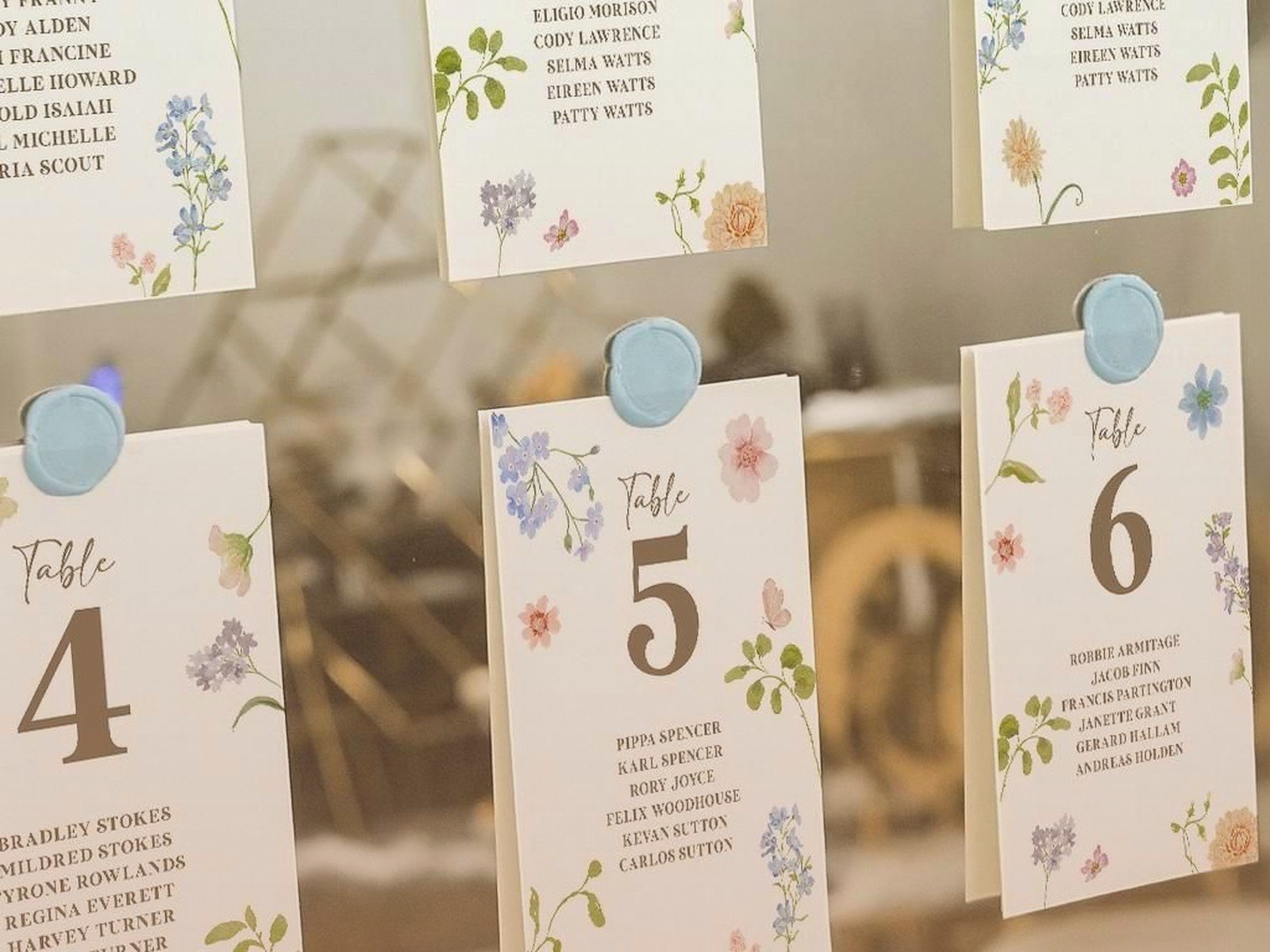
Table numbers or table names? Both work but numbers are easier for guests to find quickly. If you do names (like cities you’ve visited or favorite books), make sure they’re clearly visible and maybe have a master list at the entrance showing which table is which.
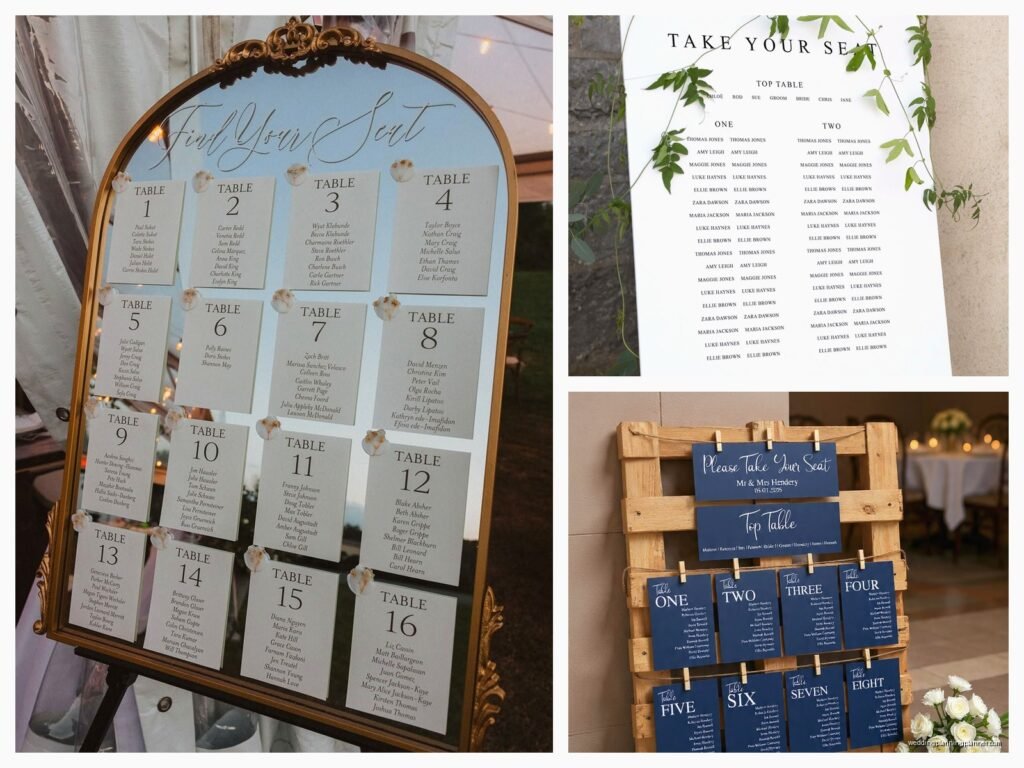
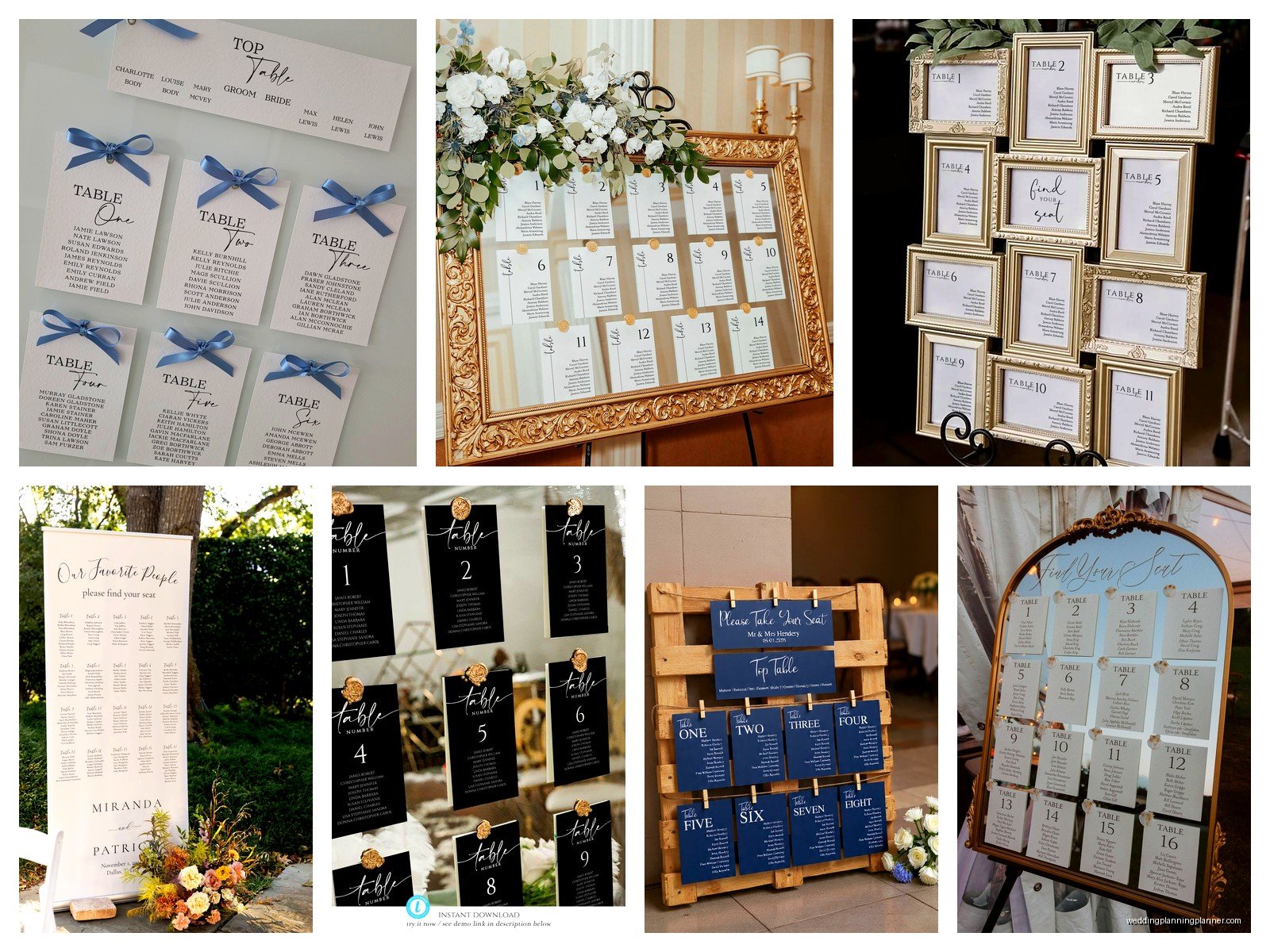
Speaking of which, you need an escort card display or seating chart display at the entrance to your reception. Escort cards are individual cards for each guest telling them their table number. A seating chart is one big display listing all guests alphabetically with their table assignments. I prefer escort cards because guests don’t all crowd around one sign trying to find their name, but seating charts look really pretty and are having a moment right now.
The Plus One Problem
If someone has a plus one, you need to know that person’s name for the seating chart. “Jessica Smith and Guest” is fine for the escort card, but ideally you’d get the guest’s actual name. It’s just more personal and also makes your job easier when you’re trying to balance tables.
Don’t split up couples obviously. I mean I shouldn’t have to say that but I’ve seen seating charts where someone put a married couple at different tables because they were trying to balance numbers and just… nah. Don’t do that.
Kids Table Or Nah
If you have a bunch of kids coming, a kids table can be great. Stock it with activities, crayons, maybe some special kid-friendly food. Seat it near their parents so parents can keep an eye on them but far enough away that if the kids get loud and rowdy it’s not disrupting everyone.
Some parents prefer having their kids right with them at their table, which is totally fine too. Just ask beforehand what they’d prefer. And babies in high chairs don’t count toward your seat count at tables – they can squeeze in anywhere.
The Actual Process Of Building Your Chart
Start with a list of all your tables and how many people each seats. Then start plugging in your VIPs and work outward. I usually do it in this order: couple’s table, parents, grandparents, wedding party, close family, close friends, extended family, coworkers and acquaintances.
You’re gonna move people around like a million times. This is normal. I use those online tools where you can drag and drop names between tables because doing it on paper made me wanna scream. AllSeated and Wedding Wire both have free seating chart tools that work pretty well.
Keep a running list of people who absolutely cannot sit together and people who definitely should sit together. Check it every time you make a change. My cat literally walked across my keyboard once and messed up an entire seating chart I’d been working on for an hour and I hadn’t saved it and I just… anyway, save your work constantly.
Balancing The Tables
Try to keep tables relatively balanced in terms of energy and age. Don’t put all the quiet introverted people at one table and all the loud extroverts at another – mix it up. Also consider mixing ages when it makes sense. Your cool aunt who’s 50 might get along great with your 30-something friends.
That said, it’s okay to have a “young people table” or a “college friends table” where everyone’s around the same age and stage of life. Sometimes those are the most fun tables at the wedding.
If you have an odd number of guests, it’s better to have one table with slightly fewer people than to squeeze too many people at other tables. A table of 7 at a round that seats 10 is totally fine. A table of 11 at a round that seats 10 is uncomfortable for everyone.
Dealing With Difficult Situations
Divorced parents who hate each other? Separate tables, ideally not directly in each other’s line of sight. Family members who aren’t speaking? Same deal. That weird friend group where two people had a falling out but they’re both invited? Put them at opposite ends of the table or just different tables entirely.
You don’t owe anyone an explanation for where they’re seated. If someone asks why they’re not at a “better” table (yes, this happens), just say you tried to seat people with others they’d enjoy talking to. Most people won’t ask though.
The Vendor Table Question
Your photographer, DJ, videographer, coordinator – they need to eat. Some couples provide a separate vendor meal area, others incorporate vendors into the regular seating. If your vendors are people you’re close with, it’s nice to give them regular guest seats. Otherwise, a vendor table in a convenient location works fine. Make sure it’s near outlets if possible and has easy access to their equipment.
Final Details Before You Submit Everything
Triple check your spelling on names. I cannot stress this enough. People get really weird about their names being spelled wrong on escort cards. Also double check table numbers – if you have tables 1-15, make sure you didn’t accidentally assign someone to table 16.
Give your final seating chart to your venue coordinator, your caterer, and keep a copy for yourself. Bring a printed copy to the wedding day in case of last-minute changes or questions.
Last-minute RSVPs or cancellations will happen. Have a plan for adjusting on the fly. Usually you can just remove place settings or squeeze in one more person without redoing the entire chart.
And honestly? Some people will move themselves around during the reception anyway. They’ll see a friend at another table and just migrate over. It’s fine. Your carefully planned seating chart is a starting point, not a prison. Once cocktail hour ends and people find their tables, they’re gonna do what they’re gonna do, and that’s kinda the beauty of it – everyone ends up where they’re happiest