
Planning Guides, Style Guide
Wedding Invitations and Save the Dates: Complete Timeline
Apr
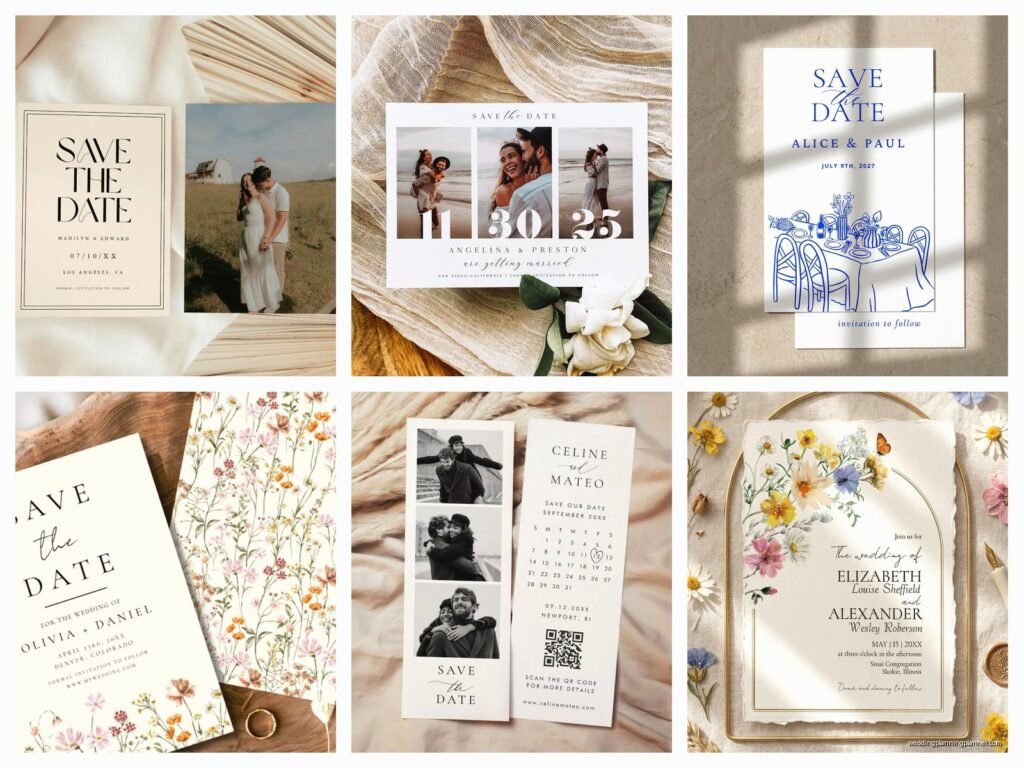
Okay So Here’s The Deal With Save The Dates
You need to send save the dates like 6-8 months before your wedding. That’s the standard timeline everyone tells you, but honestly? I had this couple in spring 2023 who sent theirs out 10 months early because half their guests were traveling from overseas and it worked perfectly. So if you’ve got a destination wedding or like, a holiday weekend situation, go earlier. Nobody’s gonna be mad about having more time to plan.
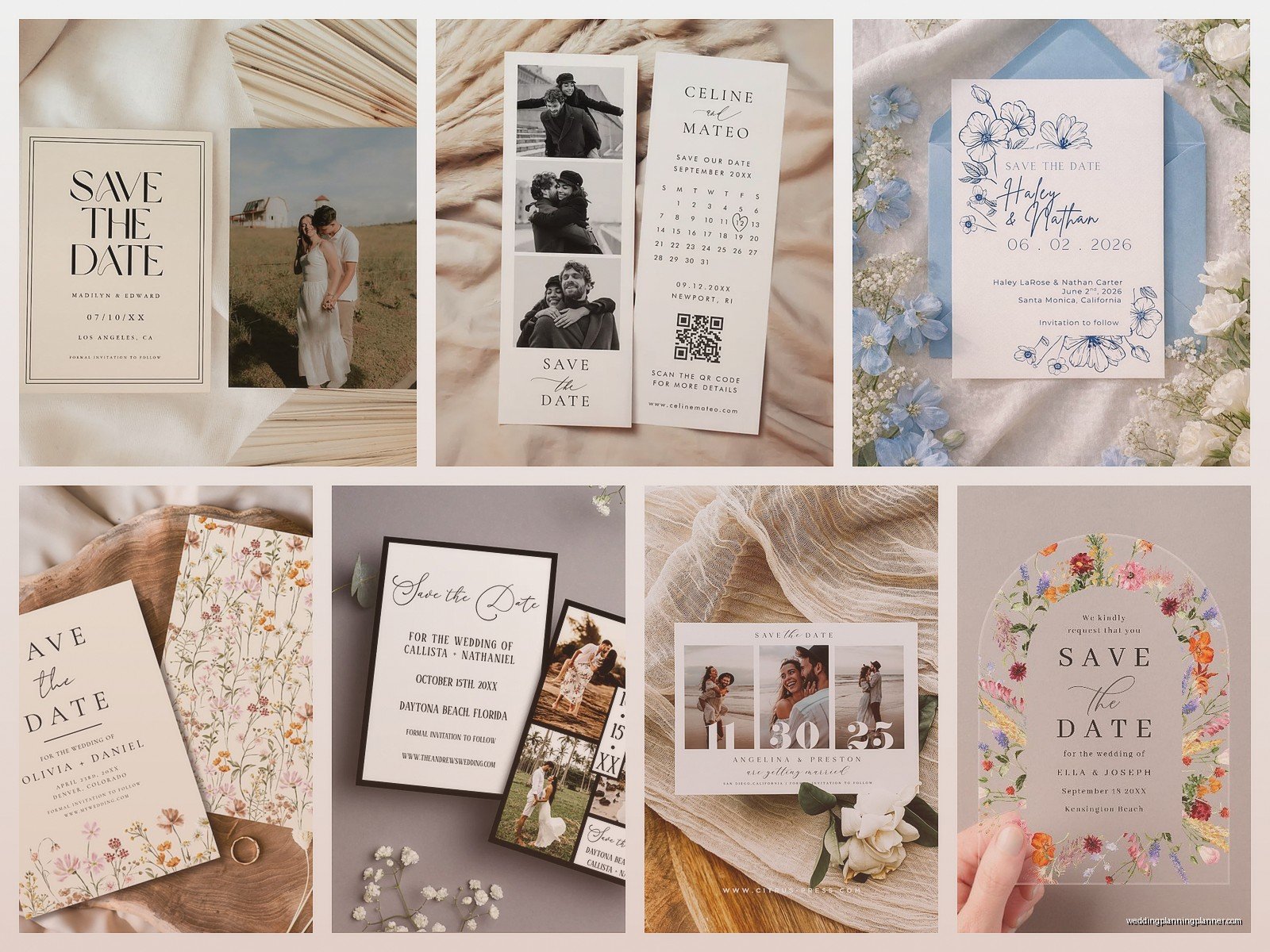
The whole point of a save the date is literally just to get on people’s calendars before they book that ski trip or say yes to being in their cousin’s wedding the same weekend. You don’t need to include a ton of info. Just the date, the city, and your names. Maybe your wedding website if you’ve got one set up already but that’s kinda optional at this stage.
What Actually Goes On A Save The Date
- Your names (obviously)
- The wedding date
- The city and state
- Your wedding website URL if you have one
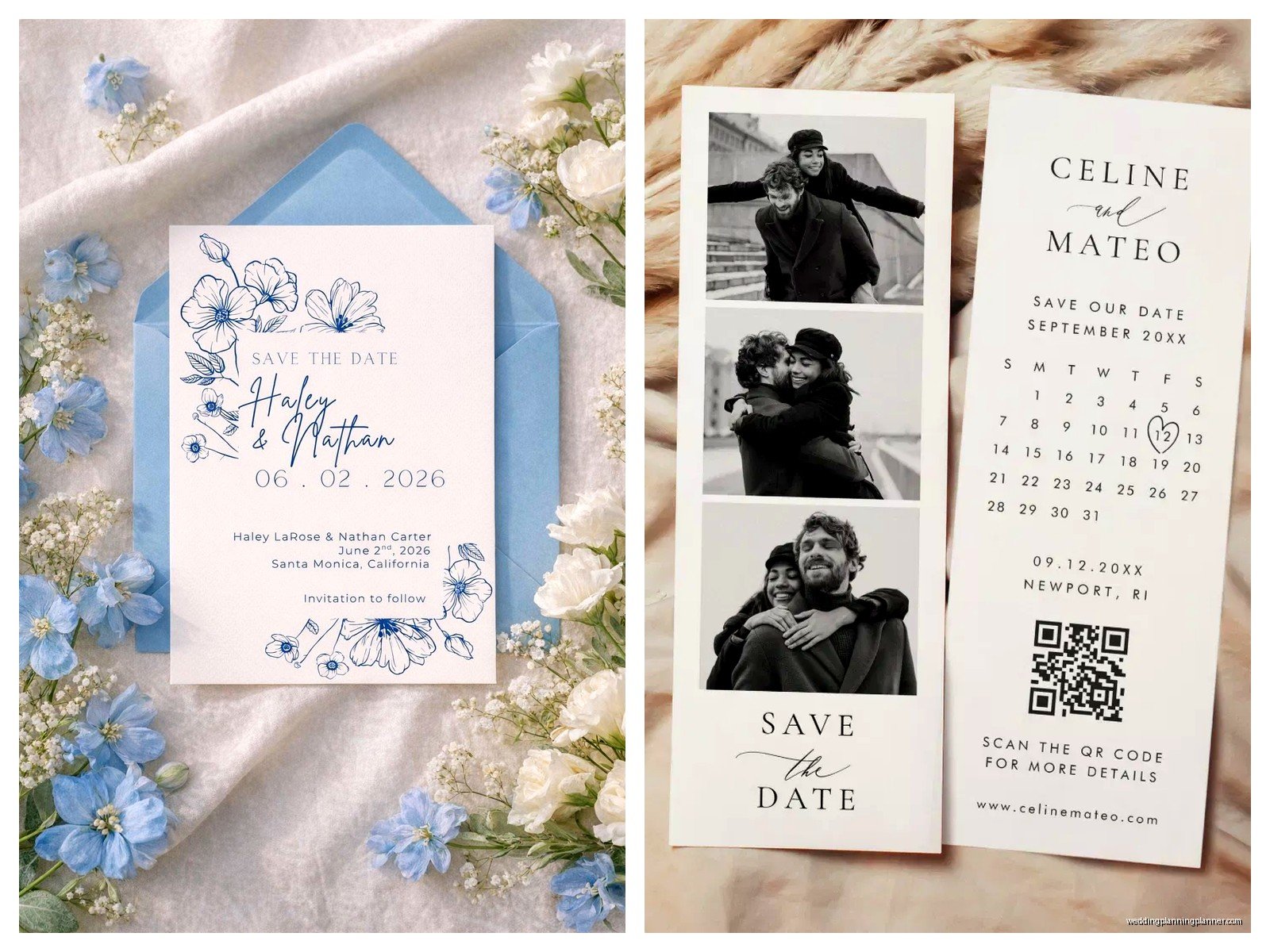
- Maybe a note like “invitation to follow” so people don’t think this IS the invitation
Do NOT put your full venue address on there. Do NOT include registry info because that’s tacky as hell and it annoys me so much when I see couples do this. Like, we get it, you want gifts, but save the dates are not the place for that conversation.
The Actual Invitation Timeline Gets Complicated
So invitations should go out 6-8 weeks before the wedding. That’s the sweet spot. Any earlier and people might lose them or forget, any later and you’re stressing people out who need to book flights or hotels or find a dress or… you know what I mean.
But here’s where it gets messy—you need to work BACKWARDS from that mailing date to figure out when to actually order everything. I learned this the hard way with a summer 2021 wedding when paper shortages were insane and everything took forever. The bride was crying on the phone because her invitations were stuck in production and we had to send digital versions to half the guest list which she absolutely hated.
Full Invitation Timeline Working Backwards
8-10 months before: Start looking at invitation designs. I know this seems crazy early but if you want something custom or letterpress or with fancy calligraphy, you need time. Plus you’ll probably change your mind seventeen times about colors and fonts.
6-7 months before: Finalize your guest list. And I mean FINALIZE it. You can’t order invitations if you don’t know how many you need. Order about 10-15% more than your guest count to account for mistakes, keepsakes, and the random people your mom will insist you invite later.
4-5 months before: Place your invitation order. This gives you a buffer for production time, shipping delays, and the inevitable “oh crap we misspelled the venue name” situation that happens to like 30% of my clients.
3 months before: Invitations should arrive. Check them immediately when they show up. Don’t just stick the box in your closet and assume everything’s perfect. My cat once knocked over a whole box of invitations that were sitting on my dining table and I had to explain to a client why some of their envelopes had tiny paw prints on them.
2.5-3 months before: Assemble everything. This takes longer than you think if you’re doing belly bands or wax seals or multiple enclosure cards. Get your bridesmaids together, open some wine, make it a thing.
6-8 weeks before: Mail them! Go to the post office and have them hand-cancel your invitations if they’re thick or have wax seals. Regular machine sorting will destroy anything even slightly fancy.
What Actually Goes Inside The Invitation
This is where people get overwhelmed because there are like six different cards that can go in there and you’re not sure what’s necessary versus what’s extra.
The Main Invitation Card
This is the big one with all the important info. It should include:
- Host line (traditionally parents but nowadays lots of couples host themselves)
- Request line (“request the pleasure of your company” for religious ceremonies, “request the honor of your presence” for secular—wait no I got that backwards, honor is for religious, pleasure is for secular… or actually you can use whatever sounds good to you because these rules are kinda outdated)
- The couple’s names
- Date and time spelled out (no numerals for formal invitations)
- Venue name and city/state
- Reception info if it’s at the same location
The Response Card
You need this unless you’re doing online RSVPs only. Include a pre-addressed stamped envelope because if you make people find their own stamp, like half of them won’t send it back. Trust me on this.
Put a deadline that’s about 3-4 weeks before your wedding. You need time to get a final headcount to your caterer and make a seating chart.
I always tell couples to number the response cards on the back in tiny pencil that corresponds to your guest list spreadsheet because I guarantee someone will send back a card with no name on it and you’ll be trying to figure out whose handwriting that is at midnight while you’re already stressed about seating charts.
Reception Card
If your ceremony and reception are at different locations, you need a separate card with the reception venue and time. Don’t try to cram this onto the main invitation because it looks cluttered.
Details Card
This is for everything else: hotel room blocks, transportation info, dress code, wedding website. You can also mention if it’s an adults-only wedding here, though that’s gonna annoy some people no matter how you word it.
Other Stuff You Might Include
- Directions card if your venue is hard to find
- Weekend events card if you’re doing a welcome party or farewell brunch
- Accommodation cards with hotel info
Honestly though? The more cards you include, the more expensive it gets and the more confused guests become. I’d put most of this info on your wedding website and just include the highlights in the invitation suite.
Addressing Envelopes Is Its Own Nightmare
Okay so you can handwrite them, get calligraphy done, print directly on the envelopes, or use printed labels. Formal etiquette says handwritten or calligraphy only but like… if you have 200 invitations to address and your handwriting looks like a drunk spider, just print them. Nobody’s gonna judge you except maybe your grandmother.
Some things about addressing that people always get wrong:
Married couple, same last name: Mr. and Mrs. Thomas Anderson (or use both first names: Mr. Thomas and Mrs. Sarah Anderson if you want to be less traditional)
Married couple, different last names: Ms. Sarah Parker and Mr. Thomas Anderson (alphabetical by last name or whoever you’re closer to goes first)
Unmarried couple living together: Both names on separate lines in the same envelope
Single person with a plus one: Just the invited person’s name on the outer envelope, then “and Guest” on the inner envelope if you’re doing inner envelopes, or on the invitation itself if not
Here’s what annoys me SO MUCH—when couples don’t make it clear whether kids are invited or not. If you address it to “The Anderson Family” people will bring their kids. If you address it to “Mr. and Mrs. Anderson” only, that should mean adults only, but you’d be surprised how many people still assume their kids are invited. Be explicit about this on your website.
International Guests and Timing
If you’ve got guests coming from other countries, they need more time for everything. Send their save the dates 8-10 months out minimum. For invitations, you might want to send theirs a bit earlier than everyone else’s, like 10-12 weeks before, so they have time to arrange travel visas if needed.
Also make sure you’re using the correct international postage. I had a client who mailed like 30 invitations to the UK with regular stamps and they all got returned and we had to rush-order new envelopes because she’d sealed them with wax and we couldn’t reuse them.
Digital Invitations Are Actually Fine Now
Look, traditional etiquette people are gonna come for me but digital invitations have come a long way. If you’re having a casual wedding or you’re on a tight budget or you just really care about the environment, digital is totally acceptable. There are beautiful options now that don’t look like a generic Evite from 2008.
The timeline is basically the same—send digital save the dates 6-8 months out, invitations 6-8 weeks before. The advantage is you can track who’s opened them and send reminders to people who haven’t responded, which is honestly pretty useful.
Just don’t do half digital and half paper based on like, who you think is “important enough” for a real invitation. That’s weird and people will figure it out and feel bad.
RSVP Tracking Will Make You Lose Your Mind
Even with a clear deadline, people will not respond on time. This is universal. You’ll have that one aunt who responds six months early and then changes her answer three times, and you’ll have your best friend from college who waits until the day after the deadline and then texts you “yeah we’ll be there” without specifying if “we” means her husband is coming or not.
Start following up with non-responders about a week after your deadline. Don’t wait too long because your caterer needs final numbers and they’re not gonna be flexible about their deadline just because your guests are flaky.
I use a spreadsheet for tracking: guest names, how many invited, how many attending, meal choices if applicable, plus one names, dietary restrictions… it’s a whole thing. There are also apps and websites that do this but I’m kinda old school about my spreadsheets I guess.
Common Mistakes People Make
Not ordering enough invitations and then panicking when you realize you forgot about your dad’s golf buddies he absolutely has to invite. Order extras from the start.
Forgetting to account for weight when designing invitations. If your suite is thick with multiple cards and a wax seal and ribbon, it’s gonna need extra postage. Take a fully assembled invitation to the post office and have them weigh it before you buy stamps.
Spelling errors. Proofread everything seventeen times. Then have someone else proofread it. Then proofread it again. I’ve seen “Saterday” and “Ocotber” and one time someone spelled their own venue name wrong.
Not including an RSVP deadline or making it too close to the wedding date. You need time to process responses and make decisions.
Assuming everyone will check the wedding website for important info. Some people, especially older guests, won’t. Put the crucial stuff in the actual invitation.
Postage and Mailing Tips
Buy pretty stamps if you want! The post office has tons of options beyond the flag stamps. Botanical stamps, vintage stamps, love stamps… it’s a small detail but it makes the envelope look nicer.
Mail invitations on a Monday or Tuesday so they don’t sit in a processing facility over the weekend. And don’t mail them right before a major holiday because postal service gets backed up.
If you’re doing international invitations, fill out the customs forms correctly and give yourself extra time. International mail is slow and unpredictable.
Consider hand-canceling at the post office for fancy invitations. The machines will bend and tear anything delicate. Yes, you have to ask them to do this and yes, they might seem annoyed about it but they’re supposed to offer this service.
The B-List Strategy
Okay so this is slightly controversial but tons of people do it. You have your A-list guests who get invitations in the first round, and then you have a B-list who gets invited if people from the A-list decline.
If you’re doing this, you gotta be strategic about timing. Send A-list invitations 8 weeks out with an RSVP deadline of 4-5 weeks before the wedding. Then as soon as you get declines, immediately send B-list invitations. They should still have at least 3-4 weeks notice minimum.
The risk is that B-list people will figure out they weren’t first choice, which can hurt feelings. But if you’re limited by venue capacity or budget, sometimes it’s necessary. Just be prepared for some people to be upset about it if they find out.
Suite Assembly Tips
There’s a traditional order for stacking enclosure cards: invitation on bottom (face up), then reception card, then response card (face up), then any other cards like directions or accommodations. The whole stack goes into the inner envelope (if you’re using one) with the printed side facing the back flap so guests see it when they open the envelope.
But real talk? Most people don’t care about this order. They’re just gonna pull everything out and read it. Don’t stress too much about getting it perfect.
Wax seals look gorgeous but they’re time-consuming and can crack in the mail. If you’re doing them, use flexible wax and definitely hand-cancel at the post office.
Belly bands and ribbon are pretty but they add time to assembly. Budget at least 2-3 minutes per invitation if you’re doing anything fancy. That adds up fast when you have 150 invitations to assemble while also planning an entire wedding and working full-time and trying to maintain your sanity.
Get help with assembly. Seriously. Invite your wedding party over, feed them pizza, put on a good playlist or that new season of whatever show everyone’s watching, and make it a party. It goes so much faster with help and it’s actually kinda fun when you’re not doing it alone at 11pm on a Wednesday.