Planning Guides, Style Guide
Table Plan: Wedding Seating Chart Layout Guide
Apr
Okay So Table Plans Are Basically The Worst Part Of Wedding Planning
Listen, I’ve done over 300 weddings at this point and the seating chart is always—ALWAYS—the thing that makes brides cry at 2am. Not the flowers, not the dress alterations, but figuring out where to put Aunt Linda who hasn’t spoken to Uncle Mark since 2019.
So first thing you gotta know is when to actually start this nightmare. Don’t do it too early because people will cancel or RSVP late (they always do), but don’t wait until the last minute either. I usually tell couples to start the rough draft about 3-4 weeks before the wedding once you have like 90% of your RSVPs back. You’ll still have stragglers but you need a framework.
The Basic Layout Options
You’ve got a few standard layouts and honestly which one you pick depends on your venue shape and guest count. I had this wedding in summer 2021 where the bride was INSISTENT on long banquet tables because she saw them on Pinterest, but her venue was this narrow rectangular room and it created this awkward bowling alley situation where half the guests couldn’t see anything. We had to pivot two weeks before and it was… not fun.
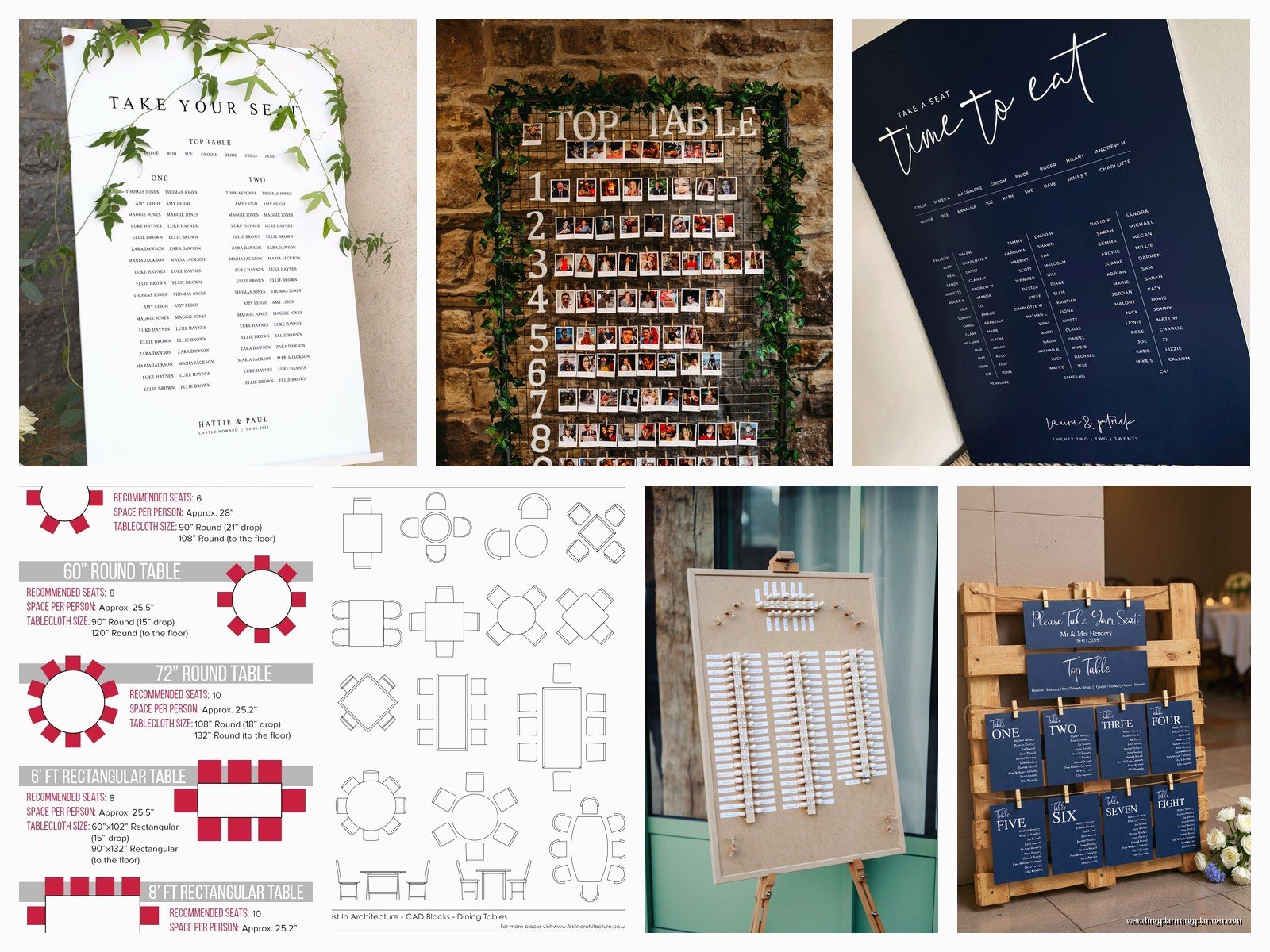
Round tables are your safest bet. They seat 8-10 people comfortably, everyone can talk to everyone, and they’re the most flexible for different room shapes. You can do 60-inch rounds for 8 people or 72-inch for 10. I personally think 10 is too many because then you get that thing where people only talk to the person directly next to them and it defeats the purpose but some couples want to maximize space.
Long rectangular tables (sometimes called “banquet style” or “family style”) look gorgeous in photos and create this intimate communal vibe. But they’re tricky. You need a long narrow venue, and you gotta think about sightlines to the head table or sweetheart table. Also if your venue has those standard 8-foot banquet tables, they only seat like 8-10 people max and suddenly you need way more tables than you thought.
Then there’s the mixed approach where you do some rounds and some rectangles which honestly just complicates your life but can look really dynamic in big spaces with weird corners or alcoves.
Starting With The VIPs
Okay so you’ve picked your table shape. Now what? Start with your head table or sweetheart table. This determines everything else because it’s your focal point.
If you’re doing a head table with your wedding party, you need to decide: are you seating dates there too or nah? I see couples go both ways. Including dates is generous and avoids the awkward situation where the best man‘s wife is sitting alone at a random table, but it also makes your head table MASSIVE. A wedding party of 12 people becomes 24 with partners and now you need like a 20-foot table.
Sweetheart tables (just the couple) are honestly easier and you get more private moments together. Your wedding party can sit at regular guest tables with their partners and friends. Win-win.
Next priority: parents and grandparents. They get premium real estate close to you but not so close they’re in the way of the photographer or blocking the dance floor. I usually put parents at a table together (both sets) if they get along, or separate tables if there’s divorce drama or they just don’t click. Grandparents need to be somewhere they can actually see and hear—not stuck in a corner by the kitchen doors.
The Group Sorting Strategy
Now comes the actual puzzle part. I use Excel for this because I’m old and it works, but there are apps now like AllSeated or WeddingWire’s tool. Honestly whatever keeps you organized.
Make a spreadsheet with every guest’s name and then add columns for: relationship to couple, age range, plus-one status, any dietary restrictions or mobility issues, and known drama. That last column is crucial. You NEED to track who doesn’t get along with who or you’ll have a disaster.
Start grouping people by natural clusters: college friends, work friends, family, high school crew, whatever. Most people have like 5-7 obvious groups. Then you look at the sizes and see what fits your table capacity. If you’ve got 13 college friends and your tables seat 10, you gotta split them somehow.
Here’s where it gets kinda creative—you want tables where people have something in common but aren’t just an echo chamber. Like don’t put all the quiet people at one table and all the loud people at another. Mix it up a little. Put the funny cousin with some of your work friends who need loosening up. Put your adventurous college roommate with your partner’s travel-loving coworkers.
The Singles Table Is Dead (Mostly)
Please don’t create an obvious “singles table” where you dump everyone who came alone. It’s 2025, we don’t do that anymore. It feels like middle school cafeteria vibes and I promise your single friends will hate you for it.
Instead, sprinkle single guests throughout tables where they’ll vibe with people. Your single friend from yoga class might love sitting with your cousin and her husband who also do yoga. Your single coworker might click with your partner’s friend group who all work in similar industries. Think about interests and personalities, not relationship status.
That said, if you have like 8-10 single friends who all know each other and are all in their late 20s/early 30s and love to party… okay fine, put them together. But make it a fun table, not a pity table. There’s a difference.
Kids And Family Dynamics
If you’re having a kid-friendly wedding, you gotta decide: kids table or kids with parents? For babies and toddlers, keep them with parents obviously. But kids like 5-12 usually have more fun at their own table where they can be loud and messy and not worry about adult conversation.
Put the kids table somewhere parents can see it but not like right next to the dance floor speakers. And if you’re smart, you’ll have some activities there—coloring books, small toys, whatever keeps them occupied during speeches.
Family dynamics are honestly the most annoying part of seating charts and this is what keeps me up at night even now. I had a bride in spring 2023 who had FOUR different family feuds happening simultaneously—divorced parents who each remarried, a sibling rivalry, and some cousin drama I never fully understood. We went through literally 11 versions of the seating chart. Eleven! My cat knocked over my coffee onto version 7 and honestly it was an improvement.
For divorced parents: separate tables unless they explicitly tell you they’re fine together. Put them equal distance from you if possible so nobody feels slighted. If one parent remarried and the other didn’t, be sensitive about that. If there are stepparents and half-siblings and… look, just make a family tree diagram if you need to. I’ve done it.
The Vendor Table Question
Your photographer, DJ, videographer, and planner (hi, that’s me) need to eat. You can either include them in your guest count and give them a regular table in the back, or do vendor meals separately. Most venues have a vendor meal option that’s cheaper than guest meals.
If you’re doing a vendor table, put it somewhere with decent access to outlets, not blocking exits, and where we can kinda keep an eye on what’s happening. We’re still working, even while eating. I don’t need a prime view but don’t stick us in a coat closet either.
Accessibility Stuff You Can’t Forget
Anyone with mobility issues, wheelchairs, walkers, whatever—they need tables near accessible entrances and definitely not on any raised platforms unless there’s a ramp. Also leave extra space around their table so they can maneuver.
Elderly guests shouldn’t be near the speakers or the kitchen doors where servers are constantly rushing through. Give them the calmer areas where they can actually have conversations.
If someone has severe allergies or needs special meals, some couples mark that on the seating chart so servers know. Or you can handle it separately with the catering team.
The Physical Chart Creation
Once you’ve got your assignments figured out, you need to actually create the display that tells people where to sit. You’ve got options here.
Traditional approach: alphabetical list with table numbers. Simple, functional, kinda boring. Usually a large printed sign or multiple frames.
Escort cards: individual cards for each guest with their name and table number, arranged alphabetically on a table. People grab their card and find their table. These can double as favors if you attach them to something cute.
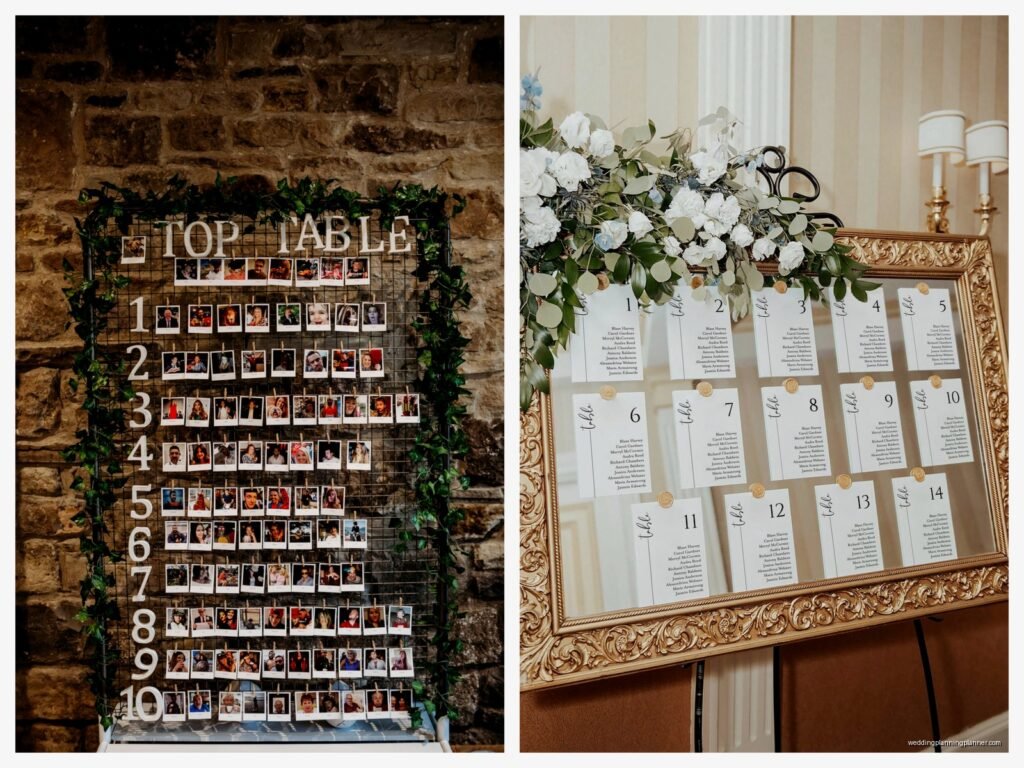
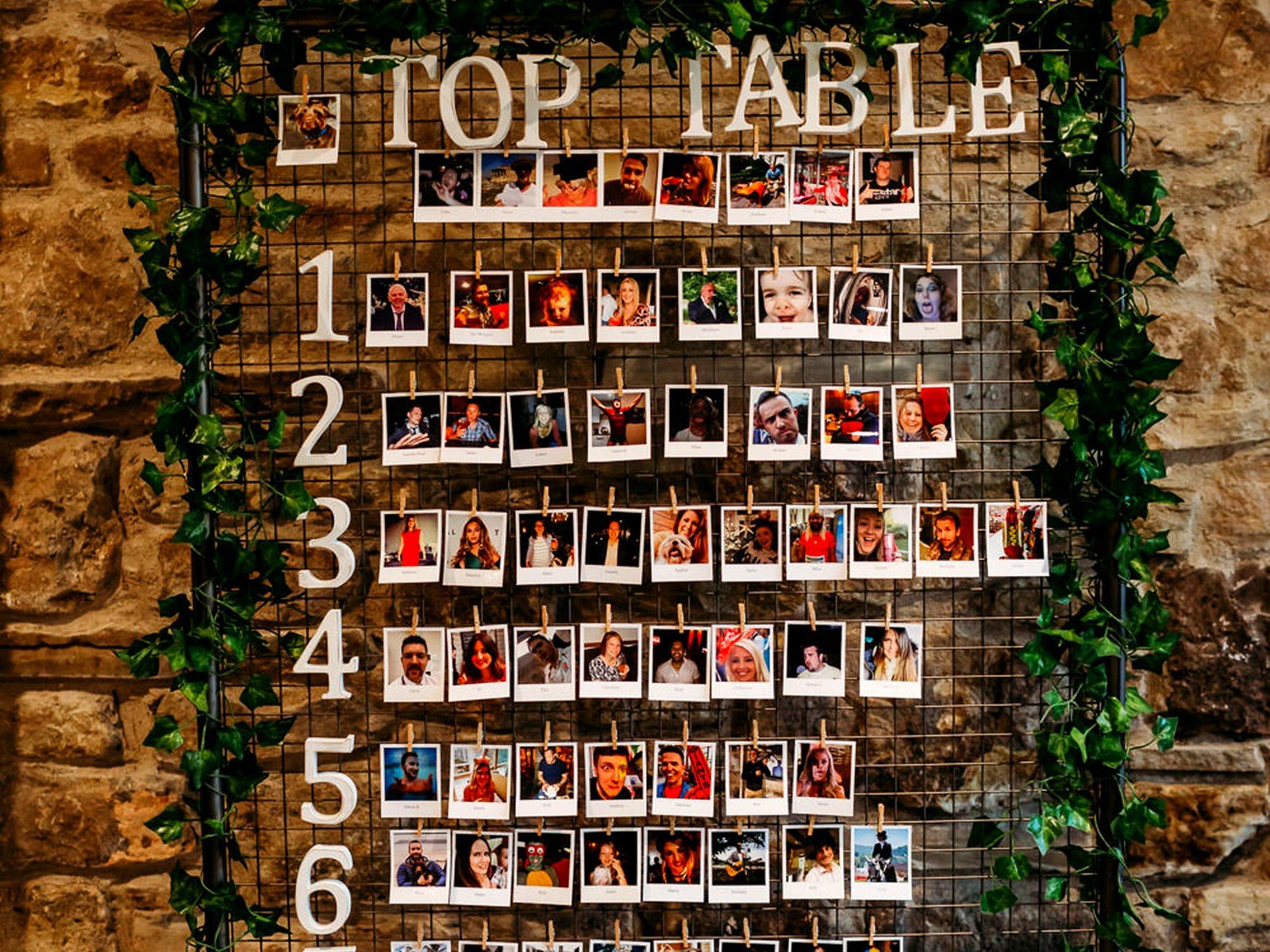
Seating chart display: a big visual representation of the room layout showing which table is which. This helps people orient themselves but requires more design work. I see a lot of acrylic signs, mirrors with calligraphy, or those wooden board displays.
Whatever you choose, make sure it’s readable from a few feet away and well-lit. I’ve seen gorgeous calligraphy charts that nobody could read because the font was too swirly or the room was too dark or… you get the idea.
Day-Of Changes Because Of Course
Someone will not show up. Someone will bring an unexpected plus-one despite RSVPing solo. Someone will have a medical emergency or their flight will get cancelled or their ex will be there and they can’t deal.
Build in a little flexibility. Have a few extra place settings available. Designate someone (your planner, a reliable bridesmaid, whoever) to handle last-minute shuffles. Don’t stress about it being perfect because it won’t be and that’s fine.
I always bring printed backup copies of the seating chart and extra escort cards with blank table assignments just in case. Has it saved the day multiple times? Yes. Do couples ever remember to thank me for this? Rarely, but whatever.
Common Mistakes That Drive Me Crazy
Putting people who don’t know ANYONE at a table full of tight-knit groups. Like your partner’s random coworker who’s never met anyone else at the wedding sitting with your college friend group who’ve known each other for 15 years. That person will be miserable.
Forgetting about your vendors and then scrambling day-of to figure out where we’re supposed to eat. Just… put it on your checklist early.
Making tables too big. A table of 12 isn’t intimate, it’s chaos. People can’t hear each other, conversations fracture into small groups anyway, and it just feels crowded.
Putting the shy people all together thinking they’ll bond over being quiet. Nope. You’ll just have an awkward silent table. Every table needs at least one or two outgoing people to keep conversation flowing.
Ignoring your venue’s layout. I cannot stress this enough—walk through your venue and look at where the columns are, where the dance floor is, where the bathrooms are, where the exits are. Don’t put a table behind a pillar where they can’t see anything. Don’t put your elderly grandparents at the table farthest from the bathroom.
The Tools I Actually Use
Okay so in terms of actual software, I’ve tried everything. Social Tables is good for professional planners but probably overkill for a couple doing their own. WeddingWire and The Knot both have free seating chart tools that are pretty intuitive. AllSeated is popular and has a free version with 3D venue mockups which is cool if you’re visual.
But honestly? Excel or Google Sheets works fine for the planning stage. Make your list, sort people into groups, assign table numbers. Then use whatever design tool you want for the pretty version guests will see.
For the actual printed materials, I usually recommend Etsy templates if you’re DIYing, or working with your stationer if you hired one. Canva also has wedding seating chart templates now that are surprisingly decent.
Timing The Whole Process
You’re gonna need multiple drafts and that’s normal. First draft is rough groups and numbers. Second draft is refining based on RSVPs and thinking through the awkward situations. Third draft is usually after you’ve slept on it and realized you accidentally put two people who hate each other at the same table or forgot about someone entirely.
Final version should be locked in about a week before the wedding, printed or ordered about 5 days before, and set up day-of. But keep a digital copy on your phone because I guarantee someone will ask you “wait, where am I sitting?” even though there’s a giant chart right in front of them.
The thing nobody tells you is that you’re gonna overthink this. You’re gonna lie awake wondering if your coworker Sarah will be offended she’s not closer to the head table or if your college roommate will think you don’t value her because she’s near the back. Truth is, most guests don’t care that much as long as they’re with at least a few people they know and can see what’s happening. They’re there for the open bar and dancing anyway, the table assignment matters for like 90 minutes max.
I always remind couples that perfect doesn’t exist with seating charts. Someone will be slightly less thrilled with their placement than others and that’s just… how it is when you’re trying to organize 100+ people with different relationships and preferences and drama histories. Do your best, be thoughtful about the major considerations, and then let it go. Your wedding will be great regardless of whether Cousin Mike is at table 7 or table 9, I promise.