
Planning Guides, Style Guide
Wedding Planning Lists: Complete Guide
May
The Master Timeline Checklist (Because You Need Structure Even If You Hate It)
Okay so the biggest mistake I see couples make is thinking they can just wing wedding planning or that they’ll remember everything in their heads. Nah. You need lists. Like, actual written-down lists that you can check off because there’s something weirdly satisfying about crossing things off and also because you WILL forget stuff.
I usually tell people to start with a 12-month timeline list if you’ve got that much time. Spring 2023 I had this couple who kept insisting they didn’t need my timeline checklist and they’d “just handle things as they came up” and guess what happened? They forgot to book transportation and almost had their entire wedding party stranded at the ceremony venue. So yeah. Lists matter.
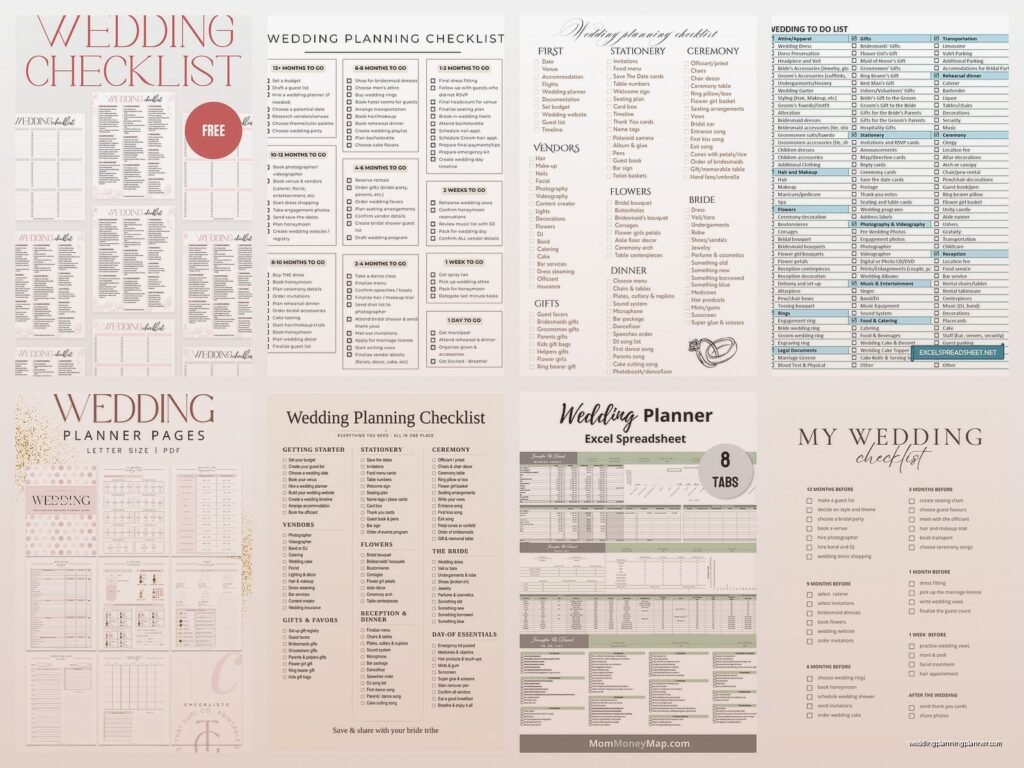
Here’s what your master timeline should look like broken down by months before the wedding:
12 Months Out (The Foundation Stuff)
- Set your actual budget and write it down somewhere you’ll see it
- Pick your wedding date or at least narrow it to 2-3 options
- Start your guest list draft (it’ll change 47 times, that’s normal)
- Book your venue because good ones disappear fast
- Hire your photographer and videographer
- Research and meet with planners if you’re hiring one
- Start looking at dress options online to get a feel for styles
10-11 Months Before
- Book your caterer or at least do tastings
- Reserve your ceremony site if it’s different from reception
- Hire your band or DJ
- Start dress shopping for real (this takes longer than you think)
- Choose your wedding party and ask them
- Book hotel room blocks for out-of-town guests
- Register for gifts if you’re doing that
One thing that really annoys me about generic wedding checklists online is they never account for paper goods timelines correctly, and that’s literally part of my job so I notice. Save-the-dates need to go out 6-8 months before your wedding, which means you need to design them like 8-9 months out to give yourself time for proofing and printing. But every checklist just says “send save-the-dates” without explaining the lead time needed.
8-9 Months Out
- Order your wedding dress
- Send save-the-dates
- Book your florist
- Reserve rental items (chairs, tables, linens if venue doesn’t provide)
- Book ceremony musicians if you want live music
- Start thinking about honeymoon plans
- Order bridesmaid dresses
6-7 Months Before
- Book hair and makeup artists
- Order wedding invitations (they take 6-8 weeks usually)
- Book transportation for wedding day
- Plan ceremony details and readings
- Start looking at cake bakers and do tastings
- Buy wedding bands
- Book rehearsal dinner venue
The Vendor Management List (Keep Everyone Organized)
You need a separate list just for vendor info because trying to remember everyone’s contact details and what you’ve paid them is gonna make you crazy. I keep mine in a spreadsheet but you can use whatever works for you.
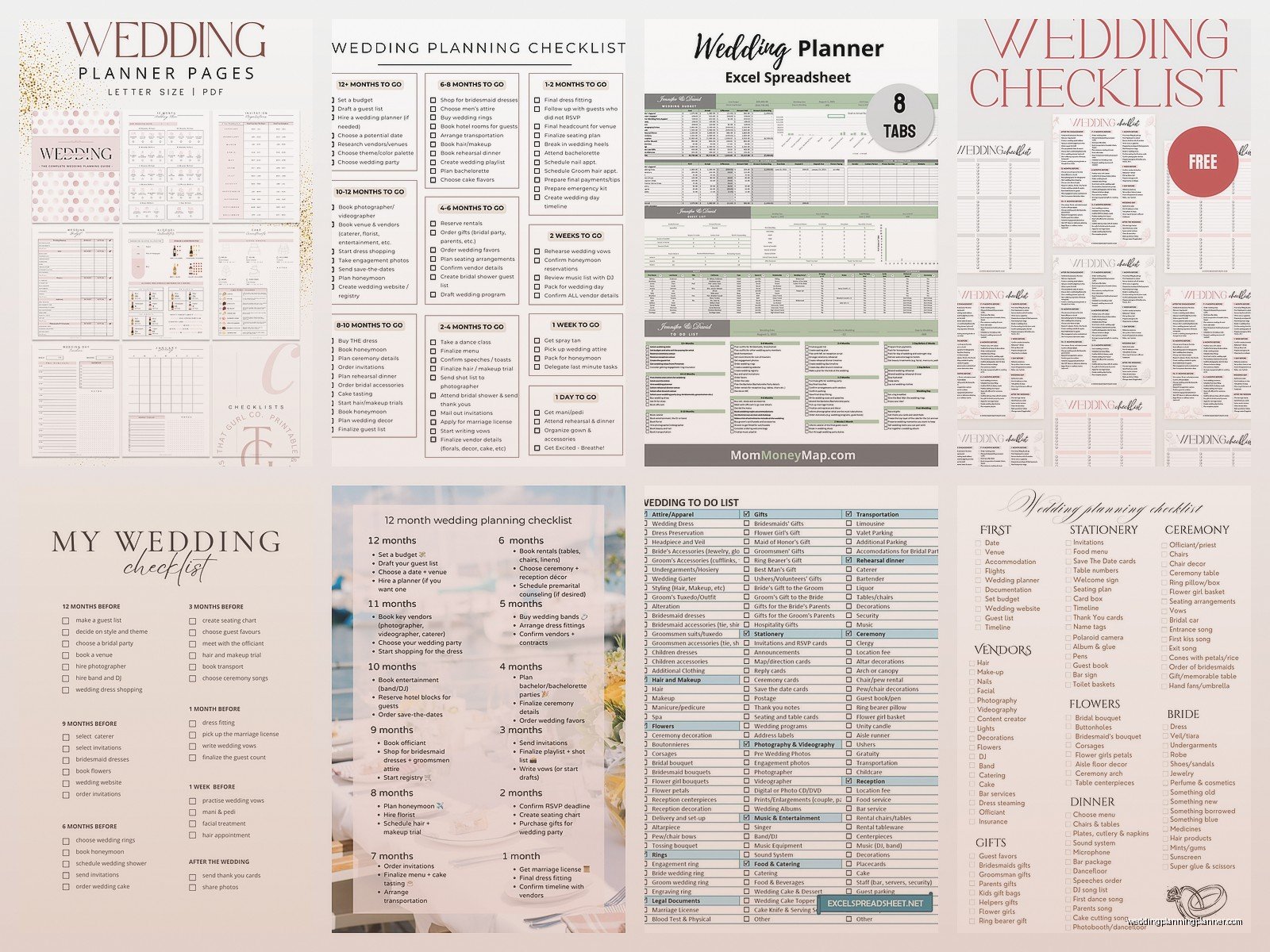
For each vendor you need to track:
- Business name and contact person
- Phone number and email
- Total cost
- Deposit paid and date
- Balance due and due date
- Contract signed date
- What’s included in their package
- Day-of contact number (sometimes different from booking number)
- Arrival time on wedding day
- Any special requirements they have
Summer 2021 I was working with a bride who had all her vendor info scattered across email, texts, and random pieces of paper. The morning of her wedding we couldn’t reach the florist because she had the wrong phone number written down and it was just… stressful for everyone. Having one master vendor list that you keep updated saves so much hassle.
The Guest List Tracking System
This is where things get messy because your guest list is gonna change constantly and you need to track like five different things for each person. I usually recommend a spreadsheet with these columns:
- Guest name
- Plus one name (if applicable)
- Address
- Email and phone
- Save-the-date sent (yes/no)
- Invitation sent (yes/no)
- RSVP received (yes/no/declined)
- Meal choice
- Dietary restrictions
- Guest category (family, friends, coworkers, etc.)
- Which events they’re invited to (if you have multiple)
- Thank you note sent
You can also add a notes column for random stuff like “sits with the college friend group” or “doesn’t get along with Uncle Bob.”
The meal choice thing is important even if you think you’ll remember. You won’t. Your caterer will need final numbers with meal counts and you don’t wanna be scrambling the week before trying to remember who wanted the chicken versus the fish.
Managing the Plus One Situation
This deserves its own section because it gets complicated. You need to decide your plus one policy early and stick to it. Common options:
- Only married or engaged couples get plus ones
- Anyone in a relationship over X months gets a plus one
- Everyone in the wedding party gets a plus one regardless
- No plus ones except for the above categories
Write down your policy and refer back to it when people ask because they WILL ask and you need to be consistent or people get offended.
The Budget Tracking List (The One Nobody Wants to Look At)
Okay so budgets are kinda the worst part of wedding planning but you absolutely need one. And not just a rough idea in your head—an actual itemized list with numbers.
Your budget list should include:
- Total budget amount
- Each vendor category with allocated amount
- Actual cost for each vendor
- Difference (over or under budget per category)
- Payment schedule and due dates
- What’s been paid so far
- What’s still owed
The main categories usually are venue, catering, photography, videography, flowers, music, dress and attire, invitations and paper goods, rentals, transportation, cake, favors, and a miscellaneous category for all the random stuff that comes up.
I always tell couples to build in a 10-15% buffer for overages because something always costs more than you expected or you decide you really want uplighting even though it wasn’t in the original plan or… you get the idea.
The Day-Of Timeline (Super Detailed Version)
This is different from your planning timeline—this is the actual minute-by-minute schedule for your wedding day. And it needs to be way more detailed than you think. My cat jumped on my keyboard while I was making one of these last week and somehow managed to delete an entire section, which was fun.
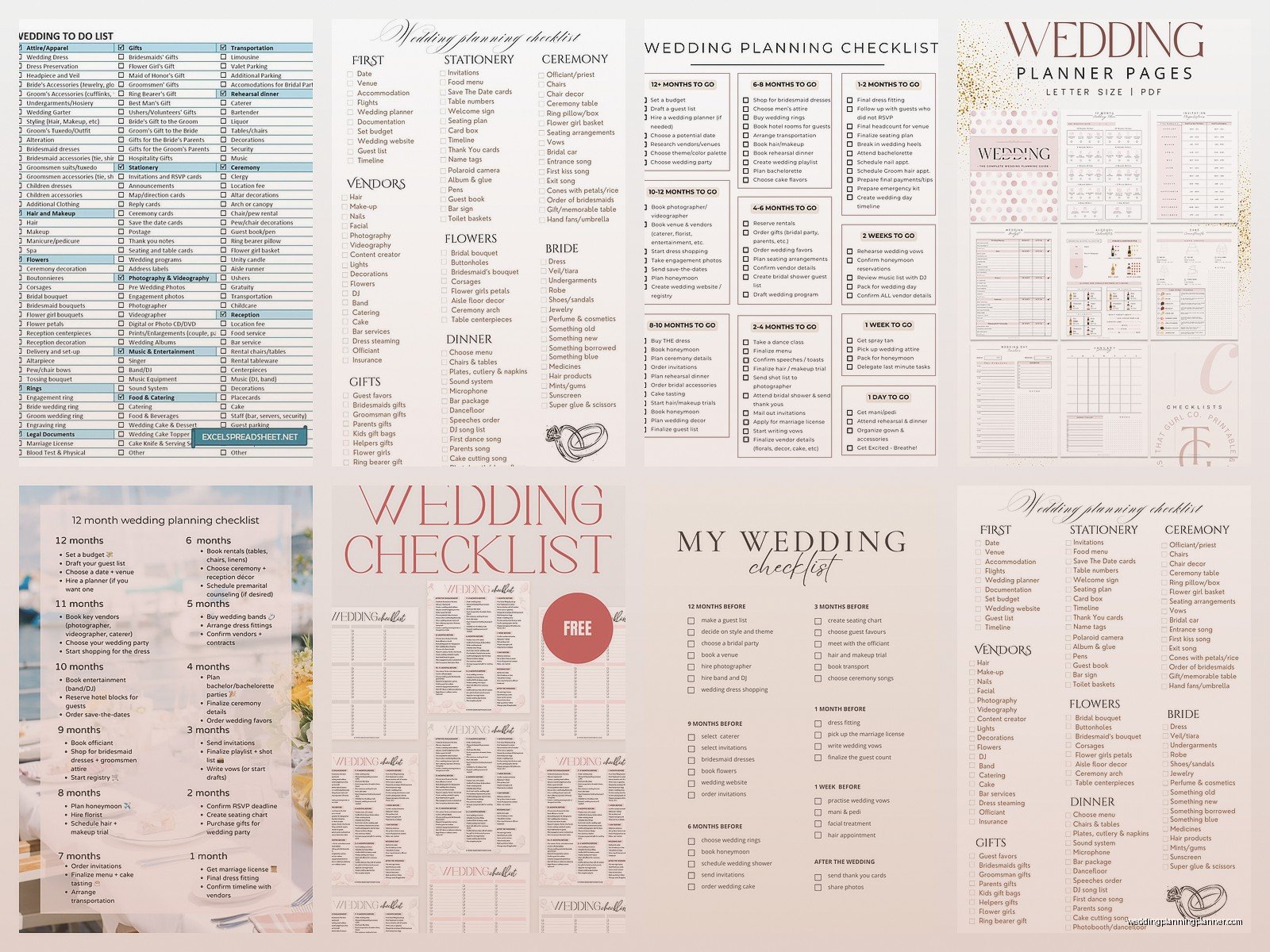
Your day-of timeline should include:
- When each vendor arrives and where
- When hair and makeup starts and ends for each person
- When the wedding party needs to be dressed
- Photography schedule (getting ready, first look if doing one, family photos, etc.)
- When transportation leaves for ceremony
- Ceremony start time
- Cocktail hour timing
- Reception entrance time
- Dinner service timing
- Speeches and toasts
- First dance, parent dances, etc.
- Cake cutting
- Bouquet and garter toss if you’re doing those
- Last song and exit
- When transportation picks up for after-party or hotel
You should make copies of this timeline for your planner (if you have one), your venue coordinator, your photographer, your DJ or band leader, and your wedding party. Everyone needs to know what’s happening when.
Building in Buffer Time
Here’s something people always forget—you need buffer time built into your timeline. Photos always take longer than you think. People are late. Unexpected things happen. If you schedule things back-to-back with zero flexibility, you’re gonna run behind and get stressed.
I usually build in 15-30 minute buffers between major events, and I definitely recommend not scheduling your ceremony right at sunset if you want sunset photos because everything runs late and you’ll miss your light.
The Stationery and Paper Goods Checklist
Since this is like my specialty area I’m gonna be more specific here. You need a list just for all your paper goods because there are more pieces than people realize:
- Save-the-dates
- Wedding invitations
- RSVP cards
- Details cards (accommodations, website, etc.)
- Invitation envelopes (inner and outer if doing formal)
- Envelope liners if you want them
- Postage for outgoing invitations
- Postage for RSVP returns
- Ceremony programs
- Escort cards or seating chart
- Place cards
- Menu cards
- Table numbers
- Welcome sign
- Bar menu sign
- Dessert table signage
- Thank you cards
And that’s just the standard stuff. Some couples also do rehearsal dinner invitations, welcome bag tags, favor tags, bathroom basket signs, signature drink signs… it adds up fast.
The timeline for stationery is really important. Save-the-dates should go out 6-8 months before. Invitations should be mailed 8 weeks before your wedding, which means you need them designed, proofed, printed, and assembled by like 10 weeks out to give yourself breathing room.
The Detail and Décor Checklist
This is where you track all the little stuff that makes your wedding feel complete. It’s easy to forget details when you’re focused on the big vendors, but these things matter:
- Ceremony décor (arch, aisle runner, etc.)
- Centerpieces
- Candles or lighting
- Guest book and pen
- Card box for gifts and cards
- Cake topper and cake knife
- Toasting flutes
- Ring bearer pillow or box
- Flower girl basket
- Welcome bags for out-of-town guests
- Favors if you’re doing them
- Send-off items (sparklers, bubbles, etc.)
- Emergency kit supplies
For the emergency kit, I always recommend having safety pins, stain remover, breath mints, tissues, bobby pins, clear nail polish, band-aids, pain reliever, and maybe some granola bars because people forget to eat.
The Attire Tracking List
You need to track not just your dress but everything everyone is wearing, plus all the accessories. This gets complicated when you have a wedding party:
- Your wedding dress, veil, and accessories
- Your shoes (and backup comfortable shoes for later)
- Your jewelry
- Your undergarments
- Groom’s suit or tux
- Groom’s shoes and accessories
- Bridesmaid dresses with tracking of who ordered what size
- Bridesmaid shoes if you’re coordinating those
- Groomsmen attire
- Flower girl dress
- Ring bearer outfit
- Parents’ attire if you’re coordinating colors
You should also track fitting appointments and alteration deadlines because those sneak up on you. Most bridal shops recommend final alterations 4-6 weeks before your wedding.
The Task Assignment List
This is something I started doing after realizing couples were trying to do literally everything themselves and burning out. You need a list of tasks that can be delegated to other people, and then you need to actually delegate them.
Things other people can handle:
- Picking up rental items
- Putting together welcome bags
- Setting up ceremony or reception décor
- Managing the guest book
- Gathering items at end of night
- Coordinating family photos
- Distributing vendor payments and tips
- Handling any issues that come up during the wedding
Assign specific people to specific tasks and make sure they know what they’re responsible for. Don’t just assume someone will handle something—actually ask them and confirm they’re okay with it.
The Post-Wedding Checklist (Yes, There’s More)
Nobody thinks about the after-wedding tasks but they exist and you should have a list:
- Return rental items
- Preserve wedding dress if you’re doing that
- Send thank you notes (track who gave what gift)
- Change name on documents if applicable
- Order prints of favorite wedding photos
- Leave reviews for your vendors
- Share photos with wedding party
- Figure out what to do with centerpieces and décor you kept
- Submit wedding announcements to newspapers if that’s your thing
The thank you note tracking is important—you need to note who gave you what gift as you receive them so you can write specific thank you notes later. A simple spreadsheet with guest name, gift description, and thank you sent date works fine.
Digital Tools vs. Paper Lists
People always ask whether they should use apps or just go old school with notebooks. Honestly? Whatever you’ll actually use consistently. I’ve seen couples succeed with both methods.
Digital tools are great because you can share them with your partner and your planner, you can access them anywhere, and you can’t lose them. Apps like Google Sheets, Asana, or Trello work well. There are also wedding-specific apps but some of them are kinda bloated with features you don’t need.
Paper lists work if you’re someone who likes physically writing things down and crossing them off. Just make sure you have one central notebook and don’t scatter your lists across multiple places.
I personally use a hybrid system—digital spreadsheets for anything with lots of data like guest lists and budgets, but paper lists for daily tasks because I like the satisfaction of crossing things off. Do what feels right for your brain.
The most important thing is having SOME system rather than keeping everything in your head or scattered across texts and emails and random notes. Wedding planning involves tracking hundreds of details and nobody’s memory is that good, even if you think yours is. Trust me on this—I’ve been doing this for years and I still need my lists for everything or I’d forget half of what needs to happen.