Planning Guides, Style Guide
Rectangle Table Wedding Layout: Complete Guide
May
Rectangle Tables Are Actually Way More Versatile Than You Think
Okay so rectangle tables. I’ve been planning weddings for like fifteen years now and honestly, rectangle tables were kinda dismissed for a while because everyone wanted rounds, rounds, rounds. But they’re having this massive comeback and I’m here for it. The thing is, most couples don’t realize how many layout options you actually have with rectangles, and that’s where people mess up their floor plans.
First thing—you gotta figure out your table size before anything else. Standard rectangle tables come in 6ft (seats 6-8 people) and 8ft (seats 8-10 people). Some venues have 4ft tables too but those are kinda awkward for a wedding unless you’re doing a really small intimate thing or using them for a sweetheart table.
The Basic Layout Styles You Can Actually Pull Off
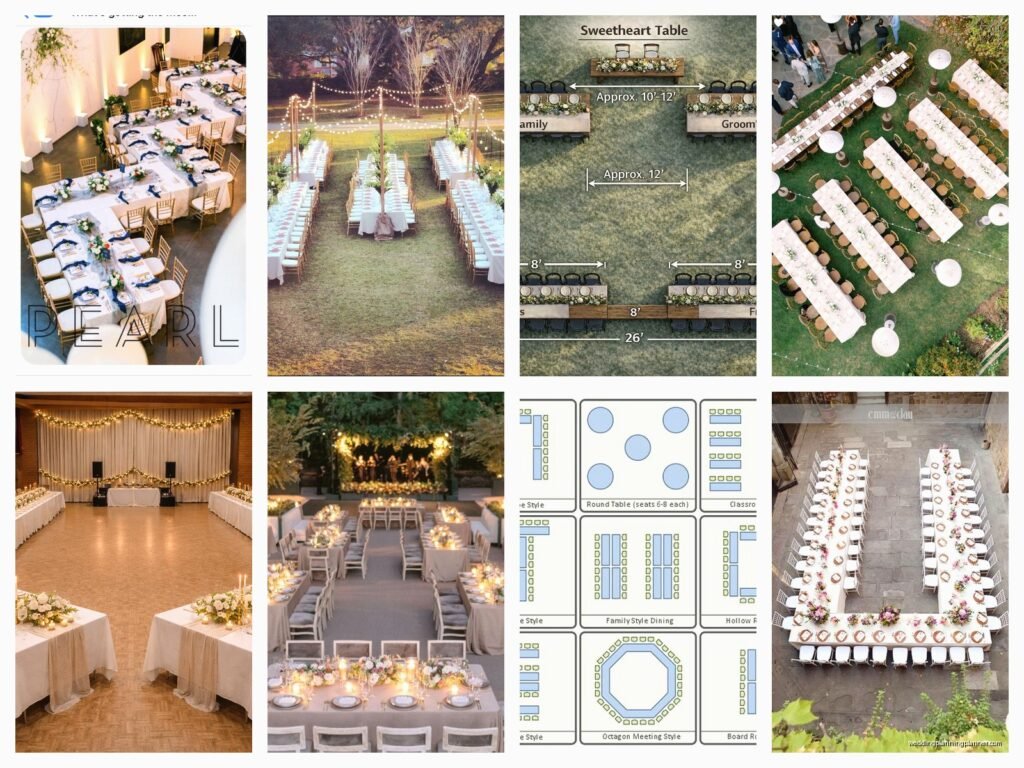
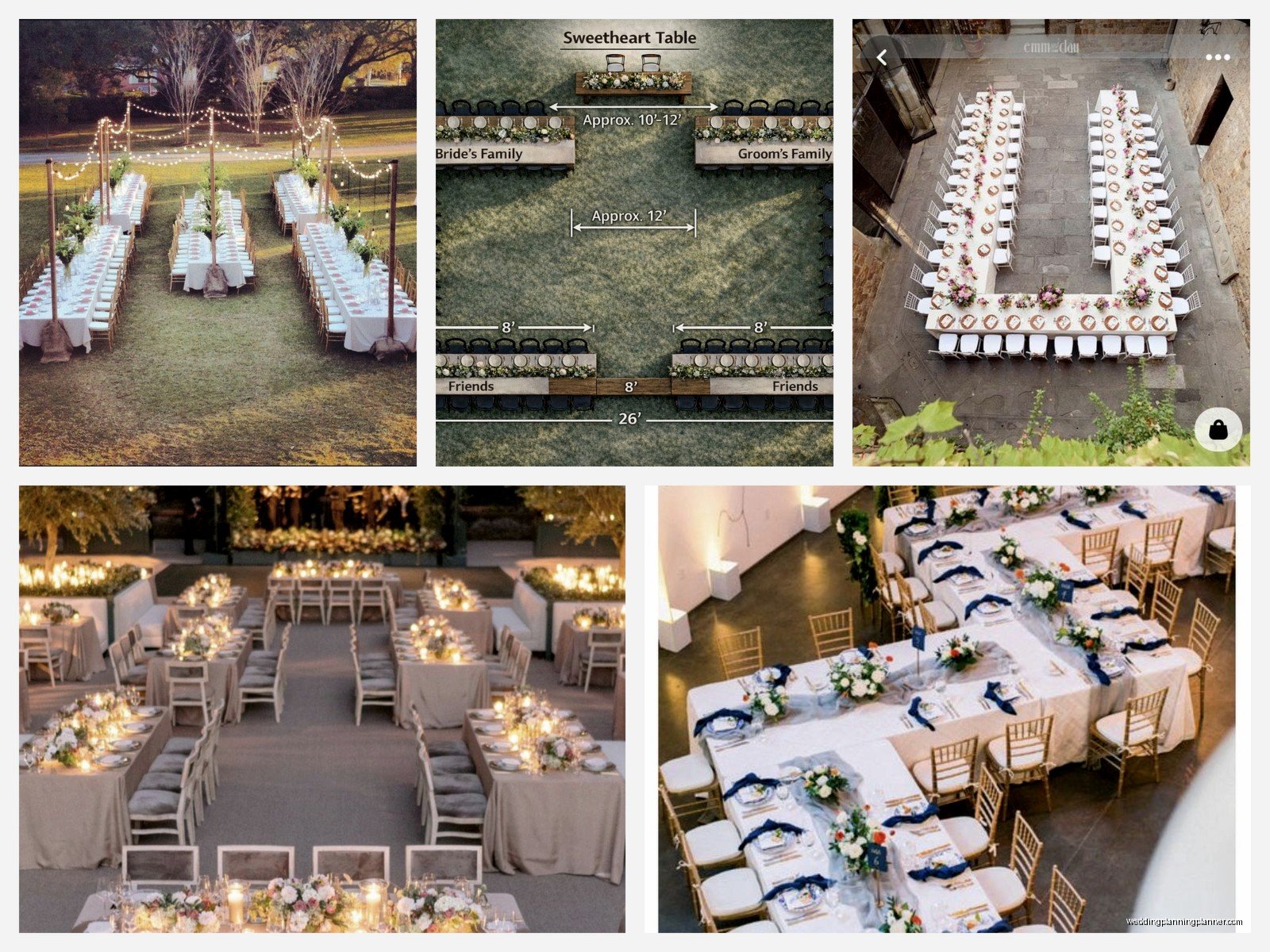
There are like four main ways to arrange rectangle tables and each one completely changes the vibe of your reception space. I learned this the hard way back in summer 2021 when I had a bride who kept changing her mind every single week and we had to redraw the floor plan seven times. SEVEN. My cat knocked over my coffee on layout number five and honestly that felt appropriate.
Long Banquet Style: This is where you line up tables end-to-end to create one massive long table or several long rows. It’s very family-style, very “we’re all breaking bread together” energy. You can do one king’s table down the center of the room, or multiple long rows running parallel. The annoying thing about this layout—and this genuinely bugs me every time—is that people at the ends of really long tables can’t talk to people at the other end. Like you’re basically at a different party than the person 20 feet away from you.
Chevron or Herringbone: This is where you angle the tables in a V-shape pointing toward the head table or dance floor. It looks amazing from above and creates really nice sightlines. Everyone can kinda see the main focal point without craning their necks. I use this layout a lot for barn venues or industrial spaces where you want something less traditional.
Mixed Parallel Rows: Just straight-up rows of rectangle tables, all facing the same direction, like pews almost. It’s simple, it’s efficient, and it works really well when you have a long narrow venue. Not the most creative but sometimes you just need functional, you know?
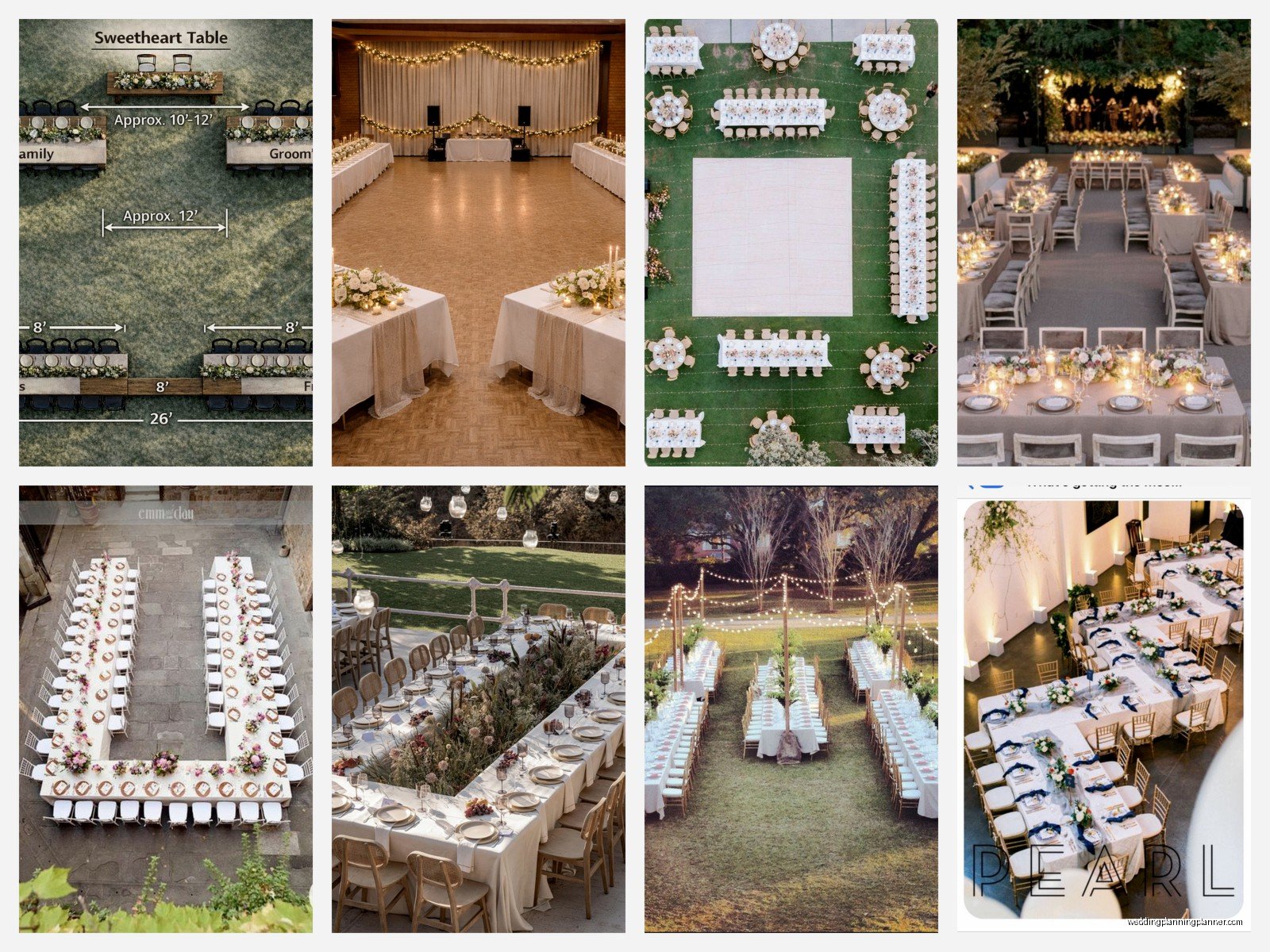
Cluster or Cross Formation: This is where you get creative and arrange rectangles in different configurations—like making a T-shape or an X with four tables, or clustering them in asymmetrical groupings. This works great for smaller weddings or when you’re mixing rectangle and round tables together.
Space Planning Because Nobody Thinks About This Until It’s Too Late
Alright so here’s what you actually need to know about spacing. For each rectangle table, you need about 10-12 feet of space in every direction when you factor in chairs pulled out and people walking behind them. I always tell couples to budget for 12 feet if they want servers to move around comfortably.
The aisle between tables should be at least 4-5 feet wide. Main aisles that lead to exits, the dance floor, or the bar? Those need to be 6-8 feet. Trust me on this. I had a spring 2023 wedding where the venue coordinator insisted we could squeeze tables closer together and it was a disaster. Servers were doing this awkward sideways shuffle thing all night and one groomsman actually knocked over a centerpiece trying to get to the bathroom.
Also calculate your perimeter space—you need at least 3 feet between your tables and any walls, columns, or DJ setups. This is like bare minimum. More is better.
Seating Arrangements Get Weird With Rectangles
So with round tables everyone’s equal, right? But rectangles create hierarchy whether you want it or not. The head seats (the two ends) are automatically more prominent. Some couples love this because you can seat the VIPs at the ends or have couples anchor each end. Other couples hate it because they don’t wanna play favorites.
For an 8ft table, I usually do 4 people on each long side and 1 on each end = 10 people total. But you can also do 3 on each long side and 1 on each end = 8 people, which gives everyone more elbow room. The 6ft tables work better with 3 on each long side and nobody on the ends, or 2-2-2 if you need to maximize seating.
One thing that changes everything is whether you’re doing assigned seats or just assigned tables. With rectangles, assigned seats makes more sense because otherwise everyone awkwardly hovers trying to figure out where to sit and… actually I think assigned seats is better in general but that’s a different rant.
The Head Table Situation
If you’re doing a traditional head table with your wedding party, a rectangle is pretty much your only option unless you wanna do some weird curved monstrosity. Most couples do one long 8ft or 16ft table (two tables pushed together) for the head table.
You can position it a few ways. Center of the room facing out toward all the guest tables is classic. Or you can put it on a slight elevation if your venue has a stage or platform. Some couples do the head table perpendicular to the guest tables instead of parallel, which creates a different flow.
Honestly though? The sweetheart table trend exists for a reason. Just you and your partner at a small table is way less stressful than coordinating a whole wedding party lineup. Your bridesmaids and groomsmen can actually eat with their partners or friends instead of being on display the whole time.
Decor Considerations That Actually Matter
Rectangles give you this long centerline to work with which is both a blessing and a curse. You can do a long garland runner down the entire center, or multiple smaller arrangements spaced out, or one dramatic tall centerpiece in the middle. The problem is when people under-decorate and you’re left with this vast expanse of empty tablecloth which looks… incomplete.
I usually recommend doing a mix of heights and textures. Like maybe three small arrangements down the length of an 8ft table, or a full garland with candles interspersed. Tall candlesticks look amazing on rectangle tables because they fill vertical space without blocking conversation sight lines.
Your table linens matter more with rectangles than rounds. A slightly wrinkled round tablecloth? Nobody really notices. A wrinkled rectangle tablecloth? Everyone sees it because there’s so much visible surface area. Spring for the better linens or at least steam them properly.
The Flow and Function Part Nobody Warns You About
Rectangle tables change how people move through your space. With rounds, guests can navigate pretty freely because there are gaps everywhere. With long banquet tables or tight row configurations, you’re basically creating lanes and corridors. This isn’t bad, it just needs to be intentional.
Think about where your bar is, where the dance floor is, where the exits are. You don’t want a layout where half your guests have to walk past the head table every time they want a drink. I sketch out the actual walking paths on my floor plans now because I learned this the hard way.
Also consider how family-style or plated service will work. Family-style is gorgeous with rectangle tables—very communal, lots of passing dishes around. But you need slightly wider spacing between tables so servers can set down those big platters. Plated service is easier to navigate but you still need clear server routes.
Mixing Rectangles With Other Table Shapes
You don’t have to commit fully to rectangles. Sometimes a mixed layout works better. I’ve done weddings where the head table and immediate family tables were rectangles, but the rest of the room was rounds. Or where cocktail-height rectangle tables were scattered around the perimeter while standard rounds filled the center.
The key is making it look intentional, not like you ran out of one type of table. Group similar shapes together or create clear zones. Like all rectangles in one section, all rounds in another. Or use rectangles for your younger guests who want to be near the dance floor and rounds for older guests who want a more intimate conversation setup.
One layout I really love is doing a long head table with shorter rectangle tables perpendicular to it, creating a T-shape pattern repeated throughout the room. It’s structured but still feels intimate somehow.
Venue Limitations You’re Gonna Run Into
Not every venue can handle every layout. Spaces with lots of columns or weird architectural features? Rectangles can actually be easier because you can work them around obstacles. But venues with really high ceilings sometimes make long banquet tables look lost and empty unless you go big on vertical decor.
Also some venues just don’t have enough rectangle tables and renting them gets expensive fast. This is something to ask about during venue tours. “How many rectangle tables do you have and what sizes?” Because if they only have ten 6ft rectangles and you need seating for 150 people, you’re either renting a ton more or you’re doing a mixed layout whether you planned to or not.
Outdoor weddings with rectangles can be tricky too because you need level ground for that much linear table space. Rounds are more forgiving on slightly uneven terrain.
The Practical Stuff About Linens and Rentals
Rectangle table linens are more expensive to rent than rounds, just FYI. A standard 90×132 inch linen for an 8ft rectangle costs about $5-15 more than a round linen depending on your market. And you’ll probably want table runners too, which is another cost.
Chiavari chairs look amazing with rectangle tables. Farm tables (those rustic wooden rectangles) usually look better with cross-back chairs or wooden folding chairs. Standard banquet chairs are fine but kinda boring—though they’re definitely the cheapest option.
If you’re using standard rectangle banquet tables they’re gonna have those metal legs which aren’t cute. Floor-length linens hide this, or you can rent farm tables which are meant to be seen. Farm tables are usually an upcharge though, like $30-75 per table versus $8-15 for standard rectangles.
Guest Experience Things I Think About
Sitting at a rectangle table feels different than sitting at a round. It’s more linear, more structured. Some guests love it because they’re not trying to talk across a big round table and there’s a clear “your zone” versus shared space. Other guests find it less social because you’re really only interacting with the people directly across from you and on either side.
For older guests or people with mobility issues, rectangles can actually be easier because there’s no awkward squeezing between chairs to reach a spot in the middle of a round table. They can just walk up to their seat from the side. This is something I started noticing more as I’ve worked with couples who have elderly grandparents or guests with disabilities.
The other thing is rectangles create more of a “dinner party” vibe versus the “we’re all at a wedding” vibe of rounds. Whether that’s good or bad depends on what you’re going for. Some couples want that intimate dinner party feel. Others want the traditional wedding reception energy.
I should probably mention that rectangle tables are amazing for small weddings under 50 people. You can do one or two long tables and it feels abundant and intentional rather than sparse. Trying to fill a big venue with just rounds when you only have 40 guests? That looks sad. But three beautiful long tables? That looks like a choice, you know what I mean…
Anyway, the main thing with rectangle table layouts is just map it out properly before you commit. Get the actual dimensions of your venue, know exactly what size tables you’re working with, and literally draw it to scale. I use a digital floor plan tool now but honestly graph paper works fine. Just don’t wing it or you’ll end up with tables crammed together and angry caterers and that’s not how you wanna spend your wedding night dealing with logistical disasters that could’ve been avoided with like twenty minutes of planning.