
Planning Guides, Style Guide
Plantable Wedding Invitations: Seed Paper Eco-Friendly
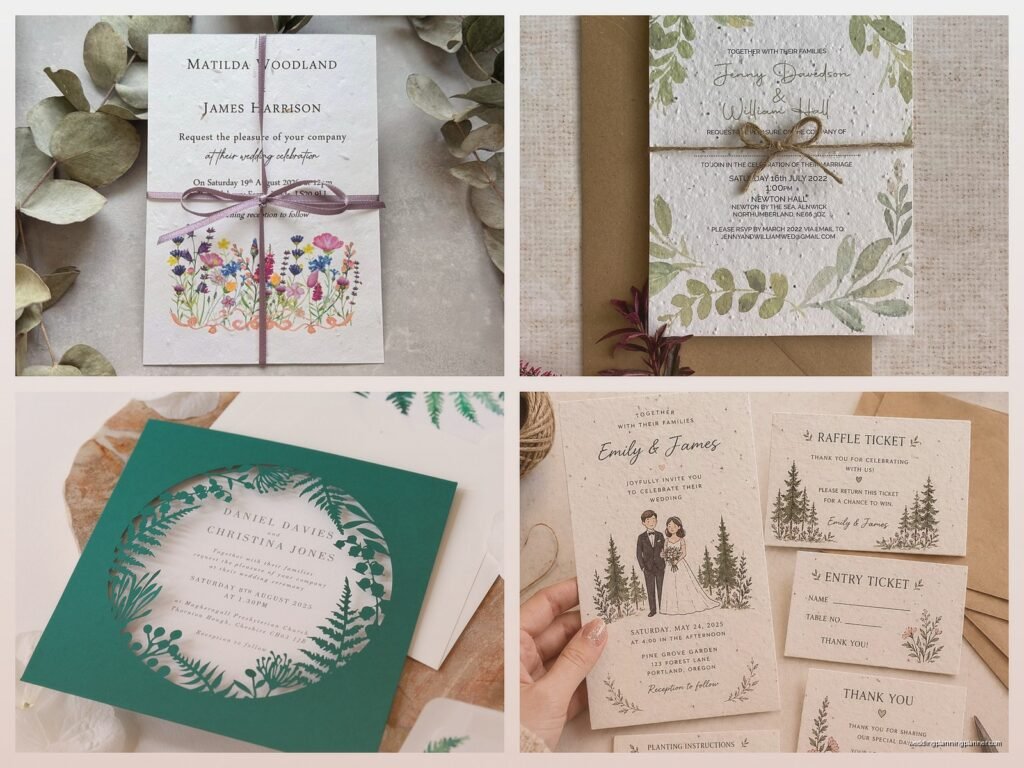
May
What Actually Is Seed Paper and Why Should You Care
So seed paper is basically exactly what it sounds like—paper embedded with seeds that you can plant after you read whatever’s printed on it. For wedding invitations, this means your guests get your details, show up to your wedding, then stick the invite in some dirt and grow flowers or herbs instead of throwing it in a drawer or the trash. The paper biodegrades and the seeds germinate, which is pretty cool when you think about how most invitations just… exist forever in landfills.
I started working with plantable invitations around spring 2023 when this couple came to me absolutely determined to have a zero-waste wedding. Like, they showed up with spreadsheets about carbon footprints and I was just trying to figure out their color palette. But they got me thinking about seed paper seriously, and honestly it’s kinda taken over a chunk of my business now.
Types of Seed Paper You’ll Actually Find
Not all seed paper is created equal, which nobody tells you until you’ve already ordered samples. You’ve got your standard wildflower mix, which is what most companies default to. Then there’s herb varieties—basil, cilantro, parsley. Some companies do vegetables but I’m gonna be honest, I haven’t seen those work as well for the aesthetic most couples want.
The texture varies wildly too. Some seed paper is smooth enough that you can print on it with a regular inkjet printer at home, which sounds convenient until you realize it jams like crazy. Other varieties are super thick and textured, almost like handmade paper, and you gotta use letterpress or screen printing or just… write on them by hand if you’re feeling ambitious.
There’s also this newer option where the seeds are in a separate tear-off section, so the main invitation part is regular recycled paper and only a portion is plantable. Honestly this bugs me because it feels like greenwashing? Like you’re not really committing to the eco-friendly thing, you’re just doing it enough to say you did it. But some couples prefer it because the printing comes out cleaner.
Colors and What They Mean for Your Seeds
Seed paper comes in different colors—natural beige/cream, white, pastels, even some bolder colors. But here’s the thing nobody mentions upfront: the dyes used to color the paper need to be vegetable-based or soy-based for the seeds to actually survive and grow. I’ve seen couples order these gorgeous deep purple invitations only to find out later that the dye concentration was so high that nothing would grow from them.
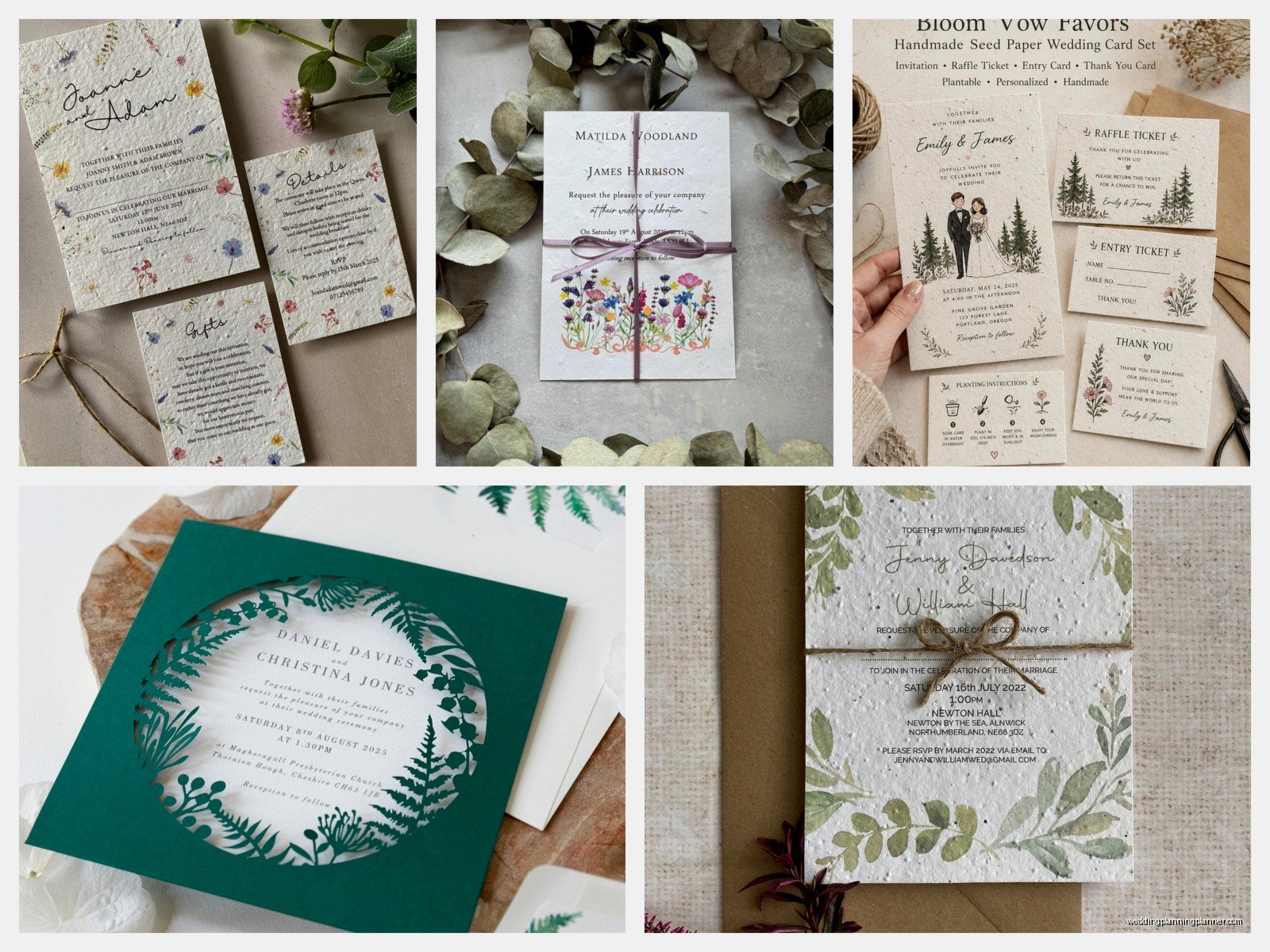
Always ask your supplier about their dye composition. If they can’t give you a straight answer, that’s a red flag.
Where to Actually Buy This Stuff
You can get seed paper from specialty wedding stationery companies, eco-friendly paper suppliers, or even Etsy. The quality difference is massive though. I usually recommend ordering samples from at least three different suppliers before committing because what looks good in photos might feel like cardboard in person.
Some companies I’ve worked with: Botanical PaperWorks (they’re based in Canada but ship everywhere), Bloomin (good for custom seed mixes), and a bunch of smaller Etsy sellers who make it by hand. The handmade stuff is usually higher quality but also way more expensive and has longer lead times.
If you’re DIYing, you can actually buy seed paper in sheets or rolls. The sheets are easier for home printing but more expensive per unit. Rolls are cheaper but you’ll need to cut them yourself, and if your paper cutter isn’t sharp you’re gonna have a bad time with the rough edges.
Printing on Seed Paper Without Losing Your Mind
This is where it gets tricky. Seed paper doesn’t behave like regular paper because it’s thicker, more textured, and the seeds create bumps in the surface. Your home printer will probably hate it.
Letterpress is actually the gold standard for seed paper invitations because the impression creates a beautiful debossed effect and the ink sits on top of the texture instead of trying to absorb into it. But letterpress is expensive—like, really expensive. You’re looking at $8-15 per invitation for letterpress printing, sometimes more depending on colors and complexity.
Digital printing works on smoother seed paper varieties. You need to adjust your printer settings to the thickest paper option and do test runs. Lots of test runs. I had a bride in summer 2021 who insisted on printing 150 invitations herself and she went through four printer cartridges and countless jammed sheets before getting it right. She called me crying at like 10 PM on a Tuesday and I had to talk her through the printer settings while my cat was knocking things off my desk in the background.
Screen printing is a middle-ground option that works really well for simple designs. It’s more affordable than letterpress but still gives you that handcrafted look.
Some couples go the handwritten route, which actually looks stunning on seed paper. You can print a light template on the paper and then hand-letter over it, or just go fully freehand if you’ve got nice handwriting or hire a calligrapher. Time-consuming, yes, but the result is gorgeous.
Ink Matters More Than You Think
Regular ink is often petroleum-based and not great for planting. You want soy-based or vegetable-based inks. Most professional printers who work with eco-friendly materials will use these anyway, but if you’re printing at home, check your ink cartridges. HP and Epson both make soy-based ink options now.
Designing Your Plantable Invitations
Keep it simple. I know you want to include seventeen different fonts and a watercolor background and photos and… just don’t. Seed paper has a natural texture and color variation that’s part of its charm. Minimalist designs work best—think simple typography, maybe a small botanical illustration, clean lines.
The natural color of seed paper (usually cream or light brown) means you’re working with an off-white background. Dark text shows up better than light text. If you’re using colored seed paper, make sure there’s enough contrast with your ink color.
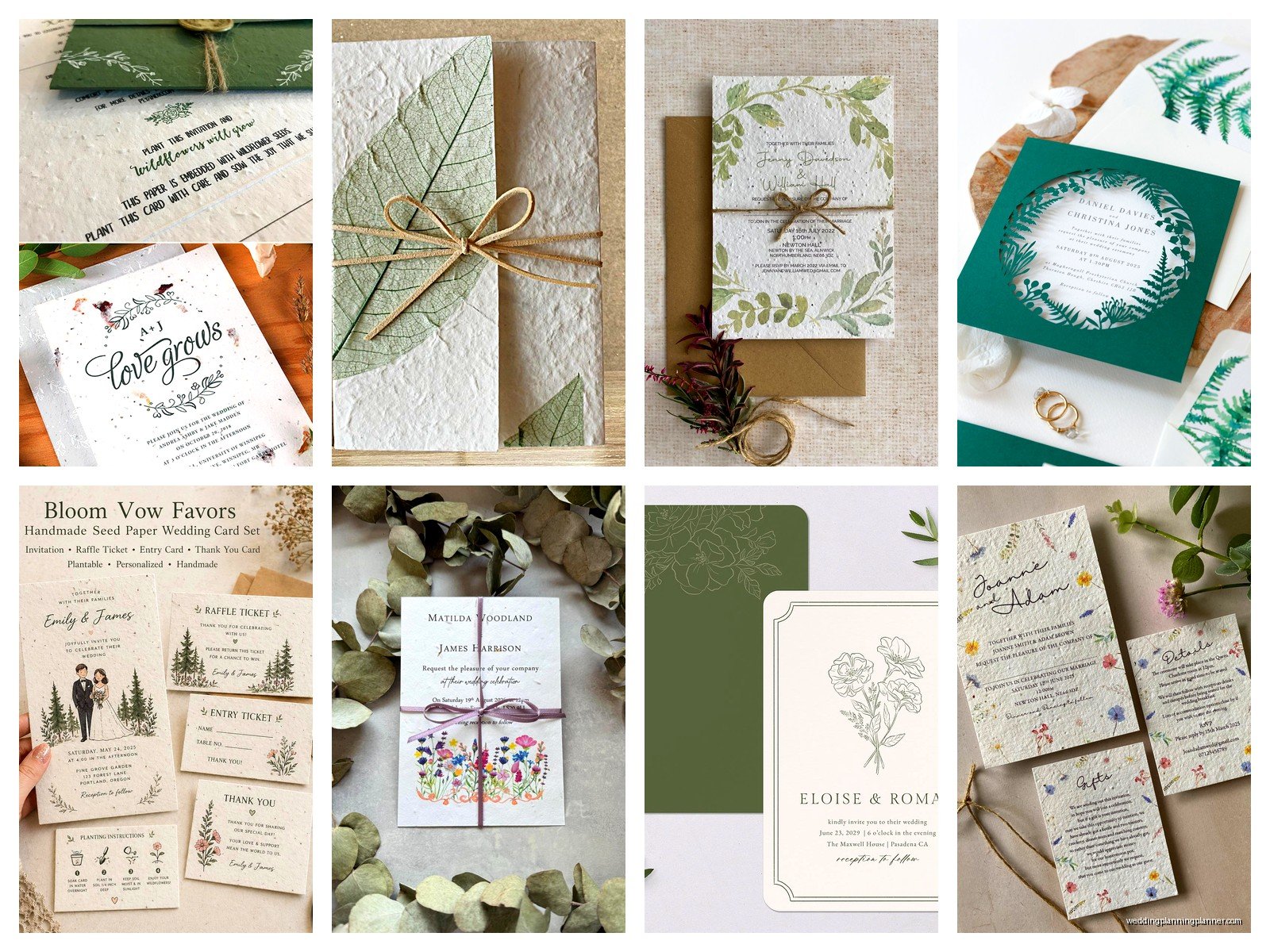
Size-wise, standard invitation sizes work fine. A5 (5.8 x 8.3 inches) is popular, or you can do a square format. Just remember that seed paper is heavier than regular paper, so larger sizes mean heavier invitations mean higher postage costs.
The Planting Instructions Situation
Your guests need to know these invitations are plantable, otherwise they’ll just… not plant them. You gotta include instructions somewhere. Some options:
- Print instructions directly on the back of the invitation
- Include a small separate card with planting instructions
- Add a note on your wedding website with detailed instructions
- Create a little sticker or stamp that says “Plant Me!” with basic directions
The instructions don’t need to be complicated. Something like: “This invitation is made from seed paper embedded with wildflower seeds. After the wedding, plant this paper in soil, water regularly, and watch flowers grow!” That’s usually enough, though some couples include more detailed steps.
What Seeds Actually Work Best
Wildflower mixes are popular because they’re hardy and grow in most climates. But if you want to get specific, consider your wedding season and your guests’ locations. Are most of your guests in a similar climate zone? You could choose seeds that thrive there.
Some options: forget-me-nots (cute for a wedding, right?), chamomile, lavender, basil, thyme, bee-friendly flower mixes. Avoid anything too temperamental or that requires specific growing conditions because your Great Aunt Susan is not gonna fuss over finicky seeds.
Envelopes and Mailing Logistics
Seed paper invitations are thicker and heavier than regular invitations, which means postage costs more. A standard seed paper invitation might need extra postage—sometimes two stamps instead of one. Take a fully assembled invitation to the post office and have them weigh it before you buy stamps for all of them.
For envelopes, you’ve got a few options. Some people use regular envelopes, some use recycled paper envelopes, some go all-in with seed paper envelopes too. Seed paper envelopes are cool but they’re also kinda rough on the postal system’s equipment, and I’ve heard stories of them arriving pretty beat up.
I usually recommend recycled paper envelopes or tree-free envelopes made from cotton or hemp. They’re eco-friendly without being as fragile as seed paper.
Hand-canceling is your friend here. It costs a bit extra but it means the post office processes your invitations by hand instead of running them through machines, which reduces damage. For textured seed paper invitations, this is pretty much necessary unless you want them to arrive looking like they went through a blender.
Cost Breakdown Because Nobody Talks About This
Let’s be real about money. Seed paper invitations cost more than regular paper invitations, sometimes significantly more.
DIY seed paper invitations: You’re looking at roughly $1-3 per invitation for the paper itself, depending on quality and where you buy it. Add ink costs, envelope costs, assembly time, and postage. Total: maybe $3-5 per invitation if you’re doing everything yourself.
Semi-custom from an Etsy seller or small stationery company: Usually $4-8 per invitation, sometimes more depending on customization and printing method.
Fully custom with letterpress printing: Sky’s the limit, but realistically $8-20 per invitation. I’ve seen couples spend more than that for super elaborate designs.
For comparison, regular printed invitations might cost $1-5 per invitation. So yeah, you’re paying a premium for the eco-friendly factor.
Things That Can Go Wrong (And They Will)
Seeds can fail to germinate. This happens. Sometimes it’s the paper quality, sometimes it’s how the guest planted them, sometimes it’s just bad luck. Set expectations accordingly—this is a nice gesture, not a guarantee of a garden.
The texture can be inconsistent. Because seed paper is often handmade or made in small batches, you might notice variations in thickness, texture, or seed distribution. Some people love this organic quality, others find it annoying. Order extra invitations to account for ones you’ll reject due to quality issues.
Printing mishaps are common. The paper jams, the ink smears, the text doesn’t line up right. Build in extra time for test prints and reprints. Like, way more time than you think you need.
Moisture is seed paper’s enemy during storage. If your invitations get damp before mailing, the seeds might start germinating in the envelope, which is… not ideal. Store them in a cool, dry place and don’t make them too far in advance.
Assembly Tips From Someone Who’s Done This Too Many Times
Set up an assembly line if you’re DIYing. Seriously, get some friends, buy pizza, put on a show in the background (I usually go with something I’ve seen before so I don’t have to pay attention—lately it’s been old episodes of The Office), and make an evening of it.
The order usually goes: print invitations, let them dry completely (this takes longer with seed paper), trim if necessary, stuff envelopes, seal envelopes, address envelopes, add stamps. Don’t try to do multiple steps at once or you’ll mess something up.
For sealing envelopes, regular lick-and-stick envelopes work fine, but some people prefer glue sticks or envelope moisteners because seed paper can be dusty and you don’t want to be licking seed dust all evening.
Addressing can be done with a printer if your envelopes are smooth enough, or hand-lettered, or with address labels. I usually recommend darker ink for addresses because it shows up better against the natural envelope colors most people choose for eco-friendly weddings.
The Greenwashing Thing I Mentioned Earlier
Look, I need to say this even though it might sound harsh. Some companies slap “eco-friendly” on their seed paper products but then the rest of their process is not environmentally sound at all. They might use synthetic dyes, petroleum-based inks, or produce the paper in ways that aren’t actually sustainable.
Ask questions. Where’s the paper made? What are the seeds embedded in it? What kind of dyes and inks are used? Is the company actually committed to sustainability or just marketing to the eco-conscious wedding crowd?
Also, if you’re doing seed paper invitations but then having a wedding with a million other non-eco-friendly elements, that’s fine—nobody’s perfect—but maybe don’t make the invitations your whole “look how green we are” talking point. It comes across as performative.
Alternatives If Seed Paper Isn’t Your Thing
Maybe you looked into all this and you’re thinking “nah, this sounds like too much work” or “this is too expensive” or “I really want a specific design that won’t work on seed paper.” That’s totally valid.
Other eco-friendly invitation options: recycled paper (way easier to work with), tree-free paper made from cotton or bamboo, digital invitations (the most eco-friendly option honestly), or even going old-school with plantable favors instead of plantable invitations.
You could do regular invitations and then include a packet of seeds as a separate favor, with a note like “In lieu of traditional favors, please plant these seeds and think of us when they bloom.” Less complicated, still eco-friendly gesture.
Timeline for Ordering and Sending
Start earlier than you would for regular invitations. Like, way earlier. If you’re ordering custom seed paper invitations from a company, you’re looking at 6-8 weeks for production, sometimes longer during wedding season. Add time for shipping, time for you to review them and potentially request changes or reprints, time for assembly, and time for mailing.
A rough timeline: Order samples 6-7 months before your wedding. Choose your design and finalize details 5-6 months out. Place your order 4-5 months before the wedding. Receive and review invitations 3 months out. Assemble and mail 8-10 weeks before the wedding.
If you’re DIYing, you can compress this timeline a bit, but don’t underestimate how long the printing and assembly process takes. I watched a groom spend an entire weekend printing 200 invitations because he kept having to troubleshoot printer issues and… it was a whole thing.
Storage Before and After
Before mailing, store your invitations flat in a cool, dry place. A closet works fine, just not a basement or garage where humidity might be an issue. Keep them away from direct sunlight too, which can fade the ink.
Tell your guests to store the invitations in a dry place until they’re ready to plant. If someone saves their invitation for months in a damp bathroom or whatever, the seeds might not be viable anymore. Including storage instructions with the planting instructions is smart—something like “Keep this invitation in a dry place until you’re ready to plant.”
What Actually Happens When People Plant Them
Honestly? A lot of people don’t plant them. I know that’s not what you want to hear, but it’s the truth. Some people don’t have outdoor space. Some people have black thumbs. Some people just forget or don’t want to deal with it.
The people who do plant them usually love it though. I’ve had clients send me photos of flowers that grew from their invitations and it’s genuinely sweet. But go into this knowing that it’s a nice option for guests who are into it, not something every single guest will utilize.
Some guests will plant them wrong—they’ll plant the paper too deep, or not water it enough, or plant it in terrible soil. That’s okay. The gesture is what matters, not the success rate of germination across all your guests.