
Planning Guides, Style Guide
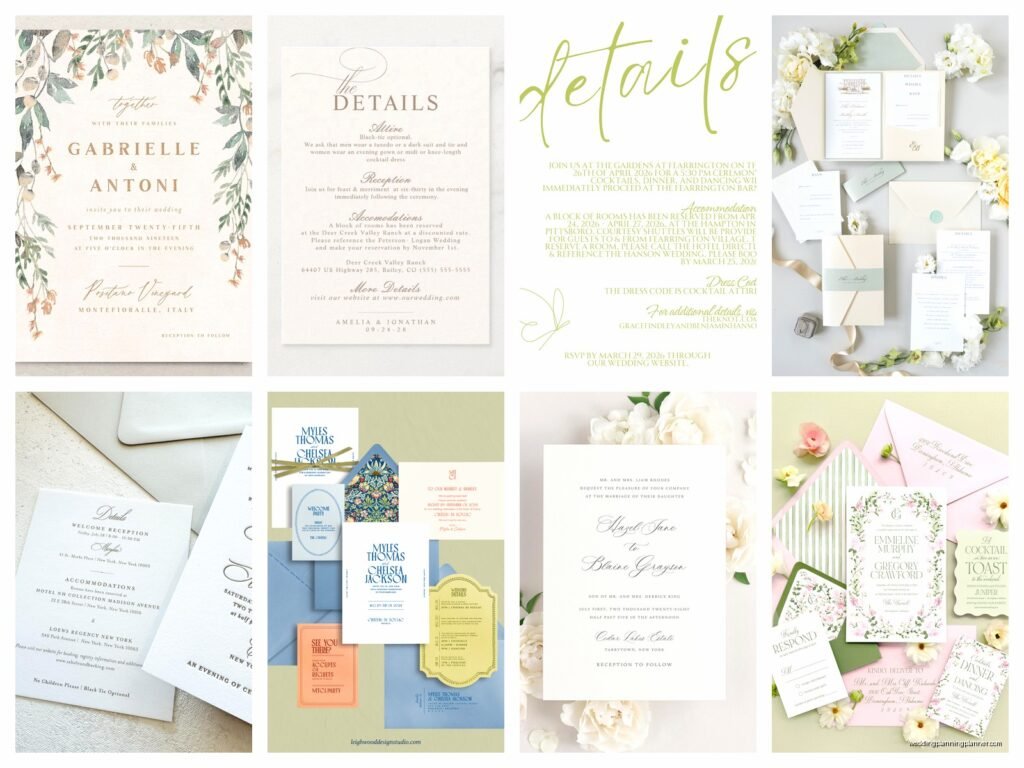
Wedding Invitation Details Card: Information Insert Guide
May
Details Cards Are Basically Your Wedding’s Instruction Manual
So you’ve got your main invitation sorted out and now you’re staring at this blank space wondering what the heck goes on a details card and honestly, I get asked this like every single week. The details card is basically where you dump all the practical info that would make your beautiful main invitation look cluttered and weird. Think of it as the FAQ section of your wedding stationery suite.
First thing – you don’t always need one. If you’re having a super simple wedding where everything’s at one venue and there’s literally nothing extra to communicate, skip it. But most weddings? Yeah, you’re gonna need this thing.
What Actually Goes On This Card
The whole point is giving guests information they need to show up prepared and not confused. I had this bride back in spring 2023 who tried to cram like fourteen different pieces of information onto her details card and it looked like a ransom note, so let’s talk about what’s actually important versus what can go on your website.
Reception details if it’s at a different location than the ceremony – this is huge. You’d be shocked how many people forget to include the actual address of the reception venue. Not just the name, the ADDRESS. I’ve seen guests show up at the wrong country club because there were two locations with similar names in the same city.
Accommodation information is pretty standard. List 2-3 hotel options with booking codes if you have room blocks set up. Include the code expiration date because hotels will release those rooms and then your aunt Linda will call you crying that there’s no discount available anymore. You can also mention if you have a shuttle service running between hotels and venues – super helpful for out-of-town guests who don’t wanna deal with parking or drinking and driving situations.
Dress Code Stuff That People Actually Need
Okay so dress code is kinda tricky because you want people to know what to wear but you also don’t want to sound demanding? I usually recommend keeping it simple. “Black Tie Optional” or “Garden Party Attire” or “Cocktail Attire” – just pick one phrase and stick with it. What drives me absolutely nuts is when couples write like a whole paragraph explaining their dress code vision. Your guests don’t need a dissertation, they just need to know if they’re wearing a suit or a tuxedo.
If your wedding’s outdoors, definitely mention that. “Ceremony will be held on the lawn – stiletto heels not recommended” is perfectly acceptable and actually helpful. I watched someone’s grandmother nearly break her ankle at a garden wedding in summer 2021 because nobody warned her about the grass situation.
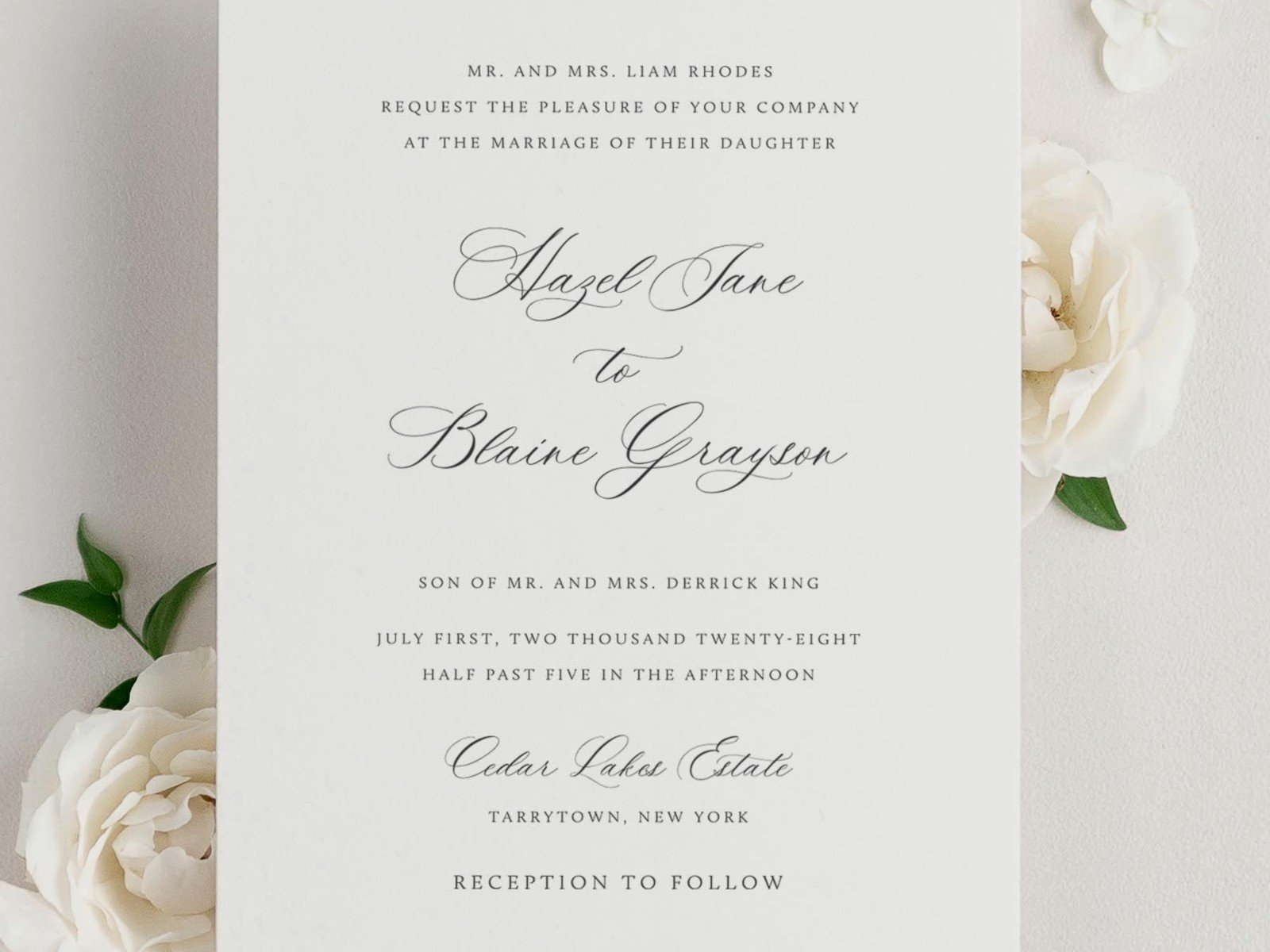
Website Information Goes Here Too
Your wedding website URL absolutely belongs on the details card. This is where you can direct people for like registry info, full schedule, travel tips, all that stuff that doesn’t need to be on physical paper. Keep the URL short if possible – nobody wants to type out “www.sarahandmichaelsmostbeautifulweddingcelebration2025.com” into their phone.
Some couples get weird about putting registry info on any printed materials but honestly, putting “For registry information, please visit our website” is totally fine and not tacky. People are gonna ask where you’re registered anyway, might as well make it easy for them.
The Timing and Schedule Stuff
If you’ve got a specific timeline for the day, you can include that. Like if cocktail hour starts immediately after the ceremony, or if there’s a gap between ceremony and reception, guests need to know that. Nobody wants to show up at 4pm for a 6pm reception because they didn’t realize there was a two-hour break.
I generally don’t recommend putting super detailed timelines on the details card though – save that for your wedding website or a separate day-of timeline card if you really want. The details card should just hit the highlights. “Ceremony begins promptly at 4:00pm” and “Reception to follow” is usually enough.
Food and Dietary Stuff
This is where it gets interesting because you’ve got options. Some couples include a line like “Dinner and dancing to follow” so guests know they’re getting a full meal. If you’re doing a cocktail reception instead of a sit-down dinner, definitely mention that – “Join us for cocktails and hors d’oeuvres” so people can eat lunch beforehand and not expect a full meal.
The RSVP card is usually where you handle meal selections and dietary restrictions, but if you want to give people a heads up on the details card, you can include something like “Please indicate dietary restrictions on your RSVP card.” Just don’t make people list out their restrictions on the details card itself – that’s what response cards are for.
Weather Contingency Plans
For outdoor weddings, I always recommend mentioning your backup plan. “In the event of inclement weather, ceremony will be moved indoors” is simple and reassuring. You don’t need to explain your whole weather-monitoring strategy or… actually, one couple tried to include a detailed explanation of how they’d decide whether to move things indoors and it was like reading a meteorology textbook.
My cat just knocked over my coffee which is kinda perfect timing for a break but anyway – back to weather stuff. If your ceremony’s outside but you’ve got an indoor backup, say so. It helps anxious guests (especially older ones) feel better about attending.
What About Kids and Plus-Ones
This is touchy but if you’re having an adults-only wedding, the details card is an okay place to mention it. Keep it polite – “We have reserved this evening for adults only” or “Due to limited space, we are unable to accommodate children.” Some people will still try to bring their kids but at least you communicated clearly.
Plus-one information should really be handled through your addressing system (only put both names on the envelope if both people are invited), but if you want to be extra clear, you can include a line on your website and reference it on the details card.
Parking and Transportation Info
If parking’s complicated or limited, mention it. “Valet parking available” or “Street parking only – please plan accordingly” saves people stress when they arrive. If you’re in a city where parking is a nightmare, definitely address this. I had a wedding in downtown Chicago where the couple arranged for a parking garage discount and included that code on their details card – their guests were so grateful.
Shuttle information is important too if you’re providing transportation. List pickup times and locations clearly. “Shuttles will run from the Marriott Hotel beginning at 3:30pm, with the last shuttle departing at 4:00pm” – that specific timing helps people plan.
Photography Stuff That’s Become More Common
Some couples are doing unplugged ceremonies now and honestly, I support it. If that’s your thing, you can mention it on the details card: “We invite you to be fully present during our ceremony – please turn off all devices and refrain from photography.” It’s your wedding, you can ask people to put their phones away for twenty minutes.
Hashtag information can go here too if you want guests using a specific hashtag for social media posts. Keep it short and memorable though – nobody’s gonna remember #SarahAndMichaelsBestDayEverInTheWholeWorld2025.
Size and Design Considerations
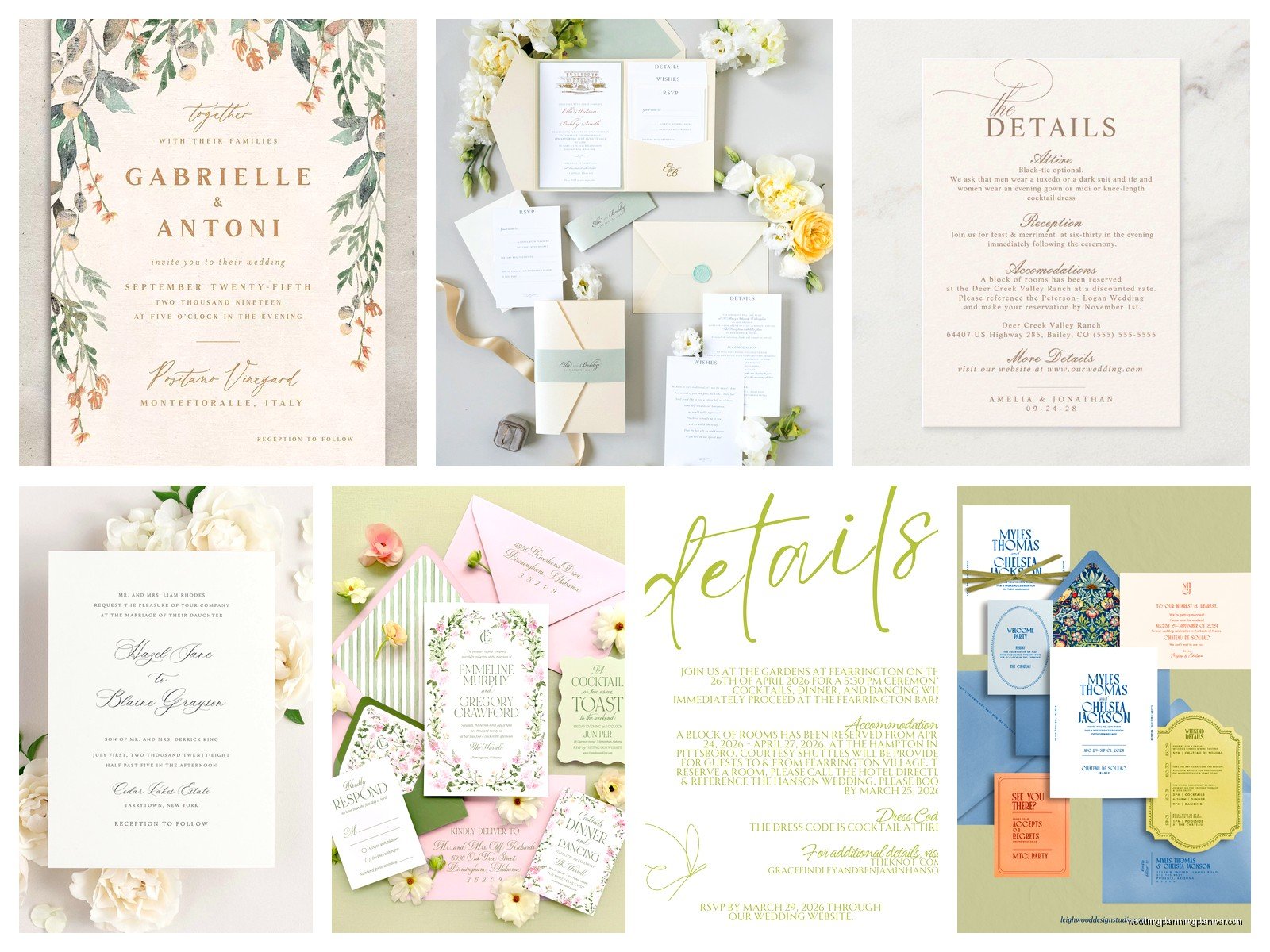
Details cards are usually smaller than your main invitation – typically 4×6 or 5×7 inches. They should coordinate with your invitation design but they don’t need to be fancy. Actually, I kinda prefer when they’re simpler because it’s just information, you know? The main invitation is the pretty one.
Font size matters here because you’re fitting more text. Don’t go smaller than 10-point font or your grandmother won’t be able to read it without a magnifying glass. I learned this the hard way with a bride who insisted on 8-point font and we got so many calls from confused elderly relatives.
You can use both sides of the card if you need to, but front-only is cleaner. If you’re going to use the back, make sure your printer can handle it and that the information flow makes sense – like don’t put critical venue info on the back where someone might miss it.
What Doesn’t Need To Be On Your Details Card
Registry information beyond a website reference – listing out specific stores looks gift-grabby even though we all know people want registry info. Your wedding website can handle the details.
Your entire love story or how you got engaged. Nah, save that for the website or don’t include it at all. The details card is functional.
Extremely specific instructions about what not to wear. I once saw a details card that said “Please do not wear red, white, or any shade of cream as these colors are reserved for the bridal party” and like… that’s too much. Pick your battles.
Overly cutesy wording that makes the information hard to understand. “Join us for a night of merriment and magical memories as we dance under the stars” doesn’t tell me what time dinner is or if there’s actually gonna be food.
Wording Examples That Actually Work
For accommodation: “Room blocks have been reserved at the following hotels under the name Smith-Jones Wedding. Please book by June 1st.”
For reception location: “Reception immediately following at [Venue Name], [Full Address]”
For transportation: “Complimentary shuttle service will be provided from the ceremony to the reception venue”
For dress code: “Cocktail Attire – Ceremony and reception will be held outdoors on grass”
Printing and Paper Quality
You don’t need to go as fancy with the details card as you do with the main invitation. If your invitation is letterpress on thick cotton paper, your details card can be digitally printed on regular cardstock. It’s fine. Nobody’s judging your details card paper weight.
That said, keep it professional-looking. Don’t print these on your home printer unless you’ve got a really good printer and quality cardstock. The slight cost of professional printing is worth it so they don’t look like you made them at Staples the night before (even if you kinda did).
Coordinating With Your Other Insert Cards
Most wedding invitation suites have multiple pieces – invitation, details card, RSVP card, maybe a weekend events card if you’ve got multiple festivities happening. They should all look like they belong together but serve different purposes. Don’t repeat information across cards – that’s just wasteful and confusing.
The details card handles logistics. The RSVP card handles responses and meal choices. If you’re having a welcome party or farewell brunch, those can go on a separate events card or on your details card if there’s room. Just make sure the information architecture makes sense so guests can find what they need quickly.
What really annoyed me recently was a couple who put conflicting information on their details card versus their website and then got mad when guests were confused. Keep your information consistent across all platforms – if the ceremony starts at 4pm on your details card, it better say 4pm on your website too.
Digital Versus Physical Details Cards
Some people are skipping physical details cards entirely and just directing everyone to their wedding website for all the info. This can work if your crowd is tech-savvy, but I always recommend having at least a basic physical details card because not everyone checks websites regularly, especially older guests.
You can do a hybrid approach – minimal info on a physical card with “For complete wedding details and schedule, visit [website]” prominently displayed. This gives you the best of both worlds and you can update website information if things change without having to reprint cards.
The main thing is making sure your guests have what they need to show up at the right place, at the right time, wearing appropriate clothes, and knowing what to expect. Everything else is just extra. Keep it clear, keep it simple, and proofread it like seventeen times because there’s always a typo that sneaks through and then you’re stuck with 150 details cards that have the wrong venue address and trust me, that’s not a fun conversation to have with your printer or your partner.