Planning Guides, Style Guide
Monogram Wedding Invitations: Custom Initial Logo Designs
May
Okay so monogram wedding invitations are basically everywhere right now
And honestly they’re one of those details that can make your whole invitation suite look way more expensive and cohesive than it actually is. I had this couple back in spring 2023 who were totally overwhelmed with their wedding planning and the bride literally texted me at like 10pm saying “I don’t even know what our wedding LOOKS like” and I told her we’d start with a monogram and build everything from there. It worked perfectly.
The thing about custom initial logos is that they’re not just for the invitation itself—you’re gonna use this thing everywhere. Programs, napkins, dance floor decals, thank you cards, the wedding website header. So you really need to get it right because once you commit to a design and order 500 napkins with it, you’re kinda stuck.
Figure out your initials situation first
This sounds obvious but I’ve had SO many couples mess this up. The traditional format for a married couple’s monogram is: Bride’s first initial, Last name initial (bigger in the middle), Groom’s first initial. So if you’re Sarah and James getting married and becoming the Thompsons, it’s S-T-J with the T being larger and centered.
But here’s where it gets messy. If you’re not taking the same last name, you have options. You can do both first initials with an ampersand between them. You can do a compound monogram with both last names. You can just… make up your own system because honestly who’s gonna police your monogram choices?
For same-sex couples I usually suggest going alphabetically by first name or by whoever’s name sounds better first when you say it out loud. There’s no rule book here and anyone who tells you there is can honestly—anyway, you get to decide what feels right.
When to use single initial vs three letters
If you want something really clean and modern, sometimes just using the shared last name initial works better. Especially if your first initials are like… I don’t know, weird letters that don’t look good together. I had a couple with initials Q and X once and those letters are just visually awkward no matter what font you use.
Single initial monograms also work better when you’re doing really ornate designs with lots of flourishes and botanical elements around the letter. Three letters can start looking crowded.
Choosing your design style and this is where it gets fun
You’ve got basically infinite options which is both exciting and paralyzing. Let me break down the main categories I work with:
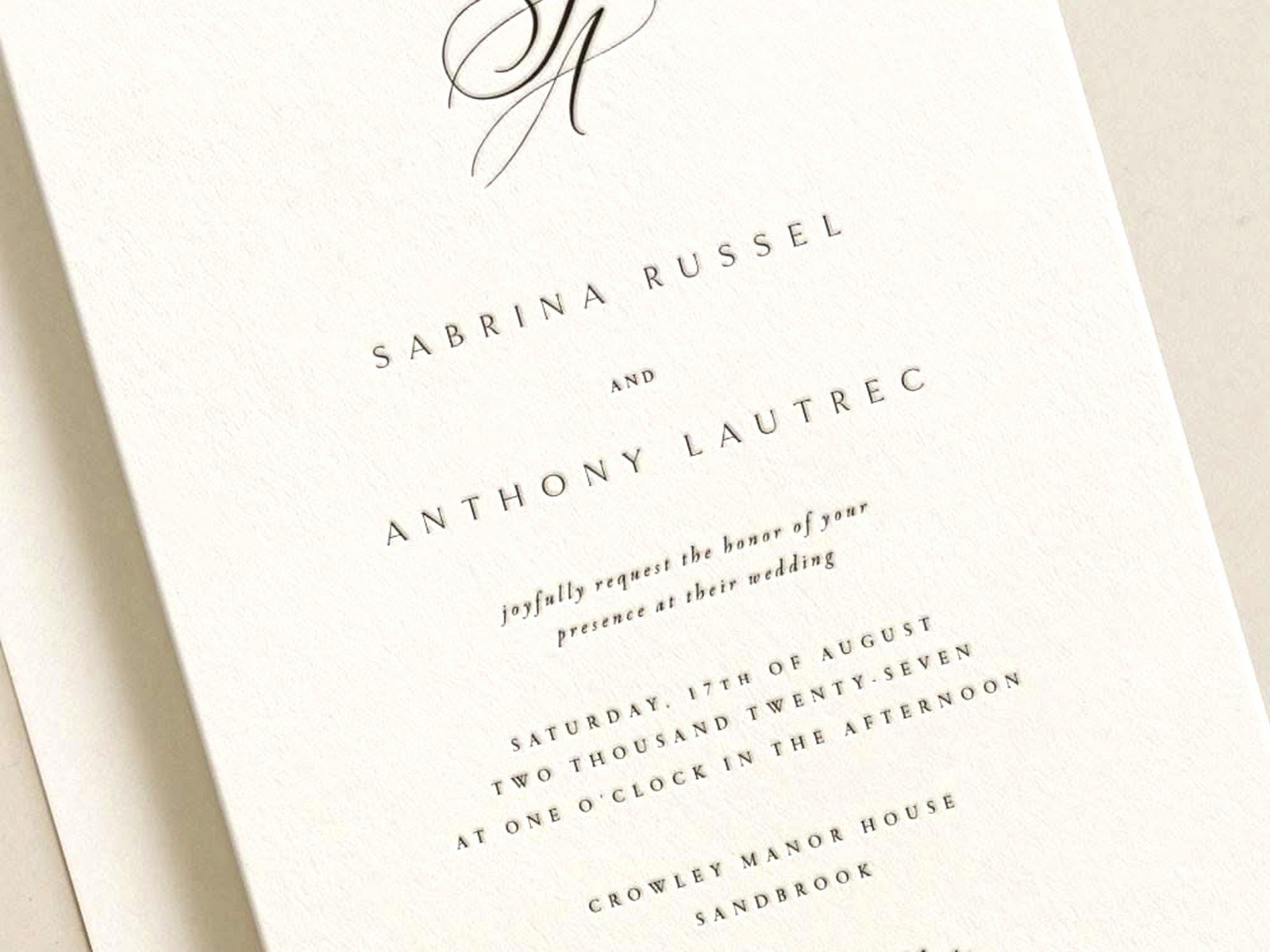
Classic formal monograms are what you picture when you think old money wedding invitations. Serif fonts, traditional layout, maybe a circular border or laurel wreath around it. These work great for black tie weddings, historic venues, very traditional families. They’re elegant but they can read as stuffy if that’s not your vibe.
Modern minimal monograms are having a huge moment. Think sans-serif fonts, lots of negative space, maybe just the initials stacked vertically or in a really simple geometric frame. These look incredible on acryllic invitations or with foil stamping. My cat walked across my keyboard while I was designing one of these last month and honestly his paw-print version looked kinda cool too but we didn’t go with it.
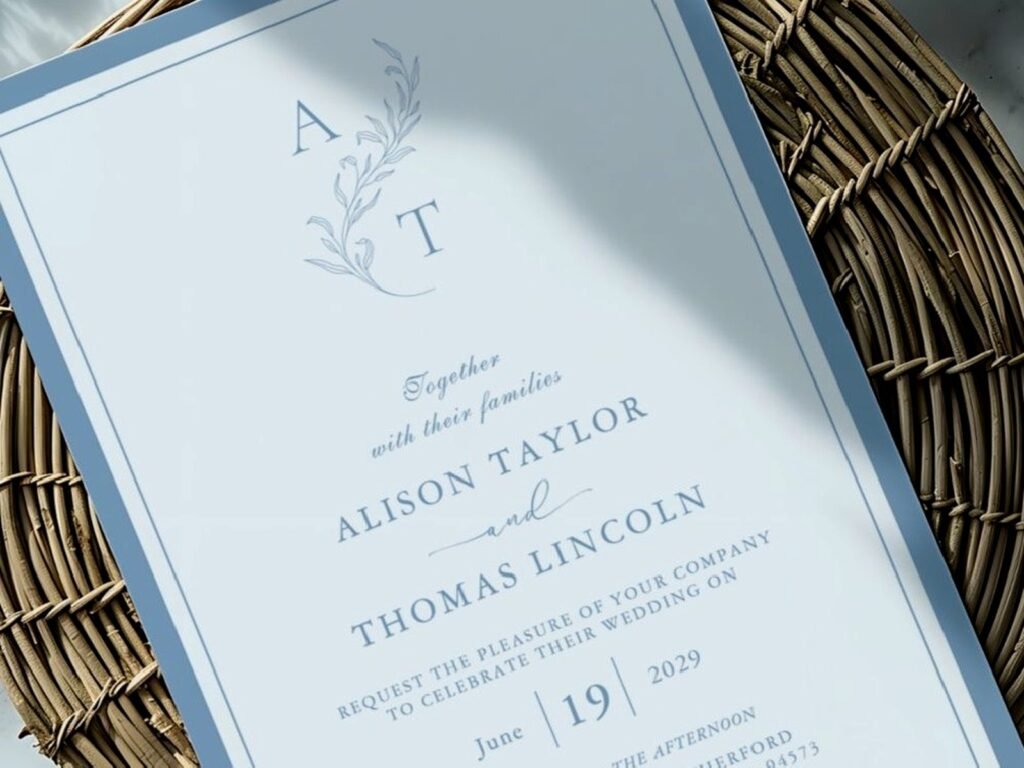
Botanical and illustrated monograms have custom drawings around or incorporated into the letters. Flowers, leaves, branches, sometimes even venue illustrations. These take the most time to create and cost more but they’re so personalized. You can include flowers from your bouquet, plants native to your wedding location, whatever.
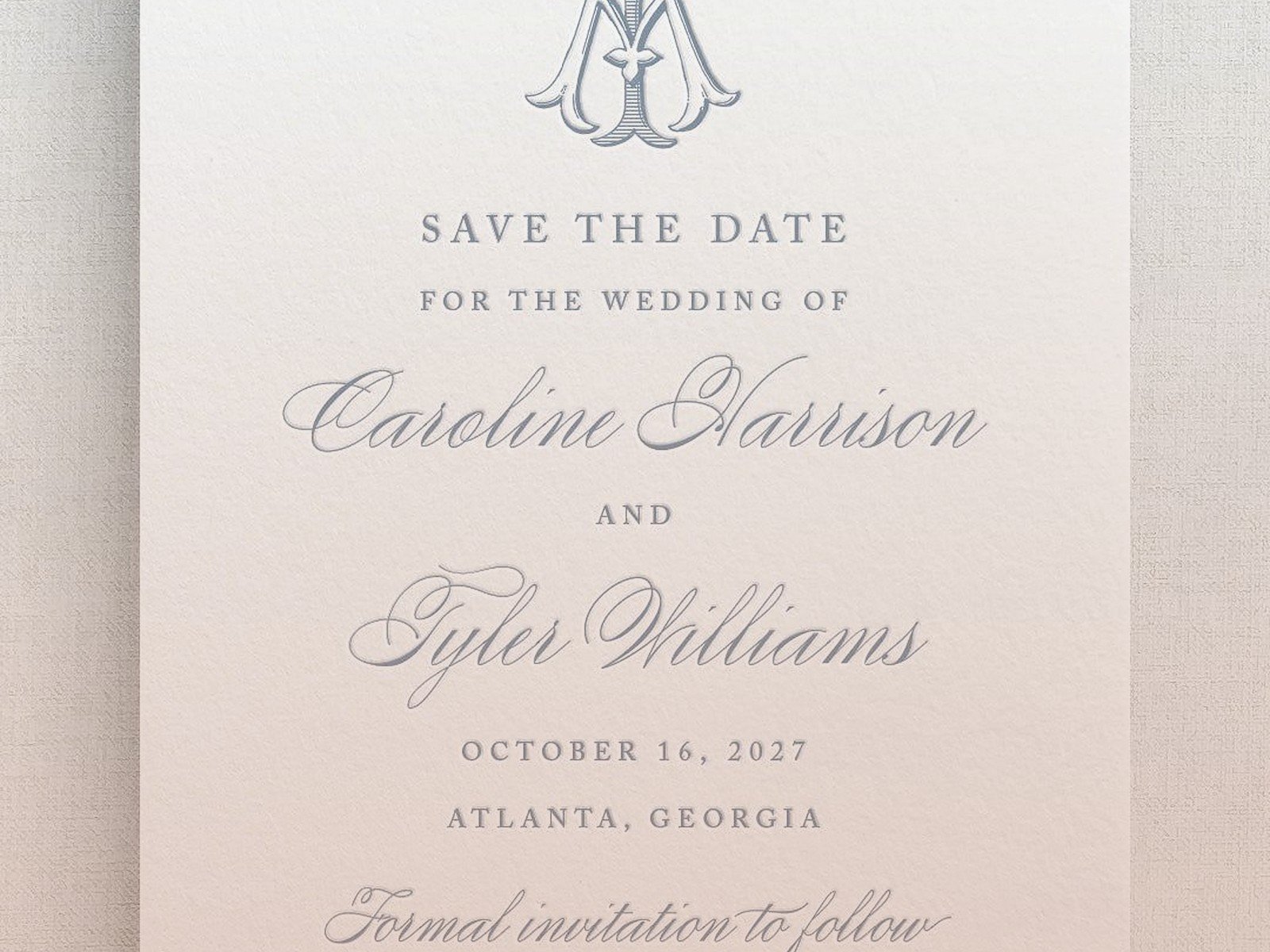
Crest-style monograms look like family crests or coat of arms. They usually have a shield shape, maybe a banner with your wedding date, decorative elements. These work really well for weddings with a specific theme—I did one for a couple getting married at a castle in Ireland and we incorporated Celtic knots and it was gorgeous.
Where to actually get your monogram designed
So you’ve got a few routes here and they vary wildly in price and quality.
DIY websites like Minted or Zazzle have monogram generators where you pick a template and plug in your letters. These are the cheapest option, usually free or included with your invitation order. The downside is you’re limited to their existing designs and approximately 47,000 other couples are using the same one. But if budget is tight, this works fine.
Etsy designers are the middle ground I recommend most often. You can find designers who’ll create a custom monogram for anywhere from like $50 to $300 depending on complexity. Make sure you’re getting the actual design files—you want a vector file (AI or EPS format) plus high-resolution PNG files with transparent backgrounds. This is important because you’ll need to send these files to different vendors for different products.
Professional stationery designers or branding designers are the high-end option. We’re talking $500+ just for the monogram design. But you’re getting multiple revision rounds, perfect execution, and usually they’ll help you think through how it’ll be used across all your materials. Worth it if you’re doing a really elaborate wedding with tons of custom details.
One thing that really annoys me is when couples hire someone on Fiverr for like $15 and then complain that the quality isn’t good enough or the designer ghosted them after the first draft. You get what you pay for, and your wedding monogram isn’t the place to go with the absolute cheapest option because again—you’re using it everywhere.
The actual design process if you’re working with a designer
First you’ll do a consultation where you talk about your wedding style, colors, venue, overall aesthetic. Bring inspiration images. I always tell couples to create a Pinterest board specifically for monogram styles they like, even if they’re for other couples’ weddings.
The designer will ask about fonts you’re drawn to, how formal or casual you want it, whether you want any specific elements included. Be specific here! Don’t just say “elegant”—everyone says elegant and it means different things. Say “elegant like an art deco hotel lobby” or “elegant like a garden tea party” or whatever actually captures what you mean.
You’ll get initial concepts, usually 2-3 different directions. This is not the time to be polite—if you hate something, say you hate it. I had this bride in summer 2021 who kept saying everything was “nice” and “fine” and we went through like six rounds of revisions because she wasn’t being honest about what she actually wanted and it was so frustrating for everyone.
Pick one direction and then you’ll do refinement rounds. Maybe the letters need to be slightly different sizes, maybe the flourish on the left is too busy, maybe the whole thing needs to be rotated 15 degrees. These details matter more than you’d think.
Color considerations that people forget about
Your monogram design should work in multiple color formats. You need it to look good in your wedding colors obviously, but you also need a version that works in black, in white (for dark backgrounds), and ideally in metallic colors like gold or rose gold if you’re doing any foil printing.
Test your monogram design in all these variations before you finalize it. Sometimes a design that looks amazing in navy blue looks completely weird in gold foil. Or the fine lines that look delicate in black disappear when you print them in white on kraft paper.
File formats and technical stuff you gotta know
When you get your final monogram, make sure you receive these files:
- Vector files (AI, EPS, or PDF format)—these can be scaled to any size without losing quality
- High-res PNG files with transparent background in various sizes
- JPG versions on white background
- Versions in each color you’ll be using
Keep all these organized in a folder in your cloud storage. You’ll be sending these files to your invitation printer, your napkin vendor, your website designer, the person making your cake topper, whoever’s doing your programs… it’s a lot of different people and you don’t wanna be searching through your downloads folder at 11pm the night before something’s due.
Some vendors will need specific file types. Most digital printers want PNG or JPG files. Foil stampers and letterpress printers usually need vector files. If a vendor asks for a file format you don’t have, you can usually convert them using free online tools or ask your original designer to provide it.
Using your monogram across everything
Once you have your monogram, you can really go wild with it or keep it minimal—totally up to you. The invitation suite is obvious: save the dates, invitations, RSVP cards, details cards, envelope liners, return address printing. Some couples even get a custom wax seal made with their monogram which looks incredible but is kinda expensive and also melts if you mail them in summer so… there’s that.
Programs and menus are the next tier. Your monogram can be the header on your ceremony programs or you can use it as a small detail in the corner. Same with menus—either make it the focal point or use it as an accent.
Cocktail napkins and dinner napkins are where you see monograms constantly at weddings. Pro tip: don’t go too small with the monogram on napkins because it’ll be hard to see. And consider that napkins get crumpled and thrown away so maybe don’t spend $800 on fancy foil-stamped ones when regular printed ones look basically the same for way less.
Welcome bags and welcome party materials if you’re doing those. Dance floor decals are having a moment—you can get a big vinyl monogram for your dance floor, though I’ll say these work better on solid color floors than patterned ones.
Your wedding website should definitely have your monogram, usually in the header or as a loading screen element. It ties everything together and guests start recognizing it as “your” symbol.
Places people use monograms that might be overkill but you do you
I’ve seen monograms on: guest book covers, ring boxes, the couple’s shoes, temporary tattoos for guests, projected on the ceiling during the reception, embroidered on the bride’s dress label, printed on the envelope liner AND the envelope seal AND the stamp (custom stamps are a thing), koozies, matchbooks, luggage tags for favors, the list goes on.
My general advice is pick 5-7 places to use your monogram and call it done. More than that and it starts feeling like branding overload rather than a cohesive design element. But some couples love going all out and honestly if it makes you happy and you’ve got the budget, why not.
Timeline for getting this done
Start working on your monogram design like 8-10 months before your wedding, or as soon as you’ve decided on your general wedding style and colors. You need the finalized design at least 6 months out so you can use it on save the dates.
The design process itself usually takes 2-4 weeks depending on how many revision rounds you do and how quickly everyone responds to emails. Build in buffer time because designers get busy during wedding season and might not get back to you immediately.
If you’re doing really custom applications like wax seals or embroidery, those items can take 6-8 weeks to produce, so factor that into your timeline too.
Budget breakdown because everyone wants to know
DIY template: $0-50
Etsy custom design: $50-300
Professional designer: $300-1000+
Then you’re paying separately for each application—printing, products, etc.
A reasonable middle-ground budget would be like $150 for the monogram design, then maybe $300-500 total for using it across invitations, napkins, and a few other key items. You can definitely spend way more or way less depending on your priorities.
Common mistakes I see all the time
Choosing a design that’s too trendy—your wedding photos are forever and that super trendy font might look dated in five years. Classic with a modern twist usually ages better than going full-on with whatever’s trending on Instagram right now.
Making it too complicated—if your monogram has 47 different elements and works in a decorative frame, it’s not gonna scale down well for small applications and it’ll be expensive to produce in formats like embroidery or engraving.
Not getting the right file formats and then scrambling when a vendor needs something you don’t have.
Forgetting to think about how it looks at different sizes—your monogram needs to work huge on a dance floor and tiny on a matchbook.
Using completely different fonts or styles for the monogram versus the rest of your invitation text and then wondering why nothing looks cohesive. The fonts don’t have to match exactly but they should complement each other or you’re gonna end up with invitation suite that looks like it was designed by three different people who never talked to each other.
Starting too late and then having to rush everything which leads to mistakes and settling for designs you don’t actually love because you’re out of time. I cannot stress enough how much easier this process is when you’re not panicking about deadlines.