Planning Guides, Style Guide
Laser Cut Invitations: Intricate Die-Cut Modern Designs
May
okay so laser cut invitations are having a MOMENT
Look, I’ve been dealing with laser cut invitations since like 2018 and they’ve completely changed the game for couples who want something that actually looks expensive without always being crazy expensive. The technology has gotten so much better and more accessible that you can find options at basically every price point now.
First thing you gotta know is that laser cut invitations are basically paper that’s been cut using a laser cutter to create intricate patterns and designs. The laser burns through the paper in super precise lines, which means you can get details that would be literally impossible with traditional die-cutting. We’re talking about delicate lace patterns, geometric shapes, florals that look like actual botanical illustrations, all that stuff.
the main types you’ll see everywhere
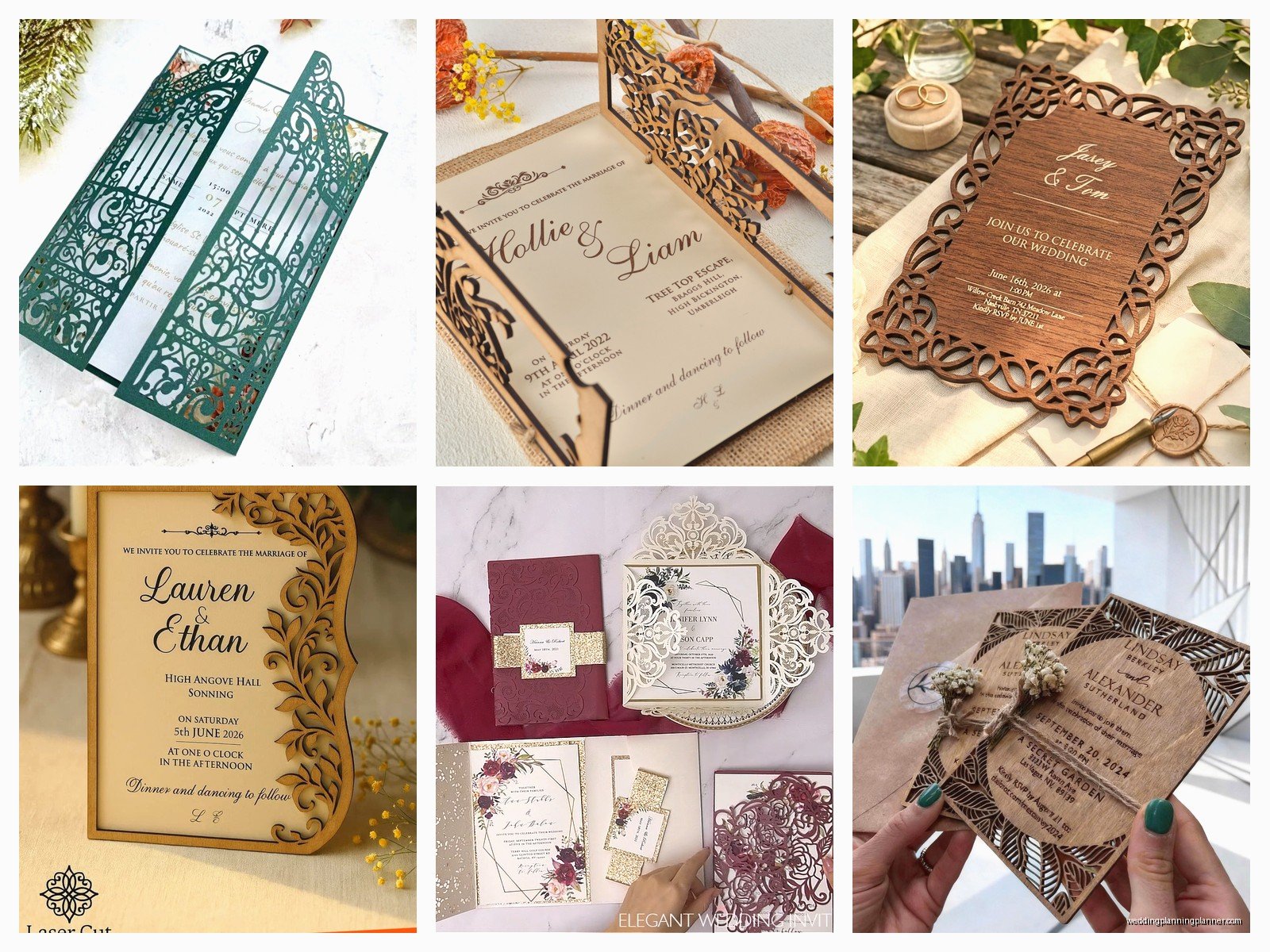
There are basically three categories I see over and over. You’ve got your gatefold style where the invitation opens like little doors (these are SUPER popular for formal weddings), your sleeve or belly band style where there’s a decorative laser cut piece that wraps around a more traditional invitation, and then your single panel style where the entire invitation is one piece with the laser cut design integrated into it.
The gatefold ones are honestly my favorite to work with because they create this really nice reveal moment when your guests open them. I had this bride in spring 2023 who was obsessed with Art Deco and we found this geometric gatefold design that had these amazing radiating lines and… it was gorgeous but omg the assembly took forever because each invitation had like 5 separate pieces that needed to be put together perfectly.
pricing is all over the place honestly
You can find laser cut invitations on Etsy starting around $3-4 per invitation for simple designs, or you can go with a luxury stationer and pay $25+ per invitation for custom work. The middle ground is usually around $8-12 per invitation which gets you really nice quality with some customization options.
What drives up the cost? Complexity of the design (more intricate = more expensive), paper quality (shimmer cardstock costs more than regular), number of layers, custom design work, and whether you’re adding foiling or letterpress on top of the laser cutting. Also assembly time if you’re buying DIY kits versus fully assembled.
One thing that really annoyed me last year was when a supplier didn’t mention that their “laser cut invitations” were actually just printed to look like laser cut. Like they had printed a design that mimicked the look of cutouts but it was just flat printed paper. Make sure you’re actually getting real laser cut work, not just a printed design that looks like it.
paper weight matters more than you think
This is where people mess up all the time. You need the right paper weight for laser cutting or the whole thing falls apart. Too thin and it’s flimsy and looks cheap, too thick and the laser has trouble cutting cleanly or it looks bulky.
The sweet spot is usually 250-300 GSM cardstock for the main laser cut piece. If you’re doing a gatefold design, you want that outer piece to be sturdy enough to hold its shape. For the inner inserts with your actual invitation text, you can go lighter, like 120-150 GSM.
Shimmer cardstock is really popular right now and it photographs beautifully, but be aware it can sometimes show slight burn marks from the laser more than matte cardstock does. It’s usually not noticeable unless you’re looking really closely, but if you’re a perfectionist it might bug you.
color choices are kinda endless but some work better
White and ivory are obviously classic and they show off the laser cut details really well because of the contrast. But I’ve been seeing tons of requests for dusty blue, sage green, terracotta, and even black laser cut invitations lately.
Dark colors can look incredibly dramatic and modern, especially if you’re doing a geometric design. The laser cutting creates these really striking shadows and depth on darker paper. Just know that any text needs to be either printed in a light color or you need to use an insert in a contrasting color so people can actually read it.
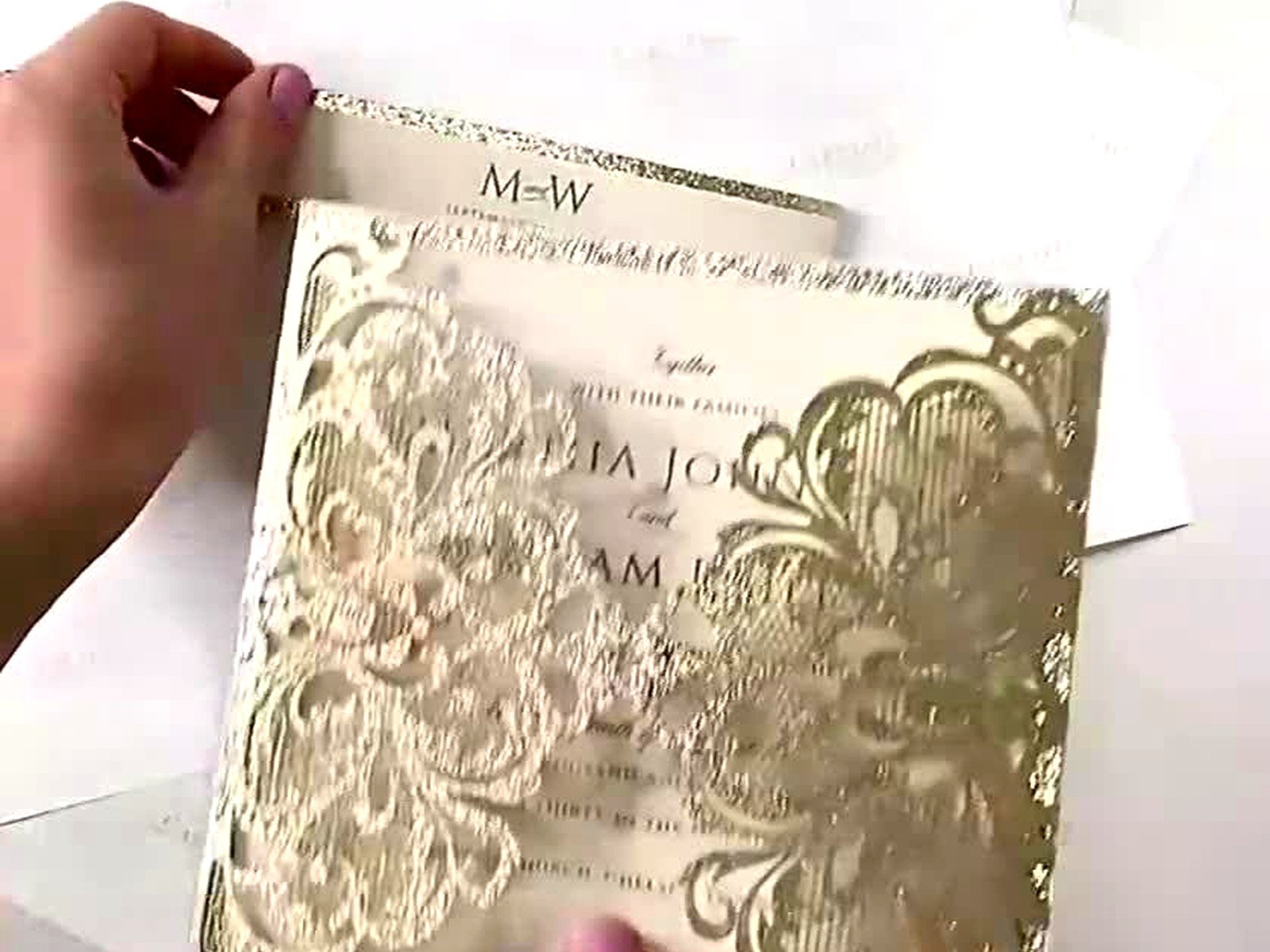
Metallic papers are gorgeous but they’re trickier to work with because the metallic coating can sometimes interfere with clean laser cutting. If you want that metallic look, it’s usually better to go with regular cardstock and add foil printing on top of the laser cut design.
design styles range from traditional to super modern
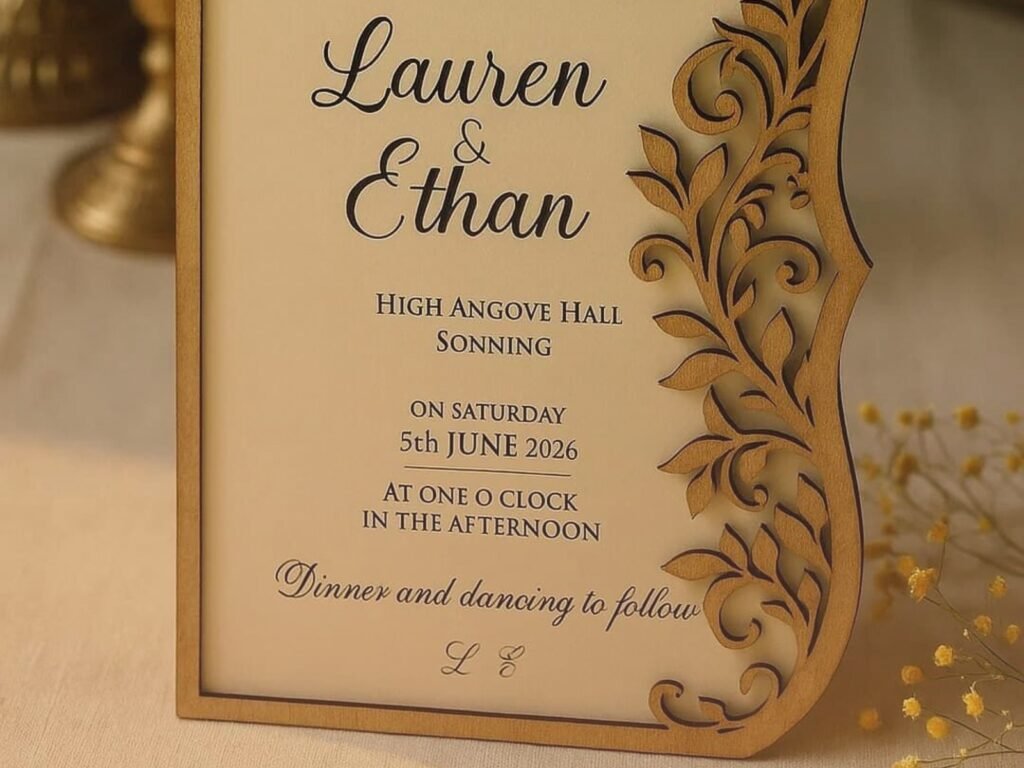
The floral lace style is probably what most people think of when they hear “laser cut invitations” and yeah, it’s still super popular for romantic garden weddings or vintage-inspired events. These usually have really intricate flower patterns around the edges with lots of delicate details.
But geometric and Art Deco designs are honestly taking over, at least in my client base. Clean lines, symmetrical patterns, modern shapes… these work really well for city weddings or contemporary venues. I’m also seeing lots of requests for mountain silhouettes, skylines, and other custom shapes that reflect the couple’s location or interests.
There’s also this whole category of pocket-style laser cut invitations where the laser cut piece creates an actual pocket that holds all your other cards and inserts. These are practical and pretty, which is a good combo.
customization options you should know about
Most suppliers offer at least some level of customization even on their standard designs. You can usually change colors, add your names or monogram into the laser cut design, adjust the wording obviously, and sometimes modify the pattern itself.
Full custom laser cut work is where you work with a designer to create a completely unique pattern. This might include your venue illustration, a meaningful symbol, your actual handwriting laser cut into the design, whatever. It’s more expensive and takes longer (usually 4-6 weeks minimum) but if you want something no one else will have, that’s the way to go.
My cat knocked over my coffee right onto a sample invitation once and I just… anyway, moving on.
assembly can be a whole thing
If you’re trying to save money, lots of people buy DIY kits where all the pieces come pre-cut and you assemble them yourself. This can save you like 40-50% on costs but you gotta be honest with yourself about whether you have the time and patience.
For a 100-invitation order, you’re probably looking at 10-15 hours of assembly time depending on complexity. You’ll need a flat workspace, good lighting, maybe some glue dots or double-sided tape, ribbon if that’s part of the design, and definitely wine or coffee or whatever gets you through repetitive tasks.
Pro tip: do a few practice ones first before you start your actual invitations. Figure out your system, make sure you understand which pieces go where, and get your timing down. I’ve seen too many people rush through assembly the night before they need to mail them and end up with crooked inserts or smudged printing.
If assembly sounds like actual torture, just pay for assembled invitations. Your sanity is worth something.
printing methods to pair with laser cutting
Digital printing is the most affordable option and it works fine for most people. The quality has gotten really good and you can print on the laser cut cardstock itself or on separate inserts.
Foil printing on laser cut invitations is stunning, I’m not gonna lie. Gold foil on a navy laser cut design or rose gold on blush pink… it adds this luxe element that photographs incredibly well. It does add to the cost though, usually $3-5 per invitation.
Letterpress is another option if you want that tactile debossed look, but it’s pricey and you need to work with a printer who knows how to handle laser cut paper without damaging the delicate cutwork. Not every print shop can do this well.
Some people go with a combo approach where the laser cut outer piece is plain or maybe has just foil printing, and then the insert cards inside have digital printing with all the details. This keeps costs reasonable while still looking high-end.
timing and ordering logistics
Order samples before you commit to a full order, always. What looks good on a screen might not look how you expect in person. Paper color, the actual size, the weight, how it feels… you need to see and touch it.
Production time for laser cut invitations is usually longer than regular printed invitations. Budget for 3-4 weeks minimum, and if you’re doing any customization add another week or two. Rush orders are sometimes possible but they cost extra and might compromise quality.
Order extras. Like, always order at least 10-15 extra invitations beyond your guest count. You’ll mess up addresses, you’ll want some for your own keepsakes, someone will inevitably lose theirs and need another one, whatever. Trust me on this.
addressing and mailing concerns
Laser cut invitations are bulkier than regular invitations which means they cost more to mail. You’re probably looking at $2-3 per invitation in postage, maybe more if your design is particularly thick or has a lot of layers.
Take a fully assembled invitation to the post office and have them weigh it before you buy stamps for your whole batch. The thickness can push you into a higher postage tier even if the weight seems okay. Also ask them to hand-cancel your invitations instead of running them through the sorting machine, because those delicate laser cut edges can get caught and damaged.
For addressing, you can do calligraphy directly on the envelope (gorgeous but expensive), use printed labels (practical), or do digital calligraphy printing (good middle ground). Just make sure your envelope is sturdy enough to handle the weight of the invitation inside. I usually recommend 100-120 GSM envelopes minimum.
matching suite pieces because people always ask
Most laser cut invitation suppliers offer matching pieces like RSVP cards, details cards, menu cards, place cards, table numbers, all that stuff. Having a cohesive look is nice but you don’t need to go overboard. Usually the invitation and maybe menu cards or table numbers in the laser cut style is enough to tie everything together.
Programs are another popular item to match, especially for formal church weddings. The laser cut design on programs looks really elegant and it’s a piece guests actually keep sometimes.
You can also just do the invitation in laser cut and then have everything else be regular printed pieces that coordinate with the colors and fonts. This saves money and honestly most guests won’t notice or care that your RSVP card doesn’t have laser cut details.
common mistakes I see all the time
Choosing a design that’s too intricate for your venue or wedding style. Like, if you’re having a casual beach wedding, maybe the super formal ornate lace design isn’t the right fit? Think about whether the invitation actually represents your wedding vibe.
Not considering readability. Some laser cut designs are so busy that it’s hard to actually read the text, especially if you’re printing on the laser cut piece itself instead of using inserts. Your guests need to easily find the date, time, and location without squinting.
Forgetting about the weight and bulk when planning your budget. Those extra postage costs add up fast when you’re mailing 150 invitations.
Waiting too long to order because you didn’t realize laser cut invitations take longer to produce. I had a stressed-out groom in summer 2021 who needed invitations in two weeks and wanted this incredibly complex custom laser cut design and I had to basically tell him it wasn’t physically possible… we ended up finding a ready-made design he liked but man, that was a stressful conversation.
Not ordering samples or just ordering one sample. Get at least 2-3 different designs so you can really compare them in person. What you think you’ll love might not be the one you actually choose once you see them all together.
working with suppliers and designers
Etsy is great for DIY kits and semi-custom work at reasonable prices. You’ll find tons of options and most sellers are pretty responsive about customization requests. Just read reviews carefully and check their production times.
Minted, Shutterfly, and similar sites have started offering laser cut options too, which is nice if you want that reliability and customer service of a bigger company. The designs are less unique but the process is usually smoother.
Local stationers or paper boutiques can often source laser cut invitations or work with laser cutting companies to create custom designs for you. This costs more but you get personalized service and someone to hold your hand through the whole process.
If you’re going the full custom route, make sure you see detailed mockups or proofs before production starts. Once it’s cut, you can’t really go back and change things, so you need to be absolutely sure about the design, sizing, colors, everything.
Ask about their policy on defects or damaged pieces too, because laser cutting can sometimes produce pieces with small imperfections and you want to know if they’ll replace those or if you’re stuck with them.