
Planning Guides, Style Guide
Already Married Reception Invitations: Post-Wedding Party
May
So You’re Already Married and Need to Tell People About Your Reception
Okay so the thing about already-married reception invitations is they’re actually way less complicated than traditional wedding invites but people still get really weird about the wording. I had this couple in spring 2023 who got married at city hall on a Tuesday because of visa stuff and they were absolutely spiraling about how to word their invitations without offending anyone, and honestly? Most guests don’t care as much as you think they do.
The main thing you gotta remember is that you’re inviting people to celebrate with you, not witness a legal ceremony. That’s already done. So the whole vibe of the invitation should be “hey we got married, come party with us” rather than trying to pretend it’s a traditional wedding happening in real time.
The Wording That Actually Works
I’m gonna be real with you – the formal etiquette books will tell you one thing, but what actually lands well with guests is usually a bit different. You want to be clear about what happened without making it sound like an afterthought or like you’re embarrassed about it.
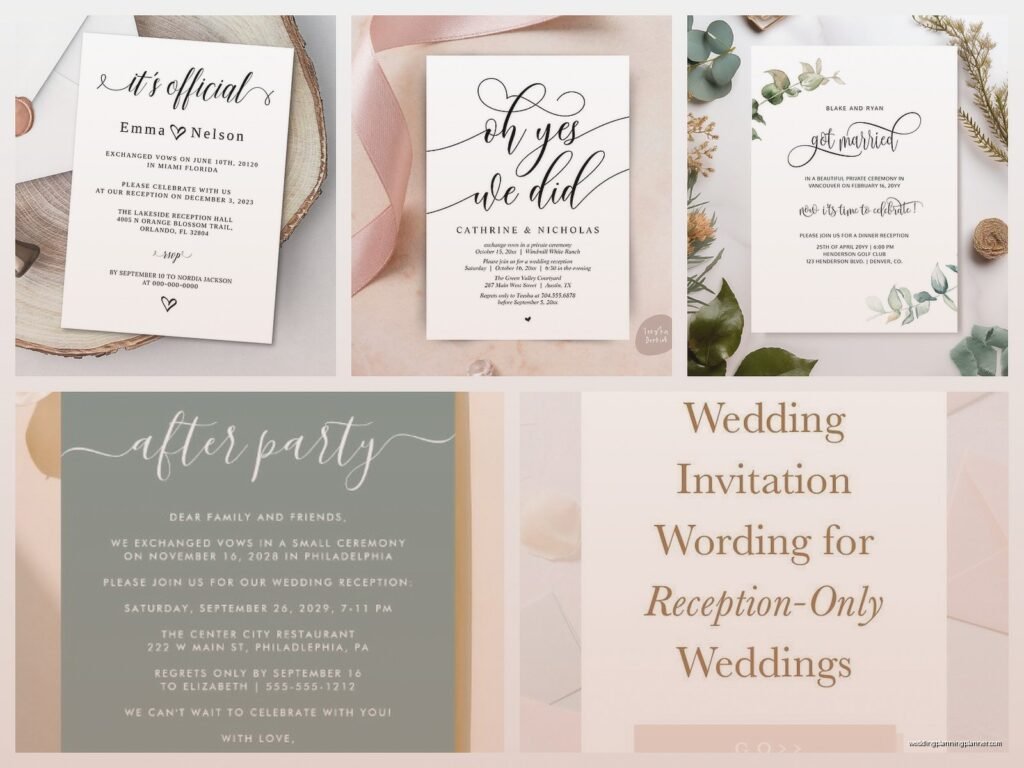
Here are some phrasings that I’ve seen work really well:
- “Jane Smith and John Doe joyfully announce their marriage and invite you to celebrate with them at a reception”
- “Having exchanged vows in an intimate ceremony, Jane and John request the pleasure of your company at a celebration of their marriage”
- “Jane and John were married on [date] and would love for you to join them as they celebrate their new marriage”
- “The newlyweds Jane Smith and John Doe invite you to share in their happiness at a reception in honor of their recent marriage”
What really annoys me is when people try to hide the fact that they’re already married or use vague language that confuses guests. Like I’ve seen invitations that say “invite you to witness the celebration of their union” and then guests show up thinking there’s gonna be a ceremony and there’s just… cocktails and dancing. Be straightforward.
The Timeline Thing Nobody Talks About
So here’s where it gets kinda tricky – how long after your actual marriage should you have this reception? I’ve planned these parties anywhere from two weeks post-wedding to like, eighteen months later. There’s no wrong answer but the timing does affect your invitation wording slightly.
If it’s within a few weeks or months, you can say “recently married” or just include the marriage date. If it’s been longer – maybe you waited for a family member to recover from illness or you needed to save up money or whatever – you might want to skip the specific date and just focus on the celebration itself.
My cat knocked over my coffee while I was working on invitations for a client last month and honestly the coffee-stained draft version looked kinda cool in a rustic way, but anyway…
What Information You Actually Need to Include
Your already-married reception invitation needs most of the same info as a regular wedding invite, just framed differently:
The names – Use your married names if you’ve changed them, or however you want to be known as a couple. This is pretty straightforward.
The ask – You’re requesting the pleasure of their company at a reception or celebration. Not a wedding. Not a ceremony. A reception.
Date and time – Same as any invitation. Include the day of the week because it helps people.
Location – Full address, especially if you’re having it somewhere that’s not gonna come up easily on GPS. I’ve had guests get lost going to barn venues that have like three different addresses depending on which mapping service you use.
Dress code – People really appreciate knowing this. “Cocktail attire” or “Garden party attire” or whatever fits your vibe.
RSVP details – Deadline, method (website, mail, whatever), and who to contact with questions.
The Registry Question That Makes Everything Awkward
Okay so technically you’re not supposed to include registry info directly on the invitation itself – that hasn’t changed just because you’re already married. But everyone knows that guests want to know where you’re registered or if you prefer cash gifts or whatever.
Put that info on your wedding website if you have one, or include it on a separate details card. You can also spread it through word of mouth via parents and wedding party members. I know it feels weird to not just tell people directly but trust me, this is one etiquette rule that’s actually worth following because it keeps the invitation focused on the celebration rather than the gifts.
What you CAN include is a line like “Your presence is the only present we need” if you genuinely don’t want gifts, though be prepared for people to bring something anyway because that’s just what happens.
Design Stuff That Actually Matters
The design of your already-married reception invitation should match the formality level of your event, but it doesn’t need to scream WEDDING in the same way a traditional invite might. You’ve got more flexibility here which is honestly refreshing.
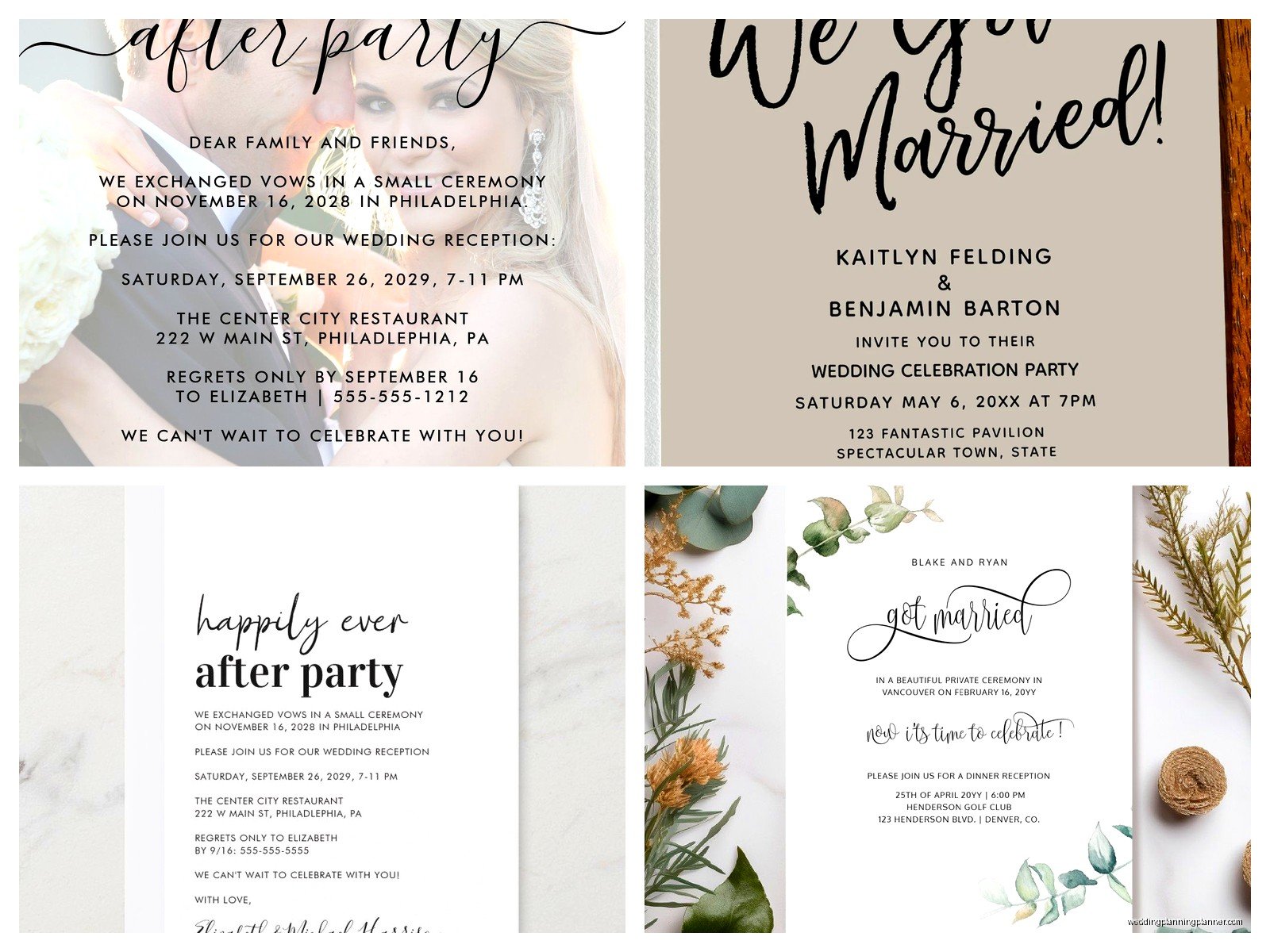
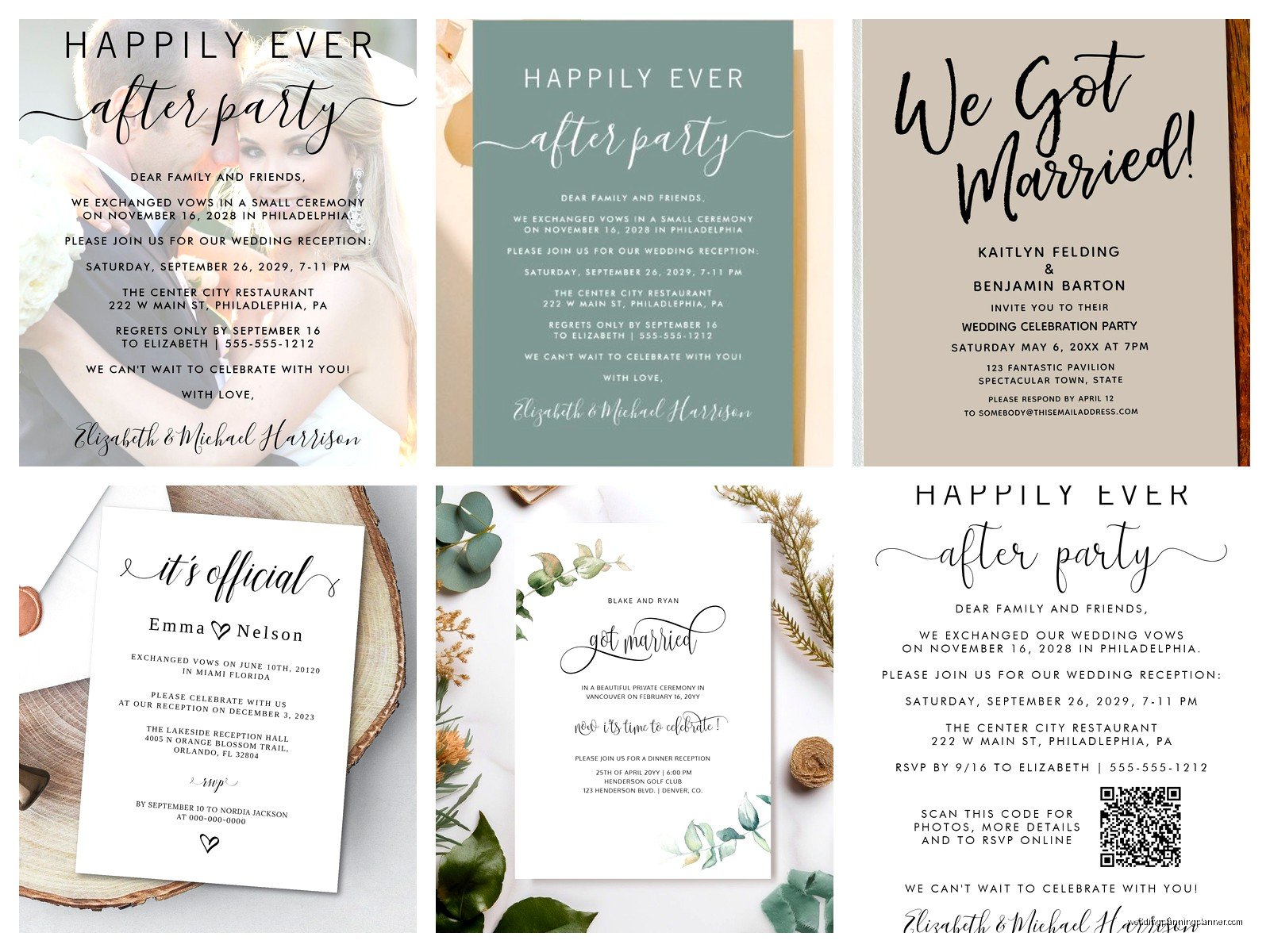
Some couples go with photo invitations that include a picture from their actual wedding day or courthouse visit. This immediately communicates “yes we’re already married, here’s proof, now come party.” It’s clear and it’s personal and guests tend to love having that photo.
Others prefer a more traditional invitation design without photos, which works great too. You’re not required to prove you got married or anything… I just think the photo route solves a lot of confusion before it starts.
Color-wise, you don’t need to stick with traditional wedding colors. I mean you can if you want, but I’ve seen people use their favorite colors or match their reception venue’s vibe or just pick something they think looks nice. The rules are more relaxed here.
Printing and Mailing Timeline
You should mail these invitations about 6-8 weeks before your reception, same as a regular wedding. If you’re having it during a holiday season or peak summer travel time, maybe push it to 10-12 weeks so people can plan accordingly.
Order your invitations at least 3-4 weeks before you need to mail them. This gives you time for:
- Printing delays (which happen more often than vendors admit)
- Addressing envelopes
- Assembling everything
- Fixing any mistakes
- Getting them to the post office
I had a bride in summer 2021 who ordered her already-married reception invites only two weeks before she wanted to mail them and the printer had a COVID-related delay and it was this whole stressful mess that could’ve been avoided with better timing. Learn from her panic.
Save the Dates – Do You Need Them?
Honestly? Probably not, unless your reception is destination-ish or during a busy time of year or you’re inviting a ton of out-of-town guests who need to book travel.
If you DO send save the dates for an already-married reception, keep them simple and clear. Something like “Jane & John were married March 15, 2024 – Save the date for their reception celebration on August 10, 2024.” You don’t need anything fancy.
But most couples skip the save the dates entirely for these situations and just send the invitation with enough advance notice. Saves money and confusion.
Digital vs Paper Invitations
Look, I’m a stationery person so I’m biased toward paper, but digital invitations are totally acceptable for already-married receptions, especially if you’re keeping things casual or you got married quickly and are planning the reception on a shorter timeline.
Services like Paperless Post or Greenvelope have really nice designs that don’t look cheap. You can still make it feel special and intentional even if it’s delivered via email.
The main advantage of digital is speed – you can send them out immediately and track RSVPs in real-time. The disadvantage is that some older guests might not see them or might not know how to RSVP online, so you might need to follow up with phone calls.
If you go digital, I’d still recommend sending paper invitations to your VIPs – parents, grandparents, anyone who you know would appreciate having a physical keepsake.
Handling the Parents’ Names Situation
Traditional wedding invitations often include parents’ names because traditionally parents were hosting and paying. For already-married receptions, this gets… weird? Because you’re probably hosting it yourselves as a married couple.
If parents ARE hosting or contributing significantly, you can include their names: “Mr. and Mrs. Parent Name invite you to celebrate the marriage of their daughter Jane to John Doe.”
But honestly most couples hosting their own already-married receptions just put their own names and skip the parent name thing entirely. It’s simpler and it reflects the reality that you’re already a married unit making your own decisions.
There’s no rule that says you have to include parent names just because it’s a wedding-related event. Do what feels right for your family situation.
Inner Envelopes and Other Extras
Inner envelopes, tissue paper, ribbon, wax seals – all that stuff is completely optional for already-married reception invitations. If you want the full formal treatment, go for it. If you want to keep it simple with just an invitation in an envelope, that’s also totally fine.
I will say that including a details card is helpful regardless of how fancy you go. This card can have:
- Your wedding website URL
- Hotel accommodation info
- Transportation details
- Weekend event schedule if you’re doing multiple gatherings
- Parking information
An RSVP card is still a good idea if you’re going the paper route, though more couples are directing people to RSVP online even when the invitation itself is paper. It’s faster and easier to track, plus you don’t have to deal with guests who forget to include the stamp or write illegibly.
What to Do About People Who Attended Your Actual Wedding
If you had a tiny ceremony that some people attended, do you send them invitations to the reception too? Yes. Everyone invited to the reception gets an invitation, even if they were at the courthouse or small ceremony.
The invitation serves as the formal details for the reception event. People need to know the time, place, dress code, etc. You can’t just assume they’ll remember verbal information or figure it out.
Plus, getting an invitation makes people feel included and valued. It’s a tangible reminder that this event is important and you want them there. Don’t skip people just because they already “celebrated” with you at the ceremony – this is a different event with different logistics.
Special Wording Scenarios
Sometimes you need specific wording for specific situations and the standard templates don’t quite work. Here are some scenarios I’ve dealt with:
Elopement followed by big party: “After eloping to [location], Jane and John invite you to celebrate their marriage with an evening of dinner and dancing.”
Pandemic wedding followed by delayed reception: “Jane Smith and John Doe were married on [date] in an intimate ceremony. Please join them as they finally celebrate with family and friends.” (I saw SO many of these in 2021-2022 and honestly everyone was just relieved to have something to look forward to.)
Cultural or religious ceremony already done: “Following their traditional [cultural] wedding ceremony, Jane and John request the honor of your presence at a reception celebrating their marriage.”
Second reception in different location: “Having celebrated with family in [city], Jane and John invite their [other city] friends to join them for a reception in honor of their recent marriage.” This comes up a lot with couples who have family on opposite coasts or in different countries.
Coordinating with Other Wedding Paper Goods
If you’re doing this reception thing relatively close to your actual wedding date, you might want your invitations to coordinate with your ceremony programs, menus, place cards, and other stationery at the reception itself. This creates a cohesive look even though the events happened separately.
You don’t need to use the exact same design, but pulling through the same color palette, fonts, or design motifs makes everything feel intentional. I usually recommend using the same designer or at least the same paper stock if you’re going the DIY route.
Or like, don’t worry about coordination at all if that’s not your thing. The stationery police aren’t gonna show up and cite you for using different fonts. Do what makes you happy and what fits your budget.
Budget Reality Check
Already-married reception invitations should cost about the same as regular wedding invitations – anywhere from $1.50 to $8+ per invitation depending on printing method, paper quality, and how many extras you include. Digital invitations run $15-50 for a template or service that manages RSVPs.
If budget is tight, here’s where you can cut costs:
- Skip the save the dates
- Use online RSVPs instead of printed cards
- Choose a simpler design with less ink coverage
- Print digitally instead of letterpress or foil
- Address envelopes yourself instead of hiring a calligrapher
- Send details via website instead of printed insert cards
Where I think it’s worth spending if you can: good quality paper stock and professional printing. An invitation on nice paper with clean printing looks expensive even if the design is simple, while a fancy design printed on flimsy paper looks… cheap.
My personal take after doing this for years is that guests remember the party itself way more than the invitation, but the invitation is their first impression and sets expectations. So find a middle ground that communicates the vibe you’re going for without breaking the bank.