
Planning Guides, Style Guide
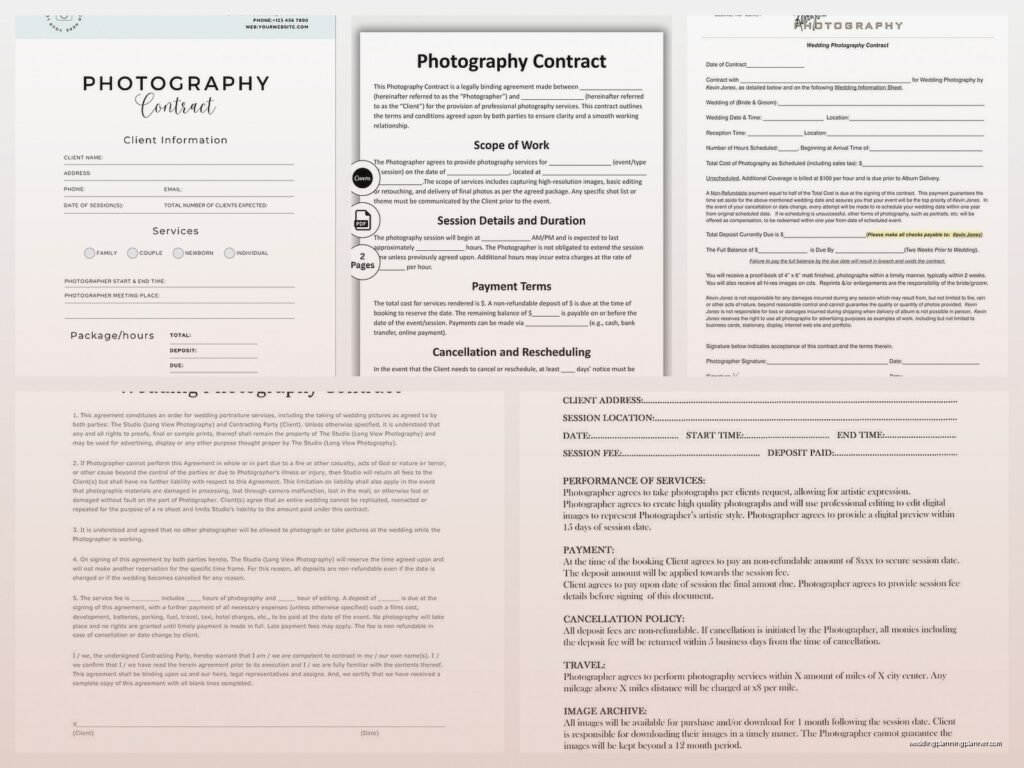
Wedding Photographer Contract Template: Photography Agreement
Jul
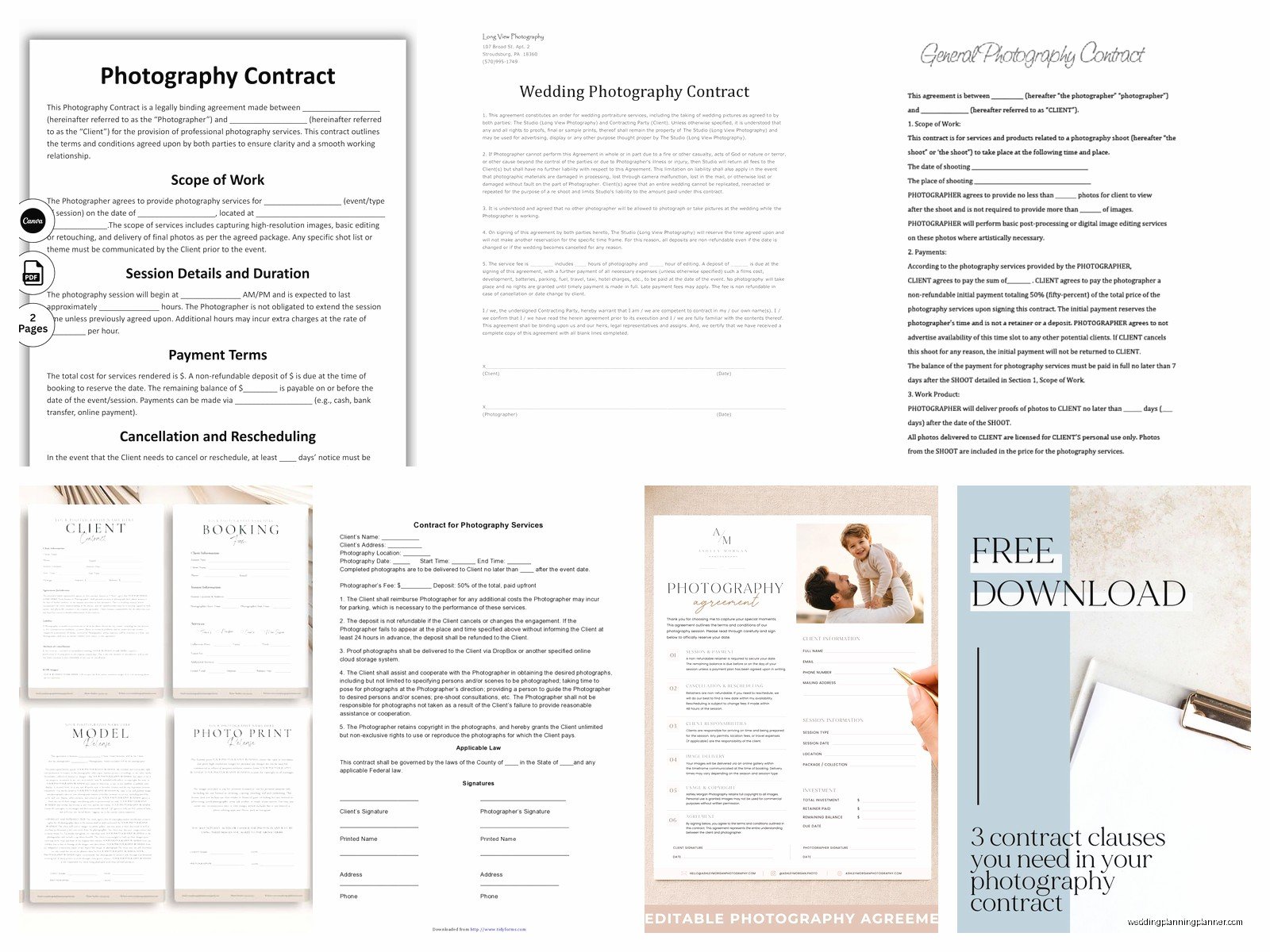
What You Actually Need in a Photography Contract
Okay so photography contracts are literally one of those things where you don’t realize how badly you need a solid one until something goes wrong and then you’re like oh crap I should’ve paid attention to this months ago. I learned this the hard way in summer 2021 when a photographer just… didn’t show up to a wedding I was coordinating and the contract was so vague that getting a refund turned into this whole nightmare situation that lasted THREE MONTHS.
The thing is, whether you’re the couple hiring the photographer or you’re helping clients review their contracts (which I do constantly), you gotta know what should actually be in there. Not just the fluff that sounds official but the real nitty-gritty stuff that protects everyone involved.
Basic Info Section That Everyone Forgets Details On
Start with the obvious stuff but be SPECIFIC. Names of both parties, full legal names not just like “Sarah” or whatever. The photography business name, the couple’s names, contact info for everyone. And I mean everyone – if there’s a secondary contact person like a wedding planner (hi that’s me usually) or a parent who’s helping coordinate, get their info in there too.
Date of the wedding, ceremony location with the actual address, reception venue with actual address. I’ve seen contracts that just say “local church” and like… which one?? There are seventeen churches in most towns. The timeline matters too – what time does coverage start, what time does it end. Be specific about hours because this is where disputes happen.
The Money Talk
Alright so here’s where it gets real. Total package price needs to be crystal clear. Break it down if there are different components – like $3000 for 8 hours of coverage, $500 for engagement session, $400 for second shooter, whatever. Itemize it.
Payment schedule is HUGE. Most photographers want something like 25-30% deposit to book the date, then maybe another payment halfway through, then final payment due like 2 weeks before the wedding. Put the exact amounts and exact due dates. Not “spring 2024” but “April 15, 2024” kind of specific.
And this is gonna sound obvious but you need the late payment policy spelled out. What happens if someone doesn’t pay on time? Is there a grace period? Late fees? Does the photographer have the right to not show up if final payment isn’t received? (Yes they do, and they should put that in writing.)
What’s Actually Included In Your Package
This section drives me crazy when it’s vague because I’ve seen so many arguments about what couples thought they were getting versus what the photographer thought they promised. Number of hours, number of photographers (is there a second shooter?), engagement session included or separate?
Deliverables matter SO much. How many edited photos will they receive? I see packages ranging from like 400 images to unlimited, and that’s a massive difference. What format – digital files, prints, album? When will they get them? Most photographers say 6-8 weeks but I’ve seen everything from 4 weeks to 6 months.
Image rights are weirdly complicated. Usually the photographer retains copyright (they should) but grants the couple a license to print and share for personal use. That means you can post on social media, make prints for your house, share with family. But you can’t like, sell the images or use them for commercial purposes. And the photographer usually wants the right to use images for their portfolio and marketing.
The Stuff Nobody Wants To Think About
Cancellation policy from both sides. What if the couple needs to cancel? Do they get any money back? Usually the deposit is non-refundable (which is fair because the photographer blocked off that date and probably turned away other clients). But what about payments beyond the deposit?
What if the photographer needs to cancel? This happened to me once where the photographer had a family emergency and like, obviously that’s understandable, but there needs to be a plan. The contract should say the photographer will help find a replacement of equal skill level or provide a full refund. Some photographers have a network of backup shooters for emergencies.
Weather and outdoor ceremony contingencies… honestly this is more relevant for the couple’s other vendors but if the ceremony location changes due to weather, make sure the photographer knows they need to be flexible about location.
The Technical Legal Stuff That Sounds Boring But Matters
Liability limitations – photographers usually include language that limits their liability to the amount paid for services. So if something goes catastrophic (all memory cards corrupt, equipment fails, whatever), the most you could recover is what you paid them. This sounds harsh but it’s pretty standard across the industry.
Model release language letting the photographer use the images for their business. Most couples are fine with this but if you’re NOT okay with your wedding photos being on someone’s Instagram or website, you need to negotiate this upfront. Some photographers charge extra for weddings that can’t be used in their portfolio.
Cooperation clause – this is basically saying that everyone will be respectful and professional. The couple and their family won’t be jerks to the photographer, and the photographer won’t be a jerk to anyone. It also usually includes something about the photographer having authority to remove anyone who interferes with their work, which is important because drunk Uncle Bob with his iPad trying to “help” is a real problem.
What Happens When Things Go Wrong
Okay so this is the part that annoys me the most about badly written contracts – they don’t address disasters. Equipment failure, photographer illness, acts of God, whatever. There should be clear language about what happens.
Most good contracts say something like: if the photographer can’t fulfill the contract due to illness, injury, or equipment failure, they’ll help find a suitable replacement or provide a full refund. That’s it. They’re not responsible for emotional damages or the cost of rebooking your venue or any of that. Again, sounds harsh, but photography is a service business and stuff happens.

The contract should also address what happens if the couple or their guests damage the photographer’s equipment. Like if someone knocks over a $3000 lens, who pays for it? (Spoiler: probably the couple, and their venue insurance might cover it.)
Delivery and Editing Details
Timeline for receiving photos should be specific. “6-8 weeks after the wedding date” is standard. Some photographers deliver a sneak peek of like 20-30 images within a few days, which is nice for couples who wanna post on social media right away.
Editing style should be mentioned – natural editing, black and white options, how many images will be edited to what level. Most photographers do color correction and basic editing on all delivered images, but heavy retouching (like removing people from backgrounds or major blemish removal) might be extra.
Delivery method matters too. Most use online galleries now where you can download high-resolution files. How long will the gallery stay active? Forever? One year? Make sure you download everything because I’ve had couples panic when they realize their gallery expired and they never saved the files to their own computer.
Print Rights and Reproduction
The couple should get print rights for personal use. This means they can print photos at Costco, make a photo book on Shutterfly, whatever. But there’s usually language saying they can’t alter the images (like running them through heavy filters that change the photographer’s artistic work) without permission.
Some photographers offer printing services themselves and prefer couples order through them. This isn’t usually required but it might get mentioned in the contract. My cat just jumped on my keyboard and I almost lost this whole thing which would’ve been… anyway.
The Shot List Conversation
There should be something in the contract about shot lists and family photos. Most photographers are fine with a reasonable list of must-have shots (first kiss, cake cutting, specific family groupings), but they don’t want a 47-page Pinterest board of “inspiration shots” that aren’t realistic for your venue or timeline.
The contract might say something like “couple may provide a shot list of up to 20 specific images” or whatever. It should also mention that the photographer needs time blocked out for family formals, usually like 20-30 minutes, and someone needs to be designated to help gather people. That’s usually me, and lemme tell you, finding Aunt Margaret when it’s time for photos is like a part-time job.
Second Shooters and Assistants
If a second shooter is included, that should be detailed. Is it for the full day or just certain hours? What if the second shooter cancels – does the photographer find a replacement or reduce the price?
Sometimes photographers bring assistants who carry equipment or help with lighting but don’t actually shoot. This is fine but should be mentioned so the couple isn’t surprised by extra people.
Venue and Timeline Logistics
The photographer usually includes language about needing access to venues during certain times. Like, they might need to arrive an hour before the ceremony to scout locations and set up. The couple needs to make sure the venue coordinator knows this and grants access.
There’s also usually something about timeline cooperation – the photographer needs the day to run reasonably on schedule to deliver what’s promised. If the ceremony starts 90 minutes late and cuts into reception time, the photographer isn’t gonna stay extra hours for free. Or they might, but it should be addressed.
Food and Breaks
This is kinda random but if the photographer is there for 8+ hours, most contracts mention that they should be provided a meal during the reception. Not like, a full guest meal with prime rib necessarily, but vendor meals are standard. Some venues charge for these, so factor that into your budget.
Bathroom breaks and water – sounds obvious but photographers are human. There should be understanding that they might miss 3 minutes of dancing while they use the restroom or… you know what, this feels too detailed but I’ve literally had couples complain about this so apparently it needs to be said.
Raw Files and Unedited Images
Most photography contracts specifically state that raw files and unedited images are NOT included. Photographers consider these their working files, like a sculptor’s rough clay before it’s finished. Couples get the edited, final images only.
Some couples want the raw files and honestly I get it – you want everything from your day. But most photographers won’t provide them, or they’ll charge a significant extra fee. This should be clearly stated in the contract so there’s no surprise later.
Social Media and Tagging
Most contracts ask that when couples share photos on social media, they tag or credit the photographer. This is how photographers get a lot of their business, so it’s a reasonable request. Some contracts make it a requirement, others just request it.
Timing of social media posts might be mentioned too – like, the photographer might want the right to share photos first before the couple posts them everywhere. Usually this is just like a 24-48 hour thing. Or sometimes photographers don’t care and you can post immediately.
Additional Services and Upsells
If there are optional add-ons available (extra hours, photo booth, albums, parent albums, whatever), these should be listed with prices. Even if the couple doesn’t want them initially, it’s good to know what’s available and what the cost would be to add them later.
Some photographers offer rush editing for an extra fee if you need photos back in like 2 weeks instead of 8. Or they might offer additional editing services like removing exit signs from photos or whatever. All of this should have clear pricing.
Signatures and Dates
Both parties need to sign and date the contract. Seems obvious but I’ve seen “contracts” that were just unsigned PDFs floating around email, which legally is… not great. Get actual signatures, even if they’re digital signatures through DocuSign or whatever platform.
The contract should be signed before any money changes hands ideally, or at least before the first payment. And both parties should keep a copy – photographers should have a system for storing these (I hope digitally backed up somewhere because paper gets lost).
Make sure you actually read the thing before signing. I know it’s boring and you’re excited about the wedding and just wanna check this off your list, but like… it’s a legal document and also protects you if things go sideways, so maybe spend 20 minutes reading it thoroughly instead of just scrolling to the bottom and signing.