Planning Guides, Style Guide
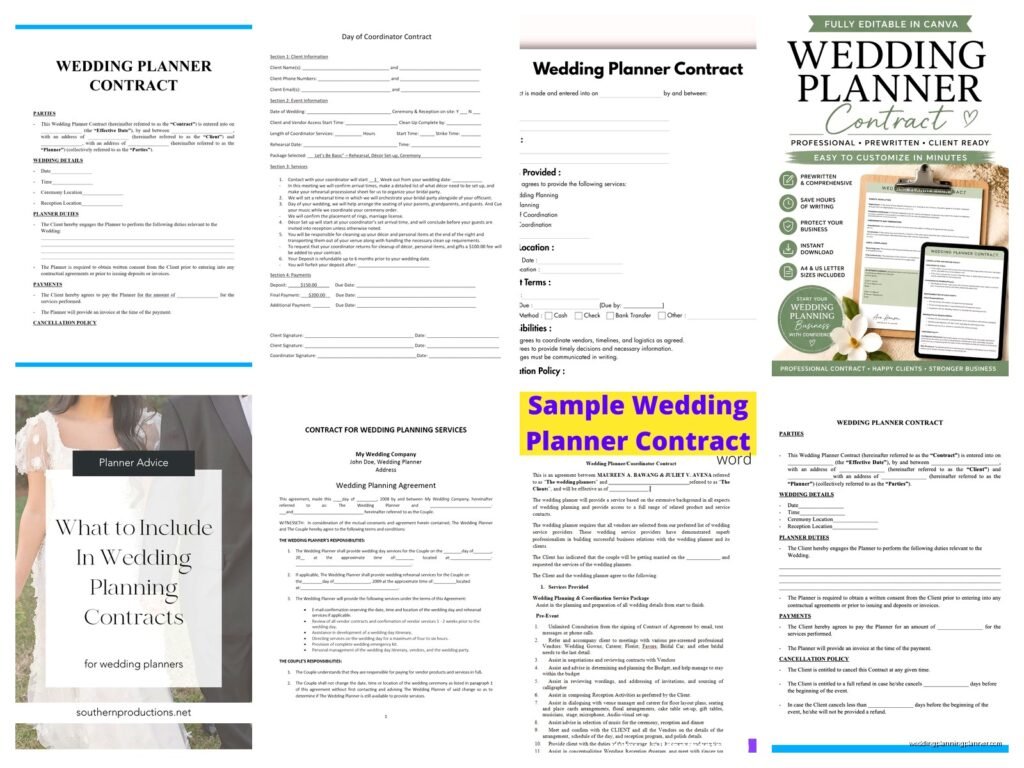
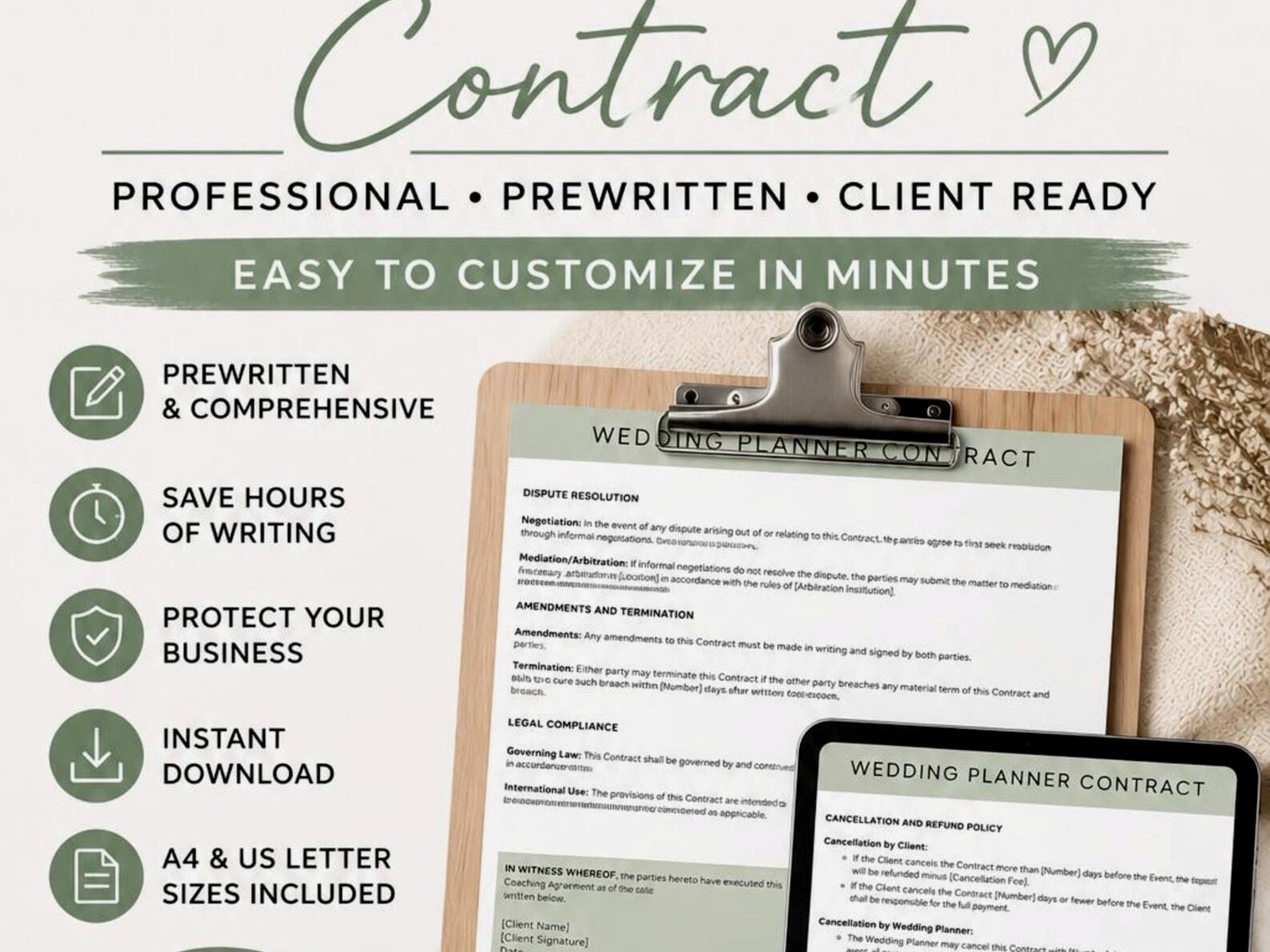
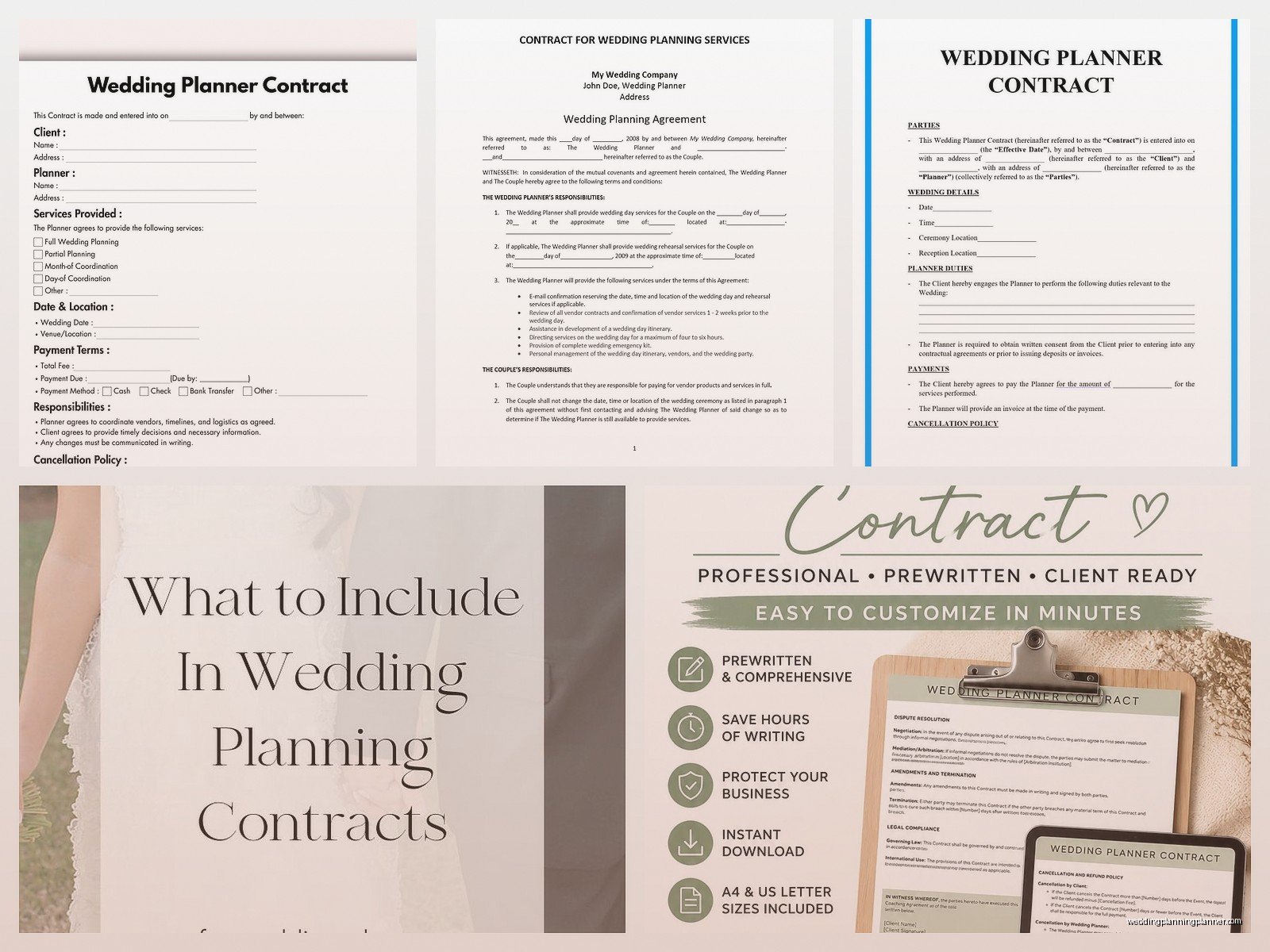
Wedding Planner Contract Template: Service Agreement Form
Jul
Getting Your Contract Sorted Out
Okay so the wedding planner contract is literally the thing that’s gonna save your business when things go sideways and trust me they will go sideways. I learned this the hard way in spring 2023 when a bride decided three weeks before her wedding that she didn’t actually need to pay my final invoice because “we became friends” and friends apparently work for free in her world. That’s when I realized my contract had some embarrassing holes in it.
Your service agreement form needs to cover your butt while also not scaring off clients. It’s this weird balance between legal protection and still sounding like a human being wrote it. I’ve seen contracts that read like they were written by robots who hate weddings and honestly those don’t help anyone.
What Actually Needs to Be in There
The services section is where you spell out exactly what you’re doing. And I mean exactly. Don’t just write “full planning services” because that means different things to different people. One bride thinks that means you’re addressing her invitations by hand and another thinks it means you show up on the wedding day for eight hours. You gotta list it out like you’re explaining it to someone who’s never planned anything before.
I usually break it down by timeline. Like “initial consultation within one week of signing” and then “venue tours and vendor recommendations during months 10-8 before wedding” and so on. This way when someone emails you at 11pm asking why you haven’t found them a florist yet and they just booked you yesterday you can point to the contract and be like yeah that’s scheduled for next month according to section 3.2 or whatever.
The Money Part That Everyone Hates Talking About
Payment terms are where things get messy if you‘re not specific. I do a non-refundable retainer that’s usually 25-30% of the total fee and then I break the rest into installments. Some planners do it differently but whatever you do just write it down clearly. Include the actual dollar amounts, the due dates, and what happens if someone’s late.
Late fees are kinda awkward to enforce but you need them in there. I do like $50 or 5% of the late payment whichever is greater after a 5-day grace period. Had a client once who paid everything exactly 8 days late every single time and it drove me absolutely insane until I started actually charging the late fees. Suddenly she could find her checkbook on time.
Also put in there what forms of payment you accept. I learned this when someone tried to pay me in installments through Venmo and then did chargebacks through her credit card company saying the services were “not as described” even though we’d had like 47 meetings at that point. Now I only take checks or bank transfers for anything over $500.
Cancellation and Refund Policy
This section saved me during the whole pandemic situation. You need different scenarios covered because life happens. I have one clause for if the client cancels, one for if I have to cancel (hasn’t happened yet knock on wood), and one for force majeure which is fancy legal talk for like natural disasters and pandemics and stuff.
For client cancellations I keep the retainer no matter what because I’ve already blocked out dates and probably turned down other clients. Then I have a sliding scale where if they cancel more than 6 months out they get 50% of additional payments back, 3-6 months gets them 25% back, and less than 3 months they get nothing back except reimbursement for any vendor deposits I’m holding that can be recovered.
The force majeure thing is tricky because you want to be fair but also you’ve got bills to pay. I usually say that if the wedding is postponed due to circumstances beyond anyone’s control then the contract transfers to the new date and if I’m not available we negotiate in good faith about partial refunds. It’s vague enough to give everyone some flexibility but specific enough that people can’t just claim force majeure because they changed their mind.
Timeline and Deadlines
Put in a section about client responsibilities and deadlines. Because here’s the thing nobody tells you about wedding planning—sometimes your clients are the problem. I had this couple who just would not make decisions and then got mad at me when their first choice venue and photographer weren’t available anymore… like yeah dude you took 6 weeks to respond to my emails about booking them.
Now my contract says clients have to respond to requests for decisions within 7 business days or I’m moving forward with my best professional judgment. I also include that if client delays push us past industry standard booking timelines (like trying to book a photographer 3 months out) I’m not responsible for limited availability or higher prices.
Vendor Coordination Stuff
Make it super clear that you’re coordinating vendors but you’re not responsible for their work. I have a whole paragraph about how I’ll recommend reputable vendors and manage communication and timelines but if the florist shows up with orange roses instead of pink that’s between the client and the florist. You should help fix it obviously but you’re not legally liable.
Also include something about vendor contracts being separate agreements. Sometimes clients think that because they hired you they don’t need to sign contracts with the caterer or DJ and then everyone’s confused about who’s responsible for what. Just clarify that each vendor relationship is independent.
Day-Of Coordination Details
If you’re doing day-of coordination spell out exactly how many hours you’ll be there. I do “up to 10 hours on the wedding day” and specify that it starts when I arrive for setup and ends when the couple leaves the reception or when the venue closes, whichever comes first. Because I’ve definitely had weddings where people wanted to party until 2am and expected me to stay the whole time and nah that’s not happening unless we renegotiate.
Include how many assistants or team members you’re bringing. My cat knocked over my coffee all over my laptop while I was writing this section actually… okay I’m back. Where was I? Right, so specify your team size because some clients assume you’re bringing like 5 people and then are surprised when it’s just you.
Emergency Contact and Communication
Have a section about how clients can reach you. I’m available by email anytime and by phone during business hours except Sundays because I need one day where I’m not talking about centerpieces. For emergencies within 2 weeks of the wedding I give clients my cell and tell them they can call evenings and weekends but please don’t abuse it.
What counts as an emergency is also worth defining because I’ve gotten “emergency” calls about stuff like “I’m having second thoughts about the napkin color” which is not an emergency that’s just cold feet about linens.
Liability and Insurance
You need a liability limitation clause. Basically saying that if something goes wrong the most the client can recover from you is the amount they paid you. Otherwise you could theoretically be on the hook for their entire wedding cost if like… I don’t know, you accidentally told them the wrong ceremony time and they showed up an hour late and the venue charged them extra or something.
Also require that venues have their own liability insurance and that you’re not responsible for injuries or property damage at the venue. One time a drunk groomsman fell into the cake and the bride tried to say it was my fault for not preventing it and I was like I’m a wedding planner not a bouncer.
Intellectual Property and Portfolio Use
Include a section about using photos and details from the wedding in your portfolio and marketing. Most clients are fine with this but some have privacy concerns or are low-key famous or whatever. I usually ask for permission to use photos on my website and social media with the option for clients to opt out or request that certain images not be used.
Also clarify who owns the wedding timeline, floor plans, and other documents you create. I’ve had planners tell me stories about clients who took their detailed planning documents and then canceled services thinking they could just do it themselves with the planner’s roadmap. Now my contracts say all planning documents remain my intellectual property even though the client can use them for their wedding.
Termination Clause
Both parties need the right to terminate under certain conditions. I can terminate if the client is abusive to me or my team, consistently misses payments, or breaches other parts of the contract. They can terminate but they lose their retainer and pay for services rendered up to that point.
Had to fire a client once in summer 2021 who kept calling me at like midnight drunk-texting me about her ex-boyfriend who was invited to the wedding and did I think he’d bring a date and it was just way too much drama that had nothing to do with actual planning. The termination clause made it possible to walk away without her suing me or something.
Dispute Resolution
Put in a mediation and arbitration clause before lawsuits. Going to court is expensive and time-consuming for everyone. I specify that if we have a dispute we’ll try to work it out directly first, then use a mediator if needed, and only go to arbitration as a last resort. Lawsuits are only for enforcing arbitration decisions.
Also include which state’s laws govern the contract. Use your state obviously since that’s where you do business and where you’d have to deal with legal stuff if it came to that.
The Boring But Important Stuff
You need signature lines for both parties with dates. Seems obvious but I’ve seen contracts where people forgot this part and then had arguments about when the agreement actually started.
Include an entire agreement clause that says this contract supersedes any previous conversations or emails or agreements. Otherwise clients can be like “but you said in that one email back in March” and try to hold you to something that’s not in the contract.
Have a severability clause which basically means if one part of the contract is found to be unenforceable the rest of it still stands. This is standard legal stuff that your lawyer will tell you to include.
Amendments and Changes
Any changes to the contract have to be in writing and signed by both parties. No verbal agreements count. This has saved me so many times when clients are like “but we talked about you doing extra stuff” and I’m like okay but we didn’t amend the contract so that’s not included.
I usually include a Change Order form as an addendum that we can use if the scope changes. Like if they originally wanted partial planning but then decided they wanted full planning, or if they added a welcome party that wasn’t in the original agreement. The change order lists the new services, additional cost, and updated payment schedule.
Getting It Reviewed
Okay so here’s the thing that really annoyed me about contract templates—most of them you find online are either way too generic or written for wedding planners in totally different states with different laws. You really need to have a lawyer who knows your state’s contract law review whatever template you start with.
It’s gonna cost you like $500-1000 probably but it’s worth it. The lawyer will catch stuff you didn’t think about and make sure the language is actually enforceable. Plus then you can say “as my attorney advised” when clients question certain clauses which makes you sound more professional and less like you’re just being difficult or whatever.
Presenting It to Clients
Don’t just email the contract and be like sign this. Walk through it with clients during your consultation or on a follow-up call. Hit the highlights especially the payment terms, cancellation policy, and what’s included in your services. This way nobody can claim they didn’t understand what they were signing.
I use DocuSign or similar services for electronic signatures. It’s faster than mailing contracts back and forth and you get automatic reminders to people who haven’t signed yet. Plus everything’s timestamped and stored digitally so you’re not dealing with paper files everywhere.
Keep signed contracts for at least 7 years after the wedding date because that’s generally how long someone has to bring a legal claim depending on your state. I have a digital folder organized by year and couple name with all contracts and related documents.
The contract isn’t there to be mean or mistrustful it’s there to make sure everyone’s on the same page and knows what to expect. Most of your clients will never reference it again after signing but for the ones where things go sideways you’ll be so glad you have everything spelled out clearly. Trust me on this one.