Planning Guides, Style Guide
Papyrus Wedding Cards: Specialty Stationery Brand
Mar
What Even Is Papyrus Wedding Cards
Okay so Papyrus is this specialty stationery brand that’s been around since like 1973, and they’re kinda everywhere but also not? Like you’ll see them in those upscale card shops, some bookstores, airport gift stores sometimes. They do all kinds of greeting cards but their wedding stuff is actually really distinctive once you know what you’re looking at.
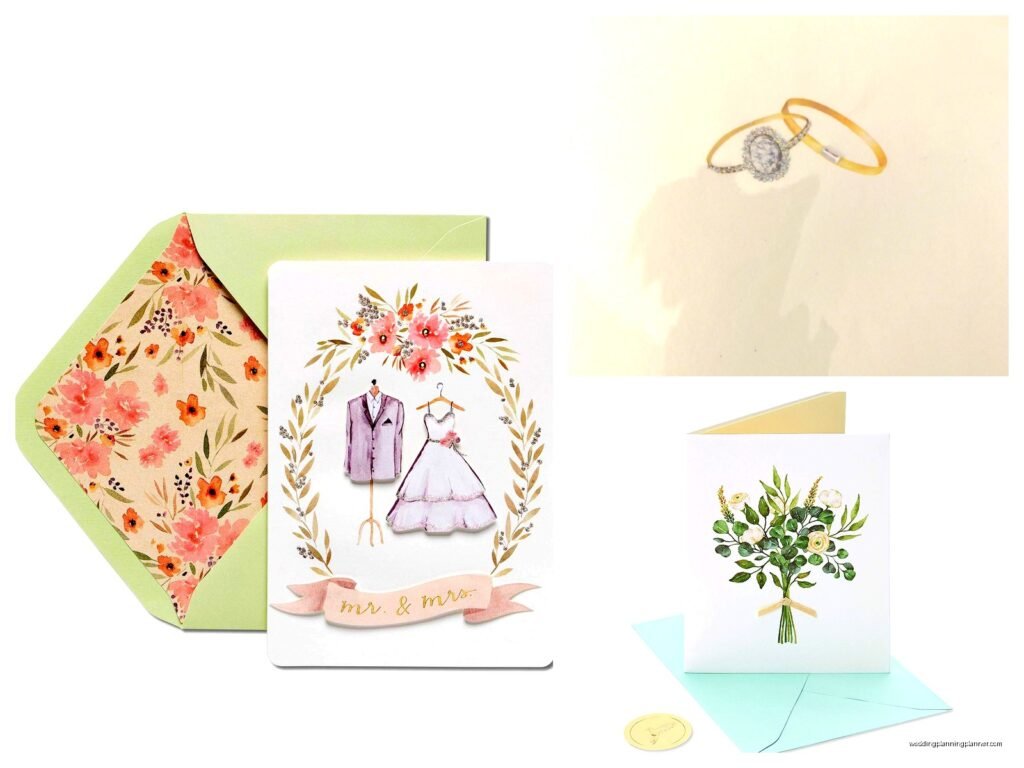
The whole brand aesthetic is very textured, layered, and they use a ton of handmade paper techniques. Think embossing, die-cuts, actual pressed flowers sometimes, metallic foils, ribbons attached to cards. It’s the opposite of minimal modern design—this is maximalist romantic stationery that your mom probably loves and honestly some of my brides are obsessed with it too.
What sets them apart is they’re not doing that clean letterpress look everyone else does. Papyrus goes hard on dimension and tactile elements. You pick up one of their cards and it feels substantial, sometimes almost too much but that’s kinda their thing.
The Price Point Situation
Here’s where it gets interesting for wedding planning. Papyrus sits in this middle luxury tier that’s actually really useful. Their wedding invitations typically run between $3-7 per card depending on the collection. That’s more than your basic Shutterfly or Minted situation but way less than custom letterpress or engraved suites that start at like $15-20 per invite.
For couples who want something special but don’t have a $2000 stationery budget, Papyrus can work. I had this bride in spring 2023 who was stressing because she wanted “fancy” invites but her mom was paying and had set a $400 limit for 100 invitations. We went to three different stores and I was honestly running out of options until we found this Papyrus collection with laser-cut lace overlays that looked way more expensive than they were.
The thing that annoyed me though? Their inventory is super inconsistent. Like you’ll find the perfect save-the-date design and then go back for the matching invitations two months later and they’ve discontinued it. This happened to me with a client and we had to frantically search three different locations to find enough of the matching design.
Where To Actually Buy Them
You can get Papyrus cards at their standalone stores (they have like 450 locations but honestly I think that number is shrinking), Barnes & Noble carries them, some Targets have a small selection, and independent card shops. They also have an online store but here’s the thing—you really need to see these in person because photos don’t capture the texture and weight.
I always tell my brides to physically go touch the cards before ordering. The embossing, the ribbon details, the way light hits the foil—it photographs okay but doesn’t translate fully. Plus some of their designs are bulkier than you’d expect and you need to factor in postage costs because dimensional cards need extra stamps.
The Design Collections They Actually Do
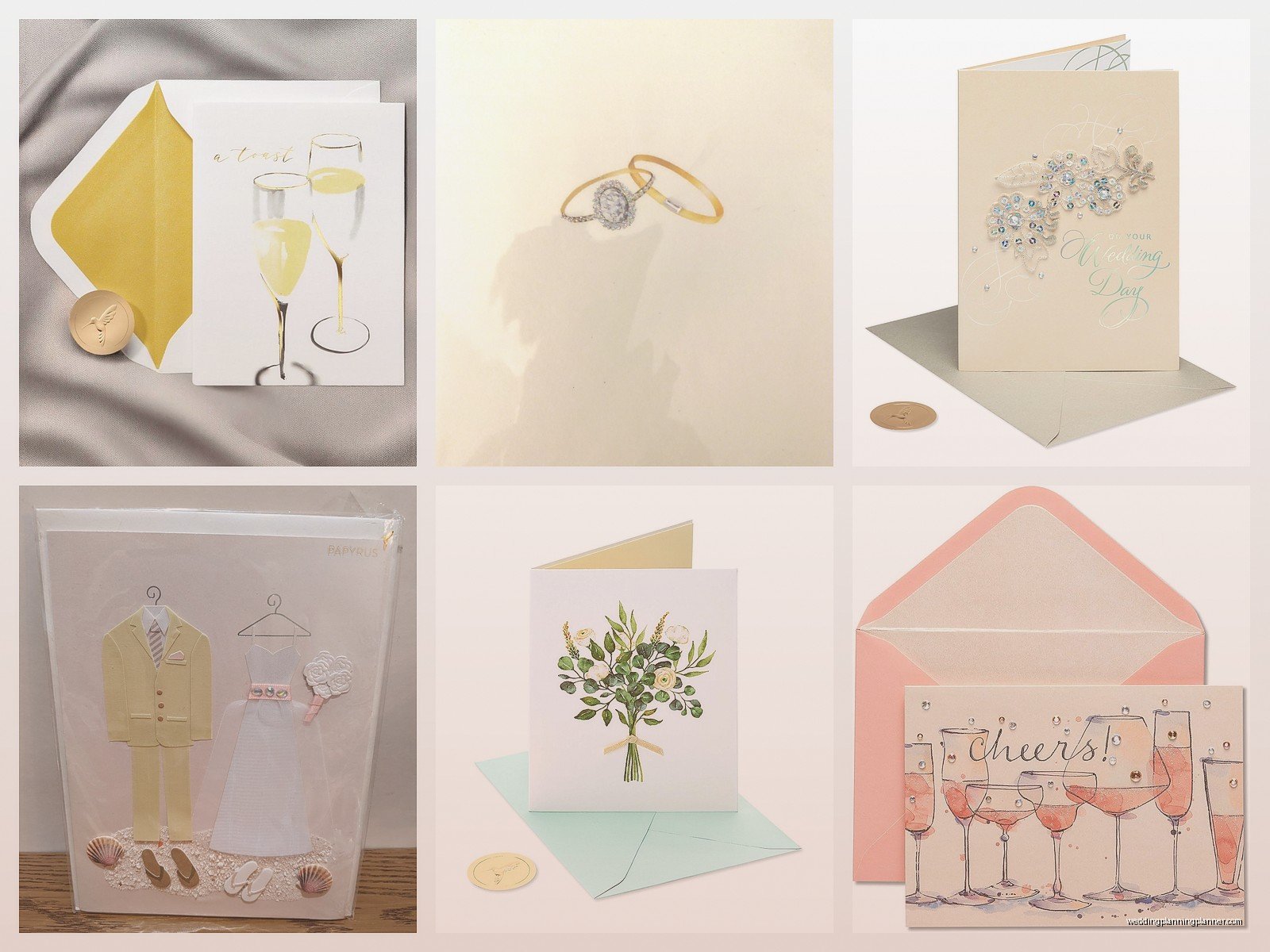
Papyrus rotates collections but there are some consistent themes they always carry. Their wedding line usually includes:
- Lace and pearl themed designs—very traditional, lots of white and cream, dimensional lace overlays
- Floral watercolor styles—these are actually really pretty, not as heavy-handed as some of their other stuff
- Metallic and foil designs—gold, rose gold, silver, usually paired with blush or navy
- Vintage romantic looks—think antique keys, old stamps, ephemera collage style
- Destination wedding themes—beach, travel, adventure vibes
The lace collections are probably their bestsellers for weddings. They do this thing where there’s a laser-cut overlay that wraps around the actual invitation card, and it looks really elegant. My client who was getting married at a historic mansion went with one of these and her guests kept commenting on how beautiful the invites were.
Customization Options Are Limited
Here’s what you gotta know—Papyrus isn’t doing fully custom work. You’re picking from their existing designs and then you can personalize the text. Most of their wedding invitations come as fill-in templates where you write in your details, or they have printing services where they’ll print your wording.
The printing quality is… fine? It’s not letterpress, it’s not engraving, it’s digital printing. For the price point it works but if you’re someone who’s gonna obsess over printing techniques then this might not be your brand. The value is really in the physical design of the card itself, not the printing.
You can usually customize font choices from a set menu, and ink colors to some extent. But you’re not redesigning the actual card layout or changing the decorative elements. It’s more like Mad Libs for wedding invitations—you’re filling in the blanks within their structure.
The Whole Suite Coordination Thing
If you’re trying to do a complete matching suite (save-the-dates, invitations, RSVP cards, thank you notes, programs, menus, etc.), Papyrus is hit or miss. Some of their collections have full suites available, others just have the invitation and maybe thank yous.
I usually recommend if you’re going with Papyrus for invites, plan to mix and match a bit. Like maybe get their fancy dimensional invitation but then do simpler RSVP cards that coordinate in color but aren’t necessarily the same collection. Or use their invites but create your own programs and menus through a different vendor.
They do have some coordinating pieces—like if you buy their lace invitation, they might have matching place cards or table numbers in the same design. But it’s not as comprehensive as what you’d get from a wedding-specific stationery company. You’re gonna need to be flexible.
Assembly Is Actually A Thing To Consider
Because Papyrus designs are so dimensional and layered, assembly can be more complex than regular invitations. Some come pre-assembled but others you’re putting together yourself. Like you’ll have the main card, the overlay piece, maybe a ribbon that needs to be tied, belly bands that wrap around everything.
I spent an entire evening in summer 2021 helping a bride assemble 150 Papyrus invitations that had this whole ribbon and wax seal situation. We set up an assembly line in her apartment, had wine, made it a party with her bridesmaids. But it took like four hours. Just know what you’re getting into because some designs require actual craft time.
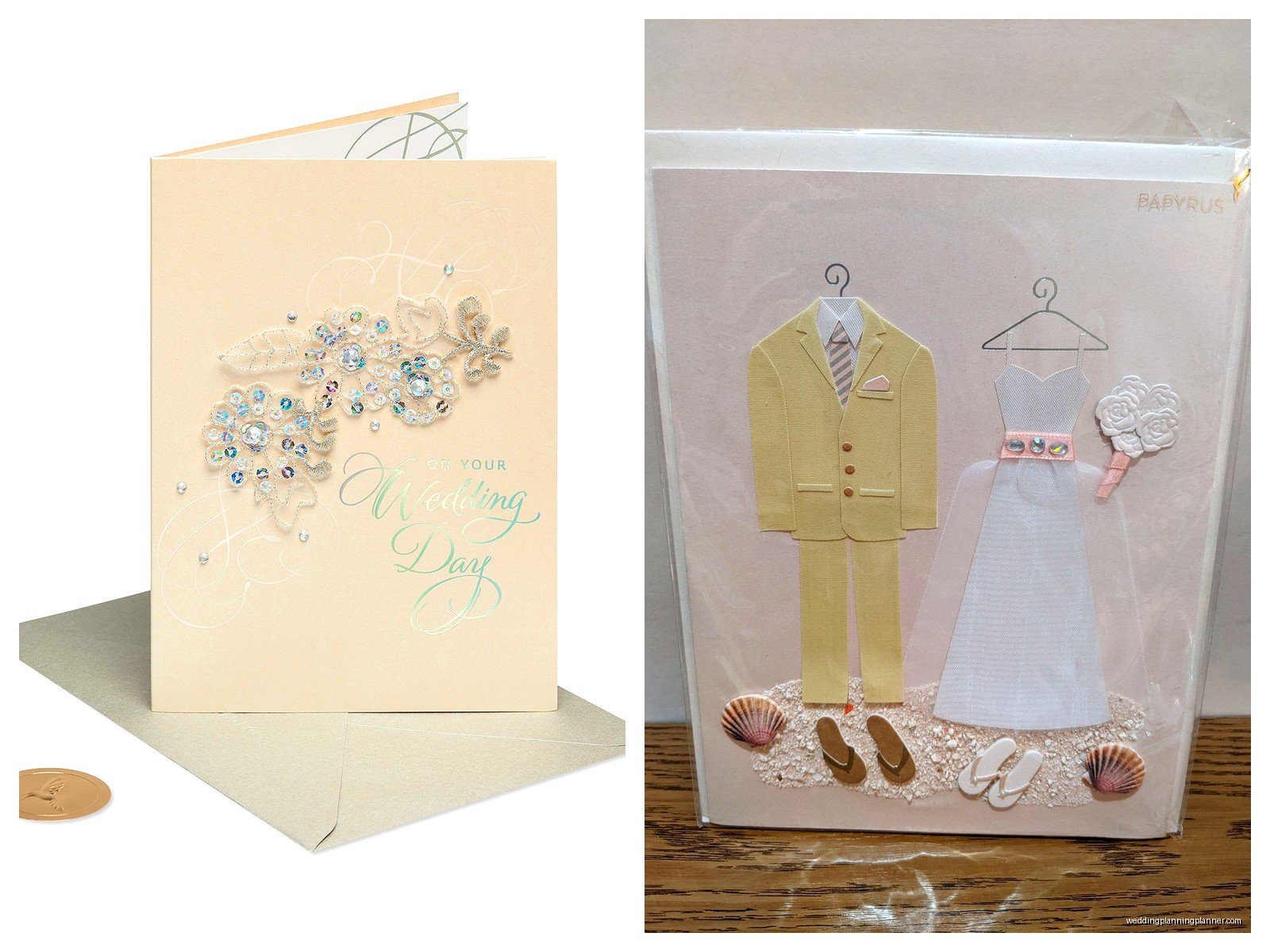
Also the envelopes—Papyrus includes them but they’re usually just standard envelopes, nothing special. A lot of my clients end up buying nicer envelopes separately or doing envelope liners to elevate the presentation. The envelope is kinda where their designs fall flat compared to the actual card.
Postage Costs Will Surprise You
This is something I always warn people about. Because Papyrus invitations are thick, textured, and dimensional, they almost never qualify for regular first-class stamp rates. Most of them are “non-machinable” which means they can’t go through the post office’s automated sorting machines.
You’re looking at extra postage—sometimes $1.00-1.50 per invitation instead of the regular $0.73 or whatever it is now. For 100 invitations that’s an extra $30-80 in stamps people don’t budget for. Always take a fully assembled invitation to the post office and have them weigh it and check dimensions before you order stamps.
Some of their designs are so bulky they need to go in a bubble mailer or small box instead of a regular envelope. I’ve seen brides get creative with this—like using it as an opportunity to create a whole unboxing experience—but it definitely changes the cost and logistics.
When Papyrus Makes Sense For Your Couples
Okay so after doing this for years, here’s when I actually recommend Papyrus to my clients:
- Mid-range budget—you want something nicer than online templates but can’t afford full custom
- Traditional or romantic wedding style—their aesthetic really leans classic and feminine
- You value the physical card design over printing techniques
- You’re okay with semi-custom rather than fully bespoke
- You want something your guests can actually feel and touch, that dimensional quality
- You’re not doing a super modern minimalist wedding because that’s just not their vibe
I don’t usually recommend them for couples doing like a contemporary art museum wedding or industrial loft venue or anything really modern. The Papyrus aesthetic is more garden party, historic venue, country club, traditional church wedding energy.
What Doesn’t Work Well
Beach weddings—I know they have beach designs but honestly the dimensional cards with ribbons and layers don’t really fit the casual beach vibe. You want something simpler for those.
Super formal black tie weddings—Papyrus is elegant but it’s not like… engraved invitation level formal. If you’re doing a white tie situation at a five-star hotel, you probably want something more elevated.
Large weddings over 200 guests—the cost adds up quickly and the assembly time becomes unmanageable. At that scale you’re better off with a printed suite that’s simpler.
Couples who want everything to match perfectly—again the coordination across all pieces just isn’t always there with Papyrus.
Comparing To Other Brands In The Same Space
So how does Papyrus stack up against competitors? Let me break it down because I get asked this constantly.
Versus Minted or Paperless Post: Papyrus is way more tactile and dimensional but less customizable. Minted gives you more design control and better printing, but the cards are flatter and less unique-feeling. If you want that wow factor when someone opens the envelope, Papyrus wins. If you want more design flexibility, go with Minted.
Versus Shutterfly or Vistaprint: Papyrus is significantly more upscale. Like not even the same category really. Shutterfly is budget-friendly and totally customizable but it looks budget-friendly. Papyrus has that boutique card store quality.
Versus independent stationers or Etsy designers: This is interesting because… Papyrus is mass-produced trying to look handmade, while Etsy is often actually handmade. For true custom work an independent stationer is better, but you’ll pay 3-4 times more. Papyrus is the compromise option.
My cat just knocked over my water bottle while I’m writing this so there’s that interruption, but anyway—
Versus Carlton Cards or Hallmark wedding lines: Similar price point but I think Papyrus has more interesting designs. Hallmark can feel kinda generic sometimes whereas Papyrus has a more distinctive look even if it’s not for everyone.
The Practical Stuff About Ordering Timeline
If you’re gonna go with Papyrus here’s the timeline I recommend. Start looking at designs about 6-7 months before your wedding. That gives you time to find what you want, order samples if you’re doing printed versions, and deal with any discontinuation issues.
Order your invitations at least 3 months before the wedding, ideally 4 months. This accounts for production time if you’re getting them printed, assembly time if needed, addressing time, and mailing. You want invites in guests’ hands 6-8 weeks before the wedding.
If you’re doing save-the-dates through Papyrus, order those 8-9 months before the wedding to mail them 6-8 months out.
For day-of items like programs or menus, you can wait until 6-8 weeks before since you don’t need to mail those. But don’t wait too long because again, inventory issues.
The Return and Exchange Policy
Papyrus has a decent return policy for their regular cards but custom-printed wedding invitations are usually final sale. You can’t return them once they’re personalized with your details. This is pretty standard across the industry but just be really sure about your design choice before ordering.
They sometimes let you order one sample invitation before committing to the full order, which I highly recommend. Spend the $5-7 on a sample so you can see exactly what you’re getting.
Real Talk About Quality Control
Most of the time Papyrus quality is solid but because they’re mass-produced you occasionally get inconsistencies. I’ve had clients receive boxes where some cards had slightly misaligned embossing or ribbons that were tied differently from card to card.
It’s not a huge deal but if you’re super detail-oriented, plan to inspect your order when it arrives and contact them about any issues. They’re usually good about replacing damaged or defective cards.
The paper quality itself is nice—thick, textured, feels substantial. The embellishments like foil and embossing are well done. It’s really just the printing that’s their weak point compared to specialty wedding stationers.
I think the biggest thing is just managing expectations. You’re not getting couture invitations here. You’re getting really nice ready-to-wear invitations that look more expensive than they are, which for a lot of couples is exactly what they need. It’s the J.Crew of wedding stationery—good quality, recognizable style, accessible price point, works for a lot of situations but isn’t gonna be everyone’s taste or the absolute highest end option available.