
Planning Guides, Style Guide
Elopement Wedding Planner: Small Intimate Coordinator
Oct
So You Wanna Be an Elopement Planner
Okay so elopement planning is totally different from traditional wedding planning and I wish someone had told me this back in spring 2023 when I took on my first elopement couple thinking it’d be easier than a 200-person reception. Spoiler: it’s not easier, just different.
First thing you gotta understand is that elopement couples are looking for something super specific. They don’t want scaled-down traditional weddings—they want an experience. Like, they’re choosing to ditch the big reception hall and invite list drama for a reason, and your job is to make that intimate moment absolutely perfect without making it feel like a mini version of something bigger.
The Actual Scope of Work
When you’re coordinating elopements, you’re basically handling everything a traditional planner does but compressed into a smaller timeline and often a more unique location. I’m talking permits for national parks, sunrise timing calculations, backup weather plans for mountaintop ceremonies, and finding that perfect secluded beach spot that isn’t actually private property.
Your services typically include:
- Location scouting and securing permits (this is huge and super annoying when you’re dealing with federal land regulations)
- Vendor coordination for intimate setups—photographer, officiant, maybe a florist
- Timeline creation that accounts for golden hour, travel time, and the couple actually enjoying their day
- Day-of coordination which is way more hands-on than you’d think
- Handling logistics like chairs, arbors, sound systems if needed
- Creating backup plans for literally everything
The thing that really annoyed me when I first started was how many couples thought elopements meant “no planning necessary” because it’s just two people. Nah. Sometimes the intimate ones require MORE detailed planning because there’s no venue coordinator to fall back on, no catering team managing the flow, no… you’re it, basically.
Finding Your Elopement Couples
Marketing yourself as an elopement coordinator is kinda niche. You’re not gonna find these couples at traditional bridal shows necessarily. I’ve had the most success with:
Instagram—like seriously, elopement couples live on Instagram. They’re searching hashtags like #adventureelopement and #intimatewedding and looking at photographer feeds. Partner with elopement photographers in your area because they’re your best referral source.
Your website needs to show that you GET it. Don’t just have traditional wedding photos with fewer people. Show couples on cliff edges, in forests, having breakfast picnics after their ceremony, exchanging vows with their dog as the only witness. That’s the vibe.
I also found that being specific about locations helps—if you specialize in desert elopements or mountain ceremonies or coastal intimate weddings, say that. Couples are looking for someone who knows the terrain, literally.
Pricing This Whole Thing
Okay so this was tricky for me to figure out. You can’t charge the same as a 150-person wedding, but you also can’t undervalue your time because elopements are actually really time-intensive per couple.
Most elopement planners charge either a flat fee or hourly, and I’ve seen packages ranging from $800 to $5,000 depending on what’s included. My sweet spot is around $1,500 to $3,000 for full planning and coordination.
Consider offering tiers:
- Basic: Location recommendations, vendor referrals, permit assistance ($800-$1,200)
- Standard: Everything above plus full timeline, day-of coordination, setup ($1,500-$2,500)
- Premium: Full planning, multiple location scouts, styled setup with rentals, extended coordination ($3,000-$5,000+)
Some planners charge hourly at like $100-$200/hour which works if you’re just consulting, but I prefer packages because elopements have so many little tasks that hourly gets weird to track.
The Logistics Nobody Talks About
Here’s where it gets real. Elopement planning means you’re often the one carrying stuff up a mountain trail or setting up an arbor on a windy beach or—and this happened to me—trying to angle a portable speaker so the music doesn’t echo weird in a canyon.
You need to actually visit locations beforehand. I learned this the hard way during that spring 2023 elopement I mentioned earlier when I recommended this “perfect” meadow based on photos and when we got there for the actual ceremony, it was completely waterlogged from recent rain and there were literally mosquitoes everywhere. The couple was sweet about it but I felt like such an idiot, and we had to pivot to a backup location I’d thankfully scouted.
Always have a backup location. Always. Weather, unexpected closures, other people showing up to your “secluded” spot—it happens.
Permit Hell
If you’re doing any public land elopements, you’re gonna spend so much time dealing with permits. National parks, state parks, beaches, forests—most require permits for ceremonies even if it’s just two people. Some places have specific rules about what you can and can’t do, like no flower petals, no stakes in the ground, no chairs, whatever.
I keep a spreadsheet of all the locations I work with and their specific permit requirements because trying to remember whether Joshua Tree needs 10 days notice or 14 days notice will make you crazy. Also some permits are lottery-based which means you need to apply way in advance and have backups ready.
The fees range from like $50 to $500 depending on location and what you’re doing. Make sure your couple knows about these costs upfront.
Vendor Coordination for Intimate Weddings
You need a totally different vendor list for elopements. Traditional wedding vendors sometimes don’t even want to book intimate weddings because the profit margin is smaller, or they have minimums that don’t make sense for two people.
Build relationships with vendors who specialize in or at least enjoy small weddings:
- Photographers who do adventure sessions—they’re used to hiking and weird locations
- Officiants who are comfortable with non-traditional settings and short notice
- Florists who can do small bouquets, boutonnieres, and maybe a simple installation
- Hair and makeup artists willing to travel or do minimal services
- Bakeries that make small cakes or dessert options for two
Sometimes you’ll need rental companies for chairs, arbors, rugs, tables for a post-ceremony picnic setup. Find companies with low minimums or who rent individual items rather than requiring big packages.
Day-Of Coordination Is Different
On a traditional wedding day, you’re managing a timeline with multiple events, coordinating lots of vendors, handling family dynamics, keeping things on schedule. With elopements, you’re often doing physical setup yourself, you’re the one making sure the couple actually eats something, you’re holding the bouquet during vows, you’re the witness if they need one.

I usually arrive at least 90 minutes before the ceremony to set up. That might mean arranging chairs, setting up a small arbor or backdrop, laying out a rug, arranging flowers, setting up any decor elements, doing a sound check if there’s music, making sure the lighting is right.
Then during the ceremony, you’re kinda just… there. Making sure nothing goes wrong, being ready to fix the bride’s dress or hold rings or whatever’s needed. It’s intimate in a way that traditional weddings aren’t because you’re like the only other person there sometimes, and honestly it can feel a bit intrusive? But also really special.
After the ceremony, you might coordinate a champagne toast, a picnic setup, help with any photo session logistics, then break everything down and pack it out. Leave no trace is huge, especially on public lands.
The Timeline Thing
Elopement timelines are so dependent on natural light and location logistics. You’re not working around a venue’s availability or a catering schedule—you’re working around when the sun hits that cliff face perfectly or when the tide is low enough to access that beach cave.
I use apps like PhotoPills to calculate sunrise, sunset, and golden hour times. Then work backwards from there. If the couple wants a sunrise ceremony (popular for avoiding crowds), that might mean you’re setting up in the dark with headlamps. Been there, done that, my cat probably wonders why I leave the house at 4am sometimes.
Build in way more travel time than you think you need. That trail that takes 20 minutes in hiking boots takes 45 minutes when someone’s in a wedding dress. Or you hit traffic. Or the parking lot is full and you have to park further away. Always add buffer time.
What to Keep in Your Elopement Kit
I have a dedicated bin that goes to every elopement with me. It’s kinda excessive but also has saved me multiple times:
- Emergency sewing kit and fashion tape
- Stain remover pen
- Bug spray and sunscreen
- Small first aid kit (blisters happen)
- Extra water bottles
- Tissues and blotting papers
- Bobby pins and hair ties
- Safety pins
- Lighter or matches (for candles or sage or whatever)
- Scissors and floral wire
- Trash bags (pack it in, pack it out)
- Small portable speaker
- Backup phone charger
- Umbrella or parasol
- Blanket for sitting
- Snacks because hungry brides are not happy brides
Depending on the location, I also bring things like a small folding table, clips for securing fabric in wind, weights for arbors or signs, candles, a portable fan for hot days…
Managing Expectations
Some couples choose elopements because they’re more affordable, and while they CAN be, they’re not automatically cheap. You need to be clear about costs—permits, travel fees if you’re going to remote locations, vendor minimums, your coordination fee, rentals.
Also manage expectations about what “intimate” means. I had a couple once who wanted to elope but also wanted to livestream it to 100 people and have a post-ceremony Zoom reception and at that point I was like… is this still an elopement or is this just a wedding with remote guests? We made it work but it required way more tech coordination than a typical elopement.
Be clear about what you will and won’t do. I don’t carry equipment that weighs more than I can comfortably hike with. I don’t set up elaborate installations that require professional rigging. I don’t coordinate multi-day elopement experiences unless that’s specifically in my package. Boundaries are important because couples will sometimes assume you’ll just handle everything because it’s “small.”
The Legal Stuff
You’re not responsible for the marriage license obviously, but you should know the requirements for wherever you’re planning elopements. Some states require witnesses, some don’t. Some have waiting periods. Some have specific rules about where officiants need to be registered.
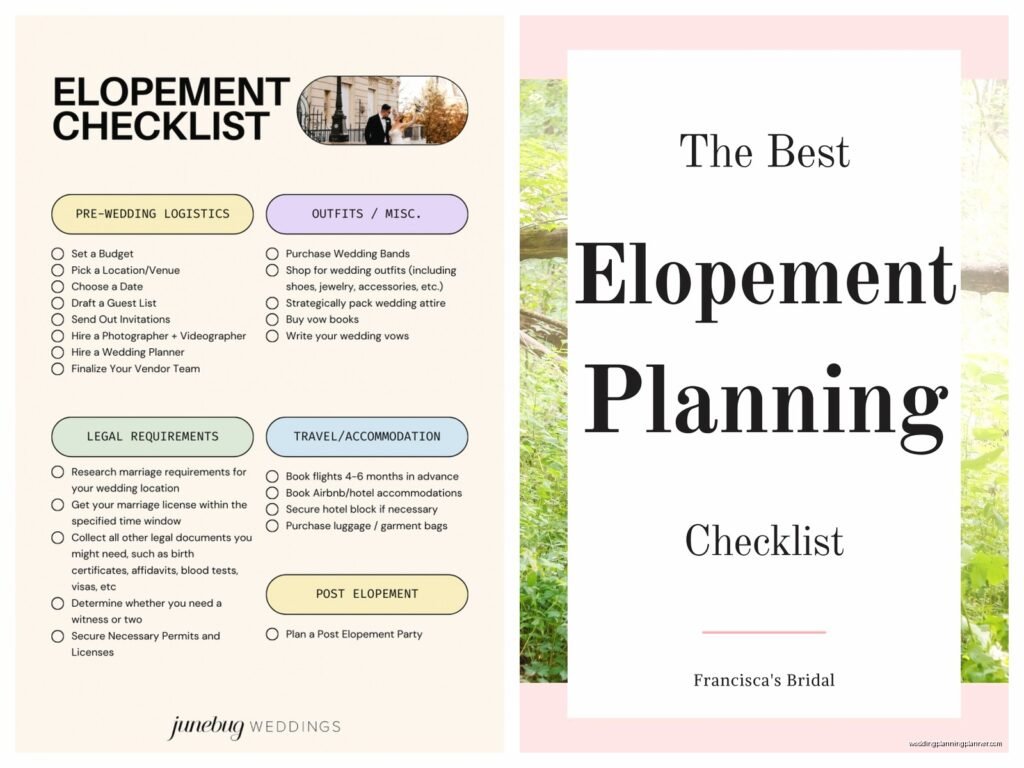
I always send my couples a checklist about marriage license requirements and strongly suggest they handle that stuff at least a week before because you don’t wanna be scrambling to find a courthouse on elopement day.
Also make sure you have liability insurance. When you’re coordinating events on public lands, near cliff edges, in remote areas—stuff happens. People trip, equipment breaks, weather causes problems. Cover yourself.
When Things Go Wrong
They will. The weather won’t cooperate, the perfect location will be closed for maintenance, the florist will get lost trying to find your remote meeting spot, someone will forget the rings (always have backup rings in your kit, just simple bands from Amazon or whatever).
I’ve had ceremonies where it started raining literally as the couple said “I do” and we all just laughed and got soaked. I’ve had a ceremony where a family of deer walked through the background and it was magical. I’ve had one where we had to move locations three times before finding somewhere that worked and the couple was so stressed but we got it done and the photos were beautiful and they sent me the sweetest thank you note afterwards.
The thing about elopement planning is you have to be really flexible and calm under pressure because there’s no hiding when something goes wrong—it’s just you and the couple and maybe a photographer. You can’t blame the venue coordinator or the catering team. It’s on you to fix it or pivot or just roll with it.
But honestly? When an elopement goes right, when you see that couple exchange vows in this perfect intimate moment that you helped create, with nobody else’s expectations or traditions or drama involved—just them and their love and this beautiful location—it’s kinda the best feeling. Way better than coordinating another cookie-cutter ballroom reception, not that there’s anything wrong with those but you know what I mean.
Just remember to charge what you’re worth, scout your locations, have backups for everything, and maybe invest in some good hiking boots because you’re gonna need them. Also waterproof mascara for yourself because these intimate ceremonies will get you right in the feelings sometimes and you don’t wanna be the planner crying harder than the couple.
