
Planning Guides, Style Guide
Wedding Party Planner: Event Coordination Services
Oct
What Wedding Party Planning Actually Involves
So you’re thinking about hiring an event coordinator or maybe you wanna become one, and honestly, it’s such a different beast than people think. Wedding party planning isn’t just about picking flowers and making seating charts—though yeah, there’s plenty of that too. It’s about managing chaos while looking calm, which is basically impossible but we try anyway.
The core service is timeline management. You’re essentially building a minute-by-minute schedule from when vendors arrive (usually like 6am for some poor florist) until the last guest stumbles out at midnight. I remember this wedding in spring 2023 where the ceremony was supposed to start at 4pm, but the bride’s hair stylist was running an hour late because she got the venue address wrong—like, how does that even happen when I sent three confirmation emails? Anyway, I had to rejigger the entire timeline, push cocktail hour earlier, convince the DJ to start playing ambient music for guests who were already arriving, and somehow keep the groom from having a meltdown. That’s the job right there.
Vendor Coordination Is Most Of The Work
People don’t realize how much time goes into just… talking to vendors. You’re the central hub for everyone. The caterer needs to know when to start serving, the photographer needs to know when family photos happen, the venue coordinator needs to know when to flip the ceremony space to reception mode. And they all email you separately with questions that could’ve been answered if they just read the timeline you sent them twice already, which honestly drives me nuts.
You gotta create a master vendor list with every single contact person, their cell numbers, their arrival times, their load-in requirements. I use a giant spreadsheet that I’ve refined over like fifteen weddings now, and it has tabs for everything—vendor contacts, payment schedules, rental inventory, ceremony processional order, reception timeline. It’s kinda excessive but also it’s saved my butt so many times.
Then there’s the actual day-of coordination. You’re doing final walkthroughs with each vendor as they arrive. The florist shows you centerpiece options and you gotta make sure they match what the bride approved three months ago. The rental company is setting up tables and you’re counting chairs to make sure they didn’t short you. The baker delivers the cake and you’re checking that it’s the right flavor tiers because one time—I swear this happened—they brought a completely different couple’s cake and we didn’t catch it until the bride saw it and was like “why is there a beach theme, we’re doing rustic barn.”
Managing The Wedding Party Drama
The actual wedding party is where things get messy. You’ve got bridesmaids who hate each other but are smiling for photos, groomsmen who showed up hungover, mothers-in-law with opinions about everything. Your job is to be the buffer between all these personalities and the couple.
I always meet with the wedding party at least once before the wedding day, usually at the rehearsal. You walk through processional order, teach them how slow to actually walk (everyone rushes, always), figure out who’s standing where, who’s holding the rings, all that stuff. But the real skill is reading the room and figuring out who’s gonna be difficult. There’s always that one bridesmaid who thinks she should’ve been maid of honor, or that groomsman who’s gonna drink too much during cocktail hour.
On the wedding day, you’re herding cats basically. Getting everyone to the ceremony site on time, making sure they have their bouquets or boutonnieres, keeping them quiet during the processional, managing the receiving line if there is one. Then at the reception you’re cueing them for entrances, making sure they know when toasts are happening, sometimes literally taking the microphone away from the best man when his speech goes too long and gets inappropriate.
The Timeline Thing Everyone Messes Up
Okay so here’s what I tell every couple: your timeline will feel too rushed when you first see it, but trust me, weddings always run long. Always. I build in buffer time everywhere because something will go wrong. The bustle will take fifteen minutes instead of five, Grandma will need help getting to her seat, the bride will want extra photos at sunset that weren’t planned.
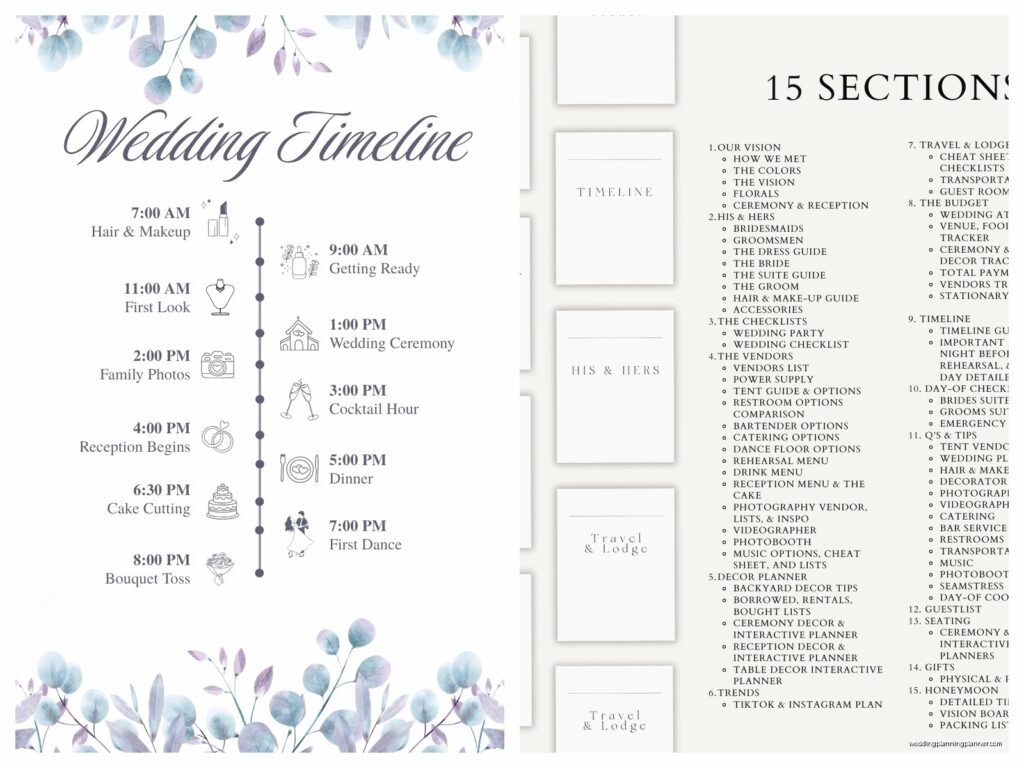
A typical timeline I create looks something like this, though obviously it varies:
- 2:00pm – Vendors begin arrival and setup
- 3:00pm – Wedding party arrives for photos
- 3:30pm – First look if they’re doing one
- 4:00pm – Family and wedding party photos
- 5:00pm – Guests begin arriving
- 5:30pm – Ceremony starts (never actually starts on time though)
- 6:00pm – Cocktail hour begins
- 6:15pm – Couple does portraits during golden hour
- 7:00pm – Reception doors open, guests find seats
- 7:15pm – Grand entrance
- 7:20pm – First dance
- 7:25pm – Welcome speech
- 7:30pm – Dinner service starts
- 8:15pm – Toasts during dinner
- 9:00pm – Cake cutting
- 9:15pm – Parent dances
- 9:30pm – Dance floor opens
- 11:00pm – Last dance and exit
But then you’ve gotta communicate this to like twenty different people and make sure everyone’s on the same page, which is where it gets complicated.
Emergency Kit Stuff You Actually Need
Every planner has their emergency kit and mine is this giant clear bin that I haul to every wedding. People always ask what’s in there and honestly it’s just… everything. Sewing kit, stain remover, safety pins, bobby pins, hair spray, deodorant, bandaids, blister pads, Advil, Tums, mints, tissues, tampons, double-sided tape, clear nail polish for stocking runs, super glue, scissors, lighter, phone chargers for every type of phone.
I’ve used almost everything in there at some point. Safety pins for a torn dress hem, super glue for a broken shoe heel, Tums for a nervous groom, stain remover for red wine on a white dress (that was stressful), bobby pins for like every single wedding ever. My cat actually knocked over the bin once while I was repacking it after a wedding and I found bobby pins under my couch for weeks.
The thing nobody tells you is that you’re also kinda like a therapist sometimes? Brides have cried on me, grooms have vented about family drama, mothers have confided their worries. You end up being this neutral person who’s there to support but isn’t emotionally invested in the family dynamics, which makes you safe to talk to I guess.
Money And Pricing Your Services
If you’re thinking about becoming a wedding planner, the pricing structure is all over the place depending on your market. I charge differently for full planning versus day-of coordination. Full planning means I’m involved from the beginning—helping with venue selection, vendor recommendations, budget management, design concepts, all of it. That’s usually a percentage of the total wedding budget, somewhere between 15-20% depending on complexity.
Day-of coordination (which really should be called month-of because you’re definitely working more than just the day) is a flat fee. In my area that ranges from like $1,200 to $3,000 depending on the planner’s experience and what’s included. Some planners include the rehearsal, some charge extra for that. Some include unlimited communication in the months leading up, some have limits.
You gotta be clear about what’s included because scope creep is real. A couple will hire you for day-of coordination but then start asking you to recommend vendors, negotiate contracts, manage their budget… and suddenly you’re doing full planning work for a day-of fee. I learned that the hard way and now my contracts are super specific about what each package includes.
What You’re Actually Selling
The service you’re really providing is peace of mind and also the ability for the couple and their families to actually enjoy the day. When I explain it to potential clients, I tell them: on your wedding day, someone’s gonna need to tell the DJ to start the ceremony music, cue the wedding party to walk, signal the officiant that we’re ready, manage the photographer’s family photo list, coordinate with catering on serving times, handle any vendor issues that come up. Do you want that person to be your mom? Your maid of honor? Or do you want them to just be guests?
That usually clicks for people. Nobody wants their sister running around with a clipboard instead of enjoying the party. And things do go wrong—vendors run late, weather changes plans, someone forgets something important. You’re there to handle it so the couple doesn’t even know there was a problem.
I had this wedding in summer 2021 where the power went out at the venue like an hour before the ceremony. The couple had no idea because I was dealing with the venue manager, the electric company, getting quotes for generator rentals, coordinating with the caterer about keeping food cold. We got the power back on twenty minutes before ceremony time and the couple just thought everything went smoothly. That’s the job working correctly.
Setting Up Your Business Systems
You need actual systems or you’ll drown in details. I use a project management tool to track every wedding with tasks, deadlines, and notes. Each wedding gets a folder in my cloud storage with subfolders for contracts, invoices, timelines, floor plans, inspiration images, vendor info. Everything’s labeled with the couple’s names and wedding date so I can find stuff quickly.
Communication templates are huge too. I have email templates for first inquiries, booking confirmations, timeline requests, vendor introductions, rehearsal info, day-after follow-up. You customize them for each couple obviously, but having the structure already there saves so much time.
Contracts are non-negotiable. You need a solid contract that outlines your services, payment schedule, cancellation policy, liability limitations. I had a lawyer review mine after I heard horror stories from other planners about couples trying to get refunds or blame them for vendor mistakes. It costs like $500 to have a lawyer draft a proper contract but it’s so worth it.
The Stuff Nobody Warns You About
Wedding planning sounds glamorous but you’re on your feet for like twelve hours straight on wedding days, you’re lifting heavy stuff, you’re sweating through your outfit, you’re skipping meals because there’s no time to eat. I always stash protein bars in my emergency kit for myself because otherwise I’d pass out by 9pm.
You also work weekends obviously, since that’s when most weddings happen. Friday through Sunday is basically gone from May to October. Your friends stop inviting you to summer stuff because they know you’re always working. I’ve missed so many birthday parties and beach trips and… yeah it’s just part of it.
The emotional labor is real too. You’re managing anxious brides, demanding mothers, drunk guests, tired vendors. You stay positive and calm even when you’re internally screaming. There was this one mother-of-the-bride who kept trying to change the timeline during the actual wedding—like wanted to move the cake cutting earlier because she was tired—and I had to politely shut that down while also not making her feel dismissed. It’s exhausting.
But there’s also something really satisfying about pulling off a smooth event. When the couple thanks you at the end of the night and they’re glowing and happy and everything went according to plan, or when a vendor tells you it was the most organized wedding they’ve worked… I dunno, it feels good. Not in like an inspirational way but just in a “I did my job well” way.
Working With Difficult Personalities
You’re gonna encounter difficult people, just accept that now. Bridezillas are real but honestly I’ve dealt with more Groomzillas and Momzillas than actual difficult brides. Most brides are just stressed and overwhelmed, which is understandable when you’re planning a major event while also working full-time and dealing with family opinions.
My approach is to stay neutral and focus on solutions. When someone’s upset about something, I acknowledge their feelings but immediately pivot to “here’s how we can fix this” or “here are your options.” Dwelling on the problem doesn’t help anyone.
Sometimes you gotta be firm though. If a request is unreasonable or impossible, you can’t just agree to keep them happy. I had a bride once who wanted to add fifty extra guests two weeks before the wedding, and I had to explain that the venue had capacity limits, the caterer needed a final count, we’d already done the seating chart… like it just wasn’t feasible. She was mad but she got over it.
The worst is when couples fight in front of you. That’s so awkward and you just kinda… pretend you didn’t hear it and keep talking about napkin colors or whatever until they calm down.
Building Vendor Relationships
Your vendor network is everything in this business. When you have trusted vendors you work with regularly, everything runs smoother. They know how you operate, you know their style, there’s mutual respect and communication.
I always recommend building relationships with at least three options in each category—venues, caterers, photographers, florists, DJs, hair and makeup, officiants, bakers, rental companies. That way you can match couples with vendors who fit their style and budget, and you have backups if someone’s booked.
Treat vendors well on wedding days and they’ll make your job easier. I always make sure they get fed if there’s vendor meals, I thank them throughout the day, I send referrals their way. In return, they text me when they’re running late instead of just showing up whenever, they’re flexible when timelines shift, they do good work because they know I’ll hire them again.
Some planners take referral fees from vendors but I don’t because I think it creates a conflict of interest. I want to recommend vendors because they’re the best fit for my clients, not because they pay me. But that’s a personal choice and plenty of planners do it differently.
Anyway, that’s the reality of wedding planning services—it’s logistics and people management and problem-solving and staying calm under pressure, all while wearing uncomfortable shoes and pretending everything’s perfect even when it’s kinda falling apart behind the scenes.
