
Planning Guides, Style Guide
Eco Friendly Wedding Invitations: Sustainable Green Options
May
Okay So Eco-Friendly Wedding Invitations Are Actually Way Easier Than You Think
The paper. Let’s start with the paper because honestly that’s where most couples get overwhelmed and then just give up and order regular invites. You want to look for recycled content paper—like 100% post-consumer waste is the gold standard but even 30-50% recycled content makes a difference. I had this couple in spring 2023 who were SO stressed about finding the perfect eco paper and I literally had to tell them to just pick one because they were spending more carbon footprint energy googling options than they’d save with any choice.
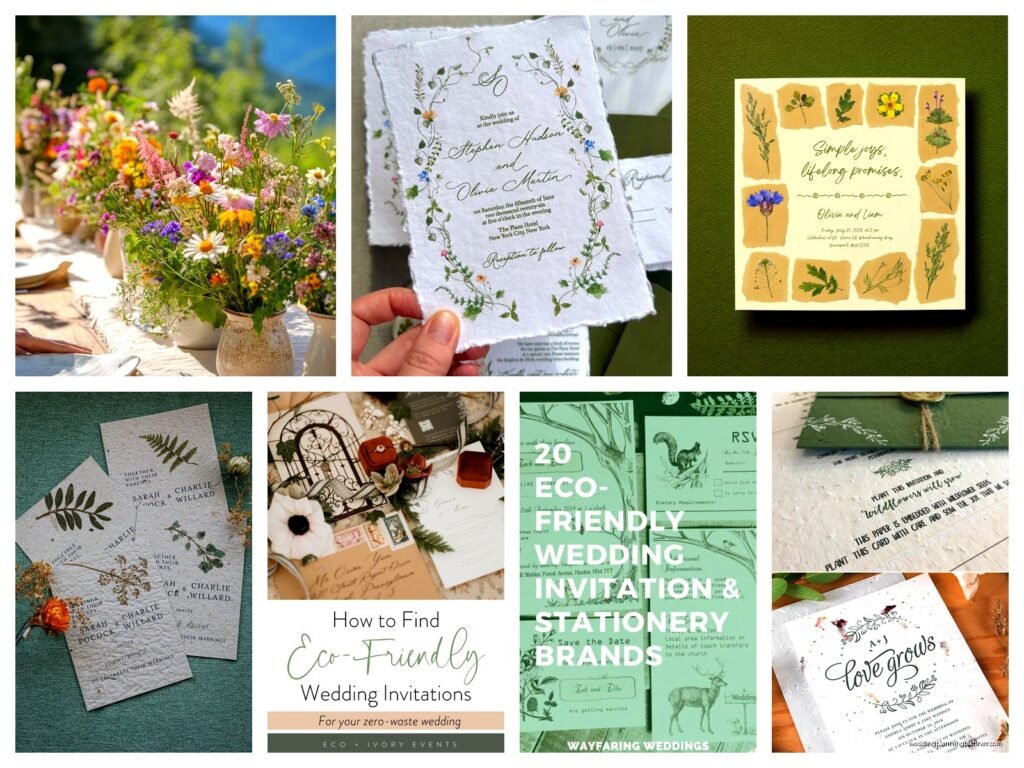
Tree-free paper is another route and it’s kinda cool actually. Bamboo, cotton, hemp, even paper made from agricultural waste like sugarcane bagasse. The bamboo ones have this slightly different texture that some people love and others think feels weird. You gotta touch samples before committing because ordering 150 invitations in a paper you’ve never felt is… not smart. Been there.
Seed Paper Is Cute But Has Issues
Okay so seed paper sounds amazing in theory—your guests plant the invitation and wildflowers grow, very circle of life, very romantic. But here’s what annoys me about seed paper and nobody talks about this: it’s THICK. Like really thick. Which means you’re paying way more for postage because these invitations are chunky. Also some of my couples have reported that guests just… don’t plant them? They feel guilty throwing them away so they sit in a drawer for two years and then get tossed anyway.
That said, if you’re gonna do seed paper, make sure it’s actually native wildflowers for your region. I’ve seen seed paper with invasive species mixed in which is like, the opposite of eco-friendly when you think about it.
Printing Methods Matter More Than You’d Think
Digital printing is generally your most eco-friendly option because there’s less waste and most digital printers now use soy or vegetable-based inks. Letterpress is gorgeous and I love it but it does require more setup and traditionally uses more resources. Although—and this is where it gets complicated because nothing is ever simple—some letterpress studios are super committed to sustainability and use wind-powered equipment and reclaimed wood for their blocks.
Thermography uses heat and powder and creates that raised text effect people like, but the powder is usually plastic-based so… not great. Engraving is similar situation—beautiful, traditional, resource-intensive.
You can also do soy-based or vegetable-based inks with most printing methods now. Just ask. Most printers will tell you what they use if you actually ask them directly instead of just assuming.
The Whole Envelope Situation
Envelopes are weirdly the part where people don’t think about sustainability and then you’ve got this beautiful recycled invitation sitting in a bleached white envelope with a plastic window. Make sure your envelopes match your values too—recycled paper envelopes, skip the plastic liners if you can (I know they look fancy but they’re not necessary), and those glassine sleeves everyone uses to keep the invitation clean? Yeah those are usually plastic.
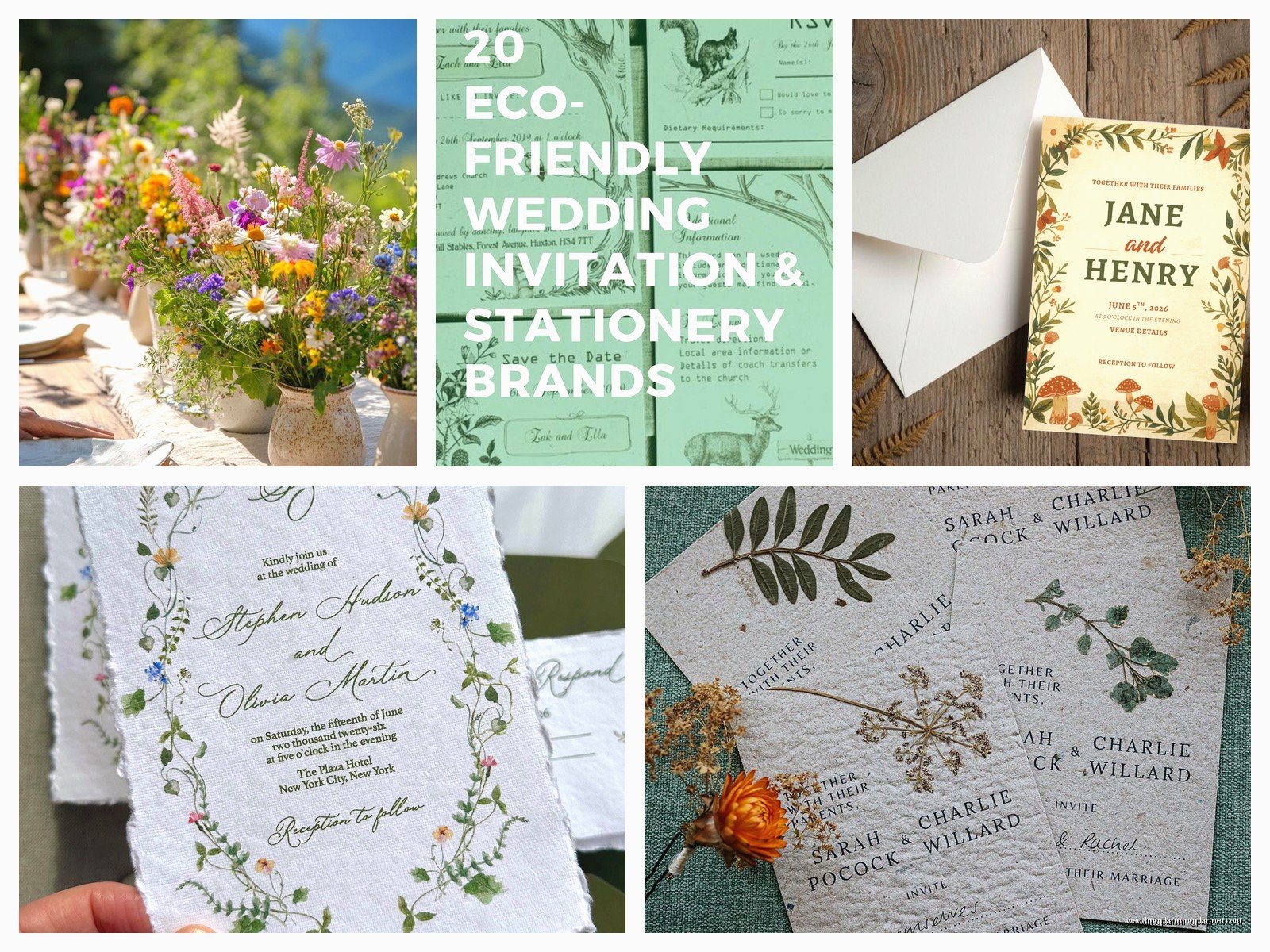
For sealing you can use water-activated gum closures instead of the peel-and-stick ones which often have plastic backing. Or just go old school with a glue stick made from plant-based adhesive. My cat knocked over my glue stick container last week and I discovered I had like nine of them, so apparently I’ve been hoarding them without realizing.
Digital Invitations Are The Most Eco Option Obviously
I mean if we’re being completely honest, a digital invitation has basically zero environmental impact compared to paper. You can make them gorgeous now with sites like Paperless Post, Greenvelope, or even just a really well-designed email if you or someone you know has design skills.
The pushback I get is always “but it’s not special” or “older relatives won’t understand technology” and okay, fair on the second point. But for the first one—you can make digital special. You can include video, animation, your engagement photos in a slideshow format. You can create a whole website that serves as both invitation and information hub.
For older relatives or people without email (yes they still exist), you can send paper save-the-dates to just those folks and then do digital invitations for everyone else. Hybrid approach. You don’t have to be all-or-nothing about this stuff.
What About Those QR Code Invitations
So this is becoming more popular—you send a minimal paper invitation that’s basically just a QR code leading to your full wedding website with all the details. Uses way less paper, less ink, and you can update information without reprinting if something changes.
The design challenge is making a QR code look elegant and not like you’re asking people to scan for a restaurant menu, which… I’m still figuring out honestly. Some couples do a simple card with their names, date, and the QR code plus maybe a single line like “Scan for details and RSVP.” It works better than you’d expect.
Minimize What You’re Actually Sending
Traditional wedding invitations come with like seventeen pieces—the invitation itself, the RSVP card, the RSVP envelope, the reception card, the accommodations card, the directions card, tissue paper between everything, and I’m probably forgetting something. Each piece is more paper, more printing, more waste.
Put everything on your wedding website instead. Your invitation can literally just say “Join us for our wedding” with the date, time, basic location, and “Visit our website for details and to RSVP” with the URL. That’s it. One card. One envelope. Done.
People will argue that not everyone will check the website but honestly? They will if that’s where the information is. And you were gonna build a wedding website anyway for registry and photos and stuff, so just use it.
Rethink The RSVP Card Entirely
RSVP cards are such a waste when you think about it. You’re sending paper to someone so they can send paper back to you with information that could be submitted online in thirty seconds. Set up online RSVPs through your wedding website—literally every wedding website platform has this feature now.
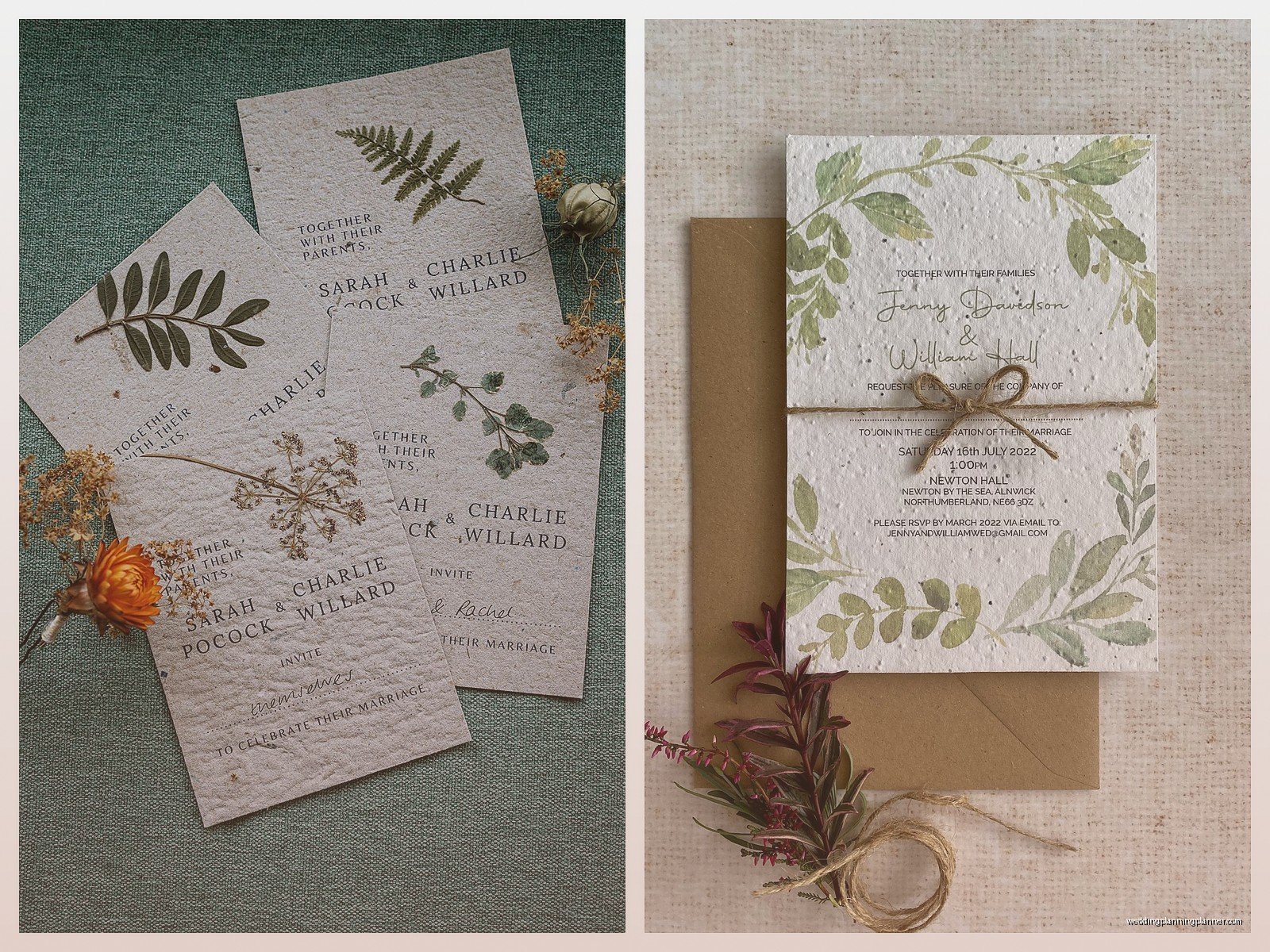
If you absolutely must include something physical for older guests, include a postcard-style RSVP (saves paper, no envelope needed) with the online RSVP option clearly printed as the preferred method.
Local Printing Reduces Shipping Impact
Order from a local print shop or stationer instead of a big online company shipping from across the country. The carbon footprint from shipping is actually pretty significant when you’re talking about heavy paper products. Plus you can usually go see samples in person which helps you make better decisions.
I worked with this amazing local printer in summer 2021 who showed me their whole process and it made me realize how much waste happens at big printing operations versus small local ones who are more careful with materials because they’re paying for everything directly.
Vintage or Second-Hand Invitation Supplies
This is gonna sound weird but hear me out—you can sometimes find unused invitation supplies from cancelled weddings or changed plans on wedding resale sites or even Facebook Marketplace. Obviously you’d need to customize them but if someone ordered 200 blank recycled paper cards and only used 50, that’s 150 cards that exist in the world already.
Estate sales sometimes have vintage paper stock too. I found this incredible box of cotton paper from the 1970s once that had aged into this beautiful cream color and…
Okay that’s maybe too niche. But the point is reusing existing materials is always more eco-friendly than producing new ones even if the new ones are “sustainable.”
Skip The Extra Stuff Nobody Needs
Belly bands, wax seals, ribbon ties, vellum overlays—all of those pretty details add up to more materials and more waste. A lot of that stuff isn’t recyclable either because you’re mixing materials (paper with fabric with wax).
Your invitation can be beautiful and simple at the same time. Good typography, nice paper, maybe one accent color. That’s enough. The Instagram-worthy invitation suites with fourteen layers and hand-torn edges and silk ribbons are gorgeous but they’re not necessary and they’re definitely not eco-friendly.
What About Calligraphy and Addressing
Hand calligraphy is lovely but if you’re doing it yourself with regular calligraphy supplies, just make sure you’re using refillable ink and not disposable pens. If you’re hiring a calligrapher, they’re probably already using quality refillable materials because that’s how professional calligraphers work.
Digital calligraphy fonts have gotten really good though. You can print addresses directly onto envelopes using a nice script font and most people won’t know the difference unless they’re really looking closely.
Or just print address labels on recycled label sheets. Nobody cares as much as you think they do about the addressing method I promise.
Consider Email Save-The-Dates Paper Invitations Later
If you want to do paper invitations but also want to minimize, send save-the-dates digitally (they’re far enough in advance that digital makes sense) and then send the formal paper invitation closer to the wedding date. You’ve cut your paper usage in half right there.
Some couples do the reverse—paper save-the-dates for the special feeling, then digital invitations with all the details. Either way works. You’re choosing where to use your paper budget both financially and environmentally.
The Whole Postage Thing
Lighter invitations cost less to mail which means less fuel used in transportation. Square envelopes cost more to mail than rectangular ones (postal service charges extra for non-standard sizes) so stick with standard sizes when possible.
Also you can request that your invitations go through standard mail processing without the barcode printing by using a rubber stamp or asking at the post office, which keeps your envelopes looking prettier but that’s more of an aesthetic thing than an eco thing.
Recycling Instructions For Guests
This might sound excessive but if you’re going through all this trouble to create sustainable invitations, include a tiny note about how to recycle or compost them. Most people don’t know that glossy coated paper can’t be recycled in standard bins, or that glitter (please don’t use glitter) contaminates recycling.
Just a small line like “This invitation is printed on 100% recycled paper and can be composted or recycled” gives people permission to not feel guilty about throwing it away after the wedding.
Working With Designers Who Get It
If you’re hiring a stationer or designer, ask specifically about their sustainable options upfront. Some designers specialize in eco-friendly work and will have all the vendor connections and material knowledge already. Others will look at you blankly and suggest regular paper with green ink to make it “eco themed” which… nah.
Good questions to ask: What paper stocks do you recommend for sustainability? Do you work with local printers? What’s your approach to minimizing waste in the design process? Can we do a digital proof instead of multiple printed proofs?
I’ve noticed more stationers are advertising their eco-friendly options now because couples are asking for it, so the market is actually shifting which is nice to see even though it took way too long to get here.
